BookBrief
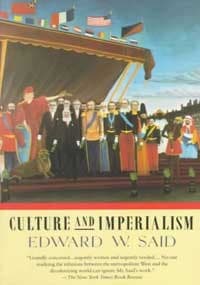
Culture and Imperialism cover
Archivist's Choice

Culture and Imperialism

Edward W. Said (1993)

Genre

Politics / History / Philosophy

Reading Time

10-12 hours

Key Themes

See below

Track Your Reading

Sign in to track this book

Edward Said shows how Western culture's grand stories and art were active partners and lasting results of imperialism.

Core Idea

Edward W. Said's "Culture and Imperialism" argues that culture is not separate but deeply tied to imperialism. It reflects and continues imperial power, even after colonies gain independence. He shows how imperial goals shape culture in both colonizing and colonized nations, affecting literature, art, and intellectual thought. These cultural forms then make domination seem normal and right. Said believes understanding this link is essential to grasp imperialism's lasting effects and to find ways to achieve true freedom and cooperation.
Reading time
10-12 hours
Difficulty
Hard
✓ Read this if...
You want to understand the profound and lasting impact of imperialism on culture, literature, and identity, and explore how power dynamics are embedded in cultural representations.
✗ Skip this if...
You are looking for a light read or a purely historical account without deep theoretical engagement with cultural studies and postcolonial thought.

Core idea

The central argument and framework that powers the entire book.

Edward W. Said's "Culture and Imperialism" argues that culture is not separate but deeply tied to imperialism. It reflects and continues imperial power, even after colonies gain independence. He shows how imperial goals shape culture in both colonizing and colonized nations, affecting literature, art, and intellectual thought. These cultural forms then make domination seem normal and right. Said believes understanding this link is essential to grasp imperialism's lasting effects and to find ways to achieve true freedom and cooperation.

At a glance

Reading time

10-12 hours

Difficulty

Hard

Read this if...

You want to understand the profound and lasting impact of imperialism on culture, literature, and identity, and explore how power dynamics are embedded in cultural representations.

Skip this if...

You are looking for a light read or a purely historical account without deep theoretical engagement with cultural studies and postcolonial thought.

Key Takeaways

1

Intertwined Destinies: Culture and Empire

Culture is not a neutral reflection of society but an active participant in the imperial project.

Quote

For if we see culture as a system of discriminations and evaluations, then we can see how the imperial experience is not just a political or economic fact, but a cultural one as well.

Said argues against separating culture from the political and economic realities of imperialism. He states that culture is not innocent or separate but deeply involved in the imperial project, both reflecting and strengthening its structures. This involvement is not passive but an active process where cultural forms—literature, music, art, history—are used to make colonial rule seem right, logical, and even natural. European high culture, often seen as universal, frequently contained stories, viewpoints, and assumptions that supported...

Supporting evidence

Said analyzes classic British novels like Jane Austen's 'Mansfield Park,' demonstrating how the seemingly domestic tranquility of the English estate is financially underpinned by slave labor on West Indian plantations, a connection often ignored or downplayed in literary analysis. The novel's cultural depiction of prosperity is inextricably linked to the imperial enterprise.

Apply this

When consuming cultural products, especially historical ones, actively question the underlying assumptions about power, race, and geography. Consider whose voices are amplified and whose are silenced, and how seemingly apolitical narratives might implicitly support existing hierarchies.

cultural-hegemonypostcolonial-theoryorientalism
2

Contrapuntal Reading: Beyond Single Narratives

Analyze cultural texts by simultaneously considering the colonizer's perspective and the suppressed voices of the colonized.

Quote

Reading contrapuntally, then, means reading a text with an understanding of what is involved when an author places himself or herself in a work and simultaneously reading that work with a consciousness of what is involved when a colonial subject is also implied in the text.

Said introduces 'contrapuntal reading,' a method for interpreting cultural texts. This approach involves considering two or more distinct stories or viewpoints that are often presented as separate or unequal. When reading a colonial text, for example, it means understanding the author's meaning from the imperial side while also imagining the experiences and resistance of the colonized people, who are often ignored in the main story. This method helps us uncover hidden complexities, power dynamics, and suppressed histories in cultural ...

Supporting evidence

Said applies contrapuntal reading to Giuseppe Verdi's opera 'Aida,' noting how its grand Egyptian setting, while seemingly celebrating ancient Egypt, is filtered through a distinctly European lens, echoing 19th-century European fascination and appropriation of the Orient. A contrapuntal reading would consider not just the European spectacle but also the actual historical and political realities of Egypt under European influence.

Apply this

When studying history or literature, actively seek out primary sources or interpretations from marginalized groups. Instead of accepting a single dominant narrative, try to layer different perspectives to gain a more comprehensive and nuanced understanding of events or cultural phenomena.

postcolonial-criticismsubaltern-studiesdeconstruction
3

The Persistence of Imperialism

Imperialism is not a relic of the past but a continuously evolving force that adapts to contemporary global structures.

Quote

Imperialism did not just disappear; it was transformed, often into more insidious and less visible forms.

Said challenges the idea that imperialism ended with formal decolonization. He argues that the structures, attitudes, and power imbalances created during the colonial era continue and change into new forms of global dominance. These 'new imperialisms' might appear as economic control, cultural dominance, or political meddling, often carried out by international groups, large companies, and powerful nations. The ways of thinking established during the age of empire still shape how we see development, conflict, and global relations toda...

Supporting evidence

Said discusses the ongoing influence of Western media and academic institutions in shaping narratives about the Middle East, even after formal colonial rule ended. He points to the continued 'othering' and stereotyping that echo earlier Orientalist discourses, influencing public opinion and foreign policy.

Apply this

Critically analyze news coverage and policy debates regarding international relations, especially concerning former colonial regions. Look for underlying assumptions that might perpetuate old stereotypes or economic dependencies, and question narratives that simplify complex global issues into 'us vs. them' binaries.

neocolonialismglobalizationcultural-imperialism
4

Resistance as an Enduring Force

The colonized are not passive recipients of imperial power but active agents of resistance and self-definition.

Quote

The entire history of imperialism is not just a history of domination, but also of resistance, of peoples asserting their own identities against the imposition of foreign rule.

Said emphasizes the many forms of resistance from colonized peoples. He rejects the image of the colonized as helpless victims, highlighting their active role in challenging, undermining, and ultimately ending colonial rule. Resistance was not only open military conflict. It also appeared in cultural preservation, language resilience, intellectual discussions, and the assertion of unique identities against attempts to erase them. This focus on resistance helps restore the full humanity and historical importance of colonized population...

Supporting evidence

Said references the anti-colonial movements and the intellectual output of figures like Frantz Fanon and Aimé Césaire, whose writings actively challenged colonial ideologies and articulated alternative visions of self-determination and liberation, demonstrating a robust intellectual resistance to imperial thought.

Apply this

When studying historical events involving power imbalances, actively seek out the perspectives and actions of those who resisted or were marginalized. Recognize that historical narratives often privilege the powerful, and that understanding resistance offers a more complete and empowering view of human agency.

decolonizationagencypostcolonial-resistance
5

Geography as a Tool of Power

Imperialism fundamentally reconfigures geographical space, turning it into a managed territory for control and exploitation.

Quote

Geography is not just a neutral backdrop to human activity but a crucial component of power, especially in the imperial project.

Said emphasizes that imperialism is deeply geographical. This means not just taking over land but also how space is thought about, mapped, and controlled. Imperial powers didn't just conquer lands; they redrew maps, renamed places, and created new administrative divisions, turning local geographies into managed territories. This geographical reorganization helped justify exploitation, extract resources, and control people. The 'discovery' of new lands, the creation of national borders in colonized areas, and the act of mapping itself ...

Supporting evidence

Said cites the arbitrary drawing of borders in the Middle East by European powers after World War I (e.g., Sykes-Picot Agreement), which disregarded existing ethnic and religious divisions, leading to lasting political instability and conflict, illustrating how imperial geography continues to shape contemporary geopolitics.

Apply this

When looking at maps or discussing international conflicts, consider the historical context of how borders were drawn and by whom. Question whether current geographical divisions reflect indigenous realities or historical power dynamics, and how this might influence present-day tensions.

geopoliticscartography-of-powerspatial-justice
6

The Universalizing Gaze of Empire

Imperial culture often posits its own values, norms, and artistic expressions as universally applicable and superior.

Quote

The great cultural monuments of the West are not innocent; they are deeply implicated in the history of empire, often presenting their own values as universal truths.

A key feature of imperial culture, Said argues, is its tendency toward universalism. European powers often presented their cultural achievements—whether literature, music, philosophy, or political systems—as inherently superior and valid everywhere, not just as products of specific times. This 'universalizing view' justified the 'civilizing mission,' suggesting that other cultures were primitive, needed guidance, or were simply inferior. This idea erased the richness of non-Western cultures, making them objects of study or assimilatio...

Supporting evidence

Said discusses how the British Empire exported its educational system, legal frameworks, and even parliamentary democracy to its colonies, often with the implicit assumption that these were the 'best' or 'most advanced' forms of governance and knowledge, disregarding indigenous systems.

Apply this

Be critical of claims of universal truth, especially when they originate from dominant cultural or political centers. Actively seek out diverse perspectives and understand that different cultures offer equally valid and valuable ways of understanding the world, rather than measuring them against a single, imposed standard.

ethnocentrismcultural-relativismhegemony
7

The Role of the Intellectual in Post-Imperial World

Intellectuals have a moral obligation to challenge dominant narratives and speak truth to power, especially regarding legacies of empire.

Quote

The intellectual is someone whose role is to speak the truth to power, to be an outsider, and to articulate the suffering and aspirations of the unrepresented.

Said sees the intellectual not as a distant observer but as a committed public figure with an important ethical role. In a post-imperial world still dealing with colonial legacies, this role is even more important. Intellectuals, especially those from former colonies or those who engage with postcolonial theory, have a duty to analyze power structures, expose hidden biases in cultural and historical stories, and advocate for justice and self-determination. This involves challenging 'official' histories, resisting academic specializati...

Supporting evidence

Said himself embodies this role through his outspoken criticism of US foreign policy in the Middle East and his advocacy for Palestinian rights, demonstrating how an intellectual can engage directly with contemporary political issues informed by historical and cultural analysis.

Apply this

Support and engage with independent journalism, academic research, and cultural commentary that offers critical perspectives on power and historical injustices. Be a discerning consumer of information and actively seek out voices that challenge the status quo, especially concerning global affairs.

public-intellectualactivismcritical-theory
8

Hybridity and the Blurring of Borders

Imperialism, despite its oppressive nature, also created new, complex cultural formations through interaction and exchange.

Quote

The imperial experience, for all its horrors, also produced new, often hybrid forms of culture, identity, and consciousness.

While highlighting the destructive parts of imperialism, Said also acknowledges 'hybridity'—the mixing of cultures, identities, and languages that resulted from long colonial contact. This does not romanticize colonialism but recognizes its complex and often contradictory outcomes. New forms of music, literature, food, and social practices emerged from these interactions, defying simple categorization into 'pure' colonizer or 'pure' colonized cultures. Hybridity challenges fixed ideas of identity and shows culture as dynamic and fluid...

Supporting evidence

Said mentions the development of new literary forms and languages in postcolonial societies, where indigenous traditions merged with European influences, creating unique and powerful modes of expression that are neither fully one nor the other but a novel synthesis.

Apply this

Embrace and celebrate cultural mixing and cross-cultural influences in art, food, and language. Recognize that identity is often fluid and multifaceted, and resist pressures to conform to rigid, singular cultural categories. Explore how different cultural elements can combine to create something new and enriching.

cultural-syncretismcreolizationdiaspora
9

Memory and Forgetting in Imperial History

The construction of imperial narratives involves selective remembering and deliberate forgetting of certain histories.

Quote

History is not simply a record of facts, but a narrative constructed through acts of remembering and, crucially, forgetting.

Said shows how imperial powers create their own histories through selective memory and strategic forgetting. Certain events, cruelties, or inconvenient truths about colonial exploitation are often left out, downplayed, or rephrased to present a more positive, heroic, or 'civilizing' story of empire. Conversely, the achievements and views of the colonized are often erased or distorted. This manipulation of historical memory helps maintain national pride, justify past actions, and continue existing power imbalances. Uncovering these for...

Supporting evidence

Said discusses how the 'glories' of the British Empire were often celebrated in official histories and public monuments, while the violence, exploitation, and resistance faced by colonized peoples were systematically marginalized or ignored in mainstream accounts.

Apply this

Actively seek out diverse historical accounts, especially those written by marginalized communities or historians who challenge conventional wisdom. Be skeptical of nationalistic narratives that present a sanitized version of history, and advocate for the inclusion of previously suppressed voices and stories in education and public discourse.

historical-revisionismcollective-memorytrauma-studies
10

Solidarity and the Ethics of Coexistence

Understanding imperialism's cultural dimensions fosters a shared humanity and the possibility of genuine cross-cultural solidarity.

Quote

To understand the cultural dynamics of imperialism is not just to condemn, but also to open pathways for a more just and interconnected future.

Ultimately, Said's work, though critical and analytical, also contains hope. By carefully detailing the links between culture and imperialism, he aims not just to expose injustice but to prepare the way for a more ethical and fair global future. Recognizing shared human experiences beneath imperial ideas and acknowledging the interconnectedness of cultures, even through conflict, can build real cross-cultural understanding and unity. This understanding moves beyond simple divisions of oppressor/oppressed and opens paths for dialogue, ...

Supporting evidence

Said's own intellectual journey, bridging Eastern and Western traditions and advocating for Palestinian rights while engaging with Western literary canons, exemplifies a commitment to finding common ground and fostering dialogue across seemingly intractable divides.

Apply this

Actively engage in cross-cultural dialogue and learning, seeking to understand different perspectives and experiences without judgment. Support initiatives that promote peace, justice, and human rights globally, recognizing the interconnectedness of our struggles and the potential for collective liberation.

intercultural-dialoguecosmopolitanismhuman-rights

Critical analysis

Notable Quotes

The main point of my book is to emphasize the importance of culture in the modern world, as well as the need to understand its relationship to power and imperialism.

Introduction to the book's central thesis.

No longer is it possible to understand the great cultures of the past or present without also understanding the history of their entanglements with other cultures, their borrowings, their resistances, their transformations.

Discussing the interconnectedness of cultures and the fallacy of isolated study.

Imperialism is not something that happened and then ended. It is still with us, in the form of a world system, a culture, and an ideology.

Arguing for the enduring legacy and contemporary manifestations of imperialism.

The power to narrate, or to block other narratives from forming and emerging, is a very important power, and it is at the heart of culture and imperialism.

Highlighting the role of narrative control in maintaining power structures.

Culture is an archive of collective memory, a repository of shared experiences, a system of values, beliefs, and practices that shape the lives of individuals and communities.

Defining culture's multifaceted role in society.

Resistance to imperialism is not just a political act; it is also a cultural act, a reassertion of identity and dignity.

Emphasizing the cultural dimension of anti-imperialist movements.

The study of culture and imperialism is therefore not only an academic pursuit but also a political and ethical one.

Stating the broader implications and responsibilities of cultural studies.

All cultures are hybrid, mixed, heterogeneous, extraordinarily differentiated, and unmonolithic.

Challenging the notion of pure or homogenous cultures.

The 'native' point of view is not a transparency but a highly mediated and constructed interpretation.

Critiquing the simplistic understanding of indigenous perspectives.

Contrapuntal reading means reading a text with an awareness of what is missing, what is repressed, what is silenced, what is marginalized by the dominant narrative.

Introducing a critical method for analyzing texts within an imperial context.

The world is too small and too interdependent for us to afford the luxury of ignorance about each other.

Advocating for mutual understanding and rejecting isolationism.

The cultural realm is precisely where the contest for power and legitimacy is often fought and decided.

Underlining the significance of culture as a battleground for political struggles.

Identity is not a pristine, essential core but a dynamic and contested construction, shaped by history, power, and cultural interaction.

Deconstructing essentialist notions of identity.

What is important to understand about culture is that it is not just an adornment, a luxury, but a vital element in human existence, a way of making sense of the world.

Elevating the importance of culture beyond superficial appreciation.

Quiz

Test Your Knowledge

Ready to see how well you understood this book? Take our interactive quiz with 10 questions.

10
Questions
~5
Minutes
?
Best Score

Key Questions (FAQ)

'Culture and Imperialism' argues that Western imperial expansion was deeply intertwined with cultural production, showing how literature, music, and art not only reflected but actively supported and legitimized the imperial project. Said demonstrates that culture was not merely a byproduct but an integral part of the imperial endeavor.

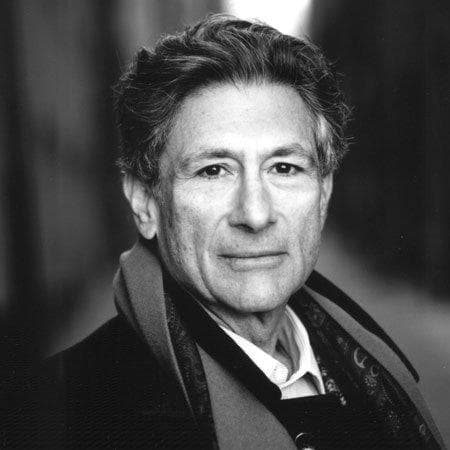
About the author