BookBrief
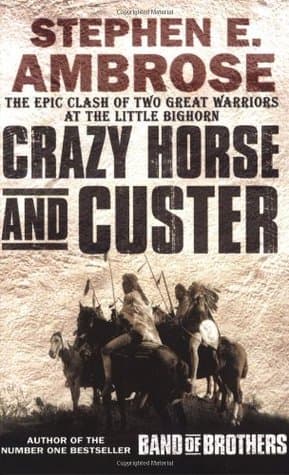
Crazy Horse and Custer cover
Archivist's Choice

Crazy Horse and Custer

Stephen E. Ambrose (1975)

Genre

Biography / History

Reading Time

15-20 hours

Key Themes

See below

Track Your Reading

Sign in to track this book

Ambrose connects the lives of General Custer and Crazy Horse, showing their collision on the plains of the Little Bighorn.

Core Idea

Stephen E. Ambrose's "Crazy Horse and Custer" traces the lives of George Armstrong Custer and Crazy Horse, ending with their encounter at the Little Bighorn. The book shows how their upbringings, values, leadership, and decisions, though different, were shaped by 19th-century America. Their clash became a tragic, almost fated result of westward expansion and Native American resistance. Ambrose explains how both men represented their cultures' fighting traditions, leading to a conflict driven by Custer's ambition and the Lakota's defense of their lands and way of life.
Reading time
15-20 hours
Difficulty
Medium
✓ Read this if...
You are fascinated by the American West, military history, or the complex, often tragic, interactions between Native American tribes and the U.S. government, and want a dual biography of two pivotal figures leading up to the Battle of Little Bighorn.
✗ Skip this if...
You prefer a purely academic or decolonized perspective on Native American history, or you are looking for a quick overview rather than a detailed, character-driven historical narrative.

Core idea

The central argument and framework that powers the entire book.

Stephen E. Ambrose's "Crazy Horse and Custer" traces the lives of George Armstrong Custer and Crazy Horse, ending with their encounter at the Little Bighorn. The book shows how their upbringings, values, leadership, and decisions, though different, were shaped by 19th-century America. Their clash became a tragic, almost fated result of westward expansion and Native American resistance. Ambrose explains how both men represented their cultures' fighting traditions, leading to a conflict driven by Custer's ambition and the Lakota's defense of their lands and way of life.

At a glance

Reading time

15-20 hours

Difficulty

Medium

Read this if...

You are fascinated by the American West, military history, or the complex, often tragic, interactions between Native American tribes and the U.S. government, and want a dual biography of two pivotal figures leading up to the Battle of Little Bighorn.

Skip this if...

You prefer a purely academic or decolonized perspective on Native American history, or you are looking for a quick overview rather than a detailed, character-driven historical narrative.

Key Takeaways

1

Parallel Paths to Collision

Two lives, shaped by vastly different cultures, were destined for a violent convergence.

Quote

The story of Crazy Horse and Custer is not merely the tale of two men, but the clash of two civilizations.

Ambrose creates a dual narrative, showing how Crazy Horse and Custer's early experiences, though different, both involved a warrior mindset. Custer, from West Point and the Civil War, sought glory and advancement in the military. Crazy Horse, a Lakota leader, earned respect through courage, spiritual power, and dedication to his people. Their characters, ambitions, and views of war reflected their societies. This set them on a collision course, representing the conflict between Manifest Destiny and Indigenous sovereignty. Understandin...

Supporting evidence

Ambrose details Custer's rapid rise through the Union ranks during the Civil War, contrasting it with Crazy Horse's quiet, but proven, leadership in intertribal conflicts and early skirmishes with white settlers, such as the Fetterman Fight.

Apply this

When analyzing historical conflicts, consider the individual and societal motivations of all key players, recognizing that seemingly disparate paths can lead to a shared, often violent, outcome.

manifest-destinyindigenous-sovereigntywarrior-ethosdual-biography
2

Custer's Ambition: A Double-Edged Sword

His relentless pursuit of glory fueled both his successes and ultimate downfall.

Quote

Custer was a man driven by ambition, a trait that made him a hero in one war and a casualty in another.

George Armstrong Custer was ambitious, which helped him in the Civil War, earning him the name 'Boy General.' However, Ambrose suggests this ambition, combined with self-confidence and a disregard for caution, became his flaw on the Western plains. His desire for a decisive victory to boost his reputation and possibly a political career often overshadowed good tactical judgment. This drive led him to underestimate his enemies, divide his forces, and miscalculate the strength of the Lakota and Cheyenne warriors at Little Bighorn. His s...

Supporting evidence

Ambrose recounts Custer's impetuous charges during the Civil War, often against superior numbers, and details his controversial decision to divide his 7th Cavalry regiment just before engaging the massive Native American encampment at Little Bighorn.

Apply this

Leaders should cultivate self-awareness to recognize when ambition might be clouding judgment, seeking diverse perspectives and prioritizing caution over impulsive glory-seeking.

military-strategyleadership-failurehubrisbattle-of-little-bighorn
3

Crazy Horse: The Reluctant, Spiritual Warrior

His power stemmed from spiritual vision and a quiet dedication to his people, not personal glory.

Quote

Crazy Horse was a man of few words, whose power lay not in his oratory, but in his unwavering resolve and the spiritual strength that guided his actions.

Crazy Horse, unlike Custer, avoided personal praise. He led by example and through his spiritual connection to the land and his people. Ambrose explains that Crazy Horse's strength came from his visions, which supposedly made him safe from bullets in battle and guided his tactics. He was not a chief by birthright like Custer was an officer. He earned his status through bravery, strategy, and a commitment to preserving the Lakota way of life. His quiet focus on collective survival, not individual fame, made him a principled opponent, r...

Supporting evidence

Ambrose describes Crazy Horse's famous 'No-Shot' vision, which he believed granted him protection in battle, and his consistent refusal to engage in peace talks that would compromise Lakota sovereignty.

Apply this

True leadership can emerge from quiet strength and spiritual conviction, prioritizing the well-being of the collective over individual recognition.

lakota-culturespiritual-leadershipindigenous-resistancenative-american-history
4

The Fetterman Fight: A Precursor to Little Bighorn

Early encounters revealed the devastating effectiveness of Native American tactics against unprepared U.S. forces.

Quote

The Fetterman Fight was a chilling prophecy of what could happen when American arrogance met the disciplined fury of the Plains warriors.

Ambrose points to the Fetterman Fight (1866) as a warning the U.S. military should have heeded. Captain William J. Fetterman, claiming he could ride through the Sioux nation with 80 men, led his command into an ambush by Crazy Horse and other Lakota and Cheyenne leaders. The entire command was destroyed. This battle showed the Plains warriors' tactical skill, their knowledge of the land, and their ability to trap an enemy. It also showed the U.S. Army's tendency to underestimate their enemies and rely on conventional tactics ill-suite...

Supporting evidence

Ambrose details the coordinated ambush by Crazy Horse and other leaders that annihilated Fetterman's command near Fort Phil Kearny, emphasizing the strategic use of decoys and overwhelming force.

Apply this

Always thoroughly analyze past failures and adapt strategies based on the capabilities of your adversary and the unique environment, rather than relying on outdated assumptions.

military-tacticsfrontier-warfarehistorical-precedentnative-american-tactics
5

The Gold Rush and Treaty Violations

The insatiable pursuit of resources irrevocably broke treaties and ignited widespread conflict.

Quote

Gold, more than anything else, was the catalyst that shattered the fragile peace and set the stage for total war.

Ambrose states that the discovery of gold in the Black Hills, sacred land guaranteed to the Lakota by the 1868 Treaty of Fort Laramie, caused the final conflict. The U.S. government's inability or unwillingness to control prospectors, followed by attempts to buy or seize the land, showed disrespect for treaty obligations and Indigenous rights. This violation of an agreement strengthened the Lakota and Cheyenne's resolve to fight. They saw their sacred lands and way of life directly threatened. The gold rush changed an uneasy peace int...

Supporting evidence

Ambrose details Custer's 1874 expedition into the Black Hills, which confirmed the presence of gold and directly led to the influx of miners, violating the Fort Laramie Treaty.

Apply this

Recognize how economic incentives and resource scarcity often drive conflict, and how the breaking of agreements can escalate tensions into open warfare.

black-hills-gold-rushtreaty-violationsresource-conflictfort-laramie-treaty
6

The Battle of Little Bighorn: A Tactical Disaster for Custer

Overconfidence, poor intelligence, and divided forces led to Custer's complete annihilation.

Quote

At Little Bighorn, Custer made every mistake a commander could make, and the Lakota and Cheyenne capitalized on every single one.

Ambrose describes the Battle of Little Bighorn as a result of Custer's tactical errors. His decision to divide his 7th Cavalry into three battalions and send them against an unknown enemy force was a mistake. He failed to scout the large encampment, underestimated the number and fighting skill of the warriors, and ignored warnings from his Crow and Arikara scouts. The terrain, combined with the numbers and tactics of Crazy Horse, Sitting Bull, and Gall, allowed Native American forces to surround and destroy Custer's immediate command....

Supporting evidence

Ambrose meticulously reconstructs the battle, detailing Custer's orders to Major Reno and Captain Benteen to engage separate parts of the village, effectively isolating his own command, and the subsequent encirclement by Crazy Horse's warriors.

Apply this

In any high-stakes situation, prioritize thorough reconnaissance, maintain unity of command, and never underestimate your adversary, regardless of past successes.

military-historybattlefield-analysiscuster's-last-standlakota-victory
7

The Aftermath: Pyrrhic Victory and Unjust Endings

Little Bighorn, though a Native American victory, ultimately hastened their subjugation.

Quote

The triumph at Little Bighorn was a glorious, yet ultimately tragic, flash of defiance in the face of an unstoppable tide.

While Little Bighorn was a victory for the Lakota and Cheyenne, Ambrose says it was a costly one. The U.S. government responded with an intense military campaign, fueled by public anger over Custer's death. The unity of the Native American tribes, which had made the victory possible, began to break under pressure, starvation, and constant pursuit by the army. Crazy Horse, despite continued resistance, eventually surrendered due to his people's dire conditions. His assassination while resisting imprisonment shows the brutal nature of U...

Supporting evidence

Ambrose details the subsequent winter campaigns by General Terry and Crook, the dwindling resources of the Native Americans, and Crazy Horse's surrender at Fort Robinson in 1877, followed by his fatal stabbing.

Apply this

Understand that even significant victories can lead to long-term strategic losses if they provoke a more powerful adversary into an overwhelming response.

pyrrhic-victoryreservation-systemnative-american-subjugationcrazy-horse-death
8

The Enduring Legacy of Myth and Memory

Both men became symbols, their true histories often obscured by national narratives and romanticized legends.

Quote

History, especially that of the American West, is often less about what happened and more about what people choose to remember and how they choose to tell it.

Ambrose examines how Custer and Crazy Horse became symbols. Custer became a martyred hero for white America, his defeat romanticized as 'Custer's Last Stand,' which overlooked his tactical failures and injustices to Native Americans. Crazy Horse, though initially demonized, became an icon of Indigenous resistance and pride, his stoicism and bravery celebrated. The book shows how these legends often distort the men and the conflict. Ambrose aims to remove these myths to present a more accurate portrayal of two figures whose legacies st...

Supporting evidence

Ambrose discusses the immediate public reaction to Custer's death, leading to countless dime novels and paintings that glorified his 'heroic' last stand, contrasting it with the slow, deliberate process of recognizing Crazy Horse's historical significance.

Apply this

Critically analyze historical narratives and popular myths, seeking out diverse perspectives and primary sources to uncover the full, often uncomfortable, truth behind iconic figures and events.

historical-revisionismamerican-mythologycultural-memoryhero-worship
9

The Inevitable Clash of Cultures

The conflict was not just between individuals but between fundamentally irreconcilable worldviews.

Quote

The collision at Little Bighorn was the tragic culmination of two civilizations that simply could not coexist on the same land, under the same terms.

Beyond individual biographies, Ambrose shows that the story of Crazy Horse and Custer is about irreconcilable cultural conflict. The U.S. government's vision of westward expansion, land ownership, and farming conflicted with the nomadic, communal, and spiritual connection to the land held by the Lakota and Cheyenne. There was no common ground when one side sought to 'civilize' and settle, and the other sought to preserve its ancestral way of life and sacred territories. This incompatibility, worsened by broken treaties and a lack of u...

Supporting evidence

Ambrose contrasts the U.S. government's policy of forcing Native Americans onto reservations to become farmers with the Lakota's deep cultural and spiritual reliance on buffalo hunting and their nomadic lifestyle.

Apply this

Recognize that many historical and contemporary conflicts arise from fundamental clashes of values, beliefs, and economic systems, requiring deep empathy and understanding to bridge divides, if possible.

cultural-clashwestward-expansionindigenous-rightsclash-of-civilizations
10

Leadership Styles Under Fire

Different approaches to command and loyalty shaped their respective fates.

Quote

One led by decree and ambition, the other by quiet example and spiritual conviction. Both faced the ultimate test of leadership.

Ambrose compares the leadership styles of Custer and Crazy Horse, showing how their approaches affected their followers and their fates. Custer, from a formal military hierarchy, commanded through rank, charisma, and a reputation for bold action. His men were subject to his impulsive decisions. Crazy Horse led through proven bravery, strategic skill, and the spiritual respect he earned from his people. His authority was earned, not given, and his decisions were often made with other leaders for the common good. At Little Bighorn, the ...

Supporting evidence

Ambrose describes Custer's tendency to operate independently and sometimes disregard superior orders, contrasting it with Crazy Horse's collaborative leadership with Sitting Bull and Gall, and his personal participation in the most dangerous parts of battles.

Apply this

Evaluate leadership effectiveness not just by individual charisma or rank, but by the ability to foster unity, adapt to changing circumstances, and inspire genuine loyalty through example and shared purpose.

leadership-stylesmilitary-leadershipnative-american-leadershipcommand-and-control

Critical analysis

Notable Quotes

Custer’s greatest fault was his inability to grasp the concept that other people were as brave as he was.

Ambrose's analysis of Custer's character and leadership flaws leading up to the Little Bighorn.

Crazy Horse fought not for glory, not for conquest, not for power, but for a way of life, for his people, for the earth.

Ambrose contrasting Crazy Horse's motivations with those of Custer and other military figures.

The frontier was a place where two cultures collided, each convinced of its own righteousness, each unwilling to compromise.

Ambrose's overarching theme about the inevitable conflict between Native Americans and white settlers.

It was a war of extermination, not always intended, but often the result.

Describing the grim reality and consequences of the Indian Wars.

Custer, for all his dash and bravado, was a man who often failed to consider the consequences of his actions.

Another critical assessment of Custer's strategic and personal shortcomings.

Crazy Horse embodied the spirit of resistance, a spirit that refused to be broken, even in the face of overwhelming odds.

Highlighting Crazy Horse's enduring legacy as a symbol of defiance.

The plains Indians were masters of guerrilla warfare, a fact the U.S. Army learned again and again, usually at great cost.

Explaining the tactical prowess of Native American warriors against the conventional army.

To understand Custer, one must understand ambition, for it drove him more than any other single force.

Ambrose delving into the primary motivator behind Custer's career and choices.

The tragedy of the Little Bighorn was not just Custer's defeat, but the loss of a way of life for the Lakota.

Broadening the scope of the Little Bighorn's significance beyond just the military outcome.

Crazy Horse’s silence was as eloquent as Custer’s boastful pronouncements.

Contrasting the personalities and communication styles of the two main figures.

The buffalo, more than any treaty, defined the existence of the Plains Indians.

Emphasizing the central role of the buffalo in Native American culture and survival.

History, like life, is full of ironies, and few are more striking than the fates of Custer and Crazy Horse.

Ambrose reflecting on the contrasting destinies and historical significance of the two men.

The land itself was a character in this drama, shaping the lives and battles of all who lived upon it.

Highlighting the environmental and geographical influences on the historical events.

Neither Custer nor Crazy Horse could truly comprehend the world of the other, leading to inevitable misunderstanding and conflict.

Explaining the fundamental lack of empathy and cross-cultural understanding between the two sides.

Quiz

Test Your Knowledge

Ready to see how well you understood this book? Take our interactive quiz with 10 questions.

10
Questions
~5
Minutes
?
Best Score

Key Questions (FAQ)

'Crazy Horse and Custer' by Stephen E. Ambrose is a dual biography exploring the lives of two iconic 19th-century warriors, General George Armstrong Custer and the Lakota leader Crazy Horse. The book traces their parallel paths, culminating in their fateful confrontation at the Battle of Little Bighorn.

About the author