BookBrief
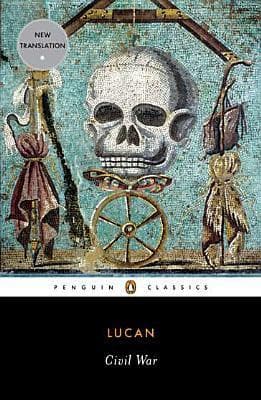
Civil War cover
Archivist's Choice

Civil War

Marcus Annaeus Lucanus (1960)

Genre

History

Reading Time

15-20 hours (for a thorough reading and analysis, given its poetic nature and length)

Key Themes

See below

Track Your Reading

Sign in to track this book

Julius Caesar and Pompey the Great tear the Roman Republic apart in a brutal, bloody struggle that shatters law, order, and the soul of a civilization.

Core Idea

Lucan's 'Civil War' is an epic and critical account of the conflict between Caesar and Pompey. It shows the war not as a heroic fight, but as a catastrophic wound Rome inflicted on itself. The book argues that unchecked ambition (Caesar) and an inability to adapt to new power dynamics (Pompey) led to the Republic's violent end, plunging Rome into a nightmare. Lucan highlights the moral decay, the lack of true heroes, and the gods' indifference, suggesting this war set Rome on a path to imperialism, with a deep loss of liberty and a lasting legacy of horror.
Reading time
15-20 hours (for a thorough reading and analysis, given its poetic nature and length)
Difficulty
Hard
✓ Read this if...
You are interested in an epic, albeit bleak, poetic interpretation of the Roman Civil War, focusing on its moral and political implications from a decidedly anti-imperial perspective. Ideal for those who appreciate detailed rhetorical analysis and a strong authorial voice lamenting the fall of the Republic.
✗ Skip this if...
You are looking for a straightforward historical narrative, a celebratory account of Roman power, or a story with clear-cut heroes and villains. This is not a light read and its poetic style can be dense for those unfamiliar with epic poetry.

Core idea

The central argument and framework that powers the entire book.

Lucan's 'Civil War' is an epic and critical account of the conflict between Caesar and Pompey. It shows the war not as a heroic fight, but as a catastrophic wound Rome inflicted on itself. The book argues that unchecked ambition (Caesar) and an inability to adapt to new power dynamics (Pompey) led to the Republic's violent end, plunging Rome into a nightmare. Lucan highlights the moral decay, the lack of true heroes, and the gods' indifference, suggesting this war set Rome on a path to imperialism, with a deep loss of liberty and a lasting legacy of horror.

At a glance

Reading time

15-20 hours (for a thorough reading and analysis, given its poetic nature and length)

Difficulty

Hard

Read this if...

You are interested in an epic, albeit bleak, poetic interpretation of the Roman Civil War, focusing on its moral and political implications from a decidedly anti-imperial perspective. Ideal for those who appreciate detailed rhetorical analysis and a strong authorial voice lamenting the fall of the Republic.

Skip this if...

You are looking for a straightforward historical narrative, a celebratory account of Roman power, or a story with clear-cut heroes and villains. This is not a light read and its poetic style can be dense for those unfamiliar with epic poetry.

Key Takeaways

1

The Republic's Self-Inflicted Wound

Lucan's epic is a lament for a Rome that chose self-destruction over shared governance.

Quote

The Roman state, once a beacon of law and order, became its own executioner, tearing itself apart in a frenzy of ambition and violence.

Lucan shows the Roman Civil War not as a noble fight, but as a tragic, almost suicidal act by the Republic. He highlights the internal breakdown of civic virtue and traditional Roman values that caused the conflict. The war was more than a clash of armies; it was a deep moral failure, where individual power mattered more than the state's good. This internal rot, more than any outside threat, sealed the Republic's fate, leading to the imperial era and forever changing Roman civilization. Lucan's work is a powerful warning about how fra...

Supporting evidence

Lucan's narrative consistently highlights the unnaturalness of Romans fighting Romans, frequently employing imagery of matricide and sacrilege to describe the conflict, such as the desecration of the natural order when brothers fight brothers.

Apply this

Modern societies can learn from Rome's descent into civil war by prioritizing dialogue, compromise, and the rule of law over partisan division and the unchecked pursuit of power, recognizing that internal cohesion is paramount for long-term stability.

republican-collapsecivic-virtueinternal-strife
2

Caesar: The Destructive Force of Ambition

Lucan paints Julius Caesar as a ruthless, almost demonic, figure driven by insatiable personal ambition.

Quote

Caesar, a force of nature, driven by an insatiable lust for power, saw no obstacle too sacred to overcome, no law too strong to break.

Unlike many accounts that might praise Caesar, Lucan's portrayal is sharply critical. He shows Caesar not as a hero, but as the embodiment of destructive ambition, a man who willingly broke the established order for personal gain. His crossing of the Rubicon is shown as an unholy act, a deliberate violation of the Republic's laws and traditions. Lucan emphasizes Caesar's speed, his relentless drive, and his disregard for human life and legal rules, making him the main cause of the catastrophic war. This view offers a strong counter to...

Supporting evidence

Lucan describes Caesar as 'lightning' and 'a force of nature' that sweeps away all in its path, emphasizing his destructive speed and lack of moral restraint when he crosses the Rubicon and invades Italy.

Apply this

Leaders should reflect on the dangers of unchecked ambition, understanding that the pursuit of personal glory at the expense of established norms and the well-being of the populace can lead to societal breakdown.

julius-caesarunchecked-ambitiontyranny
3

Pompey: The Fading Echo of Republicanism

Pompey the Great, though flawed, represents the last, desperate stand of the old Republic against imperial ambition.

Quote

Pompey, once the darling of fortune, stood as the last, weary defender of a freedom already doomed, a Republic on its deathbed.

Lucan shows Pompey as a more sympathetic, though tragic, figure than Caesar. He is the defender of the Republic, though flawed, representing Rome's fading glory and traditional values. Pompey's fight against Caesar is a fight for liberty and the established order, even if his own past actions contributed to the instability. His eventual defeat and assassination symbolize the final end of the Republican ideal. Lucan uses Pompey to highlight the lost cause, the noble but ultimately useless effort to save a system that was already crumbl...

Supporting evidence

Lucan frequently refers to Pompey as 'the Great' but often with a sense of past glory, emphasizing his former triumphs but his current inability to match Caesar's vigor. His flight and eventual murder in Egypt underscore his tragic end.

Apply this

It's crucial to identify and support leaders who genuinely prioritize democratic institutions and collective well-being, even when faced with overwhelming forces of authoritarianism, understanding that the fight for principles is often an uphill battle.

pompey-the-greatrepublican-defensetragic-hero
4

The Gods' Indifference and Rome's Fate

Lucan frequently questions divine providence, suggesting the gods were either absent or actively hostile to Rome's plight.

Quote

The heavens watched in silence, or perhaps with cruel amusement, as Rome tore out its own heart, a testament to a fate unguided by benevolent gods.

A striking part of Lucan's epic is the almost complete absence of divine help, a sharp contrast to earlier epics like Virgil's Aeneid. Instead of gods guiding heroes, Lucan shows a universe largely uncaring about human suffering, or perhaps even involved in Rome's destruction. This absence increases the horror of the civil war, emphasizing that Romans alone caused their own downfall. It brings a sense of dread and highlights the deep moral emptiness that allowed such terrible acts. The gods, if they exist, are either powerless or unwi...

Supporting evidence

Unlike Homer or Virgil, Lucan rarely invokes specific gods directly influencing battles or outcomes. Instead, he often makes cynical remarks about Fortune or Fate, suggesting a predetermined, grim destiny rather than divine guidance.

Apply this

Societies should recognize that ultimate responsibility for their actions and fate rests with themselves, rather than relying on external forces or divine intervention, fostering a proactive approach to preventing conflict and promoting justice.

divine-indifferencefate-vs-free-willmoral-vacuum
5

The Horror of Fratricide

Lucan emphasizes the unnatural and devastating horror of Romans fighting fellow Romans.

Quote

No foreign foe ever inflicted such wounds upon Rome as Rome inflicted upon herself, brother against brother, father against son.

A main part of Lucan's story is the deep tragedy of civil war as Romans killing Romans. He constantly highlights the horror of countrymen turning on each other, tearing apart families, friendships, and society itself. This is not just a political conflict; it is a moral wrong. Images of 'unholy' hands, of Roman blood staining Roman soil, fill the text, emphasizing the deep trauma inflicted on the people. This focus on internal destruction lifts the conflict beyond mere military strategy to a deep comment on the self-destructive nature...

Supporting evidence

Lucan explicitly describes the 'impious war' where 'kinsmen' clash, and uses metaphors of the state consuming its own children, such as the gruesome descriptions of the battlefields littered with Roman dead.

Apply this

Understanding the profound psychological and societal damage of internal conflict should compel societies to prioritize peaceful resolution mechanisms and foster a strong sense of national unity and shared identity to prevent such self-inflicted wounds.

civil-war-traumafratricidesocietal-breakdown
6

Rhetoric as a Weapon

Lucan's own rhetorical brilliance mirrors the powerful, often manipulative, speeches that fueled the conflict.

Quote

Words, sharper than swords, carved the path to ruin, igniting hearts with false promises and fueling the flames of war.

Lucan, a master of rhetoric, shows how language and persuasion were key to the civil war. The speeches of Caesar and Pompey, whether real or imagined, are presented as powerful tools for gathering support, making opponents look evil, and justifying violence. This shows the power of rhetoric not just to inform, but to incite and manipulate. Lucan's own dense, often exaggerated style reflects the intensity and moral urgency of the conflict, making the poem a performance that pulls the reader into the emotional and ideological storm of t...

Supporting evidence

The extensive, often lengthy, speeches attributed to Caesar and Pompey throughout the epic, where they articulate their justifications and condemnations, serve as prime examples of rhetoric's role in the conflict.

Apply this

Individuals should critically evaluate the rhetoric used by leaders and media, discerning between genuine arguments and manipulative language designed to provoke division or justify harmful actions, fostering media literacy and critical thinking.

political-rhetoricpropagandapersuasion
7

The Path to Imperialism

The Civil War irrevocably paved the way for the imperial monarchy, ending the Republic's dream.

Quote

From the ashes of the Republic rose the shadow of a single ruler, a testament to the war's ultimate, irreversible conclusion.

Lucan's epic, written under Nero, understands the civil war's outcome: the end of the Republic and the start of the imperial age. He shows the conflict as the necessary, though tragic, start to the monarchy. The breakdown of law and order, the concentration of power in military commanders like Caesar, and the people's exhaustion all created an environment ready for a single ruler. The war, then, is not just a historical event but a foundational moment in Roman history, marking a clear shift in government and identity. Lucan, through h...

Supporting evidence

The poem's very existence under an emperor, and Lucan's frequent allusions to the 'new age' or 'new masters' despite focusing on the Republican era, subtly reinforce the historical outcome.

Apply this

Societies must be vigilant about the erosion of democratic institutions and the gradual concentration of power, recognizing that historical shifts towards authoritarianism often begin with internal strife and a weakening of established checks and balances.

roman-empireauthoritarianismrepublic-fall
8

Moral Ambiguity and the Absence of True Heroes

Lucan refuses to present clear heroes, instead showcasing the moral compromises and flaws of all parties.

Quote

In a war where Rome fought Rome, no hand remained unblemished, no heart entirely pure. All were stained by the crimson tide.

One of Lucan's most compelling qualities is his refusal to offer simple moral judgments or traditional epic heroes. Caesar is a destructive force, but Pompey, while defending the Republic, is an aging, somewhat ineffective figure whose past actions contributed to the instability. Even minor characters often face morally difficult choices. This moral uncertainty reflects the complexity and tragedy of civil conflict, where good and evil are not clearly separated, and everyone involved is part of the unfolding disaster. It forces the rea...

Supporting evidence

Lucan consistently highlights the flaws of both Caesar (ruthless ambition) and Pompey (past political miscalculations, indecisiveness) and avoids portraying any character as a truly virtuous, unblemished champion.

Apply this

When analyzing historical or contemporary conflicts, it's crucial to resist the urge to simplify narratives into clear heroes and villains, instead seeking to understand the complex motivations, flaws, and moral compromises of all involved parties.

moral-relativismanti-herohistorical-complexity
9

The Weight of History's Judgment

Lucan's epic serves as a powerful historical judgment, condemning the actions that led to the Republic's fall.

Quote

Let future ages read of this madness, and tremble, lest they too invite the Furies to feast upon their own land.

Lucan writes with the full benefit of knowing the civil war's tragic outcome and its later impact on Roman history. His work is not just a retelling of events but a deep historical judgment, a lament filled with the understanding of what was lost. He implicitly and sometimes explicitly condemns the ambition, arrogance, and violence that destroyed the Republic. The poem acts as a warning, a cautionary tale for future generations about the dangers of internal conflict and the irreversible consequences of putting individual power before ...

Supporting evidence

Lucan's opening lines lament the 'impious war' and its consequences, immediately setting a tone of condemnation rather than glorification. His frequent appeals to 'posterity' and the historical record reinforce this judgmental stance.

Apply this

Societies should engage deeply with their historical narratives, learning from past mistakes and actively working to prevent the recurrence of self-destructive patterns, fostering a sense of collective memory and responsibility.

historical-condemnationcautionary-talecollective-memory

Critical analysis

Notable Quotes

The victor's cause was pleasing to the gods, but the vanquished's to Cato.

Reflecting on the Roman Civil War, contrasting divine favor with moral rectitude.

What madness, citizens, what monstrous lust for war has seized you?

An impassioned plea to the Roman people, lamenting the outbreak of civil war.

Rome herself, with her own hands, prepares to pluck out her own eyes.

A vivid metaphor for the self-destructive nature of the Roman Civil War.

For the victor, life; for the vanquished, death. This is the law of war.

A stark summary of the brutal realities and consequences of warfare.

No peace can be bought with blood, nor liberty with gold.

A commentary on the futility of trying to achieve lasting peace or freedom through corrupt means.

Fortune is not so blind as not to know how to favor the brave.

An observation on the role of courage and fortune in determining outcomes.

The gods themselves are not so powerful as to undo the past.

A reflection on the irreversibility of past events and actions.

Ambition, the last infirmity of noble minds.

A critical remark on the corrupting influence of ambition, even on the seemingly virtuous.

The greatest crime is to wage war against one's own country.

A condemnation of civil war as the ultimate betrayal of one's homeland.

Better to die free than to live a slave.

A declaration of the preference for death over servitude, a common theme in Roman thought.

When two great powers contend, the lesser must fall.

An observation on the inevitable consequences for weaker entities caught between major conflicts.

The sword alone decides the fate of nations.

Emphasizing the ultimate role of military force in shaping history and political outcomes.

No man can truly be called happy until he is dead.

A stoic or pessimistic view on the transient nature of happiness in life.

Fortune favors the bold, but justice favors the just.

Contrasting the randomness of fortune with the moral imperative of justice.

Quiz

Test Your Knowledge

Ready to see how well you understood this book? Take our interactive quiz with 10 questions.

10
Questions
~5
Minutes
?
Best Score

Key Questions (FAQ)

Lucan's 'Civil War' is an epic poem that chronicles the brutal power struggle between Julius Caesar and Pompey the Great, which ultimately led to the downfall of the Roman Republic and the rise of imperial monarchy. It vividly portrays the societal breakdown and violence that marked this transformative period in Roman history.

About the author