BookBrief
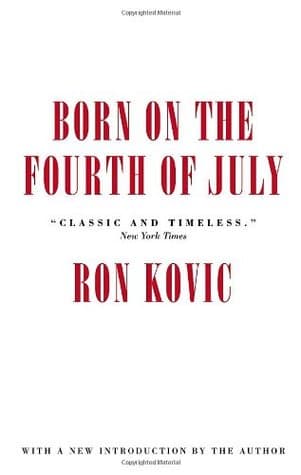
Born on the Fourth of July cover
Archivist's Choice

Born on the Fourth of July

Ron Kovic (1976)

Genre

Biography / Memoir / History

Reading Time

4-6 hours

Key Themes

See below

Track Your Reading

Sign in to track this book

Ron Kovic's life changed after a battlefield injury, taking him from a patriotic soldier eager to fight in Vietnam to a wheelchair and the national stage as a strong voice against the war he once supported.

Core Idea

Ron Kovic's "Born on the Fourth of July" is a firsthand account of the deep disappointment and physical and psychological damage the Vietnam War caused an ardent patriot. Kovic tells his story from being a flag-waving young man ready to fight for his country to a paralyzed veteran facing poor care, public indifference, and the war's moral failings. The book argues that the patriotic ideals used to recruit soldiers were a cruel pretense, ruining lives and leaving survivors with hidden wounds and a feeling of betrayal by the nation they served.
Reading time
4-6 hours
Difficulty
Medium
✓ Read this if...
You want a raw, visceral, and deeply personal account of the physical and psychological toll of war, the disillusionment of patriotic idealism, and the struggles of veterans upon returning home. It's essential for understanding the Vietnam War's impact from a soldier's perspective and the genesis of the anti-war movement among veterans.
✗ Skip this if...
You are looking for a detached historical analysis of the Vietnam War, prefer to avoid graphic descriptions of combat and injury, or are uncomfortable with intense themes of suffering, betrayal, and social injustice.

Core idea

The central argument and framework that powers the entire book.

Ron Kovic's "Born on the Fourth of July" is a firsthand account of the deep disappointment and physical and psychological damage the Vietnam War caused an ardent patriot. Kovic tells his story from being a flag-waving young man ready to fight for his country to a paralyzed veteran facing poor care, public indifference, and the war's moral failings. The book argues that the patriotic ideals used to recruit soldiers were a cruel pretense, ruining lives and leaving survivors with hidden wounds and a feeling of betrayal by the nation they served.

At a glance

Reading time

4-6 hours

Difficulty

Medium

Read this if...

You want a raw, visceral, and deeply personal account of the physical and psychological toll of war, the disillusionment of patriotic idealism, and the struggles of veterans upon returning home. It's essential for understanding the Vietnam War's impact from a soldier's perspective and the genesis of the anti-war movement among veterans.

Skip this if...

You are looking for a detached historical analysis of the Vietnam War, prefer to avoid graphic descriptions of combat and injury, or are uncomfortable with intense themes of suffering, betrayal, and social injustice.

Key Takeaways

1

The Allure of Patriotic Idealism

Unquestioning patriotism can lead to devastating disillusionment.

Quote

I was born on the Fourth of July, 1946, and I remember when I was a little boy my mother told me that I was a special child, a special American, and that God had a plan for me.

Kovic's early life shows how deeply nationalistic feelings can be, especially in small-town America during the Cold War. Raised on John Wayne movies and Fourth of July parades, he took on a heroic view of military service, seeing it as the ultimate sign of masculinity and patriotism. This idealism, supported by family, community, and popular culture, created a strong pull towards the Vietnam War. Kovic truly believed he was fighting for freedom and democracy, a belief that made his later experiences even more shocking and his change s...

Supporting evidence

Kovic details his childhood in Massapequa, Long Island, where parades, Boy Scouts, and the perceived threat of communism shaped his worldview. He describes his eagerness to enlist in the Marines, viewing it as a rite of passage and a sacred duty.

Apply this

Question the dominant narratives presented by media and government, especially concerning military intervention. Seek out diverse perspectives and historical context before forming opinions on conflict and national duty. Encourage critical thinking in younger generations about patriotism and service.


patriotismidealismmilitary-servicedisillusionment
2

The Brutality of War's Reality

War shatters innocence and exposes the horrific gap between propaganda and experience.

Quote

There was no glory in this, only screams and the smell of blood and guts.

Kovic's clear descriptions of combat in Vietnam are a sharp contrast to his childhood fantasies. He tells of the chaotic, terrifying, and morally unclear nature of guerrilla warfare, where the enemy is often unseen and the lines between soldier and civilian are blurred. The psychological cost of constant fear, the awful injuries, and the pointless violence fundamentally change his view of heroism and purpose. This part of the memoir is important for understanding the immediate impact of war, moving beyond abstract political talks to t...

Supporting evidence

Kovic recounts specific incidents, such as witnessing the deaths of fellow soldiers, the fear during ambushes, and the tragic friendly-fire incident where he accidentally killed a member of his own platoon, a moment that haunted him deeply.

Apply this

Seek out first-hand accounts and histories of war to gain a more accurate understanding of its true nature. Support initiatives that prioritize peace and diplomatic solutions over military intervention. Advocate for robust mental health support for veterans.

war-traumacombat-experiencedisillusionmentviolence
3

The Invisible Wounds of Survival

Physical injury is only one facet of war's lasting damage; psychological scars run deeper.

Quote

I had given my legs to my country, but I had lost my soul.

Kovic's severe spinal cord injury, which leaves him paralyzed, is a life-changing event. However, the book strongly shows that his physical wounds are closely tied to deep psychological and emotional trauma. His return to an indifferent and often hostile America, combined with the loss of his physical abilities, causes strong feelings of anger, shame, and despair. The struggle to connect his pre-war identity with his post-war reality, along with the guilt over his actions in Vietnam, highlights the complex and often hidden burdens vet...

Supporting evidence

Kovic details his experiences in overcrowded and understaffed VA hospitals, the indignities of his physical condition, and his struggles with impotence, alcoholism, and suicidal thoughts upon returning home.

Apply this

Recognize that veterans' needs extend far beyond physical rehabilitation. Advocate for improved funding and resources for mental health services, counseling, and peer support programs for veterans. Practice empathy and understanding towards those who have experienced trauma.

PTSDveterans-affairsdisabilitymental-health
4

The Betrayal of the Homefront

Returning veterans often face indifference or hostility, deepening their sense of alienation.

Quote

I had come home, but it wasn't home anymore. I was a stranger in my own country.

One of the most painful parts of Kovic's story is the sharp difference between the hero's welcome he expected and the reality of his return. Instead of thanks, he finds a society deeply divided by the war, often putting its anger and frustration onto returning soldiers. This rejection, combined with poor medical care and a lack of understanding, adds to his trauma. The gap between his sacrifice and the public's view of the war fuels his rage and feeling of betrayal. This experience is not unique to Kovic but reflects the wider challen...

Supporting evidence

Kovic describes being spat on, called 'baby killer,' and facing general apathy or discomfort from civilians. He also details the poor conditions and lack of respect he encountered in VA hospitals.

Apply this

Separate the war from the warrior. Regardless of political views on a conflict, support and respect those who serve. Advocate for better social and economic reintegration programs for all veterans, ensuring they receive the care and respect they deserve.

veterans-rightssocial-reintegrationpublic-perceptionalienation
5

Transformation Through Protest

Personal suffering can be a powerful catalyst for political awakening and activism.

Quote

I had gone from being a good American boy to a radical, and I was proud of it.

Kovic's journey from a strong patriot to an outspoken anti-war activist is the main part of his change. His personal suffering, along with his growing awareness of the war's pointlessness and unfairness, makes him put his anger into a larger cause. His disability, at first a source of shame, becomes a strong symbol of the war's cost, giving his voice unique moral authority. This shift shows how deep personal experience can lead to a complete re-evaluation of one's beliefs and a commitment to social change. Kovic's activism was not jus...

Supporting evidence

Kovic recounts his involvement with Vietnam Veterans Against the War (VVAW), his participation in protests, and his dramatic confrontations with political figures, including his famous protest at the Republican National Convention in 1972.

Apply this

Recognize the power of personal narrative in social movements. If passionate about an issue, find ways to make your voice heard, whether through advocacy, protest, or community organizing. Support organizations that empower marginalized voices to speak truth to power.

anti-war-movementactivismpolitical-awakeningsocial-justice
6

The Moral Cost of Conflict

War forces individuals to commit acts that deeply scar their conscience.

Quote

I had killed a man, a fellow American, by mistake. And no one would ever forgive me, especially myself.

Beyond the physical injuries, Kovic deals with deep moral injuries, especially the guilt over the friendly-fire incident. This event, where he accidentally killed a fellow Marine, haunts him constantly, showing the chaotic and morally unclear nature of combat. The book highlights how war can make people do things that go against their strong values, leaving a lasting mark on their conscience. This moral burden often goes unaddressed in post-war support, yet it is a key part of veterans' long-term psychological struggles. Kovic's strug...

Supporting evidence

Kovic repeatedly returns to the memory of the friendly-fire incident, describing the psychological torment and nightmares it caused him, and his desperate attempts to confess and seek absolution.

Apply this

Understand that the 'fog of war' can lead to tragic mistakes, and these actions carry immense psychological weight for those involved. Advocate for mental health services that specifically address moral injury and guilt in veterans. Promote restorative justice and reconciliation processes.

moral-injuryguiltconscienceredemption
7

Resilience in the Face of Adversity

The human spirit can find strength and purpose even in the deepest despair.

Quote

I was broken, but I was not defeated. I would live, and I would fight.

Despite the huge physical and psychological challenges Kovic faces, his story is one of remarkable resilience. His journey from suicidal despair to becoming a leading voice for peace shows an extraordinary ability for human endurance and change. His will to survive, to make sense of his suffering, and to turn it into meaningful action shows the power of the human spirit. This resilience is not presented as a simple win but as a hard-fought battle, full of setbacks and moments of deep struggle. Kovic's ability to find purpose in his pa...

Supporting evidence

Kovic's persistence in physical therapy, his determination to escape the confines of his hospital bed, and his unwavering commitment to the anti-war movement despite facing arrest and public hostility.

Apply this

Cultivate resilience by finding purpose in challenging experiences. Seek support networks and therapeutic interventions when facing trauma. Remember that healing is a process, and finding meaning can be a powerful motivator for recovery.

resiliencehealingpurposehope
8

The Enduring Legacy of War

The consequences of conflict reverberate for generations, shaping national identity.

Quote

The war was over, but it would never be over for me, or for America.

Kovic's memoir is not just a personal story but a key historical document that shows the lasting impact of the Vietnam War on American society. His experiences, and the public's reaction to them, reflect the deep divisions, moral reckoning, and changing national awareness that defined the era. The book argues that the 'Vietnam Syndrome' – a national hesitation to get involved in foreign military actions – was a direct result of the human cost and moral ambiguities the war exposed. Kovic's continued advocacy ensures that the lessons of...

Supporting evidence

The book's reception and continued relevance, as highlighted by contemporary endorsements, underscore its enduring impact on understanding the Vietnam War's legacy and its parallels to modern conflicts.

Apply this

Study history to understand the long-term consequences of military actions. Support initiatives for historical preservation and education about past conflicts. Engage in informed civic discourse about foreign policy and military intervention.

historical-memorynational-identitywar-legacyvietnam-syndrome
9

Finding Voice Through Vulnerability

Sharing personal pain can empower others and foster collective healing.

Quote

I had to tell my story, for all the men who couldn't, for all the ones who were still suffering in silence.

Kovic's choice to write 'Born on the Fourth of July' is an act of great vulnerability and courage. By openly sharing his most painful experiences – his physical wounds, psychological trauma, and moral struggles – he not only takes back his own story but also gives voice to countless other veterans who suffered in silence. The memoir is a strong example of the healing power of storytelling, turning personal agony into a public message that connects deeply with others. Kovic's willingness to expose his raw truth broke down barriers, cre...

Supporting evidence

The very existence of the book, its detailed and unflinching descriptions of his experiences, and its impact on public discourse and other veterans.

Apply this

Recognize the power of sharing personal stories for healing and advocacy. Create safe spaces for individuals to share their experiences, especially those related to trauma. Support authors and artists who use their platforms to bring difficult truths to light.

storytellingvulnerabilitycollective-healingempathy

Critical analysis

Notable Quotes

I was born on the Fourth of July, 1946, and growing up I used to love to stand with my dad and salute the flag.

Opening lines, establishing his patriotic upbringing and birthdate.

It was the war, it was the war that did it to him. It turned him into an animal.

Reflecting on the dehumanizing effects of war, particularly on his fellow soldiers.

I was an all-American kid, and I believed in my country, and I believed in the war.

Describing his initial fervent belief in the Vietnam War and his role in it.

I killed people. I killed people for this country.

A stark admission of his actions in Vietnam, highlighting the moral weight he carries.

I was paralyzed from the chest down. I would never walk again.

The brutal realization of his life-altering injury sustained in Vietnam.

They promised us glory, but they gave us wheelchairs.

A bitter reflection on the contrast between the promises made to soldiers and the reality of their post-war lives.

I had given my youth to my country, and now I was being treated like a cripple, an outcast.

Feeling abandoned and disrespected by the very nation he served.

I was a veteran, a paraplegic, and I was going to change things.

His determination to become an activist after experiencing the injustices faced by veterans.

We were fighting a war in Vietnam, and another war right here at home.

Comparing the conflict abroad with the struggle for recognition and care for veterans in the U.S.

The war was not over for me. It was just beginning.

Realizing that his personal battle with the war's aftermath was a lifelong struggle.

I knew what I had to do. I had to speak out.

His decision to use his voice and experiences to protest the war and advocate for peace.

I had been born on the Fourth of July, and I felt I had a right to speak my mind.

Connecting his birthdate and its patriotic symbolism to his right to dissent and protest.

I was a marine, and I had served my country. And now I was a man who hated war.

A powerful statement of transformation from a proud soldier to an anti-war activist.

We came home, and nobody cared. Nobody really gave a damn.

Expressing the feeling of abandonment and indifference experienced by many returning Vietnam veterans.

Quiz

Test Your Knowledge

Ready to see how well you understood this book? Take our interactive quiz with 10 questions.

10
Questions
~5
Minutes
?
Best Score

Key Questions (FAQ)

'Born on the Fourth of July' is Ron Kovic's memoir detailing his transformation from a patriotic young man who volunteered for service in Vietnam to a severely wounded veteran who became a prominent anti-war activist. It covers his battlefield injury, his experiences in veterans' hospitals, and his subsequent political awakening.

About the author