BookBrief
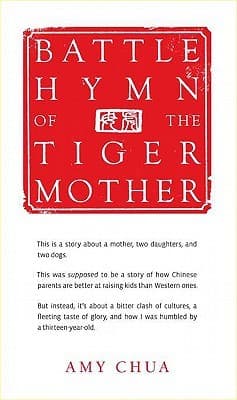
Battle Hymn of the Tiger Mother cover
Archivist's Choice

Battle Hymn of the Tiger Mother

Amy Chua (2011)

Genre

Biography / Memoir / Relationships

Reading Time

240 min

Key Themes

See below

Track Your Reading

Sign in to track this book

A Chinese-American mother starts a cultural debate by sharing her strict, no-playdate, all-piano-and-violin parenting style and the unexpected lessons it taught her.

Core Idea

Amy Chua's "Battle Hymn of the Tiger Mother" is a memoir that argues for the effectiveness of a strict, traditional Chinese parenting style over a more relaxed Western approach. Chua states that demanding academic and musical excellence, through consistent practice, high expectations, and firm guidance, builds resilience, self-discipline, and leads to greater achievement and self-esteem. She questions the Western focus on individual choice and comfort, suggesting that true love and preparation for success mean pushing children past their perceived limits, even if it means choosing long-term success over immediate happiness. The book describes Chua's experiences raising her two daughters, Sophia and Lulu, with these strict rules. It shows both the successes and the emotional challenges and rebellions that happened. It suggests that 'natural talent' often comes from intense effort and parental guidance, and that choosing discipline over comfort results in a stronger sense of self-worth from real accomplishments, not unearned praise.
Reading time
240 min
Difficulty
Easy
✓ Read this if...
You are a parent interested in exploring alternative, more authoritarian parenting styles, or you enjoy memoirs that challenge conventional wisdom and spark debate about cultural differences in child-rearing. You're open to controversial ideas about discipline, academic rigor, and the pursuit of excellence.
✗ Skip this if...
You are looking for a gentle, affirmation-focused parenting guide, or you are firmly against strict, highly demanding, or culturally insensitive parenting approaches. You prefer books that offer balanced perspectives rather than a strong, singular viewpoint.

Core idea

The central argument and framework that powers the entire book.

Amy Chua's "Battle Hymn of the Tiger Mother" is a memoir that argues for the effectiveness of a strict, traditional Chinese parenting style over a more relaxed Western approach. Chua states that demanding academic and musical excellence, through consistent practice, high expectations, and firm guidance, builds resilience, self-discipline, and leads to greater achievement and self-esteem. She questions the Western focus on individual choice and comfort, suggesting that true love and preparation for success mean pushing children past their perceived limits, even if it means choosing long-term success over immediate happiness.

The book describes Chua's experiences raising her two daughters, Sophia and Lulu, with these strict rules. It shows both the successes and the emotional challenges and rebellions that happened. It suggests that 'natural talent' often comes from intense effort and parental guidance, and that choosing discipline over comfort results in a stronger sense of self-worth from real accomplishments, not unearned praise.

At a glance

Reading time

240 min

Difficulty

Easy

Read this if...

You are a parent interested in exploring alternative, more authoritarian parenting styles, or you enjoy memoirs that challenge conventional wisdom and spark debate about cultural differences in child-rearing. You're open to controversial ideas about discipline, academic rigor, and the pursuit of excellence.

Skip this if...

You are looking for a gentle, affirmation-focused parenting guide, or you are firmly against strict, highly demanding, or culturally insensitive parenting approaches. You prefer books that offer balanced perspectives rather than a strong, singular viewpoint.

Key Takeaways

1

The 'Tiger Mother' Manifesto

Unwavering discipline and high expectations are paramount for success.

Quote

Chinese parents believe that the best way to protect their children is by preparing them for the future and arming them with skills, strong work habits, and inner confidence.

Chua's parenting, known as 'Tiger Mothering,' involves strict rules, intense academic and musical training, and avoiding activities seen as unimportant, like playdates or school plays. This method comes from a strong belief that children can achieve great things, and parents must push them to do so, even if it means choosing long-term success over short-term happiness. The main goal is to build discipline, resilience, and mastery in key skills, which will lead to real self-confidence and more opportunities. This differs greatly from W...

Supporting evidence

Chua's list of 'never allowed' activities for her daughters, including not being the #1 student in every subject (except gym and drama), not playing piano or violin, or not practicing instruments for hours daily.

Apply this

Parents can identify areas where they might be too permissive and consider introducing more structured routines or higher expectations in academic or skill-based pursuits. This doesn't mean adopting every 'Tiger Mother' rule, but rather examining where gentle nudges could become firm pushes towards excellence.


authoritarian-parentingdisciplinehigh-expectations
2

The Instrument Imperative

Mastery of a challenging instrument is a crucible for character development.

Quote

If the next time's not PERFECT, I'm going to take all your stuffed animals and burn them!

For Chua, learning an instrument like the piano or violin is not just about music; it is a rigorous way to train discipline, perseverance, and the pursuit of excellence. The amount of practice needed—two to three hours daily, double on weekends—builds a strong work ethic. This intense focus teaches children that consistent effort leads to real results and that overcoming frustration is a vital life skill. The 'perfection' demanded involves not just notes, but the mental strength developed through many repetitions and the constant purs...

Supporting evidence

Her daughters, Sophia and Lulu, were only allowed to play the piano or violin and practiced for hours every day, highlighting the non-negotiable nature of this commitment.

Apply this

Parents can select one or two challenging, skill-based activities for their children and commit to supporting consistent, rigorous practice, emphasizing the process of mastery over innate talent. Focus on the long-term benefits of perseverance.

deliberate-practicegritskill-acquisition
3

Love Through Sacrifice, Not Just Comfort

True parental love involves demanding the best, even when it's uncomfortable.

Quote

In her sacrifices—the exacting attention spent studying her daughters' performances, the office hours lost shuttling the girls to lessons—the depth of her love for her children becomes clear.

Chua challenges the Western idea that love mainly means nurturing comfort and respecting individuality. For her, love is shown through great personal sacrifice—spending huge amounts of time and energy overseeing her daughters' education and practice, often giving up her own free time or career pursuits. This demanding, 'tough love' approach is based on the belief that preparing children for the difficult realities of the world, giving them valuable skills, and building inner strength is the ultimate expression of care. It is about pro...

Supporting evidence

Chua's willingness to spend office hours lost to shuttle her daughters to lessons and her 'exacting attention' to their performances.

Apply this

Parents can reflect on where their sacrifices are directed. Instead of solely providing comfort, consider how time, energy, and resources can be redirected towards fostering skill development, academic rigor, or character building, even if it requires difficult conversations or pushing boundaries.

tough-loveparental-sacrificelong-term-thinking
4

The Culture Clash Within

Parenting philosophies are deeply cultural, leading to internal and external conflict.

Quote

This was supposed to be a story of how Chinese parents are better at raising kids than Western ones. But instead, it's about a bitter clash of cultures, a fleeting taste of glory, and how I was humbled by a thirteen-year-old.

Chua's memoir is not just a guide; it is an honest account of the internal and external conflicts that happen when two different cultural parenting styles meet, even within one family. Her 'Chinese way' faced much resistance, especially from her younger daughter, Lulu, who wanted more independence and passion-driven activities, like a 'Western' child. This clash shows that while some methods may produce impressive results, they are not always applicable or easy to adopt without significant emotional cost. The book ultimately becomes a...

Supporting evidence

The intense conflict with Lulu, who eventually rebelled against the strict regime and threatened to leave home, forcing Chua to re-evaluate her approach.

Apply this

Parents from different cultural backgrounds should openly discuss their ingrained parenting beliefs and be prepared for potential conflicts, recognizing that a blend or compromise might be necessary for family harmony and individual child well-being.

intercultural-parentingcultural-valuesparenting-styles
5

The Myth of Innate Talent

Effort, not inherent ability, is the true determinant of success.

Quote

What Battle Hymn of the Tiger Mother reveals is that the Chinese just have a totally different idea of how to do that.

A key part of the 'Tiger Mother' philosophy is rejecting the idea that children are born with fixed talents. Instead, it suggests that consistent, rigorous effort is the main reason for achievement. If a child struggles, it is not due to a lack of talent, but a lack of trying hard enough. This belief allows parents to push their children, as failure is seen as a temporary setback that can be overcome with more practice and determination, rather than a sign of inherent limitation. This view builds a growth mindset, where challenges are...

Supporting evidence

Chua's consistent refusal to accept anything less than perfection or top grades, implying that any shortfall was due to insufficient effort rather than ability.

Apply this

Parents should praise effort and process over innate ability. When a child struggles, reframe it as an opportunity for more practice and strategizing, rather than a sign of a fixed limitation. Encourage a mindset where 'I can't do it' becomes 'I can't do it *yet*.'

growth-mindseteffort-vs-talentperseverance
6

The Cost of Extreme Parenting

While effective, the 'Tiger Mother' approach comes with significant emotional and relational costs.

Quote

Oh my God, you're just getting worse and worse.

While Chua's methods clearly produced high-achieving daughters, the memoir openly shows the intense emotional stress and possible harm to the parent-child relationship. Her harsh criticisms and threats, though often effective short-term, created an environment of fear and resentment, especially for Lulu. The book serves as a warning, showing that while strict discipline can lead to external success, it risks harming a child's natural motivation, self-esteem, and the basic trust in the parent-child bond. Chua's eventual humbling by her...

Supporting evidence

Chua's admission of saying harsh things to her daughters, like threatening to burn stuffed animals, and the deep rebellion and emotional distress experienced by Lulu.

Apply this

Parents adopting strict methods should regularly check in with their children's emotional well-being and be prepared to adapt their approach. Balance high expectations with empathy, open communication, and unconditional love, ensuring that the child feels seen and valued beyond their achievements.

emotional-tollparent-child-bondrebellion
7

The Power of Parental Authority

Unquestioned parental authority can streamline decision-making and enforce consistency.

Quote

Here are some things Amy Chua would never allow her daughters to do: - have a playdate - be in a school play - complain about not being in a school play...

In Chua's system, parental authority is absolute and unquestioned. This removes long negotiations, debates, and the need for children to 'find their passion' before committing to difficult tasks. By setting activities and expectations, Chua ensured a consistent, rigorous schedule focused on skill development. This top-down approach, though debated, shows how a clear, united parental front can enforce discipline and commitment, especially when children might otherwise choose easier or less productive paths. It assumes that parents, wit...

Supporting evidence

The extensive list of activities her daughters were explicitly forbidden from doing, demonstrating her complete control over their schedules and choices.

Apply this

Parents can establish clearer boundaries and non-negotiable expectations in key areas (e.g., homework completion, specific chores, essential skill practice). This doesn't mean dictatorship, but rather a firm stance on core values and responsibilities, reducing decision fatigue and fostering consistency.

authoritative-parentingparental-controlstructured-environment
8

The Pursuit of 'Glory' and Self-Esteem

True self-esteem comes from demonstrated competence, not empty praise.

Quote

The Chinese believe that the best way to protect your children is by preparing them for the future and arming them with skills, strong work habits, and inner confidence.

Chua fundamentally disagrees with the Western focus on building self-esteem through constant praise and shielding children from failure. Instead, she argues that real confidence, or 'inner confidence,' comes from the difficult process of mastering challenging skills and achieving real success. The 'glory' she mentions, whether winning a piano competition or getting a high score on a test, is not just about external validation; it is about the internal realization that one's hard work has paid off. This hard-earned competence builds a ...

Supporting evidence

Sophia's eventual success in piano competitions, which brought her recognition and a deep sense of accomplishment, validating Chua's belief in the 'glory' of achievement.

Apply this

Parents can shift focus from generic praise to specific, effort-based feedback. Encourage children to tackle challenging tasks and celebrate their perseverance and eventual mastery, emphasizing the process of learning and improvement rather than just the outcome.

earned-self-esteemcompetence-based-confidenceachievement-motivation
9

The Necessity of Flexibility and Adaptation

Even the most rigid systems must evolve when faced with individual needs.

Quote

I was humbled by a thirteen-year-old.

Despite her initial strict adherence to the 'Chinese way,' Chua's journey eventually makes her face the limits of her rigid approach. Her younger daughter, Lulu, rebelled intensely, even threatening to burn her violin. This moment was a significant wake-up call. It shows that children are not all the same, and a one-size-fits-all parenting strategy, no matter how effective it seems, can be harmful to certain personalities. The memoir's ending, where Chua learns to compromise and allow Lulu more independence, highlights the importance ...

Supporting evidence

Lulu's extreme rebellion, culminating in her threatening to burn her violin and eventually causing Chua to allow her to switch to tennis, a sport she genuinely enjoyed.

Apply this

Parents should observe their children's individual responses to discipline and expectations. While maintaining core values, be prepared to adjust methods, listen to feedback, and allow for some individual choice and passion pursuits, especially as children mature.

parental-flexibilityindividualized-parentingcompromise

Critical analysis

Notable Quotes

Chinese mothers believe that their kids can get straight A's. American parents think that it's okay not to get straight A's.

Chua contrasting the academic expectations of Chinese versus Western parenting.

The Chinese mother believes that her kids owe her everything.

Explaining the foundational belief that underpins many Chinese parenting practices.

What Chinese parents understand is that nothing is fun until you're good at it.

Arguing that initial struggle and discipline are necessary for true enjoyment and mastery.

I've found that the best way to get my children to do something is to tell them they can't do it.

Chua describing her use of reverse psychology to motivate her daughters.

It's not about what you want, it's about what's good for you.

A common refrain Chua used with her children when they resisted her decisions.

Chinese parenting emphasizes obedience, self-control, and the belief that children can always do better.

Summarizing core tenets of the 'Tiger Mother' approach.

My husband, Jed, once said to me, 'You know, Amy, I think it's possible that you sometimes go too far.'

Jed's gentle critique of Amy's extreme parenting methods, highlighting internal conflict.

A lot of people wonder how Chinese parents raise such stereotypically successful kids. They wonder what they do to produce so many math whizzes and music prodigies, what it's like inside the family, and whether they could do it too.

The opening lines of the book, setting up the central premise and questions.

I would often tell Lulu that she was lazy, or spoiled, or pathetic. I would say, 'You are a disgrace to this family.'

Chua recounting some of the harsh verbal tactics she used, particularly with her younger daughter, Lulu.

Even when Lulu rebelled, it was clear that she loved us, and that she knew we loved her.

Despite the strictness and conflict, Chua emphasizes the underlying familial love.

Western parents are concerned about their children's self-esteem. Chinese parents are concerned about their children's future.

Another key distinction Chua draws between Western and Chinese parenting priorities.

I had a moment of doubt, a tiny crack in my armor, where I wondered if I was doing the right thing.

Chua admitting to rare instances of self-reflection and questioning her own methods.

I'm not saying it's easy. I'm saying it's worth it.

Chua's defense of her rigorous approach, implying the long-term benefits outweigh short-term difficulties.

Quiz

Test Your Knowledge

Ready to see how well you understood this book? Take our interactive quiz with 10 questions.

10
Questions
~5
Minutes
?
Best Score

Key Questions (FAQ)

Tiger Mother parenting, as depicted in the book, is a strict, authoritarian parenting style often associated with traditional Chinese cultural values. It emphasizes academic excellence, intensive musical training, and rigorous discipline, with a focus on preparing children for future success and instilling strong work habits.

About the author

Amy Chua

Amy Chua is a lawyer, writer, and professor at Yale Law School. She is best known for her memoir "Battle Hymn of the Tiger Mother," which sparked widespread debate about parenting styles. Chua's work often explores themes of cultural identity, ethnicity, and the law.