BookBrief
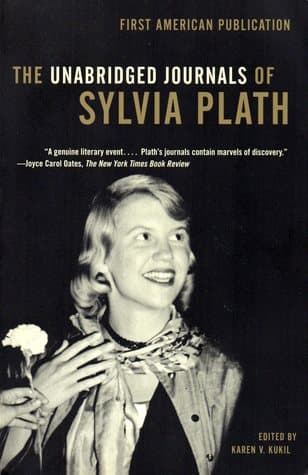
The Unabridged Journals of Sylvia Plath cover
Archivist's Choice

The Unabridged Journals of Sylvia Plath

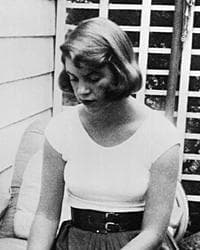
Sylvia Plath (2019)

Genre

Psychology / Biography / Memoir

Reading Time

1500 min

Key Themes

See below

Track Your Reading

Sign in to track this book

Sylvia Plath's complete journals show her literary ambition, personal struggles, and battle against inner demons, giving a window into the mind of a poetic genius.

Core Idea

Sylvia Plath's journals are an intimate record of a brilliant mind dealing with the pressures of artistic ambition, societal expectations, and psychological trouble. Through careful observations and self-examinations, Plath shows the hard process of creating an authentic self and artistic voice while balancing her inner world and external realities. The journals are a place for her creative work and a confessional space where she examines her relationships, struggles with mental illness, and search for meaningful experience. They illustrate the complex, often painful, journey of a woman seeking independence and recognition in the mid-20th century.
Reading time
1500 min
Difficulty
Hard
✓ Read this if...
You are deeply interested in the inner life of a complex artist, the struggles of mental health, the creative process, or mid-20th-century intellectual and gender dynamics. Essential for Plath scholars and admirers.
✗ Skip this if...
You prefer light reading, are sensitive to intense psychological introspection and despair, or are not interested in the detailed, often repetitive, daily life of a writer.

Core idea

The central argument and framework that powers the entire book.

Sylvia Plath's journals are an intimate record of a brilliant mind dealing with the pressures of artistic ambition, societal expectations, and psychological trouble. Through careful observations and self-examinations, Plath shows the hard process of creating an authentic self and artistic voice while balancing her inner world and external realities. The journals are a place for her creative work and a confessional space where she examines her relationships, struggles with mental illness, and search for meaningful experience. They illustrate the complex, often painful, journey of a woman seeking independence and recognition in the mid-20th century.

At a glance

Reading time

1500 min

Difficulty

Hard

Read this if...

You are deeply interested in the inner life of a complex artist, the struggles of mental health, the creative process, or mid-20th-century intellectual and gender dynamics. Essential for Plath scholars and admirers.

Skip this if...

You prefer light reading, are sensitive to intense psychological introspection and despair, or are not interested in the detailed, often repetitive, daily life of a writer.

Key Takeaways

1

The Raw Pursuit of Authenticity

Plath's journals reveal a relentless, often painful, quest for genuine self-expression.

Quote

I must be myself. I must not be anyone else.

Sylvia Plath's journals are a record of her commitment to authenticity, even when that pursuit led her into dark psychological areas. She carefully documented her inner world, refusing to hide her ambitions, anxieties, or depressions. This honest self-examination was not just a private exercise but a foundation of her artistic process, a place where her distinctive voice was made. Her writing consistently dealt with the tension between societal expectations and her own intense individuality, often making her feel like an outsider. Thi...

Supporting evidence

Plath's detailed entries on her struggles with perfectionism, body image, and the societal roles expected of women in the 1950s and early 60s, juxtaposed with her fierce literary ambitions and desire for intellectual recognition, provide ample evidence.

Apply this

Embrace radical honesty in self-reflection. Use journaling as a tool not just for recording events, but for deeply interrogating your own motives, fears, and desires without judgment. This practice can reveal hidden patterns and foster a more authentic sense of self, which is crucial for both personal growth and creative expression.
authenticityself-expressionintrospection
2

The Burden of Ambition

Plath's journals expose the immense pressure and anxiety that accompanied her towering literary aspirations.

Quote

I am afraid of life, I am afraid of myself.

Throughout her journals, Plath expresses a strong, almost overwhelming, ambition. She was not happy with just being good; she wanted greatness, literary immortality. This drive, while fueling her writing, also became a significant source of her pain. The fear of failure, the constant self-comparison to other successful writers, and the pursuit of perfection created internal pressure. Her entries show a cycle of intense creative bursts followed by periods of crushing self-doubt and despair, illustrating how the force that propelled her...

Supporting evidence

Her frequent comparisons of her own writing to that of Virginia Woolf or D.H. Lawrence, her detailed accounts of rejection letters, and her intense self-criticism regarding the quality and quantity of her work.

Apply this

Recognize that ambition, while powerful, requires careful management. Set realistic goals, celebrate small victories, and cultivate self-compassion to mitigate the inherent pressures. It's crucial to separate your self-worth from your output and to find joy in the process, not just the outcome.

ambitionperfectionismself-doubt
3

The Labyrinth of Mental Health

The journals provide a raw, unfiltered look into Plath's battles with depression and anxiety.

Quote

I desire the things that will destroy me in the end.

Plath's journals are perhaps most impactful in their portrayal of her mental health struggles. She carefully records her descent into depression, her periods of intense anxiety, and her experiences with therapy and electroshock treatment. These entries are not clinical observations but deeply personal, often agonizing, accounts of her internal suffering. They reveal the cyclical nature of her illness, the desperate search for relief, and the effect it had on her relationships and creative work. The journals show mental illness through...

Supporting evidence

Detailed descriptions of her 'bell jar' experiences, her stays in mental institutions, her feelings of numbness and despair, and her desperate attempts to find stability and meaning.

Apply this

Cultivate empathy and understanding for those struggling with mental health. If you are experiencing similar challenges, seek professional help without shame. Use journaling as a therapeutic tool to process emotions, identify triggers, and track progress, but recognize its limits and combine it with professional support.

depressionanxietymental-healthstigma
4

The Artist's Relationship with the Mundane

Plath struggled to reconcile her vast artistic aspirations with the practicalities of daily life.

Quote

I want to be a woman of substance, not a woman of dreams.

A recurring tension in Plath's journals is her struggle to balance her artistic vision with the everyday demands of existence. She often felt restricted by domesticity, by the expectations of being a wife and mother, and by the effort required to maintain a household. Yet, she also wanted stability and normalcy, seeing these as potential foundations for her creative work. This internal conflict shows a common dilemma for many artists: how to find the necessary space and time for creation amidst life's obligations. Her entries reveal d...

Supporting evidence

Her detailed complaints about housework, cooking, and societal expectations for wives, often juxtaposed with her intense desire to write and achieve literary recognition. Her entries about trying to write while caring for children.

Apply this

Establish clear boundaries between creative work and daily responsibilities. Recognize that even mundane tasks can be reframed as grounding elements that support your larger goals. For artists, consciously integrate moments of 'ordinary' life as inspiration, rather than seeing them as impediments.

domesticityartistic-processwork-life-balance
5

The Power of Observation

Plath's journals underscore her meticulous eye for detail and her ability to transform observation into vivid prose.

Quote

I am a camera with its shutter open, quite passive, recording, not thinking.

Beyond their psychological insights, Plath's journals are an example of observational writing. She had an extraordinary ability to record the small details of her surroundings, the nuances of human interaction, and the subtle shifts in her own emotional state. These detailed observations, often written with poetic precision, were the raw material for her poetry and prose. Her journaling practice sharpened her descriptive abilities, allowing her to capture sensory experiences and internal worlds with clarity. This aspect of her journal...

Supporting evidence

Her vivid descriptions of nature, specific people she encountered, the interiors of rooms, and her precise articulation of feelings and sensations, often using striking metaphors and similes.

Apply this

Cultivate a 'writer's eye' by consciously observing your surroundings and interactions. Keep a notebook or digital journal specifically for recording sensory details, overheard conversations, and fleeting thoughts. Practice describing these observations with precision and evocative language, treating them as exercises in sharpening your descriptive powers.

observationdescriptive-writingsensory-details
6

Relationships as Mirrors and Mires

Her journals dissect the complex and often turbulent nature of her personal relationships.

Quote

I must be a whole person, not half a person, or a person who is dependent on another for definition.

Plath's journals offer an intimate, often unsettling, view into her significant relationships, especially with Ted Hughes. They reveal a dynamic interplay of intense love, intellectual companionship, competitive ambition, and emotional dependency. She moves between idealizing her partners and feeling restricted or betrayed by them. These entries show the challenge of maintaining individual identity within a partnership, especially for a talented woman in a patriarchal era. Her relationships often were both sources of inspiration and g...

Supporting evidence

Her passionate declarations of love and admiration for Hughes, followed by detailed accounts of arguments, feelings of jealousy, and suspicions of infidelity, especially in the later entries.

Apply this

Reflect on how your relationships influence your sense of self and your creative work. Strive for partnerships that foster mutual growth and respect for individual identity, rather than those that lead to codependency or competition. Practice clear communication and self-advocacy within your relationships.

relationshipscodependencyidentity
7

The Artist's Hunger for Experience

Plath's journals reveal a voracious appetite for life and a belief that all experiences fuel art.

Quote

I want to taste, to savor, to know everything.

Despite her struggles, Plath's journals consistently show a hunger for life and a belief that every experience, good or bad, could be turned into art. She actively sought new sensations, places, and intellectual challenges, believing that a rich inner and outer life was essential for a writer. This curiosity and willingness to engage with the world, even its darker aspects, show her commitment to artistic exploration. She saw suffering not as an end, but as a potential source of insight and creative material. This perspective, while a...

Supporting evidence

Her detailed accounts of travel, her intellectual pursuits at Cambridge, her observations of various people and cultures, and her consistent attempts to find meaning in her own pain and depression through writing.

Apply this

Actively seek out new experiences, even those outside your comfort zone. Engage with the world with curiosity and an open mind, recognizing that every encounter holds potential for learning and inspiration. Practice reframing challenges or difficult emotions as opportunities for deeper understanding and creative expression.

experiencecreativityartistic-inspiration
8

The Unseen Labor of Creation

The journals demystify the romanticized image of the artist, revealing the sheer grind of writing.

Quote

I must work. I must work. I must work.

Plath's journals offer a stark, unromanticized look at the daily routine of being a writer. Far from depicting flashes of effortless genius, they carefully document her struggles with writer's block, her painstaking revisions, and her pursuit of publication. She records word counts, rejection slips, and the mental and emotional effort required to produce even a single poem. This portrayal of the 'unseen labor' behind her celebrated works corrects the often-glamorized image of the artist. It shows that talent, while essential, is insep...

Supporting evidence

Her entries detailing specific writing schedules, word count goals, her frustration with unproductive days, and her methodical approach to submitting work to journals and publishers.

Apply this

Embrace discipline and consistency in your creative pursuits. Recognize that inspiration is often a byproduct of showing up and doing the work, even when you don't feel motivated. Treat your creative practice with the same seriousness and dedication as any other profession, understanding that consistent effort compounds over time.

writing-processdisciplinecreative-labor
9

The Mask of Femininity

Plath grappled intensely with the restrictive gender roles and expectations of her era.

Quote

I am a woman and I am an artist, and I am in a perpetual struggle between the two.

The journals vividly illustrate Plath's internal conflict regarding her identity as a woman in the mid-20th century. She was constantly aware of the societal pressures to conform to traditional feminine roles – to be a good wife, a nurturing mother, and to prioritize domesticity over personal ambition. This external pressure clashed with her intellectual drive and her aspirations for literary greatness. Her entries reveal both her attempts to fit into these molds and her resentment and rebellion against them. This struggle shows the b...

Supporting evidence

Her reflections on marriage, motherhood, societal beauty standards, and her frustration with the limited opportunities available to women, contrasted with her unwavering commitment to her writing career.

Apply this

Critically examine societal gender roles and how they might limit your own potential or self-expression. Actively challenge and dismantle internal and external expectations that do not align with your authentic self. Advocate for equitable opportunities and support systems that allow all individuals to pursue their passions without gender-based constraints.

gender-rolesfeminismsocietal-expectations
10

The Journal as a Lifeline

For Plath, journaling was not just a practice, but a vital mechanism for survival and self-discovery.

Quote

It is as if I am writing letters to myself, to find out what I think.

Ultimately, Plath's journals were more than just a record of her life; they were a lifeline. In their pages, she could explore her darkest thoughts without judgment, express her desires, and deal with her complex identity. The act of writing itself became a form of therapy, a way to impose order on the chaos of her inner world, and a space where she could be completely honest. Without the journals, much of her internal world would have remained unexamined, and her later poetry, with its emotional power, might never have fully material...

Supporting evidence

The sheer volume and consistency of her entries, her explicit statements about writing to understand herself, and the evolution of her writing style and themes within the journals themselves, which directly fed into her published work.

Apply this

Integrate regular journaling into your routine as a tool for self-discovery, emotional processing, and creative incubation. Approach your journal as a sacred, private space where you can be completely honest without fear of judgment. See it not just as a record, but as an active dialogue with your inner self, fostering clarity and resilience.

journalingself-discoveryemotional-processingcreative-tool

Critical analysis

Notable Quotes

I can't be content with the jollity of the world. I've got to have a meaning.

Reflecting on her deeper intellectual and emotional needs beyond superficial happiness.

And by the way, everything in life is writable about if you have the outgoing guts to do it, and the imagination to improvise. The worst enemy to creativity is self-doubt.

Discussing the challenges and necessities of being a writer.

How we need another soul to cling to, another body to keep us warm. To rest and trust; to give up your soul and be free.

Expressing a longing for intimacy and deep connection.

I am afraid of being a woman. I am afraid of being a wife. I am afraid of being a mother. I am afraid of being a success. I am afraid of being a failure. I think I am afraid of being happy.

A profound statement of her multifaceted fears and anxieties about life's roles and outcomes.

I love my husband. I love him when I don't love myself. I love him when I'm hating everything.

Reflecting on her complex feelings towards Ted Hughes amidst her personal struggles.

So it is with me. I am a victim of the dread of being myself.

Grappling with issues of identity and self-acceptance.

I desire the things that will destroy me in the end.

A dark introspection on her self-destructive tendencies or attractions.

Perhaps when we are old and full of wrinkles, we will be able to look back and say, 'Ah, that was a time when I was young and beautiful, and I didn't even know it.'

Musing on the perception of youth and beauty with the wisdom of hindsight.

The world itself is a giant marvel of gorgeous and terrible things.

A poetic observation on the dual nature of existence.

I am afraid of the ocean, but I am also drawn to it. It is like life itself, vast and mysterious and full of both beauty and danger.

Using the ocean as a metaphor for her feelings about life.

I talk to God but the sky is empty.

A poignant expression of spiritual doubt and loneliness.

I am a slave to my own desires.

Acknowledging her intense inner drives and their control over her.

The worst thing, it seems to me, is a contented mind.

Suggesting that complacency hinders growth and creativity.

I must be a mermaid, R. I have no fear of depths and a great fear of shallow living.

A metaphorical declaration of her preference for profound experience over superficiality.

If I didn't think, I'd be a happy woman.

Reflecting on how her intense intellect and introspection contribute to her unhappiness.

Quiz

Test Your Knowledge

Ready to see how well you understood this book? Take our interactive quiz with 10 questions.

10
Questions
~5
Minutes
?
Best Score

Key Questions (FAQ)

'The Unabridged Journals of Sylvia Plath' is the first complete and uncensored transcription of Plath's diaries from the last twelve years of her life. It includes 60% new material never before made public, offering a much more comprehensive and unfiltered look into her personal and literary struggles than the heavily abridged 1982 version.

About the author

Sylvia Plath

Sylvia Plath was an American poet, novelist, and short story writer. She is credited with advancing the genre of confessional poetry and is best known for two of her published collections, The Colossus and Other Poems (1960) and Ariel (1965), as well as The Bell Jar, a semi-autobiographical novel published shortly before her suicide in 1963. The Collected Poems was published in 1981, which included previously unpublished works. For this collection Plath was awarded a Pulitzer Prize in Poetry in 1982, making her the fourth to receive this honour posthumously.