BookBrief
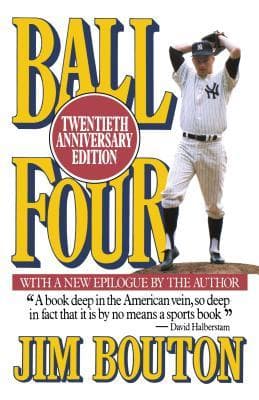
Ball Four cover
Archivist's Choice

Ball Four

Jim Bouton (1970)

Genre

Biography / Memoir / History

Reading Time

10-12 hours

Key Themes

See below

Track Your Reading

Sign in to track this book

Pitcher Jim Bouton exposes the hidden world of 1960s baseball with a rebellious spirit and a keen eye for the absurd, revealing the hilarious, heartbreaking, and human lives of the men behind America's pastime, changing how we view sports heroes.

Core Idea

Jim Bouton's "Ball Four" challenges the romantic idea of professional baseball players as untouchable heroes. Instead, it shows them as flawed, relatable working men dealing with the mundane, often petty, and sometimes cruel parts of their job. Through candid diary entries, Bouton reveals the business dealings, locker-room humor, personal struggles, and constant pressure that define a ballplayer's life. This changed public ideas and how sports and athletes are covered. The book argues that real honesty, even if it costs something, is needed to truly understand any human effort. It shows that even in visible, seemingly glamorous careers, universal experiences like aging, decline, and finding meaning still happen, often hidden by public image. It shows the power of plain truth to make institutions less mysterious and its people more human.
Reading time
10-12 hours
Difficulty
Easy
✓ Read this if...
You are a baseball fan interested in the unvarnished, behind-the-scenes reality of the sport in the late 1960s, or if you appreciate candid memoirs that challenge established narratives and humanize public figures. Also recommended if you enjoy witty, observational writing.
✗ Skip this if...
You prefer to maintain an idealized view of professional athletes and sports, or if you dislike profanity and frank discussions of personal lives (though mild by modern standards).

Core idea

The central argument and framework that powers the entire book.

Jim Bouton's "Ball Four" challenges the romantic idea of professional baseball players as untouchable heroes. Instead, it shows them as flawed, relatable working men dealing with the mundane, often petty, and sometimes cruel parts of their job. Through candid diary entries, Bouton reveals the business dealings, locker-room humor, personal struggles, and constant pressure that define a ballplayer's life. This changed public ideas and how sports and athletes are covered.

The book argues that real honesty, even if it costs something, is needed to truly understand any human effort. It shows that even in visible, seemingly glamorous careers, universal experiences like aging, decline, and finding meaning still happen, often hidden by public image. It shows the power of plain truth to make institutions less mysterious and its people more human.

At a glance

Reading time

10-12 hours

Difficulty

Easy

Read this if...

You are a baseball fan interested in the unvarnished, behind-the-scenes reality of the sport in the late 1960s, or if you appreciate candid memoirs that challenge established narratives and humanize public figures. Also recommended if you enjoy witty, observational writing.

Skip this if...

You prefer to maintain an idealized view of professional athletes and sports, or if you dislike profanity and frank discussions of personal lives (though mild by modern standards).

Key Takeaways

1

The Illusion of Childhood Heroes

Professional athletes are just regular, flawed people with extraordinary skills.

Quote

You see, you spend your whole life dreaming of becoming a big leaguer, and it's a great dream. But nobody ever tells you what it's really like.

Bouton's main discovery, which most angered the baseball establishment, was that professional baseball players are not the ideal, larger-than-life heroes shown by the media. Instead, they are a varied group of men, often immature, prone to small arguments, focused on sex, money, and bodily functions, and very insecure. They cheat on their wives, drink too much, and use crude locker room humor. This removal of mystery broke the careful image of purity around America's pastime, showing the human weaknesses beneath the uniforms. It was a...

Supporting evidence

Bouton details countless anecdotes of players' off-field behavior, from clubhouse pranks and explicit conversations to the constant pursuit of 'beaver shooting' (peeking at women) and discussions about sexual conquests. He describes the players' obsession with their salaries and the constant jockeying for position and recognition.

Apply this

When evaluating public figures, especially those in sports or entertainment, recognize that their public persona is often a carefully curated image. Seek out diverse sources of information and be wary of hagiographic portrayals. Understand that talent and character are not always intertwined.


demystification-of-heroeshuman-frailtysports-mythology
2

The Business of Baseball

Behind the national pastime lies a ruthless, profit-driven enterprise.

Quote

Baseball is a funny business. You work your whole life to get good enough to be a big leaguer, and then you spend the rest of your career trying to hang on.

Beyond the on-field drama, Bouton shows professional baseball as a harsh business. Players are goods, traded, let go, and cut with little thought for personal loyalty or feelings. Owners are shown as clever, often stingy, businessmen focused on making the most money, while general managers constantly judge players as assets. This business reality controls career paths, creates huge pressure, and makes players feel insecure, as they are always aware of their limited time in the game. Bouton's own career, from a star pitcher to a strugg...

Supporting evidence

Bouton's own experience of being traded from the Yankees, then bouncing between teams like the Seattle Pilots and Houston Astros, is central. He details contract negotiations, the constant fear of being sent down to the minors, and the stark financial differences between star players and those on the bubble. The book highlights the lack of player power relative to owners before the advent of free agency.

Apply this

Understand that most professional endeavors, even those that appear glamorous, are fundamentally businesses. Recognize the power dynamics between employers and employees, and the often-impersonal nature of corporate decision-making. Prepare for career shifts and maintain adaptability.

sports-economicsplayer-commodificationcareer-instability
3

The Price of Authenticity

Speaking uncomfortable truths can lead to ostracization, but also lasting impact.

Quote

I wasn't trying to destroy baseball. I was trying to show what it was really like.

Bouton's choice to publish 'Ball Four' was a brave act of honesty, breaking the unspoken rule of silence that protected baseball's image. He faced immediate and strong criticism: condemnation from the commissioner, calls for his book to be called untrue, and isolation from former teammates and the sports media. He was called a 'social outcast' and was never invited back to Yankee Oldtimer's Days. Yet, his willingness to tell his truth, however uncomfortable, made the book a classic. It also opened the way for more honest sports journa...

Supporting evidence

The initial reaction to 'Ball Four' is well-documented within the book's subsequent editions and historical accounts. Commissioner Bowie Kuhn's attempts to suppress the book and the widespread condemnation from sportswriters and former players serve as direct evidence of the price Bouton paid. The fact that he remains uninvited to Yankee Oldtimer's Days decades later underscores the lasting impact of his honesty.

Apply this

Consider the potential consequences of speaking truth to power or challenging established norms. While it may lead to personal costs, it can also contribute to necessary change and establish a legacy of integrity. Weigh the personal risk against the potential for positive impact.

whistleblowingtruth-tellingsocial-ostracismintegrity
4

The Power of the Diary

Unfiltered, immediate observations capture a truer reality than retrospective accounts.

Quote

I wrote down what happened, as it happened. I didn't try to make it sound better or worse.

The power of 'Ball Four' comes from its diary format. Bouton carefully wrote down daily observations, talks, and thoughts throughout the 1969 season. This immediacy gives the book an unmatched honesty, capturing the raw, unfiltered reality of life as a professional athlete. Unlike memoirs written years later, which can be affected by memory and story shaping, Bouton's journal entries show events as they happened, with all their uncertainty, humor, and everyday detail. This 'you-are-there' quality made the book revolutionary and lastin...

Supporting evidence

The book is structured as a chronological diary, with entries for virtually every day of the 1969 season. Bouton's direct quotes of teammates, his unfiltered thoughts on managers and owners, and his immediate reactions to on-field and off-field events are all presented in real-time, as recorded in his notebook.

Apply this

For personal growth or creative endeavors, consider keeping a regular journal or diary. This practice can enhance self-awareness, improve memory, and provide a rich source of raw material for future reflection or projects. Prioritize capturing immediate thoughts and details over perfect prose.

journalingauthenticity-in-writingfirst-person-narrative
5

The End of an Era

The book marks a turning point in sports media and athlete-fan relations.

Quote

Before 'Ball Four,' athletes were seen, not heard. After 'Ball Four,' they were heard, whether you wanted to hear them or not.

'Ball Four' did more than just expose baseball's hidden side; it changed sports journalism and how the public saw athletes. Before its publication, sports reporting was mostly respectful, focusing on heroic stories and avoiding arguments. Bouton's book broke this unspoken agreement, opening the door for more investigative, critical, and humanizing coverage of sports. It also gave athletes a voice, letting them share their own stories and experiences, even if those stories were messy and not perfect. This change led to modern sports me...

Supporting evidence

The book's immediate reception and the subsequent shift in sports journalism, moving from 'gee-whiz' reporting to more critical analysis, serve as evidence. The rise of player interviews, tell-all books, and more candid media interactions in the decades following 'Ball Four' demonstrate its lasting influence on the industry.

Apply this

Recognize that cultural shifts often begin with a single, courageous act. Be open to new perspectives and challenges to established norms, as they can lead to greater transparency and understanding. Support media that prioritizes authenticity and critical inquiry.

sports-journalism-evolutionmedia-revolutionathlete-empowerment
6

The Universal Experience of the Working Man

Beneath the glamour, professional sports is a job with its own frustrations.

Quote

It's a job, just like any other job. Only it's a job where you're always on display.

One reason 'Ball Four' connected with many non-baseball fans is its portrayal of professional baseball as a workplace, with all the everyday frustrations of any other job. Players deal with demanding bosses (managers), annoying colleagues, office politics, and the constant pressure to perform or risk losing their job. The travel, the boredom, the physical toll, and the emotional ups and downs of wins and losses are all part of the daily grind. Bouton removes the romance to show the work aspect of the game, making the players' experien...

Supporting evidence

Bouton describes the endless bus rides, the poor hotel food, the petty arguments between teammates, the strict rules enforced by managers, and the constant fear of being sent down to the minor leagues. He details the physical pain of pitching and the mental exhaustion of a long season, all presented as part of the daily routine.

Apply this

Empathize with individuals in high-pressure, public-facing careers by recognizing the 'job' aspect of their roles. Understand that even seemingly glamorous professions come with their own set of challenges and mundane tasks. Avoid projecting idealized notions onto others' work lives.

labor-in-sportsworkplace-dynamicsrelatability
7

The Inevitability of Decline

Athletic careers are fleeting, and the transition out of the spotlight is challenging.

Quote

You start out throwing ninety-five, and then you throw ninety, then eighty-five, and then you're looking for a job.

A sad theme throughout 'Ball Four' is the harsh truth of athletic decline. Bouton himself, once a promising young pitcher for the Yankees, is trying to extend his career in 1969, struggling with a knuckleball and knowing his fastball speed is dropping. He sees older players desperately holding onto their careers, facing the emotional and financial challenges of leaving professional sports. The book shows the brutal nature of a career built on physical ability, where age and injury are constant enemies, making the dream a temporary, fr...

Supporting evidence

Bouton's personal struggle with his declining fastball and his development of the knuckleball to stay in the game is a central narrative. He also observes the struggles of other aging players, their anxieties about being cut, and the psychological toll of knowing their best days are behind them.

Apply this

Plan for the long term in any career, especially those with a limited shelf life. Develop transferable skills, maintain a diverse network, and consider alternative paths. Embrace the concept of reinvention and adapt to changing circumstances rather than clinging to past glories.

athletic-declinecareer-transitionaging-athletesmortality
8

Humor as a Coping Mechanism

Laughter and irreverence help navigate the pressures and absurdities of professional life.

Quote

We were a bunch of guys just trying to make it, and sometimes all you could do was laugh.

Despite the serious issues of career worries and the business side of baseball, 'Ball Four' is full of humor. Bouton's witty comments, self-deprecating jokes, and the endless locker room talk show how players used humor to cope. It eased tension, built friendship, and offered an escape from the constant pressure to perform. From practical jokes to crude remarks, the humor in the book is often childish but always real, showing the human need for lightness and connection even in tough situations. It reminds us that even heroes have sill...

Supporting evidence

Numerous anecdotes throughout the book illustrate this, such as Bouton's descriptions of players 'beaver shooting' (peeking at women), the constant teasing and nicknames, the 'jock-itch' jokes, and the general irreverence towards authority figures. The lighthearted tone often masks deeper anxieties.

Apply this

Cultivate a sense of humor and learn to use it constructively in challenging situations. Laughter can reduce stress, build rapport, and help maintain perspective. Don't take yourself or your work too seriously all the time; find moments for levity and connection.

coping-mechanismsworkplace-humorcamaraderieirreverence
9

The Fragility of Reputation

A single act of honesty can redefine a public figure's entire legacy.

Quote

I knew some people wouldn't like it. But I didn't think it would make me a pariah.

Bouton's career before 'Ball Four' was known for his pitching skill, especially his World Series games with the Yankees. After the book, his reputation changed completely. He became known not just as a former baseball player, but as 'the author of 'Ball Four'' — a controversial figure who dared to break ranks. This shift shows how one public act of truth-telling can overshadow years of professional achievement, for better or worse. While it led to his isolation from the baseball establishment, it also secured his place as a cultural i...

Supporting evidence

Bouton's initial fame as a Yankee pitcher is contrasted with his later status as a 'traitor' by the baseball establishment. His continued exclusion from Yankee Oldtimer's Days, despite his on-field achievements, directly demonstrates how his literary act redefined his public and professional identity.

Apply this

Be aware of how your actions, particularly those that challenge powerful institutions, can shape your public narrative. Understand that reputation is a fluid construct. While some acts may lead to negative immediate consequences, they can also build a more enduring and authentic legacy.

reputation-managementpublic-perceptionlegacy-buildingcontroversy
10

The Enduring Power of Narrative

A compelling, honest story can transcend its subject matter and resonate widely.

Quote

People who don't ordinarily follow baseball are still reading this book.

Despite being about baseball, 'Ball Four' lasts because its themes are universal. It's a story about growing up, facing decline, navigating a workplace, challenging authority, and seeking honesty. Bouton's storytelling, combining humor, vulnerability, and sharp observation, lifts the book beyond a simple sports memoir. It became an important social document because it connected with wider cultural feelings of disappointment with authority and a wish for plain truth. This shows that a well-told story, even one in a specific subject, ca...

Supporting evidence

The fact that 'Ball Four' is still widely read and celebrated by non-baseball fans, and is often included in lists of important non-fiction works, serves as the primary evidence. Its critical reception as an 'important social document' rather than just a sports book underscores its broader appeal.

Apply this

When communicating or creating, focus on universal human themes and experiences to broaden your audience and impact. Authenticity and vulnerability often resonate more deeply than polished, curated narratives. Understand that the medium can be transcended by the message.

universal-themesnarrative-powerstorytellingcultural-impact

Critical analysis

Notable Quotes

You see, you spend a good piece of your life gripping a baseball and it turns out that it was the other way around all the time.

Reflecting on his career's end and the hold baseball had on him.

The thing about baseball is that it's a lot like life. You've got to take the good with the bad, the wins with the losses, and keep on playing.

A general observation about the nature of baseball and life.

A baseball manager is a guy who is paid to be confused.

A cynical but humorous take on the role of a baseball manager.

The first thing you learn in baseball is how to lose. Not how to win, but how to lose.

Reflecting on the prevalence of losing in the sport, even for the best players.

There are only two seasons — winter and baseball.

A popular saying among baseball enthusiasts, highlighting its importance.

Every man has to go through a period of being a rookie, and it's a tough period.

Describing the challenges and hazing faced by new players in the major leagues.

The only thing a pitcher needs to be is able to throw the ball over the plate. If he can do that, he's got a chance.

Discussing the fundamental skill required for a pitcher.

How can you expect to hit a curveball if you can't even hit a fastball?

A simple, practical observation about the progression of skills in baseball.

Baseball is a game of inches.

A common adage emphasizing the precision and small margins that decide games.

It's a funny game. You win some, you lose some, and you get rained out some.

A lighthearted summary of the unpredictable nature of baseball.

What I have to say is that I have never seen a ballplayer who didn't want to play.

Underscoring the inherent desire of professional athletes to be on the field.

The trouble with being a professional athlete is that you're always one injury away from being an ex-professional athlete.

A stark reminder of the fragility of a career in professional sports.

Most ballplayers are like children. They want to be loved and praised, and they hate to be criticized.

An observation on the psychological makeup of professional baseball players.

There are only two kinds of pitchers: good ones and bad ones.

A straightforward, no-nonsense categorization of pitching talent.

Quiz

Test Your Knowledge

Ready to see how well you understood this book? Take our interactive quiz with 10 questions.

10
Questions
~5
Minutes
?
Best Score

Key Questions (FAQ)

'Ball Four' is a groundbreaking memoir by former Major League Baseball pitcher Jim Bouton, offering an unvarnished, behind-the-scenes look at the lives of professional baseball players in the late 1960s. It chronicles his experiences with the Seattle Pilots and Houston Astros, revealing the everyday realities, humor, and frustrations of the game beyond the polished public image.

About the author