“Age cannot wither her, nor custom stale Her infinite variety.”
— Enobarbus describing Cleopatra's captivating charm to Agrippa and Maecenas.


William Shakespeare (1734)
Genre
History / Historical Fiction / Romance
Reading Time
336 min
Key Themes
See below
Sign in to track this book
In a world of empires and shifting loyalties, the passion between Rome's general and Egypt's queen ignites a war that threatens to consume them both.
The play opens in Alexandria, Egypt. Roman tribunes Philo and Demetrius observe Mark Antony's complete focus on his love for Cleopatra, Queen of Egypt. They note his public displays of affection and neglect of Roman responsibilities, particularly political matters in Rome and the coming war with Pompey. Antony, despite his love for Cleopatra, receives news from Rome that stirs his conscience. He learns of his wife Fulvia's death and Octavius Caesar's growing power, who criticizes Antony's behavior. This news, with the threat from Sextus Pompey, forces Antony to consider returning to Rome, much to Cleopatra's initial dismay and anger at his perceived inconstancy.
Antony arrives in Rome, met by a cold reception from Octavius Caesar. Their initial meeting is tense, with mutual accusations, and Agrippa and Maecenas acting as mediators. To solidify their fragile alliance and prevent further civil war, Agrippa proposes a marriage between Antony and Octavia, Octavius Caesar's sister. Despite his love for Cleopatra, Antony agrees to the union as a political necessity. A messenger delivers news of Antony's marriage to Cleopatra. She reacts with violent jealousy and rage, striking the messenger and questioning his description of Octavia's appearance, revealing her deep insecurity and possessiveness.
While in Rome, Antony meets a Soothsayer who warns him that his fortune is inferior to Octavius Caesar's. The Soothsayer advises Antony that he will always be overshadowed by Caesar if they remain close. This prophecy, combined with the underlying tension and his lingering feelings for Cleopatra, makes Antony restless in Rome. He decides to leave his new wife, Octavia, and return to Egypt, upsetting Octavia and increasing Octavius Caesar's anger. This departure breaks the fragile Roman alliance and sets the stage for renewed conflict between Antony and Caesar, as Antony openly defies Roman expectations and political obligations.
Antony returns to Egypt, welcomed by Cleopatra with open arms and renewed passion. Their reunion is a public spectacle, solidifying their defiance of Roman norms. Antony then consolidates his forces, preparing for war against Octavius Caesar. He makes strategic errors, influenced by his desire to please Cleopatra and his overconfidence. Against the advice of his general, Enobarbus, Antony insists on fighting Caesar at sea, despite the Roman advantage on land. This decision partly satisfies Cleopatra's pride and her desire to participate directly in the conflict, further blurring the lines between their personal relationship and military strategy.
The naval battle of Actium begins. Despite Enobarbus's warnings, Antony leads his fleet against Octavius Caesar's. In a moment of panic, Cleopatra's sixty ships suddenly turn and flee the battle. Antony, driven by his devotion to her and his inability to endure her absence, abandons his own fleet and follows her. This desertion demoralizes his forces and leads to a crushing defeat for Antony. Caesar's forces secure a decisive victory, leaving Antony's army in disarray and his reputation damaged. Antony is filled with shame and rage at his actions and Cleopatra's perceived betrayal, leading to a bitter confrontation between them.
After the defeat at Actium, Antony falls into despair and self-loathing. He rages at Cleopatra, blaming her for his humiliation, though his love for her quickly overcomes his anger. His loyal followers begin to lose faith. His general, Enobarbus, seeing Antony's erratic behavior and the futility of his cause, decides to desert him and join Octavius Caesar. However, Enobarbus is immediately overcome with guilt for abandoning his master. Antony, learning of Enobarbus's desertion, sends his treasure after him, a gesture of generosity that further torments Enobarbus, leading to his death from a broken heart.
Antony rallies his remaining forces for a final land battle against Octavius Caesar. He achieves a small victory, which briefly rekindles his spirits and his soldiers' morale. However, this triumph is short-lived. During a later engagement, Cleopatra's Egyptian fleet, which was supposed to support Antony, either defects to Caesar or withdraws from the fight, leaving Antony exposed. This perceived treachery devastates Antony, who believes Cleopatra has betrayed him to Caesar. He curses her vehemently, believing she has sold him out for her own safety, leading to a furious and heartbroken confrontation where he vows to kill her.
Fearing Antony's rage and seeking to rekindle his love through pity, Cleopatra sends a messenger to tell him she has killed herself and lies dead in her monument. Devastated by this news, Antony resolves to follow her in death. He orders his servant, Eros, to kill him. Eros, unable to harm his master, instead kills himself. Antony, inspired by Eros's loyalty, attempts to fall on his own sword but only wounds himself. In agony, he begs his remaining guard, Diomedes, to finish him, but Diomedes instead carries the dying Antony to Cleopatra's monument, where she is still alive.
Antony, wounded, is brought to Cleopatra's monument. She and her women are barricaded inside, fearing Caesar's forces. Unable to open the main door, they use ropes to hoist the dying Antony up to a window. With immense effort, Cleopatra, Charmian, and Iras pull him into the monument. Antony, in his last moments, urges Cleopatra to trust no Roman but Proculeius and to remember his former glory as a general, rather than his recent failures. He dies in her arms, proclaiming his love. Cleopatra is overcome with grief, expressing her loss and the end of her world with his passing.
Octavius Caesar, learning of Antony's death, expresses some regret and sends Proculeius to secure Cleopatra, hoping to parade her through Rome as a captive. Cleopatra, though captured, maintains her regal bearing. She attempts to negotiate with Caesar, offering him her treasures, but she secretly withholds some, discovered by her treasurer, Seleucus. This act reveals her continued defiance. Caesar promises her honorable treatment, but Cleopatra sees through his facade, understanding his true intention to humiliate her in Rome, leading her to plan her final act of resistance.
Determined not to be paraded as a prisoner in Rome, Cleopatra resolves to die with dignity. She arranges for a basket of figs to be brought to her, secretly containing asps. Before Caesar's guards can intervene, she applies an asp to her breast, welcoming its fatal bite. Her handmaidens, Iras and Charmian, follow her example, each taking an asp. Iras dies quickly, and Charmian, after ensuring Cleopatra's crown is straight, also succumbs to the asp's venom. Octavius Caesar arrives too late, finding the three women dead. He acknowledges Cleopatra's noble end and orders her to be buried beside Antony, recognizing their love and the power they wielded.
The Protagonist/Tragic Hero
Antony descends from a powerful triumvir to a defeated, heartbroken lover, ultimately choosing death over humiliation.
The Protagonist/Tragic Heroine
Cleopatra sacrifices her kingdom and life for love and to preserve her dignity in the face of Roman conquest.
The Antagonist
Caesar successfully eliminates his rivals, consolidating power and becoming the undisputed ruler of the Roman world.
The Supporting
Enobarbus's loyalty is broken by Antony's decline, leading to his desertion and subsequent death from guilt.
The Supporting
Octavia is an innocent victim of political maneuvering and Antony's infidelity, enduring abandonment with dignity.
The Supporting
Eros demonstrates ultimate loyalty by choosing suicide rather than harming his master, Antony.
The Supporting
Charmian remains fiercely loyal to Cleopatra, choosing to die with her rather than face Roman subjugation.
The Supporting
Iras remains fiercely loyal to Cleopatra, choosing to die with her rather than face Roman subjugation.
The Mentioned
Pompey's threat is neutralized, allowing the main conflict between Antony and Caesar to escalate.
This is the play's central conflict, shown through Antony's struggle between his love for Cleopatra and his responsibilities as a Roman leader. His devotion to Cleopatra leads him to neglect his political duties, abandon his wife Octavia, and make disastrous military decisions, such as following Cleopatra's fleeing fleet at Actium. Rome, represented by Octavius Caesar, constantly demands adherence to duty, honor, and political expediency. Antony's inability to reconcile these two opposing forces leads to his downfall, as he sacrifices his empire for love, and then his life for love.
“Let Rome in Tiber melt, and the wide arch / Of the ranged empire fall! Here is my space.”
The play contrasts the opulent, sensual world of Egypt, personified by Cleopatra, with the austere, pragmatic world of Rome, personified by Octavius Caesar. Egypt is a realm of passion, indulgence, and theatricality, where emotions dictate actions. Rome is a world of political maneuvering, military discipline, and rational ambition. Antony is caught between these two cultural poles, belonging fully to neither by the end. The clash of these two civilizations highlights different values, ultimately showing Rome's imperial power subsuming the more ancient, passionate world of Egypt, even as Egypt's spirit ultimately triumphs through Cleopatra's defiance in death.
“You shall be shown all her wealth. Besides, / What have I kept back?”
Antony's identity changes throughout the play. He begins as a celebrated Roman general, but his immersion in Egypt and his love for Cleopatra gradually strip away his Roman identity. He becomes 'the dotard of Egypt,' losing his reputation and his sense of self as a Roman warrior. Cleopatra's identity is also tied to her role as Queen of Egypt and her relationship with Antony; without him, her world is 'nothing.' The play explores how love and political circumstances can reshape or even dissolve one's core identity, leading characters to question who they are when their defining roles are stripped away. Cleopatra's final act asserts her enduring royal identity.
“I am Antony yet.”
Honor is a main concern for Roman characters, particularly Antony. His reputation as a great general and a pillar of Rome is constantly weighed against his actions in Egypt. His political and military defeats are not just strategic failures but blows to his honor. The shame of his retreat at Actium and his perceived betrayal by Cleopatra drive his despair. Cleopatra, too, cares about her honor, refusing to be paraded as a captive in Rome. Her suicide is a final, powerful act to preserve her regal reputation and avoid dishonor, showing that for both protagonists, a dignified death is better than a life without honor.
“The gods rebuke me, but it is tidings / To wash the eyes of kings!”
Manipulation and deception are common throughout the play, used by various characters for personal and political gain. Cleopatra often uses her charm, wit, and emotional theatrics to control Antony, testing his love and loyalty. Her false report of her death is an example of her manipulative tactics, though it tragically backfires. Octavius Caesar, while appearing honorable, is a master of political manipulation, using Octavia as a pawn and subtly eroding Antony's power. Even Antony, in his moments of rage, accuses Cleopatra of treachery. These deceptions often lead to tragic misunderstandings and contribute to the protagonists' downfalls.
“I have a thing for you.”
A minor character's prediction foreshadows Antony's fate.
The Soothsayer in Rome warns Antony that his 'angel' (his fortune or guiding spirit) is inferior to Octavius Caesar's and that he will always be eclipsed by Caesar when they are near each other. This prophecy serves as a powerful instance of foreshadowing, hinting at Antony's inevitable defeat and Caesar's ultimate triumph. It also adds an element of fatalism, suggesting that Antony's downfall is not merely a result of his choices but also a predetermined destiny, thus enhancing the tragic inevitability of the play's events. Antony's decision to leave Rome after this warning, yet still engage Caesar, underscores his tragic flaw.
Enobarbus's vivid description of Cleopatra's first meeting with Antony.
Enobarbus's famous description of Cleopatra on her barge, as she first met Antony, is a pivotal moment that occurs relatively early in the play. It serves not only to paint a magnificent picture of Cleopatra's allure and exoticism but also to explain the depth of Antony's enchantment. This highly poetic and sensual description solidifies Cleopatra's almost mythical power and establishes her as an irresistible force that could captivate even a hardened Roman general, thereby justifying Antony's later choices and making his sacrifice for her more understandable to the audience. It's a key moment in characterizing Cleopatra's unique power.
Cleopatra's chosen sanctuary and death chamber.
Cleopatra's monument serves as a symbolic and literal refuge for her during the final acts of the play. It is a place of temporary safety, a fortress against Caesar's forces, and ultimately, her chosen death chamber. The act of hoisting the dying Antony into the monument is a powerful visual, symbolizing their desperate clinging to each other and their defiance of the outside world. The monument becomes a sacred space where their love culminates in death, and where Cleopatra stages her final, dignified exit, transforming it from a mere structure into a powerful symbol of their tragic love and regal defiance.
The instrument of Cleopatra's and her handmaidens' suicides.
The asp is the central plot device for the climax of Cleopatra's story. It represents her ultimate act of defiance and her refusal to submit to Roman humiliation. By choosing the asp, a symbol of Egyptian royalty and divinity, she reclaims her power and identity, transforming a forced surrender into a dignified, almost sacred, exit. The asp allows her to die as a queen, not a captive, emphasizing her regal pride and the spiritual connection she maintains with her Egyptian heritage. It is a quiet, intimate death, starkly contrasting with the public spectacle Caesar intended for her.
“Age cannot wither her, nor custom stale Her infinite variety.”
— Enobarbus describing Cleopatra's captivating charm to Agrippa and Maecenas.
“We have kissed away Kingdoms and provinces.”
— Antony reflecting on the sacrifices made for his love with Cleopatra.
“Let Rome in Tiber melt, and the wide arch Of the ranged empire fall! Here is my space.”
— Antony declaring his devotion to Cleopatra over his Roman duties.
“For her own person, It beggared all description.”
— Enobarbus continuing his description of Cleopatra's allure.
“The greater cantle of the world is lost With very ignorance; we have kissed away Kingdoms and provinces.”
— Antony lamenting his losses and the cost of his passion.
“Give me my robe, put on my crown; I have Immortal longings in me.”
— Cleopatra preparing for her death, embracing her destiny.
“My salad days, When I was green in judgment, cold in blood.”
— Cleopatra reminiscing about her youth and inexperience.
“He words me, girls, he words me, that I should not Be noble to myself.”
— Cleopatra feeling manipulated by Octavius Caesar's messages.
“That which would shake the orb of the whole earth Must be to us the like.”
— Antony expressing the profound impact of their love.
“O, my fortunes have Corrupted honest men!”
— Antony lamenting the negative influence of his downfall on his loyal followers.
“And it is great To do that thing that ends all other deeds, Which shackles accidents and bolts up change.”
— Cleopatra contemplating the finality and power of death.
“The hand of fortune, Which I have often grasped with my own strength, Is now a fardel for my back.”
— Antony reflecting on his change of fortune and the burden it brings.
“I will be A bridegroom in my death, and run into 't As to a lover's bed.”
— Antony embracing death as a reunion with Cleopatra.
“No, let him be The grave of her whom he beguiled.”
— Cleopatra's reaction to the idea of Octavius Caesar taking her to Rome as a captive.
“Authority melts from me.”
— Antony recognizing his loss of power and influence.
Ready to see how well you understood this book? Take our interactive quiz with 10 questions.
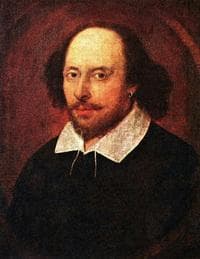
William Shakespeare was an English playwright, poet and actor. He is widely regarded as the greatest writer in the English language and the world's pre-eminent dramatist. He is often called England's national poet and the "Bard of Avon". His extant works, including collaborations, consist of some 39 plays, 154 sonnets, three long narrative poems, and a few other verses, some of uncertain authorship. His plays have been translated into every major living language and are performed more often than those of any other playwright. Shakespeare remains arguably the most influential writer in the English language, and his works continue to be studied and reinterpreted.

Michael S. Heiser
4.5

Winston S. Churchill
4.5
Will Durant
4.4
Sigurd F. Olson
4.4
Thomas Sowell
4.4

Emmanuel Guibert
4.3

W.E.B. Du Bois
4.3

Joseph Campbell
4.3