BookBrief
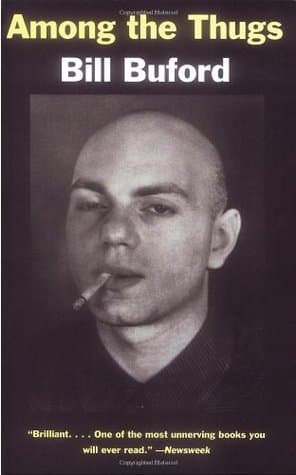
Among the Thugs cover
Archivist's Choice

Among the Thugs

Bill Buford (1991)

Genre

Memoir / History

Reading Time

8-10 hours

Key Themes

See below

Track Your Reading

Sign in to track this book

A prestigious editor plunges headfirst into the chaotic, beer-fueled world of England's soccer hooligans, documenting their violent tribalism and the sinister allure of their destructive camaraderie with unflinching personal engagement.

Core Idea

Bill Buford's "Among the Thugs" explores football hooliganism in 1980s England. It argues that the violence and tribalism are not just criminal acts but a complex, addictive social phenomenon. This phenomenon stems from the human need for belonging, the thrill of aggression, and the intoxicating power of crowds. Through participation, Buford shows how ordinary men become a collective, destructive force. He exposes the psychological contagion that drives their actions and the disturbing appeal of a world defined by ritualized brutality and a perverse sense of community. The book suggests that understanding this subculture means facing uncomfortable truths about human nature's capacity for both camaraderie and savagery.
Reading time
8-10 hours
Difficulty
Medium
✓ Read this if...
You are fascinated by subcultures, the psychology of crowds, the darker aspects of human behavior, or want an immersive, first-hand account of English football hooliganism.
✗ Skip this if...
You are sensitive to graphic violence, profanity, or narratives that do not offer easy moral resolutions, or prefer a purely academic analysis over an experiential one.

Core idea

The central argument and framework that powers the entire book.

Bill Buford's "Among the Thugs" explores football hooliganism in 1980s England. It argues that the violence and tribalism are not just criminal acts but a complex, addictive social phenomenon. This phenomenon stems from the human need for belonging, the thrill of aggression, and the intoxicating power of crowds. Through participation, Buford shows how ordinary men become a collective, destructive force. He exposes the psychological contagion that drives their actions and the disturbing appeal of a world defined by ritualized brutality and a perverse sense of community. The book suggests that understanding this subculture means facing uncomfortable truths about human nature's capacity for both camaraderie and savagery.

At a glance

Reading time

8-10 hours

Difficulty

Medium

Read this if...

You are fascinated by subcultures, the psychology of crowds, the darker aspects of human behavior, or want an immersive, first-hand account of English football hooliganism.

Skip this if...

You are sensitive to graphic violence, profanity, or narratives that do not offer easy moral resolutions, or prefer a purely academic analysis over an experiential one.

Key Takeaways

1

The Allure of Belonging

Thuggery as a distorted form of community and identity.

Quote

The violence was not an end in itself; it was a means to an end, the end being a sense of belonging, a collective identity forged in opposition to the world.

Buford explains the psychological draw of football hooliganism. He shows it is not just senseless violence but a powerful, if destructive, search for belonging. In a society that can feel isolating, these groups offer a clear identity, a shared purpose, and intense camaraderie. The 'thugs' find validation and a sense of self within their group's tribalism, an identity amplified by collective aggression and shared confrontation. This need for affiliation is a main driver, overshadowing the moral implications of their actions and creati...

Supporting evidence

Buford's descriptions of the shared chants, the collective drunkenness, and the mutual defense among the thugs during clashes, particularly the intense loyalty exhibited within the Manchester United firm he follows.

Apply this

Understand that extreme group behaviors often stem from fundamental human needs for connection and identity. When addressing such issues, simply condemning the violence is insufficient; one must also consider the underlying social and psychological voids that these groups fill for their members.

group-identitysocial-cohesiontribalism
2

The Carnival of Aggression

Violence as a ritualistic performance, not just an outburst.

Quote

It was not a spontaneous eruption but a performance, a ritual of aggression, with its own rules, its own choreography, its own perverse beauty.

Buford challenges the simple idea that hooliganism is random, uncontrolled outbursts. Instead, he describes it as a ritualized performance with unwritten rules and predictable patterns. The violence, though brutal, often has a performative aspect—a display of dominance and defiance that follows a script among participants. The build-up, taunts, charge, and retreat are all part of a perverse show. This ritualistic nature gives meaning and structure to the chaos, making it more understandable and even enjoyable for participants, who are...

Supporting evidence

The detailed accounts of specific 'battles' where the thugs would taunt, position themselves, and engage in a series of charges and counter-charges, often with a clear, albeit unspoken, objective beyond just inflicting harm.

Apply this

When analyzing social unrest or group violence, look beyond the surface chaos to identify potential underlying rituals, unwritten rules, and performative aspects that give it structure and meaning for the participants.

ritualized-violencesocial-performancecollective-behavior
3

The Contagion of Crowd Mentality

How individual identity dissolves within the anonymity of the mob.

Quote

The individual disappeared into the collective, and with that disappearance came a terrifying liberation from personal responsibility.

One of Buford's most chilling observations is how crowd mentality affects individual behavior. He shows how ordinary men, when anonymous and energized by the mob, lose their inhibitions and moral compasses. The shared excitement, rhythmic chants, and sheer number of people create a powerful, almost hypnotic, force that overrides personal conscience. This 'contagion' allows individuals to do things they would never do alone, shifting personal responsibility to the group. It highlights the dangerous psychological phenomenon where indivi...

Supporting evidence

Buford's own experience of feeling the pull of the mob, even as an observer, and his descriptions of how quiet, seemingly harmless men transform into aggressive participants once part of the larger group.

Apply this

Be aware of the psychological power of crowds and groupthink. Actively cultivate critical thinking and individual accountability, especially in highly charged social environments, to resist the seductive pull of deindividuation.

deindividuationmob-psychologygroupthink
4

The Addiction to Adrenaline

The physiological high derived from conflict and confrontation.

Quote

The thrill was real, a physical rush, a high that eclipsed the effects of the lager, a pure, unadulterated shot of adrenaline.

Buford argues that a significant driver of hooliganism is the physiological addiction to adrenaline. The anticipation of violence, the confrontation, and the aftermath of a 'victory' or 'defeat' provide an intense rush that becomes deeply addictive. This chemical high, often with alcohol, creates a potent mix that overrides rational thought and fear of consequences. For many hooligans, the mundane reality of their lives pales compared to the electric charge of a football match day. This transforms the experience into a powerful, almos...

Supporting evidence

Buford's personal accounts of feeling the adrenaline surge and his observations of the exhilaration and almost manic energy displayed by the thugs before, during, and after clashes.

Apply this

Recognize that high-risk, high-stakes behaviors can be driven by a powerful physiological addiction to adrenaline and dopamine. Interventions need to consider alternative avenues for individuals to experience excitement and challenge in a constructive manner.

adrenaline-addictionrisk-seekingdopamine-reward
5

The Unseen Social Undercurrents

Hooliganism as a symptom of deeper societal frustrations and disenfranchisement.

Quote

This wasn't just about football; it was about something deeper, an inarticulate rage born of a sense of being left behind, ignored, and powerless.

While Buford does not explicitly preach, his time with the hooligans implicitly reveals a pervasive sense of disenfranchisement and frustration. Many individuals he meets come from working-class backgrounds, feeling marginalized by mainstream society, economically stagnant, or culturally ignored. The football group offers an outlet for this unexpressed rage, a place where they can exert power, gain respect (within their subculture), and express defiance against an establishment they feel has failed them. The violence, therefore, is no...

Supporting evidence

The casual conversations Buford has with thugs about their jobs (or lack thereof), their views on 'the system,' and their general disdain for authority figures, which often extends beyond the immediate context of football.

Apply this

When analyzing disruptive social phenomena, look for underlying socio-economic and political grievances. Surface behaviors are often symptoms of deeper, unaddressed frustrations within a populace.

social-disenfranchisementclass-strugglepolitical-alienation
6

The Author's Complicity

The ethical tightrope of immersive journalism and personal transformation.

Quote

I was no longer just an observer; I was a participant, complicit in the chaos, drawn into the very thing I sought to understand.

Buford's work is an example of immersive journalism, but it also highlights the ethical challenges and personal cost of such an approach. He does not merely observe; he becomes deeply embedded, drinking, chanting, and even running with the hooligans. This closeness allows for unique insight but blurs the lines between journalist and participant. Buford grapples with his own involvement, the seduction of the violence, and the internal changes he undergoes. His narrative exposes the personal cost of understanding such a dark subculture,...

Supporting evidence

Buford's candid reflections on his own fear, excitement, and moments where he found himself actively involved in the group's movements, even celebrating their 'victories,' and his struggle to maintain journalistic objectivity.

Apply this

Journalists and researchers engaging in immersive studies must establish clear ethical boundaries and be prepared for the psychological impact of their immersion. Self-reflection on personal biases and transformations is crucial for maintaining integrity.

immersive-journalismethical-dilemmaparticipant-observation
7

The Brutality of Tribalism

How group loyalty can morph into indiscriminate hatred and violence.

Quote

The loyalty to one's own firm was absolute, but so was the hatred for anyone who wasn't part of it. The 'other' was not just an opponent; they were an enemy, dehumanized and deserving of whatever came their way.

Buford illustrates the dark side of tribalism: group loyalty turning into indiscriminate hatred of the 'other.' The strong bonds within the group are mirrored by an equally intense, often baseless, animosity towards rival teams, their fans, and even entire nationalities. This tribal mentality fosters dehumanization of outsiders, making it easier to justify violence against them. The 'enemy' is reduced to a faceless entity, stripped of individuality and deserving of contempt. This mechanism is a reminder of how easily strong in-group c...

Supporting evidence

The constant chants and taunts against opposing teams and their fans, the casual xenophobia directed at non-English individuals, and the unprovoked attacks on anyone perceived as an 'outsider' or rival.

Apply this

Recognize that strong group loyalty, while valuable, must be balanced with empathy and respect for those outside the group to prevent the escalation into dehumanization and conflict.

out-group-aggressiondehumanizationtribal-conflict
8

The Banality of Evil, English Style

Ordinary people engaging in extraordinary acts of cruelty.

Quote

They were not monsters, not in their everyday lives. They were ordinary men, fathers, husbands, workers, who, on a Saturday afternoon, became something else entirely.

Echoing Hannah Arendt's concept, Buford reveals the 'banality' of the evil he witnesses. The hooligans are not cartoon villains; they are often ordinary working-class men with families, jobs, and seemingly normal lives outside of match days. This contrast between their everyday existence and their capacity for extreme violence is one of the book's most unsettling aspects. It shows how seemingly normal individuals, under specific social and psychological conditions (group identity, adrenaline, alcohol, deindividuation), can commit acts...

Supporting evidence

Buford's interviews and casual observations of the thugs in non-match day settings, where they appear remarkably normal, even friendly, contrasting sharply with their violent behavior during football events.

Apply this

Challenge simplistic notions of 'good' and 'evil.' Understand that situational factors and group dynamics can profoundly influence individual behavior, leading ordinary people to participate in extraordinary acts of both kindness and cruelty.

banality-of-evilsituational-ethicsmoral-disengagement

Critical analysis

Notable Quotes

The feeling of belonging, of being part of something bigger than oneself, was intoxicating.

Describing the initial allure of being among the football hooligans.

It was less about the football and more about the tribalism, the primal scream of belonging to a pack.

Reflecting on the true motivation behind the violence and gatherings.

The crowd became a single organism, its thoughts and actions dictated by a collective, often irrational, will.

Observing the mob mentality at its peak during a riot.

Fear was not an emotion to be displayed; it was to be conquered, or at least hidden.

Detailing the unwritten rules of conduct and machismo among the thugs.

They weren't evil, not in the cartoonish sense. They were just... lost, angry, and profoundly bored.

Attempting to understand the underlying psychology of the individuals involved.

The violence was a language, a form of communication that bypassed words and went straight to the gut.

Analyzing the communicative function of the physical altercations.

To be an outsider was to be a target. To be an insider was to participate, however reluctantly.

Describing the dilemma of his journalistic immersion and the pressure to conform.

The adrenaline rush was undeniable, a potent drug that made the mundane world seem dull by comparison.

Experiencing the physiological effects of being in the midst of a confrontation.

There was a strange camaraderie, a bond forged in shared aggression and mutual defiance.

Noting the paradoxical sense of community among the violent groups.

It was a performance, a ritualized display of power and contempt, played out for an audience of themselves and their rivals.

Viewing the fights as a theatrical, almost performative, act.

The normal rules of society seemed to dissolve, replaced by a brutal, simplified code of conduct.

Reflecting on the breakdown of social norms within the hooligan subculture.

He wanted to understand, to peel back the layers, but the more he saw, the less he seemed to grasp.

Expressing his frustration and the complexity of his ethnographic endeavor.

The lines between observer and participant blurred, then vanished entirely.

Describing the ultimate challenge of his immersive journalism.

It was a world of stark contrasts: moments of terrifying violence interspersed with periods of profound, almost childlike, boredom.

Summarizing the cyclical nature of the hooligans' lives.

What began as an investigation slowly morphed into an experience, an uncomfortable, often exhilarating, journey into the heart of a beast.

Reflecting on the personal transformation and nature of his project.

Quiz

Test Your Knowledge

Ready to see how well you understood this book? Take our interactive quiz with 10 questions.

10
Questions
~5
Minutes
?
Best Score

Key Questions (FAQ)

'Among the Thugs' is a non-fiction book by Bill Buford where he immerses himself in the world of English football hooligans. It's a vivid exploration of their culture, motivations, and the violence that surrounds their gatherings, often focusing on Manchester United supporters.

About the author

Bill Buford

Bill Buford is an American author and journalist known for his immersive non-fiction. His acclaimed book, 'Among the Thugs,' chronicles his experiences embedded with violent football hooligans in England. Buford's work is characterized by its deep dives into subcultures and often dangerous environments that are dangerous or extreme.