BookBrief
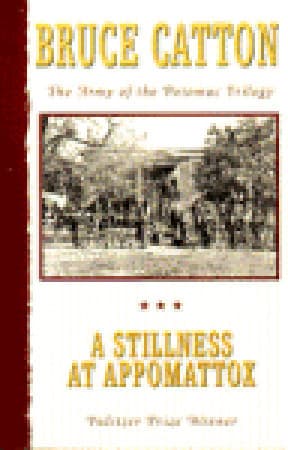
A Stillness at Appomattox cover
Archivist's Choice

A Stillness at Appomattox

Bruce Catton (1953)

Genre

History

Reading Time

10-12 hours

Key Themes

See below

Track Your Reading

Sign in to track this book

Catton brings to life the Union Army's grueling final year, from the bloody Wilderness to the quiet surrender at Appomattox, capturing the exhaustion and ultimate triumph that sealed the fate of a divided nation.

Core Idea

Bruce Catton's "A Stillness at Appomattox" chronicles the final, brutal year of the American Civil War, from the Wilderness Campaign to the surrender at Appomattox Court House. The book argues that the Union victory was not just about more soldiers, but the direct result of Ulysses S. Grant's strategic vision and determination to apply continuous pressure, combined with the resilience and suffering of the common Union soldier. Catton shows how this period changed the war from one of movement to one of attrition, ultimately breaking the Confederacy's will and ability to fight. The narrative portrays the human cost and the psychological toll on both sides, highlighting Robert E. Lee's strategic skill against an overwhelming force, and the eventual collapse of the Confederate cause. It shows the shift in warfare and leadership that brought the conflict to its decisive, yet somber, conclusion.
Reading time
10-12 hours
Difficulty
Medium
✓ Read this if...
You want a highly regarded, detailed, and human-centric account of the final year of the American Civil War, focusing on the campaigns of Grant and Lee.
✗ Skip this if...
You are looking for a broad overview of the entire Civil War or a book that primarily focuses on political or social aspects rather than military campaigns.

Core idea

The central argument and framework that powers the entire book.

Bruce Catton's "A Stillness at Appomattox" chronicles the final, brutal year of the American Civil War, from the Wilderness Campaign to the surrender at Appomattox Court House. The book argues that the Union victory was not just about more soldiers, but the direct result of Ulysses S. Grant's strategic vision and determination to apply continuous pressure, combined with the resilience and suffering of the common Union soldier. Catton shows how this period changed the war from one of movement to one of attrition, ultimately breaking the Confederacy's will and ability to fight.

The narrative portrays the human cost and the psychological toll on both sides, highlighting Robert E. Lee's strategic skill against an overwhelming force, and the eventual collapse of the Confederate cause. It shows the shift in warfare and leadership that brought the conflict to its decisive, yet somber, conclusion.

At a glance

Reading time

10-12 hours

Difficulty

Medium

Read this if...

You want a highly regarded, detailed, and human-centric account of the final year of the American Civil War, focusing on the campaigns of Grant and Lee.

Skip this if...

You are looking for a broad overview of the entire Civil War or a book that primarily focuses on political or social aspects rather than military campaigns.

Key Takeaways

1

Grant's Unyielding Grip

The strategic shift from maneuver to attrition that defined the war's end.

Quote

He would fight it out on this line if it took all summer.

Catton shows Ulysses S. Grant's relentless strategy in the Civil War's final year. Unlike his predecessors, Grant understood that the Confederacy, with its dwindling resources, could not withstand a sustained campaign of attrition. His approach was not about brilliant tactics but about constant pressure. He aimed to engage Lee's army continuously, preventing regrouping or resupplying, even at a terrible cost to his own forces. This strategic shift, from seeking decisive battlefield victories to systematically destroying the enemy's ca...

Supporting evidence

Grant's Overland Campaign (Wilderness, Spotsylvania, Cold Harbor) exemplifies this, where despite horrific casualties, he consistently refused to disengage and retreat, always pushing southward and eastward towards Richmond.

Apply this

In any long-term endeavor, sustained, consistent effort, even when costly, can be more effective than intermittent bursts of brilliance. Sometimes, success is about outlasting the opposition through sheer persistence.

attrition-warfareulysses-s-grantoverland-campaign
2

The Soldier's Burden

The human cost and psychological toll of continuous, brutal combat.

Quote

The men themselves were worn to a frazzle, but their spirit, somehow, still burned.

Catton vividly portrays the suffering and psychological impact on the common soldier during the final year. The battles of the Overland Campaign were brutal, with desperate hand-to-hand fighting, disorienting woods, and trenches that became both refuge and tomb. Constant exposure to death, lack of comforts, and relentless marching pushed men to their physical and mental limits. Still, Catton highlights their camaraderie, resilience, and grim determination. This shows that beyond grand strategies, the war was experienced by individuals...

Supporting evidence

Descriptions of the fighting in the Wilderness and Spotsylvania, where visibility was poor, and wounded men burned to death in forest fires, illustrate the horrific conditions. The 'trench warfare' around Petersburg also highlights the prolonged strain.

Apply this

Understanding the human element in any major undertaking is crucial. Leaders must recognize the toll on their people and foster resilience and support, even while pushing towards objectives.

civil-war-soldierspsychological-impact-of-wartrench-warfare
3

Lee's Defensive Masterclass

The tactical genius of Robert E. Lee in a losing cause.

Quote

Lee was a man who could inspire armies to do the impossible, even when the odds were overwhelmingly against them.

Despite facing overwhelming numbers, Robert E. Lee showed remarkable tactical skill in defending Richmond and Petersburg. Catton emphasizes how Lee, with his dwindling forces, repeatedly anticipated Union movements, fortified positions, and inflicted heavy casualties on Grant's army. His ability to maneuver his smaller force to counter Grant's blows, even as his army was slowly bled dry, shows his military skill. This highlights that even in a doomed position, exceptional leadership can prolong resistance and impose a high price on th...

Supporting evidence

Lee's defensive lines at Spotsylvania and Cold Harbor, where Union assaults were repulsed with staggering losses, are prime examples of his tactical prowess in constructing strong fortifications and exploiting terrain.

Apply this

Even when facing insurmountable odds, strategic thinking and effective utilization of limited resources can maximize resistance and impact. Understanding the opponent's strengths and weaknesses is key to effective defense.

robert-e-leemilitary-tacticssiege-of-petersburg
4

The Confederacy's Fading Hope

The gradual erosion of Southern morale and resources.

Quote

The Confederacy was a house built on sand, and the tide was finally coming in.

Catton chronicles the accelerating decline of the Confederacy's ability to wage war. Beyond battlefield losses, the book details the logistical collapse, rampant inflation, desertions, and growing despair among civilians. The blockade tightened, supplies dwindled, and the sacrifice became unbearable. This was not just a military defeat but a societal breakdown. Sherman's capture of Atlanta and his march to the sea shattered any lingering hopes of foreign intervention or a negotiated peace. The final year reveals a South that was not j...

Supporting evidence

Descriptions of widespread desertion in the Confederate ranks, the desperate calls for more manpower, and the economic hardship detailed in letters and reports from the Confederate home front.

Apply this

Sustainable success requires a robust foundation. Over-reliance on a single strength or ignoring systemic weaknesses can lead to eventual collapse, regardless of initial victories.

confederate-collapseeconomic-impact-of-warsherman's-march
5

Sheridan's Valley Vengeance

The devastating effectiveness of total war in the Shenandoah Valley.

Quote

The Valley was stripped clean, so thoroughly that a crow flying across it would have to carry its own rations.

Philip Sheridan's campaign in the Shenandoah Valley is an example of total war tactics. Catton explains how Sheridan, under Grant's directive, systematically destroyed the Valley's agricultural and industrial capacity, a crucial supply line for Lee's army. This was about more than defeating Confederate forces; it was about making the region useless to the enemy. The burning of barns, mills, and crops, while brutal, had a profound strategic impact, denying Lee vital resources and further demoralizing the Southern populace. It was a har...

Supporting evidence

Sheridan's victories at Winchester and Cedar Creek, followed by the systematic destruction of farms and infrastructure across the Valley in the fall of 1864, illustrate this policy.

Apply this

In competitive environments, sometimes disrupting an opponent's core support systems or supply lines is as critical as direct confrontation. However, the ethical implications of such 'total' strategies must always be weighed.

philip-sheridanshenandoah-valley-campaigntotal-war
6

Politics in the Trenches

The critical role of the 1864 election in the war's continuation.

Quote

The fate of the Union, and the war itself, hung precariously on the ballot box.

Catton highlights the political stakes of the 1864 presidential election, which happened during the grinding campaigns. Lincoln faced strong opposition from George McClellan, who ran on a peace platform. A Democratic victory, especially before major Union successes, could have led to a negotiated settlement that recognized the Confederacy or a weakened Union. The morale of Union soldiers and the Northern public was heavily influenced by the war's progress, making every battlefield outcome a political event. Sherman's capture of Atlant...

Supporting evidence

The widespread despondency in the North during the summer of 1864, the strength of McClellan's 'peace ticket', and the dramatic shift in public opinion following the fall of Atlanta and victories in the Shenandoah.

Apply this

Major undertakings require consistent public and political support. Leaders must not only achieve results but also effectively communicate progress and maintain confidence, especially during difficult periods.

1864-electionabraham-lincolngeorge-mcclellanpublic-opinion-war
7

The Weight of Command

The immense pressure and moral dilemmas faced by top generals.

Quote

To command was to live with the ghosts of thousands, to make decisions that would send men to their graves.

Catton offers glimpses into the minds of Grant and Lee, revealing the burden of command. Both generals, despite their contrasting styles, carried immense responsibility for thousands of lives and the fate of their nations. Grant, often depicted as stoic, endured criticism and the pressure of high casualties, yet maintained his determination. Lee, aware of his army's dwindling strength, faced the agonizing choice between prolonged, futile resistance and surrender. The book shows that beneath strategic decisions lay moral and psychologi...

Supporting evidence

Grant's often solitary demeanor and his repeated refusal to be swayed by casualty reports, and Lee's increasing weariness and his eventual decision to surrender at Appomattox, despite the desire of some to continue guerrilla warfare.

Apply this

Leadership at the highest levels demands not only strategic acumen but also immense emotional resilience and the capacity to make agonizing decisions for the greater good, often in isolation.

military-leadershipgrant-lee-rivalrydecision-making-under-pressure
8

Appomattox: A Gracious End

The surprising magnanimity of Grant in victory.

Quote

The terms were as generous as they could possibly be, a testament to Grant's foresight and his desire for peace.

The surrender at Appomattox, as described by Catton, was not a moment of Union triumph but one of solemn respect and unexpected generosity. Grant's terms — allowing Confederate soldiers to keep their horses and sidearms, and providing rations — were lenient. This decision was crucial in fostering reconciliation and preventing a prolonged guerrilla war. Catton emphasizes that Grant, despite his reputation, understood the importance of healing the nation. His actions at Appomattox showed statesmanship, recognizing that the war's end was...

Supporting evidence

The specific terms of surrender offered by Grant to Lee at Appomattox Court House, and the subsequent quiet and respectful demeanor of Union troops towards their defeated foes.

Apply this

True victory often lies not just in defeating an opponent but in establishing conditions for future cooperation and stability. Generosity and foresight in the moment of triumph can prevent prolonged resentment and conflict.

appomattox-court-housesurrender-termsreconciliationgrant's-statesmanship
9

The Enduring Myth of the Lost Cause

How the war's final year cemented romanticized narratives.

Quote

In defeat, the South found a new kind of victory, one forged in myth and memory.

While Catton focuses on military and human realities, his portrayal of Lee's defense against overwhelming odds, and the devotion of the Confederate soldier, helps us understand the 'Lost Cause' narrative. Even as the Confederacy crumbled, the tenacity and suffering of its soldiers, led by a revered general, created a powerful, tragic narrative of valor against impossible odds. Catton presents the facts of their defeat, but the drama and pathos of the final year, the desperate courage of the defenders, laid ground for future generation...

Supporting evidence

The descriptions of Lee's tactical brilliance and the unwavering loyalty of his troops, even when facing starvation and death, as seen in accounts of the Petersburg trenches and the final retreat.

Apply this

It's crucial to critically examine how historical narratives are constructed and perpetuated, recognizing that even compelling accounts of heroism can be selectively interpreted to support particular ideologies or myths.

lost-cause-mythhistorical-narrativesconfederate-memorylee's-legacy
10

The Unseen Logistics of Victory

The critical, often overlooked, role of supply and infrastructure.

Quote

Armies march on their stomachs, and the Union's stomach was well-fed, while the Confederacy's was empty.

Catton, through his detailed descriptions, shows the Union's logistical superiority. While the focus is often on battles and generals, the continuous supply of food, ammunition, and reinforcements to Grant's massive army, even deep in enemy territory, was a monumental achievement. Conversely, the Confederacy's inability to feed, clothe, and arm its soldiers consistently was a fatal flaw. The Union's well-maintained railroads, efficient quartermaster corps, and industrial capacity were decisive, enabling Grant to pursue his strategy of...

Supporting evidence

The constant flow of supplies to Grant's army during the Overland Campaign, contrasting sharply with Confederate soldiers' accounts of starvation and lack of equipment, particularly during the retreat to Appomattox.

Apply this

In any complex operation, the underlying infrastructure and logistical systems are paramount. Neglecting these 'invisible' components can undermine even the best-laid plans and most dedicated efforts.

military-logisticsunion-industrial-powerquartermaster-corpssupply-lines

Critical analysis

Notable Quotes

It was not a question of marching, or of maneuvering, or even of fighting, but simply of enduring.

Describing the nature of the Overland Campaign and the Union army's relentless push.

The war had begun to take on a character of its own, apart from the men who fought it.

Reflecting on how the conflict evolved beyond individual intentions and became a force unto itself.

They had learned, by now, that courage was not always a matter of reckless daring, but often of quiet, stubborn persistence.

Observing the evolving definition of courage among the soldiers as the war progressed.

Victory was a matter of mathematics as much as of valor.

Discussing the Union's numerical superiority and its impact on the final stages of the war.

The armies were no longer merely armies; they were communities, moving and fighting, but communities nonetheless.

Highlighting the deep bonds and shared experiences that formed within the military units.

What they were doing was not glorious, but it was necessary, and they were doing it.

Describing the grim determination of the Union troops during the grinding campaigns of 1864.

The landscape itself seemed to be bleeding, soaked with the lifeblood of a generation.

A vivid description of the battlefields, emphasizing the immense human cost of the war.

There was a stillness at Appomattox, but it was the stillness of exhaustion, not of peace.

The concluding thought on the surrender at Appomattox, emphasizing the lingering weariness.

Grant was a man who understood the arithmetic of war, and he was using it now, relentlessly.

Characterizing Ulysses S. Grant's strategic approach in the final campaigns.

The war had devoured its own youth, and now it was devouring its own veterans.

Reflecting on the relentless attrition and the toll it took on both new recruits and seasoned soldiers.

They had fought for something that went beyond flags and slogans, something indefinable but deeply felt.

Discussing the underlying motivations of the soldiers, beyond simple patriotism.

This was not the war of bright uniforms and dashing charges; this was the war of mud and blood and endless marching.

Contrasting the romanticized view of war with the harsh reality faced by the soldiers.

The Confederacy was a tree whose roots were cut, but whose leaves still held a desperate, defiant green.

A metaphor for the Confederacy's final, doomed resistance despite overwhelming odds.

They were no longer fighting for abstract principles, but for each other, for the men beside them in the ranks.

Highlighting the shift in soldiers' motivations from grand ideals to immediate camaraderie and loyalty.

Quiz

Test Your Knowledge

Ready to see how well you understood this book? Take our interactive quiz with 10 questions.

10
Questions
~5
Minutes
?
Best Score

Key Questions (FAQ)

'A Stillness at Appomattox' is the concluding volume of Bruce Catton's acclaimed 'Army of the Potomac' trilogy. It vividly chronicles the final, decisive year of the American Civil War, focusing on the campaigns and experiences of the Union's Army of the Potomac from the Wilderness to Appomattox.

About the author

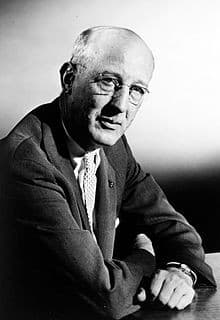
Bruce Catton

Bruce Catton was a prominent American historian and journalist, best known for his vivid narrative histories of the American Civil War. His Pulitzer Prize-winning book, 'A Stillness at Appomattox,' is considered a masterpiece of military history. Catton's extensive work brought the Civil War era to life for generations of readers.