BookBrief
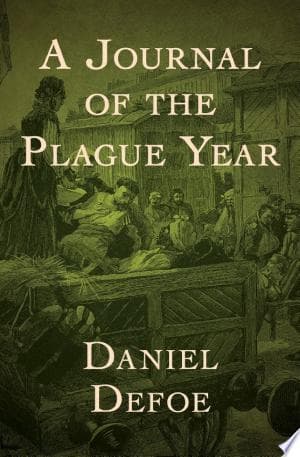
A Journal of the Plague Year cover
Archivist's Choice

A Journal of the Plague Year

Daniel Defoe (1884)

Genre

Memoir / History

Reading Time

8-10 hours

Key Themes

See below

Track Your Reading

Sign in to track this book

Amidst the desolation of 1665 London, a meticulous saddler chronicles the terrifying spread of the bubonic plague, detailing the city's descent into chaos, the grim statistics of death, and the desperate, often futile, attempts at survival.

Core Idea

Defoe's 'A Journal of the Plague Year' chronicles the devastating impact of the 1665 Great Plague of London through the eyes of a fictional observer, H.F. It explores how disease can unravel society, exposing both the worst aspects of human nature—panic, misinformation, and exploitation—and its most resilient qualities, including self-sacrifice, community support, and the drive for survival. The book considers fate, faith, and early public health ethics during widespread suffering and societal collapse. It also highlights the importance of observation and documentation in understanding and responding to crises.
Reading time
8-10 hours
Difficulty
Medium
✓ Read this if...
You are interested in historical accounts of pandemics, the psychological and societal impact of widespread disaster, or the early forms of public health responses.
✗ Skip this if...
You prefer modern prose, are sensitive to detailed descriptions of suffering and death, or are looking for a plot-driven narrative rather than a reflective, observational account.

Core idea

The central argument and framework that powers the entire book.

Defoe's 'A Journal of the Plague Year' chronicles the devastating impact of the 1665 Great Plague of London through the eyes of a fictional observer, H.F. It explores how disease can unravel society, exposing both the worst aspects of human nature—panic, misinformation, and exploitation—and its most resilient qualities, including self-sacrifice, community support, and the drive for survival. The book considers fate, faith, and early public health ethics during widespread suffering and societal collapse. It also highlights the importance of observation and documentation in understanding and responding to crises.

At a glance

Reading time

8-10 hours

Difficulty

Medium

Read this if...

You are interested in historical accounts of pandemics, the psychological and societal impact of widespread disaster, or the early forms of public health responses.

Skip this if...

You prefer modern prose, are sensitive to detailed descriptions of suffering and death, or are looking for a plot-driven narrative rather than a reflective, observational account.

Key Takeaways

1

The Unseen Enemy: Panic & Misinformation

Fear and rumor spread faster and more dangerously than the plague itself, often leading to irrational decisions.

Quote

The people were more afraid of the officers of the city than of the plague itself.

Defoe shows how the psychological effect of the plague, especially the widespread fear and misinformation, was as destructive as the disease itself. Initial denial and attempts to downplay the threat quickly led to widespread panic. This caused an exodus from the city that inadvertently spread the disease. Rumors of cures, conspiracies, and divine judgment created a climate of terror, causing people to make irrational choices, such as self-medicating with dangerous mixtures or shunning the sick. This collective hysteria often overshad...

Supporting evidence

The initial attempts by authorities to suppress news of the plague's severity, followed by the mass exodus of the wealthy and the constant circulation of false cures and prophetic warnings among the common people.

Apply this

In times of crisis, actively seek information from credible sources and critically evaluate claims. Resist the urge to spread unverified information, as it can exacerbate panic and hinder effective responses. Focus on practical, evidence-based actions rather than succumbing to fear-driven impulses.

mass-hysteriainfodemicpublic-psychology
2

Societal Collapse & Resilience

The plague exposed the fragility of social order but also revealed an enduring human capacity for adaptation and mutual aid.

Quote

It was a dreadful time, and the city was a dreadful place.

Defoe describes how the plague systematically destroyed London society. Public services collapsed, law enforcement struggled, and the dead were left unburied. The initial response was often disorganized, leading to a breakdown in trust and an increase in opportunistic crime. However, amidst this chaos, Defoe also describes remarkable acts of resilience and community. Ordinary citizens helped care for the sick, organize burials, and maintain some order. The story shows a duality: the immediate collapse of civil society under extreme pr...

Supporting evidence

The breakdown of law and order, with thieves preying on the sick and dead, contrasted with the formation of volunteer groups to dig mass graves and deliver provisions.

Apply this

Recognize that societal structures are vulnerable to severe shocks. Foster strong community ties and support networks in everyday life, as these become crucial lifelines when formal systems fail. Be prepared to adapt and contribute to informal support systems during emergencies.

social-disintegrationcommunity-resiliencemutual-aid
3

The Indiscriminate Hand of Fate

The plague demonstrated the ultimate equalizer, sparing no one regardless of wealth, status, or piety.

Quote

The rich had no more power over the plague than the poor, nor did their money protect them.

One of the most striking parts of Defoe's account is the plague's complete indifference to social hierarchy. Kings, nobles, paupers, and priests all died. While the wealthy could initially flee, they often carried the disease with them or eventually died upon their return. This indiscriminate nature removed the illusion of control that status and wealth often provide, forcing a grim realization of shared human vulnerability. It challenged common ideas of divine favor and social privilege, showing a stark, biological reality where all ...

Supporting evidence

Defoe explicitly notes that the plague 'swept away' people from all walks of life, from the Lord Mayor's household to the poorest laborers, and even those who fled to the countryside were not always safe.

Apply this

Cultivate humility and recognize the shared humanity in all people. Understand that some challenges, like global pandemics, affect everyone, making collective action and empathy more critical than individual privilege.

mortalitysocial-equalityshared-vulnerability
4

The Power of Observation & Documentation

Even amidst chaos, meticulous record-keeping and firsthand accounts provide invaluable historical and public health lessons.

Quote

I kept a journal of everything that passed.

Though a fictional memoir, Defoe's work shows the importance of observation and documentation during a crisis. His narrator, H.F., carefully records the number of deaths, the disease's progression, public reactions, and the measures taken by authorities. This detailed, almost journalistic approach, even if retrospective and imaginative, gives future generations insights into how epidemics work. It highlights how systematic data collection – even informal – can reveal patterns, inform policy, and serve as a vital historical record, hel...

Supporting evidence

The detailed weekly Bills of Mortality, which the narrator frequently cites and analyzes, and his personal anecdotes of interactions with watchmen, citizens, and infected individuals.

Apply this

During any significant event, consider maintaining a personal journal or contributing to collective data efforts. Documenting experiences, observations, and emotional responses can be therapeutic, provide valuable future reference, and contribute to a broader understanding of the event.

historical-documentationepidemiologyobservational-learning
5

Faith, Superstition & Rationality

The plague forced a confrontation between religious belief, superstitious dread, and nascent scientific understanding.

Quote

It was enough to put a man out of his wits, to see the dreadful apprehensions of the people.

Defoe clearly shows the conflicting ways people understood the plague. For many, it was a direct punishment from God, leading to fervent repentance, public fasts, and increased religious devotion. At the same time, superstition grew, with people consulting astrologers, wearing charms, and believing in absurd remedies. These reactions often overshadowed the more rational, though limited, public health measures like quarantines and burial practices. The book highlights the human tendency to seek meaning and control when facing the unkno...

Supporting evidence

The widespread belief in prophecies, the consults with 'wise men' and astrologers, and the intense religious sermons and public acts of repentance.

Apply this

In times of uncertainty, be aware of the human inclination towards superstition or simplistic explanations. Strive to integrate rational thought and scientific evidence with personal beliefs, recognizing the psychological comfort that faith can offer without letting it override practical action.

religious-responsesupernatural-beliefsscience-vs-faith
6

The Ethics of Public Health Measures

Quarantine and isolation, though effective, raised complex ethical dilemmas regarding individual liberty and collective good.

Quote

It was a cruel thing to shut up people in that manner.

The public health measures during the plague, particularly the 'shutting up' of infected houses, created a difficult ethical problem. While meant to contain the spread, these quarantines were often enforced brutally by watchmen, trapping entire families—sick and healthy alike—inside their homes, sometimes leading to starvation or the death of those who might have recovered. Defoe highlights the tension between the state's role in protecting the general population and the infringement on individual liberties and the potential for sever...

Supporting evidence

The strict enforcement of 'shutting up' houses by watchmen, the tales of families dying inside their homes, and the public's resistance and attempts to escape quarantine.

Apply this

When evaluating public health policies, consider the ethical implications of individual liberty versus collective safety. Advocate for transparent, humane, and evidence-based approaches to quarantine and isolation, ensuring support for those affected.

quarantine-ethicsindividual-libertycollective-good
7

Economic Devastation & Adaptation

Beyond the human toll, the plague wrought economic havoc, forcing radical shifts in trade and labor.

Quote

Trade was at a full stop.

Defoe details the economic disruption caused by the plague. Trade stopped, markets emptied, and countless businesses closed, leading to widespread unemployment and poverty. The wealthy fled, taking their money with them, leaving the city's economy in ruins. However, the story also shows how people adapted. Essential services, though strained, continued. New, informal economies appeared, and some individuals found ways to profit from the crisis, often through exploitation. This shows how a major catastrophe can not only destroy existin...

Supporting evidence

The emptying of the Royal Exchange, the cessation of shipping, the closure of shops, and the rise of individuals selling 'plague water' and other dubious remedies.

Apply this

Understand the interconnectedness of public health and economic stability. Support local businesses and essential workers during crises. Be wary of exploitative practices, but also recognize the human drive to find new ways to sustain livelihoods when traditional systems fail.

economic-impactmarket-disruptioninformal-economy
8

The Enduring Human Spirit

Despite unimaginable suffering and loss, the human capacity for hope, perseverance, and eventual recovery shone through.

Quote

The very air was infected, and every breath was a hazard, yet we lived.

Amidst the death and despair, Defoe's story is a testament to the human spirit. His narrator, H.F., survives physically and mentally, maintaining his observations and composure. The city, though devastated, eventually recovers. People return, trade resumes, and life, scarred but resilient, rebuilds. This speaks to a fundamental human drive to persevere, to find reasons for hope even in the darkest times, and to reconstruct what has been lost. It is a powerful message that even the most catastrophic events, while leaving a lasting mark...

Supporting evidence

The eventual decline in death tolls, the return of citizens to London, and the narrator's survival and continued reflection on the events years later.

Apply this

In times of personal or collective hardship, hold onto hope and the belief in eventual recovery. Focus on small acts of resilience and rebuilding, knowing that even the most severe crises eventually pass, and life finds a way to continue and adapt.

human-resiliencepost-crisis-recoveryoptimism

Critical analysis

Notable Quotes

It was about the beginning of September 1664, that I, among the rest of my neighbours, heard in ordinary discourse, that the plague was returned again in Holland.

The narrator introduces the initial rumors of the plague's return, foreshadowing its arrival in London.

A dreadful plague was broke out in London; and that it spread itself in a frightful manner, insomuch that the bills of mortality, which were at first but 300, rose in a few weeks to above 1000.

The narrator describes the rapid and terrifying escalation of the plague in London, evidenced by the soaring death tolls.

But the misery of the poor was, that there was no way for them to fly but into the mouth of danger, and that was of the plague itself, which they could not avoid.

Highlighting the predicament of the poor who lacked the means to escape the infected city, forcing them into greater risk.

It was a dreadful thing to hear the dismal cries of poor people at their windows and doors, and in the streets, all day and all night, groans and lamentations, and sometimes frantic calls for help.

The narrator vividly portrays the constant, harrowing sounds of suffering that permeated the city during the height of the plague.

Many of these poor people, as I have heard, had been so long out of business, and had so entirely spent all the little they had, that they were in the utmost extremity, and knew not what to do.

Describing the economic devastation and desperation faced by many, particularly the working class, due to the loss of livelihoods.

The face of London was now indeed strangely altered. I mean, the whole aspect of things was changed; the streets were empty of people, and the houses full of dismal stories.

Reflecting on the dramatic transformation of London from a bustling city to a desolate place filled with tragedy and death.

It was a time when people could not be too cautious, for the very air was infectious, and every breath they drew was a hazard to their lives.

Emphasizing the pervasive fear and danger of infection, where even the act of breathing felt perilous.

The poorer sort of people, and even some of the middle kind, were for a long time under a kind of stupidity, and like distracted creatures, could not tell what to do.

Observing the widespread psychological impact of the plague, leading to confusion and a sense of helplessness among the populace.

It was a lamentable thing to see the women and children go about the streets with their hair loose, wringing their hands, and making most dismal lamentations.

A poignant description of public displays of grief and despair, particularly by women and children, in the streets.

But it was impossible to stay the infection, or to prevent people from going about their lawful occasions, though with the utmost hazard to their lives.

Noting the difficulty of enforcing quarantine or preventing people from engaging in essential activities, despite the extreme risks.

No sooner was the plague abated, than the people returned to their old courses of life, as if nothing had happened.

Remarking on the swift return to normalcy and forgetfulness of the past horrors once the plague subsided, highlighting human resilience or denial.

And it was a strange thing to see how suddenly, in a manner, the whole face of things was changed.

Reflecting on the rapid shift from desolation back to bustling life as the plague receded.

I am not writing a history, but a journal of what I saw, and what I heard, and what I felt.

The narrator clarifies his purpose and method, emphasizing the personal, experiential nature of his account rather than a formal historical record.

The greatest number died by the violence of the distemper, and not by the want of help.

Contrasting the common perception of deaths due to lack of medical care with the reality that the disease itself was overwhelmingly lethal.

Quiz

Test Your Knowledge

Ready to see how well you understood this book? Take our interactive quiz with 10 questions.

10
Questions
~5
Minutes
?
Best Score

Key Questions (FAQ)

While presented as a first-person memoir, Daniel Defoe's 'A Journal of the Plague Year' is a fictionalized account. Defoe, who was a child during the Great Plague of London in 1665, meticulously researched historical records and eyewitness accounts to create a vivid and realistic narrative, often blurring the lines between fact and fiction.

About the author

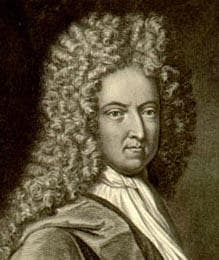
Daniel Defoe

Daniel Defoe was an English writer, trader, journalist, pamphleteer and spy. He is most famous for his novel Robinson Crusoe, published in 1719, which is claimed to be second only to the Bible in its number of translations. He has been seen as one of the earliest proponents of the English novel, and helped to popularise the form in Britain with others such as Aphra Behn and Samuel Richardson. Defoe wrote many political tracts, was often in trouble with the authorities, and spent a period in prison. Intellectuals and political leaders paid attention to his fresh ideas and sometimes consulted him.