BookBrief
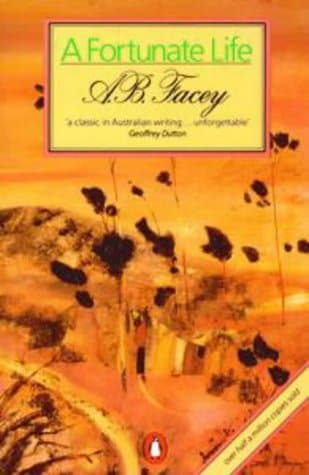
A Fortunate Life cover
Archivist's Choice

A Fortunate Life

Albert B. Facey (1981)

Genre

Biography / Memoir / History

Reading Time

600 min

Key Themes

See below

Track Your Reading

Sign in to track this book

Albert Facey's 'A Fortunate Life' tells of an ordinary man's journey from the West Australian frontier and Gallipoli trenches to family life, showing his honesty, compassion, and courage through adversity.

Core Idea

Albert Facey's 'A Fortunate Life' is a moving autobiography about hardship and resilience in early 20th-century rural Australia. Facey, born poor and orphaned young, faced hard labor, little education, and personal losses, including his brothers in WWI and his wife. He kept his optimism, worked hard, and stayed morally strong. The book shows how the human spirit endures and finds meaning even in hard times. It argues that a life lived with honesty, integrity, and love, no matter how humble, is a 'fortunate' one. Facey's direct, simple writing describes the social history of a past era, the difficulties of pioneer life, and war's impact on families. His story shows that true fortune comes from good character, strong human connections, and living an honest life. His 'ordinary' voice is a source of wisdom.
Reading time
600 min
Difficulty
Easy
✓ Read this if...
You appreciate raw, unvarnished true stories of resilience, want to understand early 20th-century Australian social history, or seek inspiration from an ordinary man who faced immense hardship with extraordinary grace and dignity.
✗ Skip this if...
You prefer fast-paced narratives, are sensitive to detailed accounts of hardship and loss, or are looking for a book with complex literary devices or philosophical discourse.

Core idea

The central argument and framework that powers the entire book.

Albert Facey's 'A Fortunate Life' is a moving autobiography about hardship and resilience in early 20th-century rural Australia. Facey, born poor and orphaned young, faced hard labor, little education, and personal losses, including his brothers in WWI and his wife. He kept his optimism, worked hard, and stayed morally strong. The book shows how the human spirit endures and finds meaning even in hard times. It argues that a life lived with honesty, integrity, and love, no matter how humble, is a 'fortunate' one.

Facey's direct, simple writing describes the social history of a past era, the difficulties of pioneer life, and war's impact on families. His story shows that true fortune comes from good character, strong human connections, and living an honest life. His 'ordinary' voice is a source of wisdom.

At a glance

Reading time

600 min

Difficulty

Easy

Read this if...

You appreciate raw, unvarnished true stories of resilience, want to understand early 20th-century Australian social history, or seek inspiration from an ordinary man who faced immense hardship with extraordinary grace and dignity.

Skip this if...

You prefer fast-paced narratives, are sensitive to detailed accounts of hardship and loss, or are looking for a book with complex literary devices or philosophical discourse.

Key Takeaways

1

Resilience Forged in Hardship

Early adversity wasn't a curse, but a crucible for an indomitable spirit.

Quote

I was never afraid of hard work, and I was always willing to learn.

Albert Facey started life with many disadvantages, orphaned and working at eight. This difficult start gave him great resilience. He did not just suffer hardship; he adapted, learned, and found purpose through constant challenges. Early experiences on the West Australian frontier, from farm work to dealing with bad employers, built his self-reliance and inner strength. These qualities helped him through a life with big personal and societal changes. His ability to recover and move forward, often with little help, shows the character f...

Supporting evidence

Facey's accounts of working for various farmers from a young age, often under harsh conditions and with minimal pay, yet always seeking to learn new skills like horse breaking or fencing.

Apply this

When facing new challenges, reflect on past adversities overcome. Identify the skills and mental fortitude developed during those times and consciously apply them to current situations. Frame difficulties as opportunities for growth, not just obstacles.


resiliencegritself-relianceadversity
2

The Dignity of Labor

Finding meaning and self-worth through honest, diligent work, regardless of its perceived status.

Quote

I found that if you worked hard and did your job well, people respected you.

Facey's story often shows the dignity he found in work. For him, work was not just a way to earn money, but a main part of his identity and a source of real satisfaction. Whether he was a farmhand, a railway worker, or a prospector, he did every task carefully and well. This was not about ambition or getting rich, but about the value of contributing, learning a skill, and earning an honest living. When many wanted to avoid manual labor, Facey embraced it. He earned respect from others and, more importantly, self-respect through his co...

Supporting evidence

His detailed descriptions of learning various trades, from farming techniques to railway maintenance, and the pride he took in performing these tasks effectively.

Apply this

Approach all tasks, even mundane ones, with a commitment to excellence. Seek to understand the value your work provides and take pride in your contributions, fostering a sense of accomplishment and self-worth.

work ethicdignity-of-workcraftsmanshipintegrity
3

The Enduring Power of Love and Companionship

Finding solace and strength in deep personal connections amidst life's relentless challenges.

Quote

My wife, Evelyn, was my rock. We shared everything, the good and the bad.

Despite a life with much hardship, including Gallipoli, the Great Depression, and losing children, Facey consistently called his life 'fortunate.' A big part of this fortune came from his long relationship with his wife, Evelyn. Their sixty years of marriage gave him a constant anchor, steady support, and a shared base for their lives. This relationship was not overly romanticized; it was a partnership of mutual respect, hard work, and shared burdens. It shows how strong personal connections, built on trust and shared experience, can ...

Supporting evidence

His poignant accounts of his marriage to Evelyn, their shared struggles during the Depression, and his profound grief at her passing after six decades together.

Apply this

Invest deeply in your significant relationships. Actively nurture bonds with loved ones through shared experiences, open communication, and mutual support, recognizing their crucial role in your overall well-being and resilience.

marriagecompanionshiplovesupport-system
4

Facing War Without Illusion

A stark, unvarnished account of combat's brutality and its lasting psychological toll.

Quote

It was just a slaughterhouse. There was no glory in it, only death and suffering.

Facey's descriptions of Gallipoli are some of the most powerful and realistic accounts of World War I from a common soldier. He removes ideas of glory or heroism, showing war as chaotic, brutal, and a senseless waste of life. His writing has no nationalistic pride; instead, it focuses on the physical and mental toll, constant fear, bad conditions, and random death. This honesty is an important historical record, reminding us of conflict's true cost and challenging any clean or glorified images of war. His ability to recall and clearly...

Supporting evidence

His detailed and graphic descriptions of the trenches, the constant shelling, the sight of dead and wounded comrades, and the sheer terror of battle at Gallipoli.

Apply this

Seek out diverse perspectives on historical events, especially those shaped by conflict, to gain a more nuanced and realistic understanding beyond official narratives. Support initiatives that promote peace and challenge the romanticization of war.

war-traumagallipolianti-warhistorical-memory
5

The Simple Honesty of a Good Man

Integrity and fair dealing as guiding principles, even when others faltered.

Quote

I always tried to do the right thing, even when it was hard.

Throughout his life, Facey showed a steady commitment to honesty and fair dealing. From early experiences with bad employers to managing land ownership and community interactions, he kept a moral compass that valued integrity. He was not guided by big philosophical ideas, but by a simple, deep sense of right and wrong. This commitment often put him at a disadvantage in a world where opportunism was common, but he never changed. His life reminds us that true character is built on consistent ethical behavior, not just when it is easy, b...

Supporting evidence

His accounts of being cheated by employers but still fulfilling his duties, his straightforward approach to business dealings, and his reputation as a reliable and trustworthy man within his community.

Apply this

Cultivate a personal code of ethics and consistently adhere to it in all interactions, professional and personal. Prioritize honesty and fairness, even when it demands personal sacrifice, recognizing its long-term value for self-respect and reputation.

integrityhonestyethicsmoral-compass
6

Adaptability in the Face of Change

Embracing new skills and circumstances as essential for survival and progress.

Quote

You had to learn new ways if you wanted to get by. Things were always changing.

Facey's life covered a time of great change in Australia, from rough frontier days to the modern post-war era. He survived and succeeded largely because he was very adaptable. He moved easily between different jobs—farmhand, prospector, railway worker, tram driver—always willing to learn new skills and adjust to different places and technologies. When the Great Depression hit and he lost his land, he did not give up but found new work. This constant willingness to change, to let go of old ways when needed, and to accept the unfamiliar...

Supporting evidence

His varied work history, from manual farm labor to operating complex machinery on the railways, and his ability to find work in different regions and industries as economic conditions shifted.

Apply this

Actively seek opportunities to learn new skills and adapt to evolving technologies or circumstances in your personal and professional life. View change not as a threat, but as an inherent part of progress and an opportunity for personal growth.

adaptabilityflexibilitylifelong-learningchange-management
7

The Enduring Value of Community

Finding support, camaraderie, and a sense of belonging in shared experiences.

Quote

We all helped each other out. That's how we got through it.

Despite his early isolation, Facey consistently found and contributed to strong community groups throughout his life. Whether it was the friendship of fellow soldiers, mutual support among rural workers, or close relationships in his later city neighborhoods, community played a vital role. In very hard times, like the Depression, collective willingness to 'help each other out' allowed many to survive. This was not abstract charity but practical, shared support—sharing food, labor, or a kind word. Facey's story reminds us that people a...

Supporting evidence

His descriptions of sharing rations and supporting wounded comrades in Gallipoli, and the reciprocal help among neighbors and friends during the Depression.

Apply this

Actively participate in and contribute to your local communities, workplaces, or social groups. Offer help to others and be open to receiving it, recognizing the inherent strength and resilience found in collective action and shared experiences.

community-buildingsocial-supportmutual-aidbelonging
8

Finding Fortune in Simplicity

True contentment derived not from material wealth, but from a life well-lived and appreciated.

Quote

I've had a fortunate life, and I wouldn't change a thing.

Perhaps the most striking part of Facey's memoir is his claim of having lived a 'fortunate life,' despite much personal loss, poverty, and trauma. This view challenges common ideas of fortune, which often link it with wealth, fame, or no suffering. For Facey, fortune was in simple joys: his family's love, the satisfaction of honest work, the beauty of the Australian land, and the human spirit's resilience. He did not focus on what he lacked but appreciated what he had. This deep contentment, from a life lived with integrity and a deep...

Supporting evidence

His concluding reflection on his life, despite all the hardships, as being 'fortunate,' emphasizing his family, his work, and his survival.

Apply this

Practice gratitude daily, focusing on the simple, fundamental aspects of your life rather than solely on material possessions or external achievements. Reframe challenges as opportunities for growth and resilience, adopting a long-term perspective on overall well-being.

gratitudecontentmentminimalismperspective
9

The Power of an Ordinary Voice

Unsung lives hold profound wisdom and offer invaluable historical and human insights.

Quote

I just told my story the best way I could, without putting on any airs.

The existence and success of 'A Fortunate Life' show the great value of stories from 'ordinary' people. Facey was not a politician, general, or celebrity; he was an everyday Australian whose life, though challenging, was mostly outside historical records. Yet, his memoir connected deeply because it offered an authentic, clear account of an era and human experience often missed by big historical narratives. It shows that deep wisdom, resilience, and insight can be found in the lives of those who simply 'got on with it.' His story valid...

Supporting evidence

The book's immense popularity and critical acclaim, despite being written by an uneducated man in his eighties, highlighting its universal appeal and historical significance.

Apply this

Actively seek out and listen to the stories of older generations and individuals from diverse backgrounds. Recognize the unique wisdom and historical insights contained within personal narratives, contributing to a richer understanding of the world.

oral-historymemoirautobiographycommon-man

Critical analysis

Notable Quotes

I had no schooling, but I learned a lot from life.

Reflecting on his lack of formal education and his life experiences.

It was a hard life, but a good life.

A recurring sentiment throughout the book, summarizing his overall outlook.

We were poor, but we didn't know we were poor.

Describing his childhood in the bush, where poverty was the norm.

You had to be tough to survive in those days.

Referring to the harsh conditions and demands of early Australian life.

I never had much, but I always had enough.

Expressing contentment despite material scarcity.

War is a terrible thing, and it changes a man.

Reflecting on his experiences in World War I and its lasting impact.

My life was full of ups and downs, but I wouldn't have it any other way.

A summary of his acceptance of life's challenges and triumphs.

Family was everything to me.

Highlighting the central importance of his family throughout his life.

You learn to make do with what you've got.

Describing the resourcefulness required for life in the bush and during difficult times.

There's always something to be thankful for.

A testament to his enduring optimistic outlook despite numerous hardships.

The land was harsh, but it was beautiful.

Describing the Australian landscape where he spent much of his life.

I saw a lot of changes in my time.

Reflecting on the significant societal and technological changes he witnessed over his long life.

I just lived my life the best way I knew how.

A humble reflection on his approach to life, without pretense.

Work was a part of life, and you just got on with it.

Describing the work ethic prevalent in his era and his own approach to labor.

Quiz

Test Your Knowledge

Ready to see how well you understood this book? Take our interactive quiz with 10 questions.

10
Questions
~5
Minutes
?
Best Score

Key Questions (FAQ)

'A Fortunate Life' is the autobiography of Albert B. Facey, an ordinary man who lived an extraordinary life through the late 19th and 20th centuries in Western Australia. It chronicles his struggles from a parentless childhood working at age eight, surviving Gallipoli, the Great Depression, and profound personal losses, all while maintaining a spirit of honesty, compassion, and courage.

About the author

Albert B. Facey

Albert B. Facey was an Australian author best known for his autobiographical novel, 'A Fortunate Life.' Published in 1981, the book chronicles his challenging childhood and early adulthood in Western Australia. Despite facing significant hardship, Facey's honest and resilient narrative resonated deeply, earning critical acclaim and becoming a beloved classic of Australian literature.