BookBrief
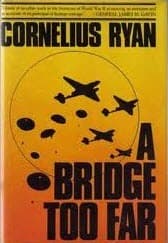
A Bridge Too Far cover
Archivist's Choice

A Bridge Too Far

Cornelius Ryan (1631)

Genre

History

Reading Time

15-20 hours (approx. 670 pages)

Key Themes

See below

Track Your Reading

Sign in to track this book

A desperate Allied gamble to end World War II with an airborne assault on the Rhine bridge at Arnhem becomes a story of heroism, miscalculation, and tragic defeat, with heavy costs for the Allies.

Core Idea

Cornelius Ryan's "A Bridge Too Far" reconstructs Operation Market Garden, the Allied attempt to seize a series of bridges in the Netherlands in September 1944. The book shows that overconfidence, flawed intelligence, logistical problems, and underestimating German strength led to a catastrophic failure, despite immense bravery. It examines how a good strategic plan, poorly executed, can fall apart due to many small failures, human error, and war's unpredictability. It ultimately demonstrates that even determined efforts can fail because of the 'fog of war' and combat's harsh realities. The main idea is that Allied leaders, wanting a quick end to the war, pushed an overly ambitious plan without considering intelligence gaps, logistical limits, and the resilience of a seemingly defeated enemy. The book illustrates the high human cost of such strategic errors, showing how individual acts of heroism, while inspiring, could not overcome the plan's basic flaws, leading to one of the most significant Allied defeats of World War II.
Reading time
15-20 hours (approx. 670 pages)
Difficulty
Medium
✓ Read this if...
You are fascinated by detailed military history, the mechanics of a large-scale operation, and the intricate reasons behind military failures. Also if you appreciate narratives built from extensive primary sources and firsthand accounts.
✗ Skip this if...
You prefer high-level strategic overviews without deep dives into tactical details, or if you find the minute-by-minute unfolding of a battle, including its many setbacks and tragic outcomes, too dense.

Core idea

The central argument and framework that powers the entire book.

Cornelius Ryan's "A Bridge Too Far" reconstructs Operation Market Garden, the Allied attempt to seize a series of bridges in the Netherlands in September 1944. The book shows that overconfidence, flawed intelligence, logistical problems, and underestimating German strength led to a catastrophic failure, despite immense bravery. It examines how a good strategic plan, poorly executed, can fall apart due to many small failures, human error, and war's unpredictability. It ultimately demonstrates that even determined efforts can fail because of the 'fog of war' and combat's harsh realities.

The main idea is that Allied leaders, wanting a quick end to the war, pushed an overly ambitious plan without considering intelligence gaps, logistical limits, and the resilience of a seemingly defeated enemy. The book illustrates the high human cost of such strategic errors, showing how individual acts of heroism, while inspiring, could not overcome the plan's basic flaws, leading to one of the most significant Allied defeats of World War II.

At a glance

Reading time

15-20 hours (approx. 670 pages)

Difficulty

Medium

Read this if...

You are fascinated by detailed military history, the mechanics of a large-scale operation, and the intricate reasons behind military failures. Also if you appreciate narratives built from extensive primary sources and firsthand accounts.

Skip this if...

You prefer high-level strategic overviews without deep dives into tactical details, or if you find the minute-by-minute unfolding of a battle, including its many setbacks and tragic outcomes, too dense.

Key Takeaways

1

The Perils of Overconfidence

Operation Market Garden's fatal flaw was an unshakeable belief in its own success, blinding planners to critical intelligence.

Quote

The feeling was that the Germans were beaten; it was only a matter of time. This overconfidence permeated every level of planning.

Operation Market Garden, though ambitiously planned, was undermined by widespread overconfidence. Allied planners, encouraged by post-D-Day successes and the swift advance through France, genuinely believed the German Wehrmacht was close to collapse. This led to a dangerous downplaying of enemy strength, a disregard for unfavorable intelligence, and a casual attitude toward logistical and tactical risks. The 'end the war by Christmas' mindset, while understandable, created an environment where critical review was set aside in favor of...

Supporting evidence

The repeated dismissal of intelligence reports detailing the presence of two SS Panzer divisions (9th and 10th) near Arnhem, or the failure to adequately address the logistical challenges of supplying such a large force deep behind enemy lines, despite warnings from British XXX Corps commander General Horrocks.

Apply this

Leaders must actively cultivate a culture of skepticism and critical self-assessment, even (especially) during periods of success. Encourage dissent and ensure mechanisms are in place to seriously evaluate negative intelligence or worst-case scenarios, rather than allowing prevailing optimism to dictate strategy.

overconfidence-biasstrategic-planningmilitary-intelligence
2

The Fog of War is Real

Despite modern communication, the chaos and unpredictability of battle rendered intelligence and command almost useless at critical junctures.

Quote

Distance, enemy action, and sheer bad luck conspired to create an information vacuum at the very moments when clarity was most desperately needed.

Ryan clearly shows how the 'fog of war'—the inherent uncertainty in combat—became a main challenge at Arnhem. Despite advances in radio communication, the operation's scale, combined with unexpected German resistance and vulnerable communication lines, meant that commanders on the ground often lacked information. Intelligence, even when accurate, struggled to reach the right people in time, or was misinterpreted. Radios failed, messages were lost, and events moved too quickly for effective coordination. This created a fragmented battl...

Supporting evidence

The repeated failures of radio communication within the British 1st Airborne Division, particularly between Major-General Urquhart's headquarters and the isolated battalions fighting at the Arnhem bridge. This communication breakdown was largely due to equipment issues and the dense urban environment, but fundamentally isolated the spearhead from its command.

Apply this

When planning complex operations, assume communication will fail. Build in redundancy, decentralized decision-making authority, and clear objectives for subordinate units that allow them to act autonomously within the broader strategic intent, even without constant contact.

fog-of-warmilitary-communicationbattlefield-chaos
3

Logistics: The Unsung Kingmaker

Operation Market Garden's downfall highlights how even the most brilliant plans collapse without meticulous logistical support.

Quote

For all the audacious planning, the sheer physical reality of moving men, supplies, and equipment proved to be the ultimate arbiter of success or failure.

Ryan's narrative argues that logistics, often overlooked in military history, determines the success or failure of campaigns. Market Garden was an ambitious airborne assault followed by a rapid ground advance, yet logistical challenges were consistently underestimated. The single, narrow road ('Hell's Highway') for XXX Corps, insufficient air resupply, and difficulties moving heavy equipment through a contested corridor became impossible obstacles. A lack of bridging equipment for the Maas and Waal rivers, the inability to quickly cle...

Supporting evidence

The agonizingly slow advance of XXX Corps along Hell's Highway, constantly harassed and delayed by German counter-attacks and roadblocks, preventing timely relief for the airborne divisions. Also, the critical shortage of anti-tank ammunition and medical supplies for the British paratroopers at Arnhem.

Apply this

Prioritize logistical planning and contingencies from the outset of any complex project. Always over-estimate resource needs and potential bottlenecks. Acknowledge that the 'boring' details of supply and transport are often more critical than the 'exciting' strategic vision.

military-logisticssupply-chainoperational-planning
4

The Price of Hubris and Complacency

German forces, though seemingly on the ropes, demonstrated remarkable resilience and adaptability when underestimated.

Quote

The Allies had assumed a broken enemy, but the Germans, even in retreat, proved capable of astonishing speed and ferocity in defense.

A critical, often tragic, lesson from 'A Bridge Too Far' is the danger of underestimating an adversary, even when they seem defeated. The Allies, particularly the British, had become somewhat complacent after their swift advances across France. They believed the Germans lacked the will or capacity for a serious defense. This overconfidence was shattered by the unexpected resilience and quick reorganization of German forces, especially the SS Panzer divisions near Arnhem. Despite heavy losses and disarray, these units, under capable le...

Supporting evidence

The swift and effective deployment of the 9th and 10th SS Panzer Divisions (which were refitting near Arnhem) to counter the British airborne landing, seizing crucial areas and isolating landing zones almost immediately. Their unexpected strength and quick reaction were a major shock.

Apply this

Never underestimate your competition, even when they appear weak or in decline. Always anticipate their potential for resurgence, adaptability, and desperate measures. Maintain a healthy respect for their capabilities and plan for worst-case scenarios, regardless of your own perceived strength.

enemy-assessmentmilitary-resiliencestrategic-underestimation
5

Heroism Amidst Futility

The book is a testament to the extraordinary courage of individual soldiers, often fighting and dying for an ultimately flawed plan.

Quote

Their courage was beyond question, a shining beacon in a sea of despair, yet it could not overcome the deficiencies of a plan that asked too much.

While 'A Bridge Too Far' is a story of strategic failure, it also shows the raw, unwavering heroism of the common soldier. Ryan dedicates much of his narrative to the individual experiences of paratroopers, glider pilots, tank crews, and infantrymen, both Allied and German, as well as the Dutch civilians caught in the fighting. These personal stories reveal incredible acts of bravery, self-sacrifice, and endurance in the face of overwhelming odds, starvation, and constant terror. The tragedy is amplified by the realization that much o...

Supporting evidence

The sustained, isolated defense of the Arnhem bridge by Lieutenant Colonel John Frost's 2nd Battalion, 1st Parachute Brigade, for four days against overwhelming German forces, running out of ammunition and medical supplies. Their stand became legendary for its sheer tenacity.

Apply this

Leaders must recognize that their decisions directly impact the lives and sacrifices of those under them. While heroism is inspiring, it's a moral imperative to ensure that such sacrifices are made in pursuit of well-conceived, achievable objectives, not to compensate for preventable errors.

military-couragehuman-cost-of-warleadership-responsibility
6

The Ripple Effect of Small Failures

A series of seemingly minor setbacks compounded into a cascading catastrophe.

Quote

There was no single, decisive mistake, but rather a relentless accumulation of small errors, oversights, and misfortunes that together spelled doom.

One of the most valuable insights from 'A Bridge Too Far' is how complex systems can fail not from one major error, but from many seemingly minor, interconnected problems. At Arnhem, these included faulty radio equipment, the unexpected presence of panzers, the decision to land paratroopers far from the bridge, the narrowness of Hell's Highway, delays in air resupply due to weather, and the failure to act on intelligence. Each of these alone might have been overcome, but together, they created a 'perfect storm' of operational failure....

Supporting evidence

The initial decision to drop the British 1st Airborne Division several miles from the Arnhem bridge, largely due to concerns about anti-aircraft fire near the bridge, which gave the Germans crucial time to react and secure key access points before the paratroopers could reach their objective.

Apply this

In any complex project, meticulously identify and mitigate even 'minor' risks. Understand that dependencies mean small failures can have disproportionate impacts. Regularly review and adjust plans based on emerging challenges, rather than hoping they will resolve themselves.

systemic-failurerisk-managementcascading-errors
7

The Human Element: Civilians in Conflict

The book vividly portrays the devastating impact of war on the innocent civilian population.

Quote

Caught between the hammer and the anvil, the Dutch civilians endured unimaginable suffering, their homes and lives shattered by a battle not their own.

Ryan's narrative goes beyond the military, offering glimpses into the lives of Dutch civilians caught in the chaos of Market Garden. Their experiences are a stark reminder of war's indiscriminate cruelty. From offering aid to wounded soldiers, to sheltering in cellars under constant shelling, to ultimately facing forced evacuation and starvation during the subsequent 'Hunger Winter,' their suffering is a powerful contrast to the strategic maneuvering of generals. The book emphasizes that war is not just about soldiers and battles; it'...

Supporting evidence

The vivid accounts of Dutch families sheltering in basements as the battle raged over their heads, witnessing the destruction of their homes, and their desperate efforts to provide food and water to wounded paratroopers despite German patrols.

Apply this

In any conflict or crisis, actively consider and mitigate the impact on non-combatant populations. Humanitarian considerations should be integral to planning, not an afterthought. Recognize that the ripple effects of conflict extend far beyond the immediate objectives.

civilian-casualtieswar-impacthumanitarian-crisis
8

The Burden of Command

Leaders face immense pressure, where decisions made in isolation have far-reaching, often deadly, consequences.

Quote

The weight of command was a crushing burden, a lonely responsibility where every choice could mean life or death for thousands.

Ryan explores the immense psychological and moral burden carried by commanders at all levels during Market Garden. From Montgomery's ambitious strategic vision to Urquhart's desperate attempts to maintain control amid chaos, and Frost's unwavering resolve at the bridge, the book shows leadership as a solitary, often agonizing, effort. Decisions had to be made with incomplete information, under extreme stress, and with the full knowledge that thousands of lives were at stake. The narrative highlights the tension between strategic goals...

Supporting evidence

General Urquhart's personal ordeal, trapped behind enemy lines for days, unable to communicate with his command, experiencing the battle directly with his men, and the immense pressure on him to somehow salvage the situation despite overwhelming odds.

Apply this

Leaders must cultivate resilience, clarity of thought under pressure, and the ability to make difficult decisions with imperfect information. Recognize the isolating nature of command and build strong advisory networks, but ultimately accept the responsibility that the final decision rests solely with you.

leadership-pressuredecision-making-under-duressmilitary-leadership
9

The Enduring Power of Primary Sources

Ryan's methodology of interviewing hundreds of participants brings unparalleled depth and authenticity to historical narrative.

Quote

The raw, unvarnished recollections of those who lived it are the truest testament to history's brutal reality.

'A Bridge Too Far' is a masterclass in historical methodology, especially in its use of extensive primary source interviews. Ryan's careful efforts to find and interview hundreds of participants—from generals to privates, Allied and German, and Dutch civilians—give the narrative an unmatched sense of immediacy, authenticity, and human depth. This approach allows for multiple perspectives, revealing not just the 'official' story but the many personal experiences, confusions, and acts of bravery and cowardice that make up the true fabri...

Supporting evidence

The book is replete with direct quotes and anecdotes from individuals like Sergeant John Geddes of the British Parachute Regiment, who described specific moments of terror and camaraderie, or the detailed accounts of Dutch civilians like Kate ter Horst, who kept a diary and tended to wounded soldiers.

Apply this

When seeking to understand complex events or problems, always go beyond official reports or secondary analyses. Seek out firsthand accounts, diverse perspectives, and direct observations. The deepest insights often come from those closest to the action.

oral-historyprimary-sourceshistorical-research

Critical analysis

Notable Quotes

For the paratroopers, the battle was not just about taking ground; it was about holding it against overwhelming odds.

Describing the initial challenges faced by the airborne divisions.

The Arnhem bridge, a steel spiderweb across the Lower Rhine, became the focal point of their dreams and their nightmares.

Highlighting the strategic importance and psychological weight of the Arnhem bridge.

They were told it would be a 'mad dash,' a quick thrust to seize the bridges. They found instead a prolonged, bloody siege.

Contrasting the initial optimistic planning with the grim reality of the battle.

Courage was a common commodity; fear, a constant companion.

Reflecting on the emotional state of the soldiers during intense combat.

The road to Arnhem was paved with good intentions and the bodies of fallen men.

A poignant summary of the costly advance towards Arnhem.

Every yard gained was paid for in blood, every hour a testament to human endurance.

Emphasizing the heavy cost and continuous effort required from the troops.

The Dutch civilians, caught between the hammer and the anvil, displayed extraordinary bravery and compassion.

Acknowledging the role and suffering of the Dutch civilian population.

Logistics, the unglamorous backbone of any military operation, proved to be a critical, often fatal, flaw.

Pointing out the crucial role of supply lines and their breakdown.

The river became not just a geographical barrier, but a symbol of the insurmountable odds they faced.

Illustrating the symbolic significance of the Rhine river as an obstacle.

Failure, when it came, was not for lack of trying, but for the inherent flaws in the grand design.

Attributing the ultimate failure of the operation to strategic miscalculations.

They went in with high hopes, believing in a swift victory. They left with a deeper understanding of the brutal realities of war.

Summarizing the transformation of the soldiers' understanding of war.

The courage of the individual soldier, often overlooked in the sweep of grand strategy, was the true heart of the battle.

Highlighting the importance of individual bravery over overarching strategic plans.

A bridge too far was not just a phrase; it was the tragic epitaph for an audacious, ill-fated gamble.

Explaining the significance of the book's title in the context of the operation's outcome.

The wind carried the sounds of battle and the cries of the wounded, a constant, mournful symphony.

Evoking the sensory experience of the battlefield.

Quiz

Test Your Knowledge

Ready to see how well you understood this book? Take our interactive quiz with 10 questions.

10
Questions
~5
Minutes
?
Best Score

Key Questions (FAQ)

'A Bridge Too Far' is Cornelius Ryan's detailed historical account of Operation Market Garden, the ambitious Allied airborne operation in September 1944. It chronicles the attempt by American and British airborne forces to capture key bridges in the Netherlands, particularly the crucial Rhine bridge at Arnhem, to end World War II by Christmas.

About the author

Cornelius Ryan

Cornelius Ryan was a renowned Irish-American journalist and author celebrated for his meticulously researched and gripping accounts of World War II. His most famous works, 'The Longest Day' and 'A Bridge Too Far,' are considered definitive narratives of pivotal Allied operations. Ryan's dedication to historical accuracy and vivid storytelling made him a master of military history non-fiction.