BookBrief
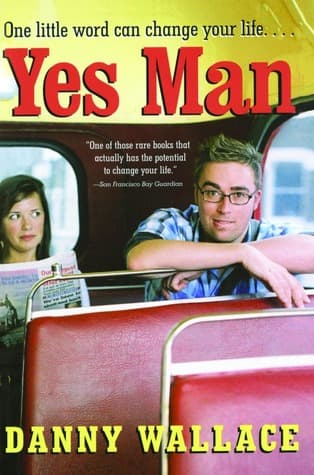
Yes Man cover
Archivist's Choice

Yes Man

Danny Wallace (2005)

Genre

Lifestyle / Biography / Memoir

Reading Time

6-8 hours

Key Themes

See below

Track Your Reading

Sign in to track this book

A man's isolated life changes when he spends a year saying "yes" to every opportunity, leading to adventures, love, and self-discovery.

Core Idea

Danny Wallace's 'Yes Man' describes his year-long experiment of saying 'yes' to every invitation, request, and opportunity, no matter how unusual. The book shows that an unconditional 'yes' can lead to new experiences, challenge personal limits, and add meaning to a stagnant life. It explores how accepting randomness can lead to personal growth and a more engaged existence, while also acknowledging potential problems with constant agreement.
Reading time
6-8 hours
Difficulty
Easy
✓ Read this if...
You feel stuck in a rut, are prone to saying 'no' to new experiences, or are looking for an entertaining and inspiring account of radical personal change and embracing life's randomness.
✗ Skip this if...
You prefer highly structured self-help, dislike biographical memoirs, or are looking for a deep philosophical treatise on decision-making rather than a lighthearted exploration.

Core idea

The central argument and framework that powers the entire book.

Danny Wallace's 'Yes Man' describes his year-long experiment of saying 'yes' to every invitation, request, and opportunity, no matter how unusual. The book shows that an unconditional 'yes' can lead to new experiences, challenge personal limits, and add meaning to a stagnant life. It explores how accepting randomness can lead to personal growth and a more engaged existence, while also acknowledging potential problems with constant agreement.

At a glance

Reading time

6-8 hours

Difficulty

Easy

Read this if...

You feel stuck in a rut, are prone to saying 'no' to new experiences, or are looking for an entertaining and inspiring account of radical personal change and embracing life's randomness.

Skip this if...

You prefer highly structured self-help, dislike biographical memoirs, or are looking for a deep philosophical treatise on decision-making rather than a lighthearted exploration.

Key Takeaways

1

The Power of Unconditional 'Yes'

Embracing every opportunity can fundamentally reshape your reality.

Quote

Say yes more.

Danny Wallace's initial plan, to say 'yes' to every offer, however strange or difficult, is the core of the book's experiment. This is not about blind optimism, but a deliberate effort to stop the automatic 'no' that often controls our lives, especially when we feel stuck or alone. Saying 'yes' breaks routine, pushing one into uncomfortable but rewarding situations. It is a commitment to openness that allows for new experiences, showing how much we miss by staying in our comfort zones. The 'yes' becomes a trigger, not just for externa...

Supporting evidence

The initial encounter with the stranger on the bus who gives the life-altering advice, spurring Wallace to commit to a year of 'yes' as a response to his recent breakup and growing isolation.

Apply this

Identify one area of your life where you habitually say 'no' (e.g., social invitations, new hobbies, small favors). For the next week, commit to saying 'yes' to any reasonable proposition that arises in that area, observing the immediate and subsequent impacts.

opennessserendipitycomfort-zone-expansion
2

The Absurdity of Opportunity

Saying yes often leads to hilariously improbable and unexpected scenarios.

Quote

I’d never been to a meeting of a cult before. But I’d said yes, so it was happening.

One of the most enjoyable parts of Wallace's experiment is the wide range, and often strangeness, of situations he experiences. From joining a cult to flying to Switzerland on a whim, or becoming a guru, these experiences show how a simple 'yes' can open doors to worlds we never knew existed or actively avoided. The book shows that many of life's most memorable moments are not planned; they happen when one is willing to jump into the unknown, no matter how silly or inconvenient it might seem at first. It suggests that life is often st...

Supporting evidence

Wallace's experiences joining a cult, flying to Switzerland for a weekend with strangers, becoming a stand-up comedian, and even having money spontaneously appear in his bank account from unexpected sources.

Apply this

When presented with an invitation that seems odd or slightly out of your comfort zone, pause before saying 'no.' Consider the potential for a unique story or experience, even if it feels a bit ridiculous. Embrace the 'what if' instead of the 'why not.'

spontaneityadventureunpredictability
3

Redefining 'Success' and 'Failure'

The 'yes' philosophy blurs the lines, valuing experience over outcome.

Quote

The point was not to succeed, but to participate.

Wallace's journey is not a series of perfect successes. He has awkward moments, small financial problems, and situations that do not always work out. However, the main lesson is that these 'failures' are not problems but important parts of the experiment. By saying 'yes,' the focus shifts from achieving a specific, positive result to simply engaging with life. This changes what 'success' means – it is no longer about perfection or avoiding mistakes, but about the richness of the experience itself. This mindset frees one from the fear ...

Supporting evidence

His attempts at stand-up comedy, which weren't always stellar, or financial risks he took that didn't always yield returns, yet were still considered valuable experiences within the 'yes' framework.

Apply this

Undertake a small project or activity where your primary goal is participation and learning, rather than achieving a perfect result. Actively embrace any mistakes or awkward moments as part of the process, reflecting on what you gained from the experience itself.

resilienceexperiential-learninggrowth-mindset
4

The Magnetic Pull of Positivity

A 'yes' attitude attracts similar energy and opportunities.

Quote

The more you put yourself out there, the more the world seems to meet you halfway.

Wallace finds that his commitment to 'yes' not only opens doors; it seems to create a ripple effect, bringing more opportunities and interesting people into his life. This is not magic, but rather shows how an open, welcoming attitude makes one more approachable. When you show a willingness to engage, people are more likely to engage with you. This creates a positive cycle, where new connections lead to more invitations, and a general sense of excitement spreads. It highlights the social connections built by simply being available and...

Supporting evidence

The numerous instances where strangers or new acquaintances offer him opportunities, ranging from a trip abroad to a chance to be a 'guru,' simply because he was open to their propositions and conversations.

Apply this

For one day, make an effort to be noticeably more open and receptive in your interactions. Smile more, make eye contact, and respond positively to small conversational overtures. Observe if this changes how people interact with you and if new micro-opportunities arise.

social-capitalreciprocityattraction
5

Overcoming Social Anxiety and Isolation

Forcing engagement is a powerful antidote to loneliness.

Quote

Before, I'd often say no to things because I couldn't be bothered. Now, I couldn't say no.

At the center of Wallace's experiment is a personal struggle with loneliness after a breakup. The 'yes' rule acts as a forced way to become active, making him step out of his comfort zone and engage with the world, even when he initially wants to withdraw. This forced engagement is a strong cure for social anxiety, showing that consistent exposure to social situations, even uncomfortable ones, can reduce fear and rebuild confidence. It shows that sometimes, simply showing up, no matter how you feel inside, is the most important step i...

Supporting evidence

Wallace's initial state of post-breakup inertia and his subsequent, often reluctant, participation in various social events, which gradually transformed his disposition and social life.

Apply this

If you're feeling isolated, identify one social invitation or opportunity you've been considering declining. Commit to attending for at least 30 minutes, with the option to leave afterward. Focus on simply being present, not on 'performing' socially.

behavioral-activationsocial-reintegrationanti-loneliness
6

The Perils of Unchecked Affirmation

'Yes' isn't always comfortable or without consequence.

Quote

There were times when I really, really wanted to say no.

While the book celebrates the power of 'yes,' Wallace does not avoid the downsides. His commitment leads to real discomfort, wasted time, small financial losses, and moments of pure awkwardness. He finds himself in questionable situations, like attending cult meetings or enduring boring social events. This honest portrayal is important, as it grounds the experiment in reality, showing that growth often comes with friction. It highlights that the 'yes' idea is not a quick fix for constant happiness, but a tool for pushing boundaries, a...

Supporting evidence

His experience being propositioned by a stranger for a 'three-way,' attending a tedious 'cult' meeting, or enduring an incredibly long and dull conversation with an acquaintance he barely knew.

Apply this

Before committing to a 'yes' experiment, establish clear ethical or safety boundaries. Acknowledge that discomfort is part of the process, but also recognize when a situation genuinely compromises your well-being or values, and allow for a 'no' in those specific, pre-defined instances.

discomfort-toleranceboundary-settingconsequence-management
7

Finding Purpose Through Randomness

Meaning can emerge from seemingly arbitrary acts of openness.

Quote

By saying yes to everything, I was finally saying yes to myself.

One of the most important results of Wallace's year is finding a new sense of purpose and direction. What starts as a playful experiment to relieve boredom and loneliness slowly becomes a deeply personal quest. By experiencing many different things, he accidentally discovers what truly interests him, what he values, and even finds love. The book suggests that sometimes, purpose is not found through careful planning, but through a willingness to explore, to let life guide you to unexpected places. This 'randomness' is actually a form o...

Supporting evidence

His eventual meeting of his future wife, the development of new skills, and the general sense of fulfillment he gains by the end of the experiment, all stemming from seemingly unconnected 'yes' moments.

Apply this

Engage in a 'discovery' activity once a month: choose a random event, class, or gathering in your local area that you know nothing about. Attend with an open mind, focusing on what you can learn or experience, rather than expecting a specific outcome.

self-discoverymeaning-makingexistentialism
8

The Art of the Balanced 'Yes'

While 'yes' is powerful, sustainable living requires discernment.

Quote

The trick, I realized, was not to say yes to everything forever, but to learn when to say no again.

Importantly, Wallace does not suggest an endless, unqualified 'yes.' Toward the end of his experiment, he realizes he needs to use 'no' again, but with new understanding. The year of 'yes' provides a reset, changing his default response from 'no' to a more thoughtful 'yes.' He learns the importance of careful judgment – not to shut down opportunities, but to choose those that match his values and goals, now clearer from his many experiences. This lesson is perhaps the most practical: the 'yes man' experiment is a valuable tool for bre...

Supporting evidence

His eventual decision to propose to his girlfriend, a 'yes' that was chosen and deeply meaningful, rather than a random obligation. He also reflects on the unsustainable nature of an absolute 'yes' long-term.

Apply this

After a period of increased 'yes,' reflect on the experiences that brought genuine joy, growth, or meaning versus those that were merely obligations. Use this insight to consciously develop a more discerning 'yes' and a more confident 'no' for future opportunities.

discernmentintentional-livingbalance
9

Embracing the Mundane with Enthusiasm

Even everyday tasks become richer with a 'yes' mindset.

Quote

Saying yes didn't just apply to exotic trips, but to the small stuff too.

While the book is full of big adventures, Wallace also shows that the 'yes' idea applies to everyday life. Saying 'yes' to helping a neighbor, attending a local event, or even just engaging more fully in a conversation can make ordinary moments more meaningful. It is about bringing an attitude of openness to all parts of life, not just the extraordinary. This aspect is perhaps the most widely applicable, suggesting that we do not need to quit our jobs and travel the world to embrace the 'yes' idea; we can start by simply being more pr...

Supporting evidence

His willingness to help friends with trivial tasks, attend local community events he might have previously ignored, or simply engage with strangers in unexpected ways, leading to small but significant connections.

Apply this

For one day, approach all your routine tasks and interactions with a 'yes' mindset. This could mean actively listening in a meeting, smiling at a cashier, or engaging with a minor request from a family member with genuine enthusiasm. Notice how this shift impacts your perception of the day.

mindfulnessdaily-engagementgratitude

Critical analysis

Notable Quotes

Saying yes to things is like the secret to life. Saying yes to things is the way you get out there. It's the way you experience new things. It's the way you meet new people. It's the way you have fun.

Danny's realization about the power of 'yes' early in his experiment.

The opposite of a good idea is not a bad idea, it's a good idea that you say no to.

Reflecting on missed opportunities when he used to say no.

It's a simple idea, but it's not easy. It takes courage to say yes to things that scare you.

Acknowledging the challenge in committing to the 'yes' philosophy.

The world is full of interesting people and experiences, and all you have to do is say yes to them.

A summary of the book's core message.

I used to be a very cynical person. I used to think that the world was a terrible place. But now I know that it's not. It's a wonderful place, and it's full of wonderful people.

Describing his transformation from cynicism to optimism.

You never know what's going to happen when you say yes. That's the beauty of it.

Embracing the unpredictability and excitement of saying yes.

It's not about being reckless. It's about being open.

Clarifying that 'yes' doesn't mean irresponsibility, but receptiveness.

I learned that the only way to truly live is to embrace the unknown.

One of the key lessons learned from his year of saying yes.

If you're not saying yes to things, you're missing out on a lot.

A direct call to action for the reader.

The more you say yes, the easier it gets.

Noting how the habit of saying yes builds momentum and confidence.

Sometimes the best things happen when you least expect them, and usually when you've said yes to something you wouldn't normally.

Reflecting on serendipitous outcomes of his 'yes' decisions.

Life is too short to say no all the time.

A simple, powerful justification for adopting the 'yes' philosophy.

I used to think I knew what I wanted. Now I know that what I want is to keep finding out what I want.

His evolving understanding of desires and continuous self-discovery.

It's amazing what doors open when you just decide to walk through them.

Encouraging active participation in life's opportunities.

Quiz

Test Your Knowledge

Ready to see how well you understood this book? Take our interactive quiz with 10 questions.

10
Questions
~5
Minutes
?
Best Score

Key Questions (FAQ)

The core concept of the 'Yes Man' experiment is to embrace complete openness by saying 'yes' to every offer, invitation, challenge, and chance that comes your way. It's about breaking free from routine and fear of the unknown to experience life more fully.

About the author

Danny Wallace

Danny Wallace is a British author and comedian, best known for his book 'Yes Man,' which was adapted into a major Hollywood film. His work often explores themes of self-improvement and embracing new experiences with a humorous and relatable approach. Wallace has also written for television and radio, cementing his reputation as a witty and engaging storyteller.