BookBrief
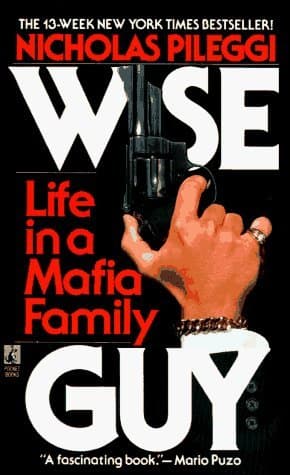
Wiseguy cover
Archivist's Choice

Wiseguy

Nicholas Pileggi (1985)

Genre

Biography / Memoir / History / Mystery

Reading Time

640 min

Key Themes

See below

Track Your Reading

Sign in to track this book

Henry Hill's story, from street kid to mobster, reveals the violent, luxurious, and ultimately treacherous reality behind the Mafia's romantic image.

Core Idea

Wiseguy explores the daily, often brutal, reality of Mafia life through Henry Hill, an associate of the Lucchese crime family. It examines the initial appeal of power, money, and belonging, then contrasts it with the constant paranoia, violence, and betrayal inherent in the lifestyle. The book argues that the romanticized gangster image is false, instead showing a world driven by small disputes, excess, and an inescapable path to prison, death, or informant status, ultimately exposing its emptiness and self-destruction.
Reading time
640 min
Difficulty
Medium
✓ Read this if...
You are fascinated by the unvarnished reality of organized crime, want to understand the psychological draw and eventual decay of the mob lifestyle, or enjoy true crime narratives that prioritize authentic detail over sensationalism.
✗ Skip this if...
You are looking for a moralistic critique of crime, prefer fiction over non-fiction, or are sensitive to graphic descriptions of violence and the grim realities of criminal life.

Core idea

The central argument and framework that powers the entire book.

Wiseguy explores the daily, often brutal, reality of Mafia life through Henry Hill, an associate of the Lucchese crime family. It examines the initial appeal of power, money, and belonging, then contrasts it with the constant paranoia, violence, and betrayal inherent in the lifestyle. The book argues that the romanticized gangster image is false, instead showing a world driven by small disputes, excess, and an inescapable path to prison, death, or informant status, ultimately exposing its emptiness and self-destruction.

At a glance

Reading time

640 min

Difficulty

Medium

Read this if...

You are fascinated by the unvarnished reality of organized crime, want to understand the psychological draw and eventual decay of the mob lifestyle, or enjoy true crime narratives that prioritize authentic detail over sensationalism.

Skip this if...

You are looking for a moralistic critique of crime, prefer fiction over non-fiction, or are sensitive to graphic descriptions of violence and the grim realities of criminal life.

Key Takeaways

1

The Allure of the Life

The Mafia offered a seductive blend of power, money, and belonging.

Quote

For us, to live any other way was nuts. To us, the wiseguys were the good guys.

Henry Hill's early life in the mob was defined by a strong pull towards a world that promised instant rewards and a sense of family. Growing up in a working-class neighborhood, the wiseguys represented success, respect, and an escape from the ordinary. They drove expensive cars, wore nice suits, and seemed to operate above the law. This initial draw was not just about money; it was about the friendship, the feeling of being part of something powerful and exclusive. The mob offered a distorted sense of justice and order, where loyalty ...

Supporting evidence

Henry's vivid descriptions of his childhood fascination with the mobsters across the street, their flashy cars, and their seemingly limitless cash.

Apply this

Understand how a desire for belonging, status, and perceived security can draw individuals into illicit or dangerous communities, highlighting the importance of positive community engagement and mentorship for at-risk youth.

mob-culturesocial-statusbelongingillicit-attraction
2

The Illusion of Control

Power in the mob was often fleeting and always came with a hidden cost.

Quote

It was a license to steal. It was a license to do anything.

The early days of Henry Hill's mob career brought a feeling of invincibility and unlimited power. He could extort, steal, and manipulate with seeming ease, believing he was untouchable. However, this sense of control was an illusion, always subject to the wishes of higher-ranking capos and the constant threat of betrayal or violent revenge. The 'license to steal' was always conditional, given and taken away by those above him. This point shows the inherent weakness of power within a criminal group, where loyalty is often false and vio...

Supporting evidence

Henry's involvement in various scams, hijackings, and extortions, and the constant fear of being 'whacked' or falling out of favor with figures like Jimmy Burke.

Apply this

Recognize that unchecked power, especially within hierarchical and unregulated systems, often leads to instability and ultimately self-destruction. Prioritize ethical leadership and accountability in any organization.

power-dynamicscriminal-hierarchyfalse-sense-of-securitybetrayal
3

The Paradox of Family

The mob offered a twisted form of family, built on loyalty and fear.

Quote

You could be a wiseguy, you could be a made guy, you could have everything. But if you weren't loyal, you were nothing.

The idea of 'family' within the Mafia is a main theme, providing a strong sense of belonging and mutual protection. However, this family bond is deeply contradictory. While it offered real friendship and support, especially in times of need or conflict with outsiders, it was also based on an extreme code of silence (omertà) and harsh discipline. Disloyalty or perceived weakness could lead to being cast out, violence, or death. This dual nature means that while members felt intensely connected, they also lived in constant fear of those...

Supporting evidence

The close-knit relationships between Henry, Jimmy Burke, and Tommy DeVito, contrasted with the brutal murder of Billy Batts for a perceived slight, and the eventual paranoia and betrayals.

Apply this

Examine how group cohesion can be achieved through both positive reinforcement and coercive control. Reflect on the ethical implications of 'loyalty' when it demands immoral or illegal acts.

omertagroup-cohesionloyalty-ethicscriminal-familial-bonds
4

The Downward Spiral of Excess

The pursuit of 'the good life' inevitably led to addiction and self-destruction.

Quote

We lived like kings, but we were always on the run.

Henry Hill's life was a roller coaster of lavish spending, drug use, and reckless behavior, fueled by his criminal earnings. The constant money flow led to an endless desire for more, seen in gambling debts, expensive gifts, and a growing cocaine addiction. This lifestyle, initially seen as freedom, became a trap. The need to keep up appearances and feed his addictions pushed him deeper into dangerous schemes, increasing his risk of arrest or murder. The 'good life' was ultimately unsustainable, turning from a dream into a nightmare a...

Supporting evidence

Henry's detailed accounts of his drug dealing, his own cocaine addiction, his lavish parties, and the ever-present threat of financial ruin and his eventual arrest for drug trafficking.

Apply this

Consider how immediate gratification and the pursuit of material wealth, especially through illicit means, can create a cycle of addiction and self-destructive behavior. Emphasize the importance of financial discipline and ethical earning.

addiction-cyclematerialismself-destructionreckless-living
5

The Women Behind the Wiseguys

Mob wives and mistresses navigated a world of glamour, deceit, and danger.

Quote

She knew what she was getting into. They all did.

The women in Henry Hill's life, especially his wife Karen and his mistress Janice, offer an important view of the mob world. They were drawn to the excitement and financial benefits, but they also faced the dangers and deceptions of the lifestyle. Karen, initially attracted to Henry's charm and the thrill of his illegal world, experienced constant fear of violence, lies, and the emotional toll of his infidelity and drug use. Janice, his mistress, also lived a life of secrecy and risk. These women were not just bystanders; they were ac...

Supporting evidence

Karen's experiences with Henry's violence, her initial attraction to his outlaw status, her complicity in hiding money, and her eventual disillusionment and fear for her children.

Apply this

Analyze the impact of criminal lifestyles on families and partners, particularly the ethical compromises and psychological toll. Discuss the concept of complicity and victimhood within abusive or illicit relationships.

gender-roles-crimecomplicitydomestic-impact-crimerelationship-dynamics-crime
6

The Inevitable Fall

The mob's internal code and external pressure ensured no one stayed on top forever.

Quote

Everybody gets whacked. Everybody eventually pays.

The story of 'Wiseguy' shows that even within the seemingly untouchable world of the Mafia, a fall is certain. Whether through internal power struggles, betrayal, or law enforcement, the 'life' always catches up. Henry's downfall was a mix of his drug addiction, reckless behavior, and increasing pressure from federal authorities. The loyalty that once defined his world disappeared as he faced a long prison sentence or death from his former associates. This point highlights the inherent unsustainability of a criminal group, where trust...

Supporting evidence

Henry's arrest for drug trafficking, his realization that Jimmy Burke was planning to kill him, and his subsequent decision to cooperate with the FBI and enter the Witness Protection Program.

Apply this

Examine the inherent risks and lack of long-term security in criminal enterprises. Understand the motivations behind turning informant and the breakdown of criminal loyalty under pressure.

criminal-justice-systemwitness-protectionbetrayal-consequencesfall-from-grace
7

The Mundanity of Evil

Beneath the glamour, the mob's daily life was often petty, violent, and surprisingly ordinary.

Quote

Most of the guys, they weren't geniuses. They were just tough guys who knew how to make a buck.

One of the most striking parts of 'Wiseguy' is how it removes the mystique from the Mafia. While Hollywood often shows mobsters as larger-than-life figures, Pileggi's account, through Henry Hill, reveals the often petty, repetitive, and surprisingly ordinary aspects of their daily lives. The 'work' involved endless waiting, small-time scams, and sudden bursts of brutal violence over seemingly minor issues. The glamour was often superficial, hiding a life of constant paranoia, low-level extortion, and a crude culture. This point challe...

Supporting evidence

Descriptions of the daily routine at the cab stand, the 'score' for small-time hijackings, the casual violence over debts, and the lack of grand strategic planning beyond immediate gain.

Apply this

Deconstruct romanticized portrayals of crime in media. Understand how evil can manifest not just in grand schemes, but in the normalization of petty violence and exploitation within a subculture.

criminal-normalizationdemystification-crimeeveryday-violenceglamour-vs-reality
8

The Burden of Testimony

Cooperating with the government offered safety but stripped away identity and belonging.

Quote

I was a nobody. I was a rat. I was a ghost.

Henry Hill's decision to enter the Witness Protection Program after testifying against his former associates saved his life, but it came at a high personal cost. The program offered physical safety but required the complete removal of his former identity, cutting all ties to his past, family, and the only life he had known. He became a 'ghost,' constantly moving and living under a new name, unable to truly connect with anyone or escape the psychological burden of his past. This point highlights the difficult trade-offs in cooperating ...

Supporting evidence

Henry's experiences in Witness Protection, his struggles to adapt to a normal life, his inability to hold a steady job, and his constant yearning for the excitement and camaraderie of his past.

Apply this

Discuss the psychological and social impacts of identity loss and forced relocation. Consider the long-term consequences of informant status on an individual's well-being and sense of self.

witness-protection-programidentity-lossinformant-consequencespsychological-impact-betrayal

Critical analysis

Notable Quotes

As far back as I can remember, I always wanted to be a gangster.

Henry Hill's opening narration, setting the tone for his life story.

To me, being a wiseguy was a thing of honor. We ran things. We were respected.

Henry reflecting on the early allure and perceived prestige of the gangster life.

Every day when I went to work, I knew that I could get killed. But I didn't think about it. If I thought about it, I couldn't do the work.

Henry discussing the constant danger inherent in his criminal activities and his way of coping.

We were treated like movie stars, like politicians, like everybody who was somebody.

Henry describing the lavish lifestyle and deference shown to mobsters in their heyday.

It was a glorious time. It was the best time of our lives.

Henry's nostalgic view of the peak of his criminal career, before the downfall.

I was a good earner. I knew how to make money. That's what they liked about me.

Henry explaining his value to the Lucchese crime family, emphasizing his financial contributions.

For us to live any other way was unthinkable.

Henry's perspective on the insular and all-consuming nature of the mob lifestyle.

Jimmy was always looking for a score. He was always looking for the big one.

Henry describing Jimmy Burke's relentless pursuit of lucrative criminal enterprises.

Paulie might have moved slow, but it was only because Paulie didn't have to move for anybody.

Henry's observation on the power and authority of Paulie Vario, his mob boss.

One day, I'm gonna be a made man. That's all I wanted.

Henry's early aspiration to become a fully initiated member of the Mafia, a status he never achieved.

I knew what I was doing was wrong, but I didn't care. It was too good.

Henry acknowledging the illegality of his actions but being swayed by the benefits and excitement.

You got to be careful what you say to who. Everybody's got a big mouth.

Henry on the constant paranoia and need for discretion within the criminal underworld.

It's a strange thing. When you're a wiseguy, you don't think you're going to get caught.

Henry reflecting on the sense of invincibility that often accompanies a life of crime.

I was a degenerate gambler, a drug addict, and a wiseguy. And I was happy.

Henry's candid self-assessment, highlighting the destructive yet paradoxically fulfilling aspects of his life.

Quiz

Test Your Knowledge

Ready to see how well you understood this book? Take our interactive quiz with 10 questions.

10
Questions
~5
Minutes
?
Best Score

Key Questions (FAQ)

'Wiseguy' is a non-fiction book by Nicholas Pileggi that details the life of Henry Hill, a former mob associate, providing an intimate look into the day-to-day operations, violence, and personal life within the Mafia. It covers his rise and fall within the criminal underworld, as well as his eventual decision to become an informant.

About the author