BookBrief
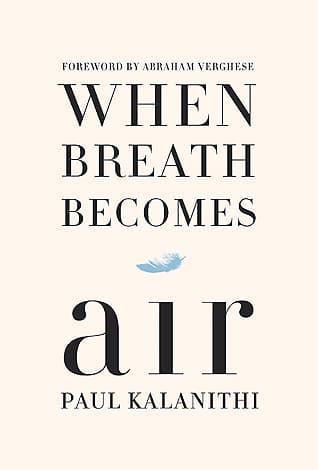
When Breath Becomes Air cover
Archivist's Choice

When Breath Becomes Air

Paul Kalanithi (2016)

Genre

Biography / Memoir / Science / Philosophy

Reading Time

240 min

Key Themes

See below

Track Your Reading

Sign in to track this book

A brilliant neurosurgeon, suddenly a patient with terminal cancer, faces the question of what makes life worth living when his envisioned future disappears into an urgent present.

Core Idea

When Breath Becomes Air is a memoir by Paul Kalanithi, a neurosurgeon diagnosed with terminal lung cancer. It explores how identity shifts when a doctor becomes a patient, making him confront his own death and redefine life's meaning. Kalanithi addresses philosophical questions about existence and purpose while handling the practical and emotional challenges of his illness, his child's upcoming birth, and the loss of his future.
Reading time
240 min
Difficulty
Medium
✓ Read this if...
You are interested in deeply personal reflections on mortality, the meaning of life, the doctor-patient dynamic, and finding purpose in the face of terminal illness.
✗ Skip this if...
You are looking for a lighthearted read, or are currently struggling with grief and prefer to avoid emotionally intense narratives about death and dying.

Core idea

The central argument and framework that powers the entire book.

When Breath Becomes Air is a memoir by Paul Kalanithi, a neurosurgeon diagnosed with terminal lung cancer. It explores how identity shifts when a doctor becomes a patient, making him confront his own death and redefine life's meaning. Kalanithi addresses philosophical questions about existence and purpose while handling the practical and emotional challenges of his illness, his child's upcoming birth, and the loss of his future.

At a glance

Reading time

240 min

Difficulty

Medium

Read this if...

You are interested in deeply personal reflections on mortality, the meaning of life, the doctor-patient dynamic, and finding purpose in the face of terminal illness.

Skip this if...

You are looking for a lighthearted read, or are currently struggling with grief and prefer to avoid emotionally intense narratives about death and dying.

Key Takeaways

1

Identity Beyond Profession

Illness forces a re-evaluation of who you are when your life's work is stripped away.

Quote

I had come to see my life as a physician as a moral commitment, an act of love. But now, it was just a job, and I couldn't do it. My identity as a doctor, as a surgeon, was gone. And I had no idea who I was without it.

Kalanithi's story shows the shock of losing one's professional identity, especially when it is tied to purpose and self-worth. As a neurosurgeon, his work was a calling, a direct involvement with human life and death. His diagnosis didn't just end his ability to practice; it broke his idea of himself. This forced him to face the truth that identity, especially in modern society, often comes from achievement and profession. The memoir argues that true identity must be strong enough to exist without external roles, a key lesson for anyo...

Supporting evidence

Kalanithi's struggle to find meaning and purpose after being unable to return to the operating room, leading him to question whether he was still 'Paul' without his surgeon's scrubs.

Apply this

Actively cultivate aspects of your identity outside of your professional life—hobbies, relationships, personal values, and intellectual pursuits. Regularly reflect on what truly defines you beyond your job title or achievements.

identity-crisispurpose-after-careerself-worth
2

The Doctor as Patient

Experiencing illness from the other side fundamentally changes one's perspective on medicine and empathy.

Quote

As a doctor, I had been taught to be objective, to distance myself from the suffering of my patients. But as a patient, I was the suffering. And I realized that the distance I had cultivated was a barrier, not a shield.

Kalanithi's position as both a trained neurosurgeon and a terminally ill patient offers insight into the medical system. He critiques the disconnect between doctor and patient, often a result of medical training that values objectivity over empathy. His experience shows how easily doctors can become insensitive to the human experience of illness, focusing on disease rather than the person. The book suggests that true healing requires doctors to not just treat illnesses but to engage with the patient's experience, fears, and hopes. Thi...

Supporting evidence

Kalanithi's frustration with doctors who treated his scans and symptoms rather than acknowledging his existential dread, and his appreciation for those who engaged with him as a person.

Apply this

If you are a medical professional, actively practice empathy by imagining yourself in your patient's shoes. If you are a patient, advocate for yourself and seek out doctors who treat you as a whole person, not just a collection of symptoms.

doctor-patient-relationshipmedical-empathyhumanistic-medicine
3

Confronting Mortality, Living Fully

Facing death can paradoxically illuminate what truly makes life meaningful.

Quote

I began to realize that coming face to face with my own mortality, in a sense, had changed nothing and everything. Seven words from Samuel Beckett began to repeat in my head: 'I can't go on. I'll go on.'

The memoir is a meditation on death, seeing it not as an end, but as a way to understand life more deeply. Kalanithi struggles with the human challenge of accepting limits, at first seeing death as the ultimate defeat. However, his journey shows that awareness of limited time does not necessarily lead to despair, but can sharpen one's focus on what truly matters. He navigates the tension between planning for a future that might not happen and living authentically in the present. This challenges the modern avoidance of discussing death...

Supporting evidence

Kalanithi's decision to have a child, Cady, despite his terminal diagnosis, viewing it as an act of hope and a commitment to life amidst impending death.

Apply this

Engage in regular reflection on your values and priorities. Consider what you would do if you had a limited time frame, and then strive to incorporate those priorities into your daily life now. Don't wait for a crisis to live meaningfully.

mortality-awarenessmeaning-of-lifecarpe-diem
4

The Weight of Prognosis

Medical prognoses are not just data; they are deeply personal narratives that shape a patient's remaining life.

Quote

The tricky part of illness is that, as a patient, you are not a statistic. You are a person. And a prognosis, no matter how accurate, is still just a prediction, not a decree.

Kalanithi, as both a doctor who gave prognoses and a patient who received them, offers a nuanced view of their impact. He understands the scientific need to predict outcomes but also the devastating psychological weight these predictions carry. A prognosis is not just a clinical assessment; it is a story patients internalize, shaping their decisions about treatment, future plans, and how they see their remaining time. The book highlights doctors' ethical responsibility to deliver these predictions with sensitivity, acknowledging the h...

Supporting evidence

Kalanithi's internal debate about whether to pursue aggressive treatment or focus on quality of life, heavily influenced by the varying prognoses he received and his own medical understanding.

Apply this

If you are a patient, understand that prognoses are probabilities, not certainties. Seek clarity, but also empower yourself to make choices aligned with your values. If you are a doctor, remember that your words carry immense weight; deliver prognoses with empathy and an understanding of their profound human impact.

medical-ethicspatient-autonomyprognosis-impact
5

Love as a Sustaining Force

The unwavering support of loved ones provides essential strength in the face of terminal illness.

Quote

My wife, Lucy, was my anchor, my confidante, my partner in crime. Her love was a constant, a force that held me together even when I felt like I was falling apart.

Amid medical complexities and existential crises, the memoir consistently shows the importance of human connection, especially family love. Paul's relationship with his wife, Lucy, is a central support, providing emotional support, shared purpose, and a reason to fight. Their decision to have a child, Cady, despite his terminal diagnosis, shows the power of love and hope. This highlights that while individual strength is vital, it often comes from strong relationships. Love, in this context, is not just an emotion but an active, susta...

Supporting evidence

Lucy's steadfast presence throughout Paul's illness, her sacrifices, and her unwavering commitment to their shared life and future, even as it became uncertain.

Apply this

Actively nurture and prioritize your most important relationships. Invest time and effort into building strong bonds with loved ones, as these connections will be invaluable during times of adversity.

marital-supportfamily-strengthlove-in-adversity
6

The Pursuit of Meaning Through Language

Literature and writing offer a unique pathway to understanding and articulating the human condition.

Quote

I had gone to medical school to understand the body, but I had gone to literature to understand the soul.

Kalanithi's background in literature and his passion for writing are central to his ability to process and express his experiences. He sees literature not just as an academic pursuit but as a tool for exploring life, death, and meaning. His memoir itself shows how language can turn personal suffering into universal insight. This highlights the value of the humanities in an increasingly scientific and technical world. It suggests that while science can explain 'how' we live and die, literature helps us understand 'why' and 'what it mea...

Supporting evidence

Kalanithi's extensive literary references throughout the book, his early academic pursuits in English literature, and his eventual decision to write his memoir as a way to find meaning in his illness.

Apply this

Engage with literature, philosophy, and other humanities. Use writing as a tool for self-reflection and to process challenging experiences. Consider how storytelling can help you understand your own life and connect with others.

literature-and-meaninghumanities-valuewriting-as-therapy
7

The Inevitable Sacrifice of Parenthood

Bringing new life into the world while facing one's own mortality is an act of profound hope and sacrifice.

Quote

I had expected to be a father for thirty years. Now, I might be a father for thirty days. What was the point of bringing a child into the world if I couldn't be there to raise her?

The decision to have a child, Cady, despite Paul's terminal diagnosis, is perhaps the most poignant and courageous act in the memoir. It captures the paradox of life and death, hope and despair. This explores the emotional and ethical complexities of parenthood in such circumstances. It highlights the selfless love in bringing a child into the world, knowing you might not see them grow. Kalanithi struggles with the 'why' of it—why create a new life when your own is fading? His conclusion is that it is an act of faith, a continuation o...

Supporting evidence

Paul and Lucy's difficult conversations and ultimate decision to conceive Cady, and Paul's later reflections on Cady's future and the meaning she brought to his final months.

Apply this

Reflect on the legacy you wish to leave, whether through children, mentorship, or your contributions to the world. Embrace acts of creation and hope, even when faced with uncertainty.

parenthood-mortalitylegacy-buildinghope-in-grief
8

Redefining Success in the Face of Limitations

True success shifts from external achievement to the quality of one's remaining life and relationships.

Quote

Before, success meant achieving my surgical goals. Now, success was about living a meaningful day, connecting with my family, and finding a way to contribute, however small.

Kalanithi's initial definition of success was based on his ambition to become a top neurosurgeon, a path of rigorous training, intellectual challenge, and saving lives. His illness forces a redefinition. When external markers of success—career advancement, professional awards, future plans—become impossible, he must find new ways to measure it. This explores the painful but ultimately freeing process of shifting from a future-oriented, achievement-driven model of success to one focused on presence, relationships, and the value of each...

Supporting evidence

His shift from desperately trying to return to surgery to finding fulfillment in writing, spending time with his family, and preparing for Cady's arrival.

Apply this

Regularly evaluate your definition of success. Is it solely based on external achievements, or does it incorporate personal growth, meaningful relationships, and inner peace? Be prepared to redefine success as life circumstances change.

redefining-successquality-of-lifepresence-over-achievement
9

The Unspoken Burden of the Caregiver

Terminal illness places an immense and often invisible burden on the primary caregiver.

Quote

Lucy bore the lion's share of the burden. She was my advocate, my nurse, my emotional support. And she did it all while grieving the future we had lost.

While the memoir is primarily Paul's story, it shows the overlooked burden on the primary caregiver, his wife, Lucy. She handles the emotional toll of seeing her husband decline, manages medical logistics, acts as his advocate, and grieves the future they had planned—all while trying to maintain some normalcy. This calls attention to the need to recognize and support caregivers, who often experience their own silent suffering and exhaustion. It emphasizes that illness affects the whole family, and the caregiver's well-being is importa...

Supporting evidence

Paul's descriptions of Lucy taking on increasing responsibilities, making difficult decisions, and coping with her own grief while remaining his steadfast support.

Apply this

If you are a caregiver, seek out support systems and allow yourself to receive help. If you know a caregiver, offer specific, practical assistance and emotional support. Recognize that their needs are significant and often unspoken.

caregiver-burdengrief-supportfamily-resilience

Critical analysis

Notable Quotes

I had come to see the world as a place of infinite complexity, its problems never simple, its solutions never perfect.

Reflecting on his medical training and the nuances of patient care.

You can’t ever reach perfection, but you can believe in an arc of improvement that will always pull you upwards.

Discussing the pursuit of excellence in surgery and life.

Science may provide the most accurate way to determine what is, but it offers no guidance on what should be.

Pondering the limitations of science in answering existential questions.

Before my illness, I saw death as an intellectual concept. When it became a real, tangible possibility, it altered everything.

Describing the shift in his perception of death after his diagnosis.

The secret to my success, if there is any, is that I have always been a hard worker. I have always pushed myself.

Reflecting on his work ethic and ambition prior to his illness.

Human knowledge is never contained in a single brain.

Considering the collaborative nature of medicine and learning.

What makes life meaningful enough to go on living?

A central question he grapples with throughout his illness.

Even if I'm not a surgeon, I can still be a doctor. Even if I'm not a doctor, I can still be a human being.

Coming to terms with the potential loss of his professional identity.

You can't ever reach perfection, but you can believe in an arc of improvement that will always pull you upwards.

A recurring theme about striving for betterment.

I began to understand that the brain is no more than a meat puppet.

Reflecting on the physical basis of consciousness and its fragility.

There is a gap between the patient's experience of illness and the doctor's understanding of it.

Highlighting the inherent disconnect between patient and physician perspectives.

The fact of death is not what matters, but how we face it.

A profound realization about confronting mortality.

God, I hope I'm not a doctor who kills people.

A fear expressed early in his surgical training, highlighting the immense responsibility.

I started to understand that when I was a surgeon, I was not just fixing brains; I was fixing people.

Realizing the holistic nature of his work beyond just the technical aspects.

Quiz

Test Your Knowledge

Ready to see how well you understood this book? Take our interactive quiz with 10 questions.

10
Questions
~5
Minutes
?
Best Score

Key Questions (FAQ)

'When Breath Becomes Air' is a memoir by Paul Kalanithi, a neurosurgeon diagnosed with terminal lung cancer. It chronicles his journey from doctor to patient, exploring profound questions about life, death, meaning, and identity.

About the author