BookBrief
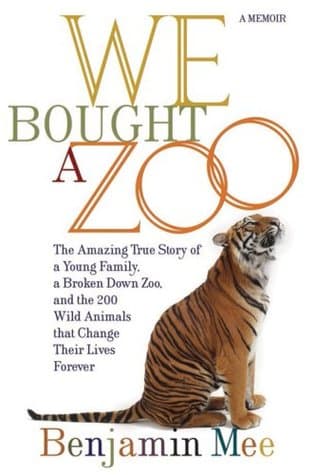
We Bought a Zoo cover
Archivist's Choice

We Bought a Zoo

Benjamin Mee (2008)

Genre

Biography / Memoir

Reading Time

360 min

Key Themes

See below

Track Your Reading

Sign in to track this book

A grieving family risks everything to purchase a dilapidated zoo in the English countryside, embarking on a heartwarming and chaotic adventure of mending broken cages, taming wild animals, and healing their own hearts.

Core Idea

Benjamin Mee's 'We Bought a Zoo' recounts the true story of his family's decision to purchase Dartmoor Wildlife Park, a run-down zoo in rural England. It details the challenges and successes they had in restoring and reopening it. The book explores how people can be resilient, adaptable, and committed when facing overwhelming odds. It shows how a seemingly absurd leap of faith can lead to unexpected healing and a new sense of purpose, especially after personal loss. It argues that embracing radical change and accepting nature's unpredictability can transform individuals and families.
Reading time
360 min
Difficulty
Easy
✓ Read this if...
You enjoy true stories of overcoming adversity, tales of quirky family adventures, or narratives about finding new purpose in unexpected places, especially involving animals.
✗ Skip this if...
You prefer highly academic or theoretical non-fiction, or if you dislike stories with significant emotional arcs including grief and struggle.

Core idea

The central argument and framework that powers the entire book.

Benjamin Mee's 'We Bought a Zoo' recounts the true story of his family's decision to purchase Dartmoor Wildlife Park, a run-down zoo in rural England. It details the challenges and successes they had in restoring and reopening it. The book explores how people can be resilient, adaptable, and committed when facing overwhelming odds. It shows how a seemingly absurd leap of faith can lead to unexpected healing and a new sense of purpose, especially after personal loss. It argues that embracing radical change and accepting nature's unpredictability can transform individuals and families.

At a glance

Reading time

360 min

Difficulty

Easy

Read this if...

You enjoy true stories of overcoming adversity, tales of quirky family adventures, or narratives about finding new purpose in unexpected places, especially involving animals.

Skip this if...

You prefer highly academic or theoretical non-fiction, or if you dislike stories with significant emotional arcs including grief and struggle.

Key Takeaways

1

Leap of Faith into the Wild

Sometimes the most improbable dreams offer the greatest rewards.

Quote

The thing about buying a zoo is that it's not like buying a house. It's buying a lifestyle, a commitment, a whole new way of seeing the world.

Benjamin Mee's decision to buy Dartmoor Wildlife Park, a run-down zoo in the English countryside, was an act of courage, perhaps even madness. Facing personal tragedy and the daunting task of managing hundreds of exotic animals, crumbling buildings, and a difficult staff, Mee took on the challenge. This highlights the significant change in perspective and commitment required when one's life becomes tied to such a project. It was not just a financial transaction; it was a complete immersion into a world ruled by the animal kingdom's rh...

Supporting evidence

The author's initial description of the zoo's state – 'overgrown, ramshackle, and on the brink of closure' – contrasted with his family's enthusiasm, especially his children's, for the project, despite the immense personal and financial risks involved.

Apply this

When facing a life-altering decision, embrace the potential for radical change rather than shying away from it. Consider how a seemingly overwhelming challenge might redefine your purpose and priorities.

risk-takinglife-changeaudacity
2

The Unpredictable Nature of Nature

Managing a zoo means constant adaptation to the wild's whims and wonders.

Quote

Every day brought a new challenge, a new escape, a new birth, or a new crisis. Predictability was a luxury we simply couldn't afford.

Running a zoo is a lesson in crisis management and improvisation. Mee quickly learned that the animal kingdom operates on its own terms, often defying human expectations and schedules. From escaped jaguars to unexpected animal births, the daily routine was anything but routine. This emphasizes the constant need for flexibility, resilience, and a deep understanding of animal behavior. It is a reminder that no matter how much planning goes into such an endeavor, the animals' inherent wildness will always introduce an element of delightf...

Supporting evidence

The numerous anecdotes of animal escapes, particularly the two jaguars, and the complex logistics of managing a diverse range of species, each with unique needs and temperaments.

Apply this

Cultivate adaptability and problem-solving skills, especially when dealing with complex systems or living beings. Expect the unexpected and learn to pivot quickly.

adaptabilitycrisis-managementanimal-behavior
3

Family as the Foundation

Shared purpose and resilience strengthen family bonds in the face of adversity.

Quote

The zoo became an extension of our family, and our family became the heart of the zoo. We were all in this together, for better or worse.

At its core, 'We Bought a Zoo' is a story about family. Benjamin Mee's decision to buy the zoo was deeply connected to his personal grief and the desire to create a new, meaningful life for his children. The entire family, including his siblings and mother, became essential to the zoo's operation and survival. This highlights how a shared, monumental project can either tear a family apart or create strong bonds. In the Mees' case, the collective effort, sacrifices, and successes at the zoo strengthened their relationships and provided...

Supporting evidence

The active involvement of Benjamin's children in the daily tasks, his brother's contribution to the building work, and his mother's unwavering support and practical help, especially after his wife's passing.

Apply this

Identify a shared project or goal with your family that requires collective effort. Embrace the challenges as opportunities to strengthen your bonds and create lasting memories.

family-bondsshared-purposeresilience
4

Grief, Healing, and New Beginnings

Finding purpose in the midst of profound loss can lead to unexpected renewal.

Quote

The zoo, in its own wild way, became a place where we could mourn, remember, and ultimately, begin to heal. It gave us something to live for, beyond the sadness.

Benjamin Mee's journey with the zoo was closely linked to his wife Katherine's terminal illness and eventual death. The zoo became a sanctuary, a distraction, and ultimately, a source of purpose during a difficult period. This explores the significant psychological role the zoo played in the family's grieving process. The demanding, life-affirming work of caring for animals and building something new provided a tangible way to channel grief into productive action, offering a path towards healing and a renewed sense of hope. It shows h...

Supporting evidence

The author's candid reflections on his wife's illness and death, and how the all-consuming nature of running the zoo provided a necessary focus and a reason to keep moving forward during his darkest days.

Apply this

When facing personal tragedy, seek out meaningful projects or commitments that can provide structure and purpose. Allow new responsibilities to help channel grief into constructive action.

grief-processingpurpose-findinghealing
5

The Economics of Conservation

Saving endangered species requires more than passion; it demands financial ingenuity.

Quote

Love for animals is essential, but it doesn't pay the bills. Keeping a zoo afloat, especially one dedicated to conservation, is a constant battle against the balance sheet.

Beyond the stories of animal rescue, Mee offers a clear look at the financial realities of running a zoo, especially one with a conservation mission. This highlights the immense economic pressures involved in animal welfare, veterinary care, building maintenance, and staff salaries. It reveals that passion alone is not enough; successful conservation efforts require good business sense, constant fundraising, and often, innovative solutions to make ends meet. The book does not romanticize the financial struggle but rather shows the con...

Supporting evidence

The detailed accounts of financial struggles, securing loans, unexpected costs for animal care (like specialized diets or veterinary emergencies), and the constant effort to attract visitors and generate revenue.

Apply this

Understand that any passion project, especially one with a social or environmental mission, requires a robust financial plan. Learn about fundraising, budgeting, and sustainable business models.

conservation-financenon-profit-managementresourcefulness
6

The Power of Community and Collaboration

No monumental task is achievable in isolation; success requires a supportive network.

Quote

We quickly learned that the zoo wasn't just ours; it belonged to everyone who believed in it, from the staff to the volunteers to the local community.

Benjamin Mee's ambitious project would have failed without the support of his dedicated staff, volunteers, and the local community. This emphasizes the critical role of collaboration and the unifying power of a shared vision. From experienced zookeepers who stayed on despite the changes to local tradesmen offering help, and ultimately, the visitors who came to support the revived park, the zoo became a community endeavor. It illustrates that even the most individual dreams often require a collective effort to happen, showing how share...

Supporting evidence

The loyalty of the existing zoo staff, the influx of volunteers, the support from local businesses, and the eventual public outpouring of interest and visits that kept the zoo viable.

Apply this

When embarking on a challenging project, actively seek out and cultivate a strong support network. Don't be afraid to ask for help and empower others to contribute to your vision.

community-buildingcollaborationshared-vision
7

Embracing the Absurdity

Sometimes, the only way to survive chaos is to find humor in it.

Quote

You have to laugh, don't you? Otherwise, you'd just cry. And frankly, there wasn't time for crying when a wolf was scaling a fence.

Daily life at Dartmoor Wildlife Park was often chaotic, stressful, and utterly absurd. Mee's narrative has a dry wit and an ability to find humor in the most challenging situations, from runaway animals to bureaucratic problems. This highlights the psychological coping mechanism of embracing the ridiculousness of life's unpredictable moments. It suggests that a sense of humor is not just a pleasant addition, but a vital tool for resilience, allowing one to navigate high-stress environments and maintain perspective when things inevitab...

Supporting evidence

Numerous humorous anecdotes, such as the repeated escapes of animals, the eccentricities of the staff, and the author's self-deprecating observations about his own lack of experience.

Apply this

In stressful or challenging situations, consciously look for the humor. Cultivate a lighthearted perspective to reduce tension and maintain mental well-being.

humorresiliencecoping-mechanisms
8

The Responsibility of Custodianship

Owning a zoo is a profound commitment to the welfare of sentient beings.

Quote

These animals weren't just exhibits; they were individuals, each with a personality, a history, and a future that now depended entirely on us.

Mee's memoir clearly illustrates the ethical and practical responsibility that comes with being a custodian of wild animals. This emphasizes that running a zoo is more than a business; it is a sacred trust. It involves understanding complex animal needs, providing stimulating environments, ensuring top-tier veterinary care, and making difficult decisions about their lives and deaths. The book conveys a deep respect for the animals, treating them as sentient beings rather than mere attractions. This sense of custodianship extends beyon...

Supporting evidence

The detailed descriptions of animal care, the emotional attachments formed with specific animals (like the tiger, Spartacus), and the serious ethical dilemmas faced regarding their health and well-being.

Apply this

Reflect on areas in your life where you hold a position of responsibility over others (people, pets, projects). Embrace this role with seriousness, empathy, and a commitment to their well-being and growth.

animal-welfareethicscustodianship
9

Transforming the Impossible into Reality

With perseverance and a clear vision, even the most daunting challenges can be overcome.

Quote

There were countless moments when giving up seemed like the only sane option. But something inside us, some stubborn refusal to fail, kept us going.

The entire narrative of 'We Bought a Zoo' shows the power of perseverance. Mee and his family faced many obstacles: financial ruin, run-down facilities, animal health crises, personal grief, and constant skepticism. This highlights that what seems impossible can become achievable through sheer will, sustained effort, and belief in a vision. It is a powerful message about human tenacity and the ability to push through adversity, showing that major transformations often require long-term commitment and the courage to keep going even whe...

Supporting evidence

The multi-year process of renovating the zoo, overcoming numerous setbacks, securing funding, and continually learning on the job, culminating in the successful reopening of the park.

Apply this

Identify a long-term goal that seems overwhelming. Break it down into smaller steps and commit to consistent, persistent effort, even when faced with setbacks. Believe in your ability to achieve the 'impossible'.

perseverancevisiontransformation

Critical analysis

Notable Quotes

You can't just buy a zoo, Benjamin. It's not like buying a car or a house.

Benjamin's brother, Duncan, expressing skepticism early in the process.

Sometimes you've just got to be crazy enough to try.

Benjamin reflecting on his decision to pursue the zoo.

The animals don't care about your grief. They need to be fed, cleaned, and cared for, no matter what.

Benjamin realizing the relentless demands of the zoo after his wife's death.

A zoo is a collection of stories, each animal a living chapter.

Benjamin musing on the individual histories and personalities of the animals.

We were all just trying to keep our heads above water, literally and figuratively.

Describing the challenges of heavy rain and financial struggles at the zoo.

It was a monument to love, loss, and the sheer bloody-mindedness of a family.

Benjamin reflecting on Dartmoor Zoo's meaning to him and his family.

The greatest danger we face is not failure, but the fear of trying.

A broader philosophical thought Benjamin arrives at through his experiences.

You learn to live with the fear, but you never let it stop you.

Discussing the constant worries and risks involved in running the zoo.

Every day was an adventure, sometimes a terrifying one, but always an adventure.

Summarizing the daily life and unpredictability of owning a zoo.

The animals became our anchors, our reason to keep going.

How the animals provided purpose and comfort during difficult times.

It was a crazy idea, born out of grief and a desperate need for change, but it was *our* crazy idea.

Acknowledging the unconventional origins of their zoo venture.

You can't prepare for everything, but you can learn to adapt.

Benjamin reflecting on the numerous unexpected challenges they faced.

The silence after her death was deafening, but the roar of the lions was a different kind of life.

Contrasting his personal loss with the vibrant, demanding life of the zoo.

Sometimes all you need is twenty seconds of insane courage. Just literally twenty seconds of just embarrassing bravery. And I promise you, something great will come of it.

A piece of advice Benjamin received that he often reflected on.

Quiz

Test Your Knowledge

Ready to see how well you understood this book? Take our interactive quiz with 10 questions.

10
Questions
~5
Minutes
?
Best Score

Key Questions (FAQ)

'We Bought a Zoo' is the true story of Benjamin Mee and his family's decision to purchase and renovate Dartmoor Wildlife Park, a dilapidated zoo in the English countryside. It chronicles their struggles and triumphs as they navigate the challenges of running a zoo and caring for its diverse animal inhabitants.

About the author

Benjamin Mee is a British author and journalist, most famous for his memoir 'We Bought a Zoo.' The book chronicles his family's unconventional decision to purchase and renovate a dilapidated zoo in Devon, England. Mee's writing often explores themes of resilience, family, and the human connection to the natural world.