BookBrief
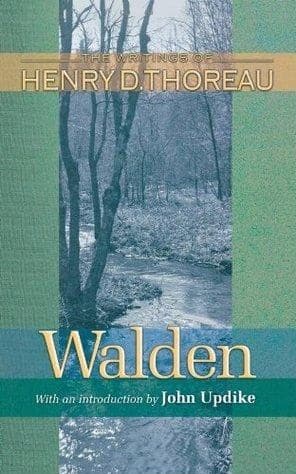
Walden cover
Archivist's Choice

Walden

Henry David Thoreau (1954)

Genre

Biography / Memoir / Philosophy

Reading Time

9 hours 45 min

Key Themes

See below

Track Your Reading

Sign in to track this book

Thoreau's Walden chronicles his two-year experiment in simple living by Walden Pond, offering insights into nature and human existence.

Core Idea

Walden argues for a simple, self-sufficient life, suggesting that society's rules and material goals distract people from their true potential and connection to nature. Thoreau writes that by removing what is unnecessary, individuals can better understand themselves, find meaning in the present, and live authentically with nature. He believes true wealth is intellectual and spiritual independence, gained through quiet time, reflection, and direct experience with life's basic facts.
Reading time
9 hours 45 min
Difficulty
Medium
✓ Read this if...
You are seeking inspiration to simplify your life, connect with nature, or explore philosophical ideas about self-reliance and non-conformity. You appreciate reflective prose and a deep dive into the meaning of living deliberately.
✗ Skip this if...
You prefer fast-paced narratives, practical self-help guides with actionable steps, or find extended philosophical meditations on nature and solitude tedious. You are not interested in a historical perspective on minimalist living.

Core idea

The central argument and framework that powers the entire book.

Walden argues for a simple, self-sufficient life, suggesting that society's rules and material goals distract people from their true potential and connection to nature. Thoreau writes that by removing what is unnecessary, individuals can better understand themselves, find meaning in the present, and live authentically with nature. He believes true wealth is intellectual and spiritual independence, gained through quiet time, reflection, and direct experience with life's basic facts.

At a glance

Reading time

9 hours 45 min

Difficulty

Medium

Read this if...

You are seeking inspiration to simplify your life, connect with nature, or explore philosophical ideas about self-reliance and non-conformity. You appreciate reflective prose and a deep dive into the meaning of living deliberately.

Skip this if...

You prefer fast-paced narratives, practical self-help guides with actionable steps, or find extended philosophical meditations on nature and solitude tedious. You are not interested in a historical perspective on minimalist living.

Key Takeaways

1

Simplify, Simplify, Simplify

Conscious reduction of material possessions and commitments leads to spiritual freedom.

Quote

Our life is frittered away by detail. An honest man has hardly need to count more than his ten fingers, or in extreme cases he may add his ten toes, and lump the rest. Simplify, simplify.

Thoreau's most important idea is the call for simplification. He argues that modern life, even in his time, is too complicated. It is weighed down by extra possessions and social duties that keep people from truly living. By reducing material needs and social ties, a person can find time and energy for self-reflection, connecting with nature, and seeking basic truths. This is not just about saving money; it is a philosophical stand against consumerism and social pressures that define a 'good life.' He shows that real wealth is not in ...

Supporting evidence

Thoreau's two-year experiment at Walden Pond, where he built his own cabin, grew his own food, and lived on a budget of mere dollars, serves as the primary evidence. He meticulously details his expenses, demonstrating how little one truly needs to survive and thrive outside of societal norms.

Apply this

Conduct a 'possession audit,' identifying items that add complexity rather than value. Practice mindful consumption, questioning every purchase. Dedicate specific time blocks to 'unplug' from digital distractions and engage in simple, solitary activities like walking or reading.

minimalismvoluntary-simplicityanti-consumerism
2

The Economy of Life

Understanding the true cost of things extends beyond monetary value to include time and freedom.

Quote

The cost of a thing is the amount of what I will call life which is required to be exchanged for it, immediately or in the long run.

Thoreau questions common ideas of economy by defining 'cost' not just as money, but as 'life' – the time, effort, and freedom given up to get or keep something. He criticizes the social trap where people work long hours at jobs they dislike to afford luxuries they do not truly need. In doing so, they lose their most valuable thing: their limited existence. This view encourages a deep look at one's spending, not only financially but in how one lives. It makes readers consider if their current 'economy' helps their best self or just kee...

Supporting evidence

He calculates the exact cost of his cabin and provisions at Walden, demonstrating how little money he spent, and then contrasts this with the 'cost' of a typical farmer's life, burdened by debt and incessant labor. He cites the example of the 'sleepers' on the railroad tracks, metaphorically representing those crushed by the demands of progress without questioning its true value.

Apply this

Before making a significant purchase or commitment, calculate its 'life cost': how many hours of your work does it represent? Evaluate if the joy or utility gained is truly worth that segment of your finite life. Prioritize experiences and personal growth over material acquisition.

time-valueconscious-spendingexistential-cost
3

Awaken to the Present Moment

True living requires intense presence and sensory engagement with the world around us.

Quote

To be awake is to be alive. I have never yet met a man who was quite awake. How could I have looked him in the face?

Thoreau believes that most people live without fully noticing the richness and wonder around them. He calls for a clear awakening – a heightened state of awareness where one fully uses all senses in the present moment. This is not just about enjoying nature; it is about being completely present in every interaction, observation, and task. He thinks that by developing this strong presence, one can see deeper truths, feel great joy, and truly 'live' instead of just existing. His writing itself shows this sensory focus, pulling the reade...

Supporting evidence

Thoreau's vivid descriptions of nature, such as the 'loon's laugh,' the sound of ice 'booming' on the pond, the 'huckleberries' he gathered, or the specific colors of the autumn leaves, exemplify his acute sensory awareness. He spends pages detailing the sounds, sights, and feelings of his daily life, from chopping wood to observing ants.

Apply this

Practice daily mindfulness exercises, focusing on sensory details of ordinary activities like eating or walking. Engage in 'deep observation' of a natural object for five minutes. Regularly 'unplug' from distractions to simply 'be' in your immediate environment, noticing what you usually overlook.

mindfulnesspresent-momentsensory-awareness
4

Nature as a Spiritual Teacher

The wilderness offers profound lessons for self-discovery and spiritual nourishment.

Quote

I went to the woods because I wished to live deliberately, to front only the essential facts of life, and see if I could not learn what it had to teach.

For Thoreau, nature is not just a setting but an active, living thing full of wisdom. His move to Walden Pond was a spiritual journey, a clear attempt to live in the natural world to learn from it. He saw the seasons, animal behavior, and the quiet of the woods as a reflection of human life and a source of deep spiritual insight. Nature, untouched by human artifice, offers an honest truth. It encourages self-reflection and reveals the 'essential facts of life' that society often hides. It is a peaceful place for the soul and a demandi...

Supporting evidence

His detailed observations of flora and fauna, the changing seasons, and the pond itself are central to the book. He learns patience from watching a hawk, resilience from the winter pond, and the interconnectedness of life from his bean field. He describes the sounds of owls and loons as profound spiritual experiences.

Apply this

Spend regular, solitary time in nature, actively observing without distraction. Keep a nature journal, documenting your observations and reflections. Approach nature with a learner's mindset, seeking metaphors and lessons for your own life challenges.

ecospiritualitynature-therapytranscendentalism
5

Self-Reliance and Non-Conformity

Authentic living demands independence from societal pressures and the courage to forge one's own path.

Quote

If a man does not keep pace with his companions, perhaps it is because he hears a different drummer. Let him step to the music which he hears, however measured or far away.

Thoreau strongly supports individualism and self-reliance, asking the reader to question social norms and expectations. He argues that conforming leads to a life of quiet unhappiness, where people give up their unique inner voice to fit in. True freedom, he suggests, comes from developing an independent spirit, trusting one's own judgment, and having the courage to live authentically, even if it means choosing a different path. His own time at Walden was a clear act of not conforming, showing that it is possible to build a life based ...

Supporting evidence

His decision to live alone in the woods, outside of the conventional village life, is the ultimate act of self-reliance. He describes his interactions with the villagers and visitors, often highlighting their inability to comprehend his chosen lifestyle, reinforcing his distinct path. His refusal to pay a poll tax and subsequent imprisonment (detailed in 'Civil Disobedience,' a companion essay) further exemplifies his non-conformity.

Apply this

Identify areas where you are conforming to societal expectations rather than your own values. Practice making small, independent choices that align with your inner 'drummer.' Cultivate critical thinking skills to question popular opinions and trends.

individualismautonomycivil-disobedience
6

The Tyranny of Convention

Societal institutions and traditions often hinder rather than help human flourishing.

Quote

Most of the luxuries, and many of the so-called comforts of life, are not only not indispensable, but positive hindrances to the elevation of mankind.

Thoreau critically examines the institutions and customs of his era, from government to business to education. He argues that many of these structures, meant to improve life, instead trap individuals in cycles of work, debt, and intellectual stagnation. He criticizes blindly following tradition and accepting 'progress' without thought, which often comes at the cost of human freedom and ecological health. His time at Walden was an effort to remove these layers of social pretense and find what truly makes an existence meaningful, free f...

Supporting evidence

His critique of the railroad as a symbol of technological 'progress' that enslaves rather than liberates, or his observations on the villagers' lives of 'quiet desperation,' are examples. He challenges the necessity of elaborate housing and clothing, demonstrating how they become burdens rather than benefits.

Apply this

Periodically question the 'givens' in your life – routines, beliefs, possessions – and assess if they truly serve you or are merely inherited conventions. Seek out alternative ways of living or thinking that challenge the status quo. Engage in civil discourse to challenge problematic societal norms.

social-critiquedeconstructioninstitutional-critique
7

The Power of Solitude

Solitary introspection is essential for profound thought and spiritual growth.

Quote

I find it wholesome to be alone the greater part of the time. To be in company, even with the best, is soon wearisome and dissipating. I love to be alone.

Thoreau champions the value of solitude, not as an escape from society, but as a necessary condition for deep thought, self-discovery, and spiritual renewal. He argues that constant social interaction, even with loved ones, can scatter one's focus and prevent the quiet reflection needed for true understanding. His time at Walden allowed him to develop a rich inner life, observe nature without interruption, and engage in sustained philosophical inquiry. For him, solitude was not loneliness, but a fertile ground for creativity and conne...

Supporting evidence

His daily routine at Walden, largely spent alone, is testament to this. He describes his long walks, his hours spent reading and writing, and his observations of nature, all conducted in solitude. He notes that he was 'never lonesome' and found more 'true society' with nature than with humans.

Apply this

Schedule regular periods of solitude in your week, free from digital distractions and social obligations. Use this time for reflection, creative pursuits, or simply being present. Learn to enjoy your own company and cultivate a rich inner world.

introspectionhermitagealonetime
8

The Richness of Manual Labor

Engaging in practical, physical work connects us to reality and provides tangible satisfaction.

Quote

I found that by working about six weeks in a year, I could meet all the expenses of living. The result was that I had more leisure than any laborer in New England, and not half as much to do.

Thoreau shows that manual labor, far from being a burden, can bring deep satisfaction and lead to independence. By building his cabin, growing his bean field, and doing other necessary tasks, he met his basic needs with little money. He also gained a deep understanding of life's practical realities. This hands-on engagement with the physical world grounds a person in reality, encourages self-reliance, and provides a clear sense of achievement that can be more fulfilling than purely intellectual pursuits or abstract work. It challenges...

Supporting evidence

His detailed accounts of building his cabin, planting and tending his bean field, chopping wood, and fishing for his meals are central. He meticulously tracks the time and resources required for these tasks, showing how they provided both sustenance and meaning.

Apply this

Engage in a practical DIY project, learning a new skill that involves manual effort. Dedicate time to gardening, cooking from scratch, or repairing household items. Find ways to incorporate physical work into your routine that produces a tangible outcome.

craftsmanshipself-sufficiencypractical-skills
9

The Importance of Reading and Reflection

Engaging with profound literature is a vital form of self-education and intellectual growth.

Quote

Books are the treasured wealth of the world and the fit inheritance of generations and nations.

Despite his focus on nature and manual labor, Thoreau was a dedicated intellectual and a passionate reader. He spent much time at Walden reading classical literature, philosophy, and poetry, seeing it as a direct conversation with great thinkers throughout history. He believed that engaging with important texts was a key part of self-education. It sharpened the mind, broadened perspective, and offered tools for critical thought. For Thoreau, real reading is not passive but an active process of grappling with ideas, letting them shape ...

Supporting evidence

The chapter 'Reading' is entirely dedicated to this topic, where he extols the virtues of reading the 'best books' and laments the superficiality of contemporary literature. He mentions specific authors like Homer and Aeschylus, whose works he studied during his time at the pond.

Apply this

Dedicate specific, uninterrupted time each day to reading challenging, non-fiction or classical literature. Practice active reading by taking notes, reflecting on passages, and discussing ideas with others. Prioritize depth over breadth in your reading choices.

bibliophiliaself-educationcritical-reading
10

Life as an Experiment

Embrace curiosity and treat existence as an ongoing inquiry into truth.

Quote

I learned this, at least, by my experiment: that if one advances confidently in the direction of his dreams, and endeavors to live the life which he has imagined, he will meet with a success unexpected in common hours.

Thoreau presents his two years at Walden as a clear 'experiment' in living, a scientific investigation into what makes up the 'essential facts of life.' This approach encourages a proactive, curious, and fearless way of living. One constantly tests ideas about happiness, meaning, and social structures. Instead of passively accepting set ways of living, Thoreau urges individuals to actively design and refine their own lives. They should observe the outcomes and draw personal conclusions. This experimental spirit empowers one to go beyo...

Supporting evidence

The entire structure of Walden is presented as a detailed report of his 'experiment.' He meticulously records his observations, expenses, and philosophical conclusions, treating his life at the pond as a controlled study. His 'conclusion' chapter summarizes his findings.

Apply this

Identify an area of your life where you feel stuck or unfulfilled, and design a small 'experiment' to try a new approach for a defined period. Document your process, observations, and outcomes. Cultivate a mindset of curiosity and non-attachment to outcomes, viewing failures as data points.

experimental-livingpersonal-developmentself-actualization

Critical analysis

Notable Quotes

I went to the woods because I wished to live deliberately, to front only the essential facts of life, and see if I could not learn what it had to teach, and not, when I came to die, discover that I had not lived.

Thoreau's primary motivation for his experiment at Walden Pond.

Our life is frittered away by detail. An honest man has hardly need to count more than his ten fingers, or in extreme cases he may add his ten toes, and lump the rest. Simplicity, simplicity, simplicity! I say, let your affairs be as two or three, and not a hundred or a thousand; instead of a million count half a dozen, and keep your accounts on your thumb-nail.

A critique of the complexity and unnecessary details in modern life.

The mass of men lead lives of quiet desperation. What is called resignation is confirmed desperation.

An observation on the unfulfilled lives of many people.

If a man does not keep pace with his companions, perhaps it is because he hears a different drummer. Let him step to the music which he hears, however measured or far away.

A call for individuality and non-conformity.

Heaven is under our feet as well as over our heads.

Reflecting on the sacredness and beauty found in nature.

Beware of all enterprises that require new clothes, and not rather a new wearer of clothes.

A warning against superficial changes and an emphasis on inner transformation.

Rather than love, than money, than fame, give me truth.

Expressing a preference for truth above all other worldly desires.

We do not ride on the railroad; it rides upon us.

A commentary on how technology can enslave rather than liberate humanity.

The cost of a thing is the amount of what I will call life which is required to be exchanged for it, immediately or in the long run.

Defining true cost in terms of one's life energy and time.

It is never too late to give up our prejudices. No way of thinking or doing, however ancient, can be trusted without proof. What everybody echoes or in silence passes by as true to-day may turn out to be falsehood to-morrow, mere smoke of opinion.

A call for critical thinking and challenging accepted norms.

If you have built castles in the air, your work need not be lost; that is where they should be. Now put the foundations under them.

Encouraging the pursuit of dreams and then grounding them in reality.

The universe is wider than our views of it.

Emphasizing the vastness and mystery beyond human perception and understanding.

Why should we be in such desperate haste to succeed and in such desperate enterprises? If a man does not keep pace with his companions, perhaps it is because he hears a different drummer. Let him step to the music which he hears, however measured or far away.

Questioning the societal pressure for hurried success and advocating for individual pace.

Only that day dawns to which we are awake. There is more day to dawn. The sun is but a morning star.

A profound statement on awakening to life's full potential and endless possibilities.

Quiz

Test Your Knowledge

Ready to see how well you understood this book? Take our interactive quiz with 10 questions.

10
Questions
~5
Minutes
?
Best Score

Key Questions (FAQ)

Walden, or Life in the Woods, is a memoir and philosophical reflection by Henry David Thoreau detailing his two-year experiment living simply in a cabin he built near Walden Pond. It explores themes of self-reliance, nature, social critique, and the virtues of a deliberate life.

About the author