BookBrief
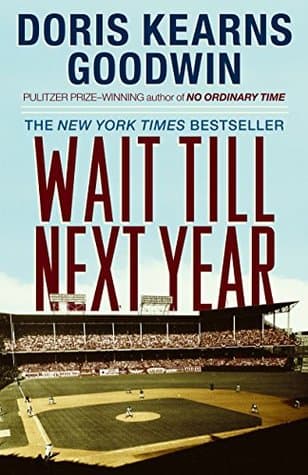
Wait Till Next Year cover
Archivist's Choice

Wait Till Next Year

Doris Kearns Goodwin (1997)

Genre

Biography / Memoir / History

Reading Time

6-8 hours

Key Themes

See below

Track Your Reading

Sign in to track this book

In 1950s Brooklyn, a young Doris Kearns Goodwin navigates family joys, her mother's illness, and the agony of the Dodgers' departure, all through her childhood love of baseball.

Core Idea

Doris Kearns Goodwin's "Wait Till Next Year" is a memoir that uses the Brooklyn Dodgers' 1950s seasons as a personal guide for her childhood. The book shows how baseball's triumphs and heartbreaks, especially a fan's hope and disappointment, help us understand family life, a past era, and the universal experience of loss and change. It suggests that shared stories, like those in sports, create lasting bonds and a way to process personal and community struggles, shaping who we are and how we remember history.
Reading time
6-8 hours
Difficulty
Easy
✓ Read this if...
You love baseball history, enjoy memoirs about childhood and family, or are interested in how personal narratives intertwine with larger cultural moments like the Brooklyn Dodgers' saga.
✗ Skip this if...
You have no interest in baseball or find detailed accounts of 1950s American life, particularly sports fandom, tedious.

Core idea

The central argument and framework that powers the entire book.

Doris Kearns Goodwin's "Wait Till Next Year" is a memoir that uses the Brooklyn Dodgers' 1950s seasons as a personal guide for her childhood. The book shows how baseball's triumphs and heartbreaks, especially a fan's hope and disappointment, help us understand family life, a past era, and the universal experience of loss and change. It suggests that shared stories, like those in sports, create lasting bonds and a way to process personal and community struggles, shaping who we are and how we remember history.

At a glance

Reading time

6-8 hours

Difficulty

Easy

Read this if...

You love baseball history, enjoy memoirs about childhood and family, or are interested in how personal narratives intertwine with larger cultural moments like the Brooklyn Dodgers' saga.

Skip this if...

You have no interest in baseball or find detailed accounts of 1950s American life, particularly sports fandom, tedious.

Key Takeaways

1

Baseball as a Moral Compass

The game instilled values of loyalty, resilience, and the bittersweet nature of hope.

Quote

For me, baseball was a world of order and logic, a miniature model of life itself, where rules were clear, and heroes, though fallible, still inspired.

Goodwin shows how baseball, especially her love for the Brooklyn Dodgers, was more than a hobby; it was central to her moral and emotional growth. The daily routine of listening to games with her father, scoring plays, and discussing outcomes taught her about loyalty, resilience in defeat, and the power of hope found in 'Wait Till Next Year.' This immersion in the Dodgers' world gave her a way to understand fairness, effort, and shared joy and sorrow, reflecting life's bigger lessons in a way a child could grasp. It was a shared langu...

Supporting evidence

Goodwin recounts the meticulous ritual of her father dictating the play-by-play from the radio, and her scoring the game in a book, a daily communion that solidified their bond and her understanding of the game's intricate rules and narratives.

Apply this

Identify a shared passion with a loved one that can serve as a vehicle for transmitting values. Engage deeply in the rituals of that passion, using its narratives to discuss life's complexities and build lasting connections.

childhood-ritualsintergenerational-bondssports-psychology
2

The Enduring Power of Neighborhood

Post-war suburban communities fostered deep connections and a shared sense of identity.

Quote

Our neighborhood was a tapestry woven with distinct threads – Dodger fans, Giant fans, Yankee fans – but all bound together by the shared fabric of daily life.

Goodwin paints a clear picture of 1950s suburban life, where the neighborhood was the center of social life. The corner store was not just for groceries; it was a place for news, gossip, and debates about local baseball teams. This era, with its close-knit streets and familiar faces, created a strong sense of belonging and shared identity. Children played freely, neighbors looked out for each other, and small community events strengthened social ties. This view of community contrasts with today's often more isolated urban or suburban ...

Supporting evidence

Goodwin describes the distinct loyalties to the Dodgers, Giants, and Yankees that divided the neighborhood, yet simultaneously provided a common ground for conversation and rivalry, binding people together through shared passions.

Apply this

Actively seek out opportunities to engage with your local community. Support local businesses, participate in neighborhood events, and foster connections with those who live near you to rebuild a sense of shared identity.

community-buildingpost-war-americasocial-fabric
3

The Weight of Parental Illness

A mother's debilitating illness profoundly shaped a child's understanding of resilience and loss.

Quote

My mother's illness was a slow, quiet diminishment, a shadow that lengthened over our lives, teaching me about the fragility of joy and the enduring power of love.

The memoir explores the effect of Goodwin's mother's long-term illness on her childhood. While her mother fostered a love of books and imagination, her physical decline cast a quiet shadow over the home. This experience made a young Doris confront fragility, caregiving, and the slow process of loss long before her mother's death. It showed the difference between her mother's active mind and her physical limits, shaping Goodwin's empathy and resilience. The illness also subtly changed family dynamics, putting more emphasis on her relat...

Supporting evidence

Goodwin details her mother's increasing confinement to the house and the way her love for books became a shared, quiet activity, contrasting with the more active world of baseball she shared with her father.

Apply this

When facing family illness, acknowledge the emotional toll on all members, especially children. Find ways to maintain connection and shared activities, adapting to new circumstances while preserving the essence of relationships.

childhood-grieffamily-dynamicschronic-illness-impact
4

Father-Daughter Bonds Through Shared Passions

A father's dedication to a shared interest can build an unbreakable connection.

Quote

My father taught me the joy of baseball, but more than that, he taught me the joy of sharing something completely, utterly, with another person.

Goodwin's relationship with her father, largely built through their shared love for the Brooklyn Dodgers, is a main part of the memoir. Her father's patient teaching of baseball's details, his ability to convey the game's drama and heroes, created a deep and lasting bond. This shared interest became a language, a ritual, and a source of understanding and comfort. It shows how a parent can use a specific interest to teach a child about the world and build a lasting emotional connection, offering a safe space for shared excitement, disa...

Supporting evidence

The daily ritual of her father dictating the play-by-play from the radio for her to score, and their subsequent discussions about the game, exemplify the deep, consistent engagement that built their bond.

Apply this

Identify a specific hobby or interest you can share with a child. Dedicate consistent time to this activity, using it as an opportunity for conversation, teaching, and emotional connection, rather than just a pastime.

parent-child-relationshipsshared-hobbiesemotional-connection
5

The Trauma of Loss: Team and Mother

The departure of the Dodgers and her mother's death marked the definitive end of childhood.

Quote

The Dodgers' leaving Brooklyn and my mother's leaving this earth, in such close succession, felt like the twin pillars holding up my childhood had crumbled.

Goodwin powerfully connects two losses—the Brooklyn Dodgers' move to Los Angeles in 1957 and her mother's later death—as the events that ended her childhood. The Dodgers' departure was a community trauma, breaking a shared dream and a sense of identity for an entire borough. For young Doris, it was a betrayal of loyalty and the loss of a predictable joy. Her mother's death, soon after, increased this feeling of deep and permanent loss. Together, these events made her face the harsh realities of change, impermanence, and life's bitters...

Supporting evidence

Goodwin explicitly states how these two events, occurring in rapid succession, felt like the definitive end of an era and her own innocent childhood, forcing her to mature quickly.

Apply this

Recognize that significant losses, whether personal or communal, can deeply impact a child's development. Provide support and space for processing grief, acknowledging that these moments are often pivotal in shaping identity and worldview.

childhood-traumagrief-and-lossdevelopmental-milestones
6

Nostalgia as a Historical Lens

Personal memoir offers a unique, empathetic gateway to understanding a historical era.

Quote

To remember my childhood is to remember the 1950s, a time and place inextricably linked to my earliest sense of self.

As a historian, Goodwin's memoir shows how personal stories can illuminate a historical period. Through her memories of growing up in 1950s New York, she doesn't just list facts; she brings out the feeling, atmosphere, and cultural details of the post-war era. Her personal experience of shared baseball loyalties, close-knit neighborhoods, and the innocence of the time gives readers an empathetic way to understand a significant moment in American history. This approach shows how individual lives are deeply shaped by larger historical t...

Supporting evidence

Goodwin's detailed descriptions of the 'corner store' culture, the prevalence of radio listening, and the distinct loyalties to baseball teams serve as micro-historical insights into the macro-history of 1950s American suburbs.

Apply this

When studying history, seek out personal narratives and memoirs alongside academic texts. This can provide a richer, more empathetic understanding of past eras and human experiences within them.

oral-historyhistorical-empathycultural-memory
7

The Power of Shared Narrative

Collective stories, like those of a baseball team, create communal identity and meaning.

Quote

The Dodgers were more than just a team; they were a story we all lived, a drama we collectively experienced, shaping who we were as a community.

Goodwin clearly shows how the Brooklyn Dodgers gave a whole community a shared story. The team's wins and losses were not just events; they were shared experiences that created a collective identity, conversation, and emotional investment. This shows the human need for shared stories and heroes, whether in sports, politics, or culture. These stories provide a way to understand common purpose, experience collective joy and sorrow, and strengthen social bonds. The loss of the Dodgers was so traumatic because it was not just losing a tea...

Supporting evidence

The vivid descriptions of neighbors debating game outcomes, the communal despair after losses, and the shared elation after victories underscore the team's role as a central, unifying narrative for Brooklyn.

Apply this

Identify and engage with shared narratives in your own community – be it local sports, cultural events, or historical stories. Participate in conversations and activities that reinforce these collective identities to strengthen social bonds.

collective-identitysocial-cohesionnarrative-theory
8

Childhood Resilience Amidst Change

Children possess an innate ability to adapt and find new meaning after profound loss.

Quote

Though the Dodgers were gone and my mother was gone, life, stubbornly and wonderfully, continued to unfold, demanding new chapters.

Despite the losses of her beloved baseball team and her mother, Goodwin's memoir subtly conveys childhood's resilience. While these events marked an end, they also forced adaptation and growth. Children, perhaps more than adults, can process grief, accept new realities, and find new sources of meaning and joy. Goodwin's eventual shift from a Dodger fan to a Yankees fan (though reluctant) and her continued search for knowledge and connection show this adaptable spirit. It demonstrates the human ability to heal and move forward, even wh...

Supporting evidence

Goodwin's eventual (and somewhat begrudging) shift in baseball loyalty, and her continued engagement with the world through books and school, illustrates her capacity to adapt and find new interests after profound loss.

Apply this

When supporting children through loss or significant change, acknowledge their grief but also foster opportunities for new experiences, interests, and connections. Trust in their innate capacity for resilience and adaptation.

resilience-psychologychild-developmentcoping-mechanisms
9

The Innocence of a Bygone Era

The 1950s represented a period of perceived simplicity and security that shaped a generation.

Quote

Our 1950s world felt safe and predictable, a cocoon woven from routine and shared expectations, before the larger world began to intrude.

Goodwin's memoir offers a nostalgic look at the perceived innocence and security of 1950s America, especially in its suburban settings. It evokes a time before widespread social upheaval, rapid technological change, or the anxieties of later decades. This era, as she describes it, had clear social norms, strong community ties, and a sense of optimism after World War II. While acknowledging that no era is without complexities, Goodwin's personal experience shows how this environment created a certain naiveté and a belief in predictable...

Supporting evidence

Goodwin's descriptions of children playing freely in the streets, the sense of safety in the neighborhood, and the shared, uncomplicated joy of baseball all contribute to this portrayal of a simpler time.

Apply this

Reflect on how your own upbringing and historical context have shaped your worldview. Consider the 'innocence' or 'complexities' of your formative years and how they compare to previous or subsequent generations.

post-war-cultureamerican-dreamgenerational-differences

Critical analysis

Notable Quotes

The game of baseball has always been a large part of my life, a constant against which all else was measured.

Reflecting on the central role of baseball in her childhood and life.

It was the Dodgers who taught me how to feel, how to hope, and how to cope with the crushing disappointment that life inevitably brings.

Describing the emotional education she received through her devotion to the Brooklyn Dodgers.

The ritual of listening to the games, recording every play, and then reliving them with my father was the most important thread in the fabric of my childhood.

Detailing the daily routine of listening to Dodgers games with her father and its significance.

For a child, there is no more powerful force than the love of a parent, especially when that love is expressed through shared passion.

Commenting on the bond with her father through their mutual love for baseball.

The move to Los Angeles was not just a geographic shift; it was a tearing away of a piece of our collective soul.

Expressing the profound sense of loss felt by Brooklyn residents when the Dodgers moved to Los Angeles.

In the end, it was not the winning that mattered most, but the shared experience, the collective breath held, the hope renewed with each new season.

Summarizing the deeper meaning of sports fandom beyond just victories.

History, I would come to learn, is not just about facts and dates, but about the stories we tell ourselves, the myths we create, and the emotions they evoke.

Reflecting on her early experiences with baseball stories as a precursor to her later career as a historian.

My father taught me that life, like baseball, is full of unexpected twists and turns, and that resilience is the most important quality one can possess.

Attributing life lessons learned from her father and baseball.

The beauty of baseball lies in its timelessness, its ability to connect generations, and its endless capacity for drama.

Articulating the enduring appeal of baseball.

Growing up in the 1950s, the world felt both vast and intimately small, defined by the boundaries of our neighborhood and the reach of our radio.

Describing the atmosphere of her childhood in the 1950s.

Every statistic was a story, every player a character, and every game a new chapter in an unfolding saga.

Illustrating how she perceived baseball statistics and games as a child.

The sound of Red Barber's voice was the soundtrack to my childhood, a comforting presence that made the world make sense.

Highlighting the importance of Dodgers announcer Red Barber to her and her family.

To be a Dodgers fan in Brooklyn was to belong to something larger than yourself, a collective identity forged in hope and heartbreak.

Explaining the sense of community and identity derived from being a Brooklyn Dodgers fan.

Even after the Dodgers left, the memory of them, and the joy they brought, remained a vivid and cherished part of who I was.

Reflecting on the lasting impact of the Dodgers despite their departure from Brooklyn.

Quiz

Test Your Knowledge

Ready to see how well you understood this book? Take our interactive quiz with 10 questions.

10
Questions
~5
Minutes
?
Best Score

Key Questions (FAQ)

Wait Till Next Year is Doris Kearns Goodwin's memoir of her childhood in 1950s suburban New York, focusing on her love for her family and the Brooklyn Dodgers. It explores her formative years through the lens of post-war American culture and the profound impact of baseball on her life.

About the author

Doris Kearns Goodwin

Doris Kearns Goodwin is a Pulitzer Prize-winning historian and presidential biographer. Her notable works include 'Team of Rivals: The Political Genius of Abraham Lincoln,' which was adapted into the film Lincoln, and 'Wait Till Next Year.' Goodwin's deep research and narrative skill offer profound insights into American history and leadership.