BookBrief
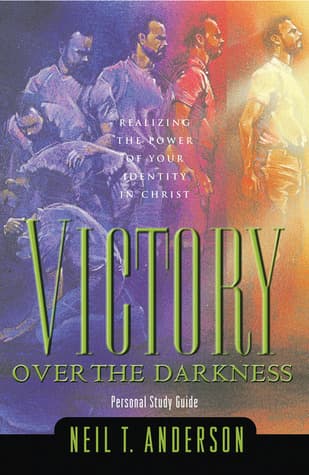
Victory Over the Darkness cover
Archivist's Choice

Victory Over the Darkness

Neil T. Anderson (1990)

Genre

Spirituality

Reading Time

240-320 min

Key Themes

See below

Track Your Reading

Sign in to track this book

Learn how internalizing biblical truths helps you break free from spiritual bondage and claim your identity in Christ, transforming your mind and defeating the enemy's lies.

Core Idea

Neil T. Anderson's "Victory Over the Darkness" says many struggles Christians face come from misunderstanding or disbelieving their identity in Christ. The book argues that by understanding and accepting who God says they are—righteous, loved, forgiven, and empowered—believers can overcome spiritual strongholds, habitual sins, and emotional distress. Anderson offers a way to do this, stressing the importance of giving up lies, accepting truth, confessing sin, forgiving others, and understanding how the enemy works. This helps readers walk in the daily freedom and victory they have through their connection with Christ.
Reading time
240-320 min
Difficulty
Medium
✓ Read this if...
You are a Christian struggling with recurring sin, negative thought patterns, or a sense of spiritual defeat, and you want practical steps to live out your faith with more freedom and confidence.
✗ Skip this if...
You are looking for a purely academic theological discourse or prefer a less prescriptive, more contemplative approach to spiritual growth.

Core idea

The central argument and framework that powers the entire book.

Neil T. Anderson's "Victory Over the Darkness" says many struggles Christians face come from misunderstanding or disbelieving their identity in Christ. The book argues that by understanding and accepting who God says they are—righteous, loved, forgiven, and empowered—believers can overcome spiritual strongholds, habitual sins, and emotional distress. Anderson offers a way to do this, stressing the importance of giving up lies, accepting truth, confessing sin, forgiving others, and understanding how the enemy works. This helps readers walk in the daily freedom and victory they have through their connection with Christ.

At a glance

Reading time

240-320 min

Difficulty

Medium

Read this if...

You are a Christian struggling with recurring sin, negative thought patterns, or a sense of spiritual defeat, and you want practical steps to live out your faith with more freedom and confidence.

Skip this if...

You are looking for a purely academic theological discourse or prefer a less prescriptive, more contemplative approach to spiritual growth.

Key Takeaways

1

Identity in Christ

Embrace your true spiritual identity as a child of God, not defined by past sins or worldly labels.

Quote

You are no longer a sinner trying to get saved; you are a saint who occasionally sins.

Anderson says many Christians live in bondage because they do not grasp their new identity in Christ. Instead of seeing themselves as redeemed children of God, they continue to identify with past sins, failures, or labels the world has given them. This wrong self-perception creates a major stronghold for spiritual oppression. Real freedom begins when believers accept the biblical truth that in Christ, they are saints, forgiven, righteous, and loved. This does not mean ignoring sin, but understanding that one's basic identity is no lon...

Supporting evidence

Anderson frequently cites Ephesians 1 and 2, and Romans 6 and 8, to demonstrate the believer's new position and spiritual inheritance in Christ, emphasizing phrases like 'in Him' and 'co-heirs with Christ.'

Apply this

Regularly confess and meditate on biblical 'who I am in Christ' statements (e.g., 'I am a child of God,' 'I am forgiven,' 'I am righteous'). Actively reject negative self-talk and labels that contradict your identity in Christ.

identity-in-christspiritual-warfareself-perception
2

The Power of Truth

Knowledge of biblical truth is the primary weapon against spiritual deception and emotional bondage.

Quote

You will know the truth, and the truth will make you free.

Anderson says spiritual bondage, emotional struggles, and destructive behaviors often come from believing lies, whether from the enemy, the world, or one's own flesh. The solution is not just willpower or positive thinking, but actively applying God's truth. He stresses that Satan's main method is deception, and our defense is the Word of God. Freedom is not just a feeling; it is a state reached by aligning one's mind and beliefs with objective biblical reality. This means finding specific lies, confessing them, and replacing them wit...

Supporting evidence

Anderson structures much of his counsel around identifying common lies (e.g., 'I'm worthless,' 'God doesn't love me') and countering them with specific Bible verses that declare God's character and the believer's standing.

Apply this

When experiencing negative emotions or thoughts, pause and ask: 'What lie am I believing right now?' Then, intentionally recall and declare a specific scriptural truth that refutes that lie.

truthspiritual-deceptionrenewing-the-mind
3

Renounce and Reclaim

Actively renounce past spiritual ties and sinful patterns, then reclaim ground for Christ.

Quote

Freedom is not merely the absence of bondage; it is the presence of Christ's reign in your life.

Anderson introduces a practical, two-part process for breaking free from spiritual bondages: renunciation and reclaiming. Renunciation is verbally rejecting any past involvement with occult practices, false religions, ungodly promises, or even sinful habits that have given the enemy spiritual entry points. It is a clear act of ending agreement with darkness. After this, reclaiming involves asserting one's position in Christ and inviting the Holy Spirit to fill the space left by renounced activities. This is not a passive process but a...

Supporting evidence

Anderson provides specific prayers and declarations for renouncing various forms of spiritual involvement, from dabbling in New Age to generational sin patterns, and then praying to appropriate Christ's victory.

Apply this

Identify specific areas of past sin or spiritual involvement. Verbally renounce them before God, confessing them as sin, and then declare your commitment to follow Christ in those areas, asking for the Holy Spirit's empowerment.

renunciationspiritual-cleansedeliverance
4

The Enemy's Tactics

Understand Satan's limited power and primary strategies to effectively resist his influence.

Quote

Satan cannot make you do anything; he can only tempt you and deceive you.

Anderson explains Satan's role, saying the enemy is a defeated foe with limited power, mainly working through deception and temptation, not irresistible force. He says Satan cannot read our minds, force us to sin, or truly possess a born-again believer. Instead, he plants seeds of doubt, fear, and lies in our thoughts, aiming to gain a 'foothold' (Ephesians 4:27) through unconfessed sin, unforgiveness, or believing falsehoods. Recognizing these methods helps believers resist effectively. The key is to tell the difference between one's...

Supporting evidence

Anderson frequently references biblical accounts of temptation and spiritual warfare, such as Jesus' temptation in the wilderness and Paul's exhortations to 'stand firm' against the devil's schemes (Ephesians 6).

Apply this

When tempted or experiencing negative thoughts, ask: 'Is this from God, from myself, or from the enemy?' If it's from the enemy, verbally resist it in the name of Jesus and declare a corresponding truth.

satan's-tacticsspiritual-warfaretemptation
5

The Sin of Unforgiveness

Unforgiveness is a major stronghold that grants the enemy access and hinders spiritual freedom.

Quote

Unforgiveness is like drinking poison and expecting the other person to die.

Anderson identifies unforgiveness as a major barrier to spiritual freedom and emotional health. He explains that holding onto bitterness, resentment, and anger towards those who have wronged us not only harms us emotionally and physically but also gives the enemy a 'foothold' in our lives (Ephesians 4:26-27). This is not about excusing the offense or forgetting the pain, but about choosing to release the offender to God's justice and releasing ourselves from the prison of bitterness. True forgiveness is a decision, not an emotion, and...

Supporting evidence

Anderson often refers to Matthew 18:21-35 (the parable of the unforgiving servant) and Ephesians 4:32 to illustrate God's command to forgive and the consequences of not doing so.

Apply this

Make a list of anyone you need to forgive (yourself included). Verbally forgive them before God, releasing them from your judgment and releasing yourself from the bitterness. Seek to make amends if appropriate.

unforgivenessemotional-healingspiritual-strongholds
6

Breaking Generational Sins

Recognize and renounce patterns of sin passed down through family lines to achieve personal freedom.

Quote

We are not necessarily guilty of our ancestors' sins, but we can be affected by their consequences if we choose to continue in the same patterns.

Anderson addresses the idea of generational sin, explaining that while God does not punish children for their parents' sins, patterns of sin, curses, or brokenness can be passed down through families. These are not set fates but rather tendencies or learned behaviors that can create spiritual weaknesses. He encourages believers to identify such patterns in their family history (e.g., addiction, abuse, divorce, occult involvement) and actively reject any agreement with them. This involves confessing the sins of ancestors (without takin...

Supporting evidence

Anderson draws from Old Testament passages that mention the consequences of sin extending to future generations (e.g., Exodus 20:5), interpreting them not as punitive but as describing the natural and spiritual impact of continued sinful patterns.

Apply this

Research your family history for recurring negative patterns. Confess these patterns as sin before God, renounce any spiritual agreement with them, and declare your freedom in Christ to live differently.

generational-sinfamily-patternscurses
7

The Importance of Confession

Confession of sin is essential for spiritual cleansing and maintaining open fellowship with God.

Quote

Confession is not about punishment; it's about cleansing and restoring fellowship.

Anderson stresses that confession is not a punishment but an important step for spiritual health and freedom. He explains that unconfessed sin creates a barrier in our relationship with God and gives the enemy an open door to accuse and oppress. True confession involves agreeing with God about the nature of our sin, acknowledging it, and repenting (turning away from it). This act immediately restores fellowship with God, as 'He is faithful and just to forgive us our sins and and to cleanse us from all unrighteousness' (1 John 1:9). It...

Supporting evidence

The entire process of 'breaking free' is predicated on honest confession of sin, both personal and ancestral, and is directly linked to 1 John 1:9 for immediate cleansing and restoration.

Apply this

Practice daily or regular confession of any known sins, immediately bringing them before God. Don't dwell in guilt but accept God's forgiveness and cleansing, moving forward in His grace.

confessionforgivenessspiritual-cleansing
8

Walking in Freedom Daily

Freedom is maintained through daily disciplines of truth, prayer, and obedience, not a one-time event.

Quote

Freedom is not a destination; it's a journey you walk out every day.

Anderson clarifies that while big breakthroughs can happen, spiritual freedom is not a static state achieved once and for all, but an ongoing journey. It requires continuous watchfulness, daily renewing of the mind, and consistent application of biblical truth. This involves daily prayer, meditating on scripture, keeping a repentant heart, and actively resisting temptation and lies. Just as physical health needs daily habits, spiritual health and freedom need consistent spiritual practices. The goal is not just to get free, but to sta...

Supporting evidence

Anderson's 'Steps to Freedom in Christ' are presented as a guided process, but he consistently underscores the need for ongoing spiritual disciplines and accountability to maintain the freedom gained.

Apply this

Establish daily habits of prayer, Bible reading, and intentional reflection on your identity in Christ. Regularly review your thoughts and beliefs, actively replacing lies with truth.

spiritual-disciplinesdaily-walksanctification
9

The Role of the Holy Spirit

The Holy Spirit empowers believers to live in freedom and overcome sin, not human effort alone.

Quote

You can no more live the Christian life in your own strength than you can create yourself.

While stressing personal responsibility in choosing truth and resisting evil, Anderson firmly grounds the ability to live in freedom in the power of the Holy Spirit. He says that trying to overcome sin and live righteously through sheer willpower is useless and leads to frustration and failure. The Holy Spirit convicts of sin, clarifies truth, empowers obedience, and enables believers to walk in their new identity. The Christian life is not a self-improvement project but a Spirit-led transformation. Actively yielding to the Holy Spiri...

Supporting evidence

Anderson frequently references Romans 8, Galatians 5, and other passages that speak of 'walking in the Spirit' and the Spirit's power to overcome the flesh and live a victorious life.

Apply this

Before engaging in spiritual warfare or making decisions, consciously invite the Holy Spirit to lead and empower you. Regularly pray for the filling and guidance of the Holy Spirit in all areas of your life.

holy-spiritempowermentspiritual-growth
10

Discipleship and Accountability

Community and guidance are vital for maintaining freedom and continuing spiritual growth.

Quote

Isolation is the enemy's playground.

Anderson implicitly, and sometimes explicitly, stresses the important role of discipleship and accountability in the journey of freedom. While much of the book focuses on individual choices and prayers, he understands that lasting victory rarely happens alone. Being connected to a healthy Christian community, having mentors or accountability partners, and being part of a discipling relationship gives support, encouragement, and necessary correction. These relationships help solidify new freedoms, offer a safe space for confession, and...

Supporting evidence

The 'Steps to Freedom' ministry often involves trained facilitators, and Anderson consistently advocates for individuals to be part of a local church and seek wise counsel.

Apply this

Seek out a trusted Christian mentor or accountability partner. Share your struggles and victories, and commit to regular check-ins to support each other in your walk of freedom.

discipleshipaccountabilitychristian-community

Critical analysis

Notable Quotes

You are not who you think you are; you are who God says you are.

A foundational statement about identity in Christ.

The greatest freedom you have is the freedom to choose your own attitude.

Discussing personal responsibility and mindset in spiritual growth.

If you don't stand for something, you'll fall for anything.

Emphasizing the importance of spiritual convictions.

You cannot consistently behave in a way that is inconsistent with the way you see yourself.

Explaining the link between self-perception and behavior.

The battle for the mind is the battle for the heart.

Highlighting the spiritual significance of mental and emotional health.

Forgiveness is setting a prisoner free and discovering the prisoner was you.

Describing the transformative power of forgiveness.

You are not a victim of your past; you are a victor in Christ.

Encouraging believers to overcome past hurts through faith.

The truth will set you free, but first it will make you miserable.

Acknowledging the discomfort that often accompanies spiritual truth.

Your worth is not determined by your performance but by God's love for you.

Countering performance-based spirituality with grace.

The only way to defeat the enemy is to know who you are in Christ.

Stressing the importance of spiritual identity in overcoming challenges.

You can't change the past, but you can change the meaning of the past.

Offering perspective on healing from past experiences.

The most important opinion about you is the one God has.

Redirecting focus from human approval to divine affirmation.

Freedom is not the absence of conflict but the presence of peace in the midst of it.

Defining spiritual freedom in practical terms.

You are not defined by your failures but by your faith.

Encouraging resilience and faith-based identity.

Quiz

Test Your Knowledge

Ready to see how well you understood this book? Take our interactive quiz with 10 questions.

10
Questions
~5
Minutes
?
Best Score

Key Questions (FAQ)

'Victory Over the Darkness' is a Christian spirituality book by Neil T. Anderson that focuses on overcoming negative thoughts and spiritual battles by internalizing biblical truths. It teaches readers to renew their minds based on Scripture to resist Satan's lies and live in the freedom Christ offers.

About the author