BookBrief
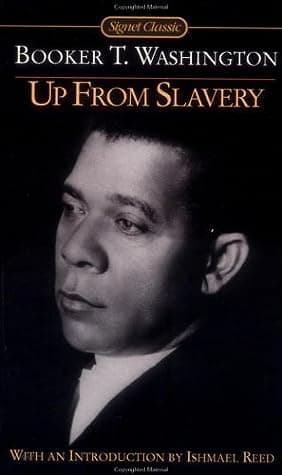
Up from Slavery cover
Archivist's Choice

Up from Slavery

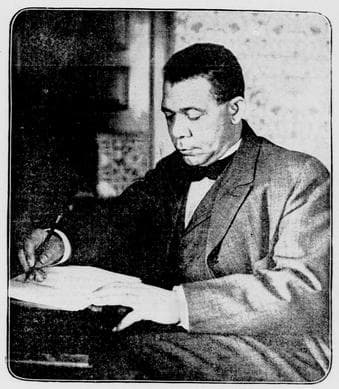
Booker T. Washington (1900)

Genre

Biography / Memoir / History

Reading Time

6-8 hours

Key Themes

See below

Track Your Reading

Sign in to track this book

Born enslaved, Booker T. Washington's autobiography tells of his rise to become a leading educator and national figure, showing the path from bondage to empowerment through the Tuskegee Institute.

Core Idea

Booker T. Washington's autobiography suggests that practical education, industrial skills, economic independence, and strong moral character are the best ways for African Americans to achieve equality and overcome the legacy of slavery. He believed that by showing their value through hard work, saving money, and peaceful cooperation, Black Americans could slowly earn respect and acceptance from white communities, building a base for future political and social progress. This approach focused on self-reliance and the dignity of labor as key parts of individual and group progress within the existing social structure.
Reading time
6-8 hours
Difficulty
Medium
✓ Read this if...
You are interested in primary source accounts of post-Civil War African American experiences, the philosophy of self-help and vocational education, or the historical context of racial uplift movements in the late 19th and early 20th centuries.
✗ Skip this if...
You are looking for a book that advocates for immediate political confrontation or radical social restructuring to achieve racial equality, or if you find accommodationist strategies difficult to reconcile with modern civil rights perspectives.

Core idea

The central argument and framework that powers the entire book.

Booker T. Washington's autobiography suggests that practical education, industrial skills, economic independence, and strong moral character are the best ways for African Americans to achieve equality and overcome the legacy of slavery. He believed that by showing their value through hard work, saving money, and peaceful cooperation, Black Americans could slowly earn respect and acceptance from white communities, building a base for future political and social progress. This approach focused on self-reliance and the dignity of labor as key parts of individual and group progress within the existing social structure.

At a glance

Reading time

6-8 hours

Difficulty

Medium

Read this if...

You are interested in primary source accounts of post-Civil War African American experiences, the philosophy of self-help and vocational education, or the historical context of racial uplift movements in the late 19th and early 20th centuries.

Skip this if...

You are looking for a book that advocates for immediate political confrontation or radical social restructuring to achieve racial equality, or if you find accommodationist strategies difficult to reconcile with modern civil rights perspectives.

Key Takeaways

1

The Dignity of Labor

Manual labor is not just a means to an end, but a path to self-respect and societal value.

Quote

No race that has anything to contribute to the markets of the world is long in any degree ostracized.

Washington believed that true freedom and respect for African Americans would come through mastering practical skills and showing economic usefulness, not just through political action. He thought that by excelling in agriculture, trades, and domestic sciences, Black individuals could prove their essential value to Southern society, thereby earning the respect of their white neighbors. This focus on industrial education differed from traditional academic models, stressing that hard, honest work, no matter how humble, was dignified and...

Supporting evidence

The entire philosophy behind the founding and curriculum of the Tuskegee Normal and Industrial Institute, which prioritized brick-making, farming, carpentry, and sewing over classical studies.

Apply this

Identify areas where practical skills are undervalued and seek to master them. Recognize the inherent dignity in all forms of labor and contribute meaningfully to your community through tangible output.

industrial-educationeconomic-empowermentself-sufficiency
2

The Power of Self-Help

External aid is temporary; true progress stems from internal effort and collective self-reliance.

Quote

The great mistake of the past has been that so many have tried to begin at the top instead of at the bottom.

Washington promoted self-help, urging African Americans to take primary responsibility for their own progress rather than waiting for government help or charity. He thought that relying too much on outside support could lead to dependence, while internal initiative built resilience and real ability. This was not a rejection of aid, but a call to use resources strategically alongside continuous personal effort. His goal was for Black communities to improve themselves, creating their own opportunities and solving their own problems, thu...

Supporting evidence

Tuskegee Institute's early days, where students often built the school's facilities themselves, growing their own food and making their own bricks, rather than relying solely on external contractors or funding.

Apply this

Before seeking external solutions, exhaust internal resources and collective community efforts. Invest in skill development and asset building within your own group or organization.

bootstrappingcommunity-developmentagency
3

Education as Liberation

Education, especially practical education, is the most potent tool for breaking the chains of poverty and prejudice.

Quote

Ignorance is not a good defense.

For Washington, education was about developing character, competence, and economic viability, not just acquiring knowledge. He saw education as the main way African Americans could overcome the legacy of slavery and achieve full citizenship. However, his view of education was vocational, focusing on skills that would lead to immediate employment and economic independence. He argued that practical training in trades, agriculture, and domestic sciences would not only provide livelihoods but also instill discipline, self-respect, and a s...

Supporting evidence

The curriculum at Tuskegee, which focused on 'learning by doing' and ensuring that graduates were equipped with marketable skills, from blacksmithing to teaching, that directly addressed the needs of their communities.

Apply this

Prioritize continuous learning and skill acquisition, especially in areas that enhance your economic independence and societal contribution. Seek out educational opportunities that bridge theory with practical application.

vocational-trainingskill-developmenthuman-capital
4

The Long Game of Progress

Societal change is a gradual process requiring patience, persistence, and strategic accommodation.

Quote

The wisest among my race understand that the agitation of questions of social equality is the extremest folly.

Washington's philosophy supported a gradual approach to racial equality, often called 'accommodationism.' He believed that direct confrontation and demands for social equality were counterproductive in the immediate post-Reconstruction South, given the strong racial hostility. Instead, he urged African Americans to focus on economic development and moral improvement, arguing that social and political equality would naturally follow once Black communities proved their worth and became economically essential. This strategy, though contr...

Supporting evidence

The 'Atlanta Compromise' speech (though not explicitly detailed in the book, its philosophy is pervasive), where Washington advised Black people to 'cast down your bucket where you are' and focus on economic self-sufficiency rather than demanding immediate political or social equality.

Apply this

When facing deeply entrenched systemic issues, identify foundational areas where incremental progress can be made. Prioritize building sustainable strength over immediate, potentially unsustainable, confrontation.

gradualismaccommodationismpragmatism
5

Character Over Circumstance

True success and respect are earned through integrity, industry, and moral fortitude, regardless of one's origins.

Quote

No man, who has to do with the uplift of humanity, can afford to lose faith in humanity itself.

Washington constantly stressed the importance of character in overcoming difficulties and earning respect. He believed that while external conditions could be disabling, an individual's internal moral compass, work ethic, and commitment to excellence were the ultimate factors in success. He saw developing strong moral character – honesty, punctuality, diligence, and self-control – as essential for Black Americans to succeed economically and to challenge racist stereotypes. For Washington, being skilled was not enough; one had to be a ...

Supporting evidence

Numerous anecdotes throughout the book where Washington recounts individuals who, through sheer force of character and diligent work, overcame immense prejudice and poverty to achieve success, often earning the respect of former slaveholders.

Apply this

Cultivate virtues like integrity, diligence, and perseverance. Recognize that your character is a powerful tool for influence and overcoming obstacles, often more so than material possessions or initial circumstances.

moral-integrityvirtue-ethicsresilience
6

The Interdependence of Races

The prosperity of the South, and indeed the nation, is inextricably linked to the uplift of all its people.

Quote

No man can drag me down so low as to make me hate him.

Washington saw the destinies of Black and white Southerners as connected. He argued that the economic stagnation and social unrest in the post-slavery South harmed everyone, not just African Americans. By improving the education, skills, and economic standing of Black citizens, the entire region would benefit through increased productivity, stability, and shared prosperity. This practical argument appealed to the self-interest of white Southerners, suggesting that helping Black communities was not just morally right but economically n...

Supporting evidence

His appeals to white philanthropists and Southern leaders, often framing the investment in Tuskegee and Black education as an investment in the overall economic health and stability of the South.

Apply this

Identify areas of mutual interest and shared benefit when advocating for change. Frame solutions in a way that demonstrates positive outcomes for all stakeholders, fostering collaboration rather than opposition.

mutual-benefitsocial-cohesionshared-destiny
7

Overcoming the Legacy of Slavery

The psychological and practical scars of slavery required specific, targeted efforts to heal and build anew.

Quote

To get a dollar into the hands of a Negro, a dollar that he has earned, means more than to get a hundred dollars into the hands of a white man.

Washington understood that the shift from slavery to freedom involved deep psychological and practical challenges. Former slaves often lacked basic education, property, and experience in self-governance, having been denied agency for generations. Tuskegee's industrial education model was designed to address these shortcomings, teaching habits of industry, thrift, and self-reliance. It aimed to counter the dehumanizing effects of slavery by giving individuals skills that affirmed their value and allowed them to support themselves. This...

Supporting evidence

The emphasis at Tuskegee on teaching students how to manage money, own property, and operate businesses, directly countering the lack of such opportunities during slavery.

Apply this

When addressing historical injustices, consider the deep-seated psychological and practical impacts. Develop solutions that not only provide resources but also empower individuals with agency, skills, and self-respect.

post-slavery-reconstructionpsychological-emancipationdignity-restoration
8

The Power of Example

Leading by example and demonstrating success is more persuasive than mere argumentation.

Quote

There is no power on earth that can permanently stay the progress of a determined race.

Washington strongly believed that visible demonstrations of success by African Americans would be more effective in fighting prejudice and gaining respect than arguments or protests. Tuskegee Institute itself was a clear example: a thriving institution built by Black people, educating Black people, and contributing valuable skills to the wider community. This 'show, don't tell' philosophy was central to his strategy. By proving their ability for self-governance, economic productivity, and moral uprightness, Black communities could gra...

Supporting evidence

The consistent growth and success of Tuskegee Institute, which under Washington's leadership, transformed from a dilapidated shanty into a sprawling, self-sufficient educational complex, attracting national attention and funding.

Apply this

Instead of just talking about what needs to change, actively build and demonstrate successful models. Let your actions and tangible results speak louder than your words.

demonstration-effectrole-modelingproof-of-concept
9

Philanthropy and Partnership

Strategic alliances with influential benefactors are crucial for scaling impactful initiatives.

Quote

I have found that the happiest people are those who do the most for others.

Washington was a skilled fundraiser and networker. He knew that while self-help was important, significant progress often needed outside money and influence. He built relationships with wealthy industrialists and philanthropists, both Black and white, using their resources to build and expand Tuskegee. His ability to explain his vision in ways that appealed to potential donors, emphasizing the practical benefits and societal stability that industrial education offered, was key. This was not just asking for money; it was forming strate...

Supporting evidence

His successful appeals to figures like Andrew Carnegie, Collis P. Huntington, and Julius Rosenwald, securing millions in donations that allowed Tuskegee to grow into a major educational institution.

Apply this

Identify potential allies and benefactors who align with your mission. Develop compelling narratives that demonstrate the return on investment (social, economic, or otherwise) for their support, fostering genuine partnerships.

strategic-partnershipsfundraisingsocial-investment
10

The Transformative Power of Travel

Exposure to different cultures and ways of life broadens perspective and inspires innovation.

Quote

I have always been impressed with the idea that the greatest object in life is to be useful.

Though his early life was restricted, Washington later understood the great value of travel and seeing different societies. His trips to Europe, especially England, gave him broader views on race relations, education, and social improvement. These experiences confirmed some of his own ideas, offered new insights, and strengthened his belief in the universal principles of industry and self-improvement. Travel allowed him to compare the conditions of African Americans with other marginalized groups, refining his strategies and strengthe...

Supporting evidence

His detailed accounts of his travels to Europe, where he observed various social conditions and educational models, and how these experiences influenced his thinking and reinforced his commitment to Tuskegee's mission.

Apply this

Actively seek out opportunities for new experiences and exposure to different cultures or ways of thinking. Use these insights to challenge assumptions, inspire innovation, and broaden your understanding of complex problems.

global-perspectivecultural-exchangeexperiential-learning

Critical analysis

Notable Quotes

The great mission of the Negro in this country is to show that he can rise, and that he can make himself useful.

Reflecting on the purpose of his work and the broader African American struggle.

No man, who is at all a man, will ever blame a woman for having too much love.

A general reflection on human nature and relationships, not directly tied to racial themes.

No race that has anything to contribute to the markets of the world is long in any degree ostracized.

Arguing for the importance of economic contribution as a path to social acceptance.

I have learned that success is to be measured not so much by the position that one has reached in life as by the obstacles which he has overcome while trying to succeed.

Reflecting on his personal journey and the true meaning of success.

The older I grow, the more I am convinced that there is no education which one can get from books and lectures that is equal to the education which one can get from actual contact with men and things.

Emphasizing the value of practical experience over purely theoretical learning.

To those of my race who depend on bettering their condition in a foreign land or who underestimate the importance of cultivating friendly relations with the Southern white man, who is their next-door neighbor, I would say: 'Cast down your bucket where you are.'

From his famous Atlanta Compromise speech, advising African Americans to focus on local economic development and cooperation.

No race can prosper till it learns that there is as much dignity in tilling a field as in writing a poem.

Advocating for the dignity of labor and practical skills, a core tenet of his philosophy.

I believe it is important that the Negro youth be taught to appreciate the dignity of labor, and to realize that they are to be a part of the industrial life of the country.

Outlining his educational philosophy for African American youth.

There is no escape through help from others, or by the neglect of self, or by the shirking of duty.

A statement on personal responsibility and accountability.

Character, not circumstance, makes the man.

A powerful assertion about the importance of inner qualities over external conditions.

Few things help an individual more than to place responsibility upon him, and to let him know that you trust him.

Reflecting on effective leadership and motivation.

The time will come when the Negro in the South will be accorded justice, not because he is a Negro, but because it is the right and proper thing to do.

Expressing an optimistic view of future race relations and justice.

I have always been a believer in the doctrine that the Negro should be taught to do something that the world wants done.

Emphasizing vocational training and practical skills as essential for economic integration.

The world is not so much interested in what you have been as in what you are now, and what you are going to be.

Encouraging a forward-looking perspective, focusing on present and future achievements.

Quiz

Test Your Knowledge

Ready to see how well you understood this book? Take our interactive quiz with 10 questions.

10
Questions
~5
Minutes
?
Best Score

Key Questions (FAQ)

'Up from Slavery' is the autobiography of Booker T. Washington, detailing his journey from being born into slavery in the American South to becoming a prominent national leader, educator, and founder of the Tuskegee Institute. It chronicles his personal struggles, educational pursuits, and his vision for the advancement of African Americans in the post-Reconstruction era.

About the author

Booker T. Washington

Booker T. Washington was a prominent educator, orator, and author. His autobiography, "Up from Slavery," remains a seminal work detailing his life and advocacy for African American advancement during the Reconstruction Era. Washington's pragmatic approach to racial uplift and his founding of the Tuskegee Institute significantly impacted education and civil rights in the late 19th and early 20th centuries.