BookBrief
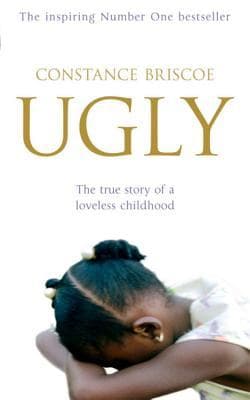
Ugly cover
Archivist's Choice

Ugly

Constance Briscoe (2006)

Genre

Biography / Memoir

Reading Time

10-12 hours

Key Themes

See below

Track Your Reading

Sign in to track this book

Constance Briscoe's true story recounts her childhood of abuse, starvation, and abandonment, and her will to survive against all odds.

Core Idea

Constance Briscoe's "Ugly" is a memoir about a childhood marked by severe physical and emotional abuse from her mother, often with other family members involved. The book shows how family abuse works, where love depends on obedience and silence. It explores how this trauma shaped her view of herself, especially her appearance. Despite the constant violence, neglect, and social services' failure to help, Briscoe's story shows her resilience, self-belief, and how education helped her escape, heal, and break the cycle of violence to become a judge.
Reading time
10-12 hours
Difficulty
Medium
✓ Read this if...
You are interested in powerful true stories of overcoming severe childhood abuse and neglect, exploring themes of resilience, trauma, and the pursuit of justice and self-worth against overwhelming odds.
✗ Skip this if...
You are sensitive to graphic descriptions of child abuse, domestic violence, and emotional cruelty, or prefer books with a less intense and more uplifting tone throughout.

Core idea

The central argument and framework that powers the entire book.

Constance Briscoe's "Ugly" is a memoir about a childhood marked by severe physical and emotional abuse from her mother, often with other family members involved. The book shows how family abuse works, where love depends on obedience and silence. It explores how this trauma shaped her view of herself, especially her appearance. Despite the constant violence, neglect, and social services' failure to help, Briscoe's story shows her resilience, self-belief, and how education helped her escape, heal, and break the cycle of violence to become a judge.

At a glance

Reading time

10-12 hours

Difficulty

Medium

Read this if...

You are interested in powerful true stories of overcoming severe childhood abuse and neglect, exploring themes of resilience, trauma, and the pursuit of justice and self-worth against overwhelming odds.

Skip this if...

You are sensitive to graphic descriptions of child abuse, domestic violence, and emotional cruelty, or prefer books with a less intense and more uplifting tone throughout.

Key Takeaways

1

The Insidious Nature of Familial Abuse

Abuse within the family unit is often hidden, normalized, and incredibly difficult to escape.

Quote

My mother's love was a weapon, not a shield. Each blow, each cruel word, etched itself deeper than any external wound.

Briscoe's memoir clearly shows how those meant to protect can become the source of terror. The truth is not just about physical scars, but the psychological trap of being abused by a parent. This type of abuse is especially damaging because it destroys a child's basic sense of safety and self-worth, making it hard for them to know what is normal or to get help. The constant manipulation and the social expectation of family loyalty create a stronger prison than any physical one. Briscoe's story highlights the painful conflict of depend...

Supporting evidence

Constance's consistent beatings, starvation, and the emotional manipulation where her mother would oscillate between violence and fleeting moments of 'kindness' to maintain control. Her attempts to get taken into care, which were consistently thwarted due to the hidden nature of the abuse and her mother's ability to present a 'normal' facade to outsiders.

Apply this

Recognize that 'family secrets' can hide grave injustices. Support initiatives that empower children to report abuse anonymously and provide resources for those trapped in abusive households, understanding that their situation is uniquely complex due to the familial bond.


child-abuse-dynamicsfamilial-traumaintergenerational-violence
2

The Failed Safety Nets

Societal and institutional failures often leave abused children without adequate protection or intervention.

Quote

I tried to tell them, to show them, but no one truly saw. My cries for help echoed in empty rooms.

Briscoe's difficult experiences show a major flaw in systems meant to protect children. Despite her desperate attempts to get help—drinking bleach, running away, trying to go into care—the authorities and institutions around her consistently failed. This is not just a personal tragedy; it points to systemic issues where signs of abuse are missed, misunderstood, or ignored. The lack of proper investigation, the failure to see past a parent's outward appearance, and bureaucratic obstacles often leave children like Constance stuck. This ...

Supporting evidence

Constance's repeated attempts to report her mother to social services and teachers, only for her claims to be disbelieved or inadequately investigated. Her drinking bleach was a desperate cry for help that, tragically, did not lead to her removal from the abusive home.

Apply this

Advocate for improved mandatory reporting laws, better training for educators and social workers to recognize subtle signs of abuse, and more resources for child protective services to conduct thorough, child-focused investigations.

child-protection-failuressystemic-neglectinstitutional-blindness
3

Resilience Forged in Adversity

The human spirit's capacity to endure and find strength even in the most brutal circumstances.

Quote

They tried to break me, but every blow, every deprivation, only hardened my resolve to survive and prove them wrong.

Constance Briscoe's story shows the remarkable strength of the human spirit. Despite enduring severe physical and psychological torture from her mother, she found an inner strength to not only survive but to eventually succeed. This strength was not passive; it was an active, determined will to live and to escape her situation. It appeared in her resourcefulness, her drive to do well in school, and her courage to break free. Her story challenges the idea that victims are always broken, showing instead that trauma, while damaging, can ...

Supporting evidence

Her survival after being abandoned at 13, her dedication to her studies despite her home life, and her eventual success in pursuing a legal career, directly defying the expectations and limitations imposed by her abusive upbringing.

Apply this

Foster resilience in vulnerable populations by providing access to education, mentorship, and therapeutic support that emphasizes agency and self-efficacy. Recognize that survival itself is a profound act of strength.

post-traumatic-growthgrit-and-perseveranceinner-strength
4

The Weight of Appearance

How societal perceptions of 'ugliness' and beauty can intersect with self-worth and abuse.

Quote

My mother told me I was ugly, worthless. And for a long time, I believed her, seeing her words reflected in every mirror.

Briscoe's title, 'Ugly,' reflects how her mother's verbal abuse targeted her appearance, instilling deep feelings of worthlessness. This goes beyond just physical looks; it speaks to the psychological effect of being constantly told you are unlovable and undesirable. Her mother used 'ugliness' as a way to control, linking it directly to her daughter's perceived value. This story shows how outside approval, or the lack of it, can deeply shape a child's self-perception, especially when it comes from a primary caregiver. It highlights th...

Supporting evidence

Her mother's constant derogatory comments about Constance's appearance, calling her 'ugly' and 'dark', linking her physical traits to her perceived lack of worth. This psychological torment was as damaging as the physical abuse.

Apply this

Challenge superficial beauty standards and promote self-acceptance. Educate on the profound psychological damage of verbal abuse, particularly when it targets a child's identity and appearance. Encourage positive self-talk and affirmation.

body-image-issuespsychological-abuseself-esteem-development
5

Breaking the Cycle

Escaping an abusive past requires immense courage and a conscious effort to forge a new future.

Quote

The hardest prison to escape is the one built in your mind, but I was determined to tear down its walls, brick by painful brick.

Constance Briscoe's journey illustrates the difficult process of breaking free from an abusive past, both physically and psychologically. It is not enough to simply leave the abusive environment; the internalized trauma, learned behaviors, and shattered self-worth often remain. Her success as a judge is not just a career achievement, but a deep act of self-reclamation. It shows her refusal to let her past define her future and her deliberate choice to build a life based on justice and self-respect, rather than continuing the cycle of ...

Supporting evidence

Her pursuit of education and law, culminating in her becoming a judge, stands as direct evidence of her breaking the cycle of poverty and abuse she was born into. This career path is a stark contrast to the life her mother attempted to impose on her.

Apply this

Support survivors of abuse through therapy, education, and mentorship programs that focus on healing, self-empowerment, and building healthy relationships. Emphasize that breaking the cycle is a lifelong journey, not a single event.

trauma-recoveryself-liberationintergenerational-trauma
6

The Power of Education

Education can be a crucial escape route and a source of empowerment for those in dire circumstances.

Quote

My books were my friends, my teachers, my escape. They showed me a world beyond the walls of my mother's cruelty.

For Constance, education was a lifeline, a safe place, and a tool against her oppressive home life. Despite the chaos and hardship at home, her dedication to her studies gave her purpose and a path to a different future. School offered moments of normalcy and validation, a stark contrast to the abuse she faced. This highlights how access to good education, even in the hardest situations, can give children the tools, confidence, and hopes needed to rise above their current reality and imagine a life beyond their limitations. It becomes...

Supporting evidence

Her dedication to her studies, achieving good grades despite her home life, and ultimately pursuing higher education to become a lawyer and then a judge. Education was her primary means of escaping her impoverished and abusive beginnings.

Apply this

Champion equitable access to education for all children, particularly those from disadvantaged backgrounds. Implement programs that support students experiencing trauma, recognizing that school can be a critical safe space and a catalyst for change.

educational-empowermentsocial-mobilitysafe-spaces-in-education
7

The Long Shadow of Trauma

Childhood abuse leaves deep psychological scars that require continuous healing and self-awareness.

Quote

Even when the physical bruises faded, the invisible ones remained, shaping my fears, my choices, my very self.

Constance Briscoe's story, while a triumph, shows that the scars of childhood abuse are not easily removed. The psychological impact—including trust issues, difficulty forming healthy relationships, and struggles with self-worth—can affect a person's life long after they have escaped the abusive situation. Her journey suggests that healing is an ongoing process, requiring constant awareness, self-reflection, and often professional help to process past experiences without letting them define one's present or future. It shows the lastin...

Supporting evidence

While the book focuses on her survival and success, the very act of writing such a raw memoir suggests a deep, ongoing process of grappling with her past. Her descriptions of internal struggles and the difficulty of trusting others hint at the lasting psychological impact.

Apply this

Promote mental health awareness and access to trauma-informed therapy for survivors of abuse. Encourage empathy and understanding that healing is non-linear and takes time, often manifesting in complex ways.

complex-traumaintergenerational-traumahealing-journey
8

The Isolation of Abuse

Abuse thrives in secrecy, often isolating victims from external support and understanding.

Quote

My mother built walls around our suffering, making sure no one outside could hear my screams, or see my tears.

One of the most damaging parts of Constance's abuse was the deep isolation it caused. Her mother intentionally created an environment of secrecy, making it nearly impossible for Constance to get help or for outsiders to step in. This isolation is a common tactic in abusive homes, where the abuser controls the story and limits the victim's access to outside support. It strengthens the victim's feeling of helplessness and shame, making them believe their suffering is unique and that no one would understand or believe them. Briscoe's sto...

Supporting evidence

Her mother's careful presentation of a 'normal' family life to neighbors and authorities, the punishment Constance received for trying to disclose the abuse, and her feeling of being utterly alone in her suffering.

Apply this

Develop community-based programs that foster open communication about abuse. Train individuals in various community roles (e.g., librarians, hairdressers, religious leaders) to recognize signs of abuse and offer discreet, safe avenues for disclosure and support.

social-isolationabuse-tacticssecrecy-in-abuse
9

The Power of Self-Belief

Despite overwhelming odds, cultivating inner belief is crucial for overcoming adversity.

Quote

They told me I was nothing, but deep inside, a tiny spark of defiance whispered that I could be something more.

Constance Briscoe's journey shows the strong impact of self-belief, even when it is fragile. Constantly put down and told she was 'ugly' and worthless, her ability to hold onto even a small amount of hope and belief in her own potential was huge. This inner strength allowed her to resist her mother's destructive words and follow a path of self-improvement and achievement. It highlights that while outside support is important, the inner belief in one's own worth and abilities, no matter how small, can be the most powerful force for cha...

Supporting evidence

Her determination to excel in school, her decision to pursue law despite her background, and her eventual rise to a respected position as a judge, all driven by an internal conviction that she deserved better and was capable of more.

Apply this

Encourage and nurture self-belief in children and young adults, especially those facing difficult circumstances. Provide mentorship and positive role models who can affirm their potential and help them envision a brighter future.

self-efficacyinner-strengthpositive-psychology

Critical analysis

Notable Quotes

I was born into a world where I was not wanted, where my very existence was a burden.

Reflecting on her earliest memories and the emotional neglect from her mother.

My mother's words were like stones, thrown at me daily, each one chipping away at my self-worth.

Describing the constant verbal abuse she suffered from her mother.

The mirror was my enemy, reflecting back the 'ugly' that my mother insisted I was.

Struggling with her physical appearance and internalizing her mother's criticisms.

Books became my refuge, a portal to a world where I wasn't ugly, where I could be someone else.

Finding solace and escape in reading amidst her difficult home life.

Every achievement was a small act of defiance, a quiet rebellion against the low expectations placed upon me.

Explaining her motivation to succeed in school despite her mother's discouragement.

I learned to hide my pain, to put on a brave face, because showing weakness only invited more cruelty.

Developing coping strategies to deal with the abuse and neglect.

The dream of becoming a lawyer wasn't just a career choice; it was a desperate bid for a different life.

Highlighting her ambition to pursue law as a means to escape her past.

Even when I felt like giving up, a tiny spark of hope flickered within me, refusing to be extinguished.

Reflecting on her inner strength and perseverance during challenging times.

Forgiveness felt like a betrayal of the child I once was, the child who suffered so much.

Struggling with the idea of forgiving her mother for the years of abuse.

My success was not just my own; it was a testament to every child who was told they would never amount to anything.

Viewing her achievements as a victory for others who experienced similar struggles.

The scars were not just on my body, but etched deep into my soul, a constant reminder of where I came from.

Acknowledging the lasting impact of her childhood trauma.

Love, when it finally found me, was a revelation, a warmth I had never known existed.

Experiencing genuine love and affection for the first time in her adult life.

I may have been 'ugly' in my mother's eyes, but I was beautiful in my own resilience.

Reclaiming her self-worth and defining beauty on her own terms.

Telling my story wasn't easy, but it was necessary, a way to finally break free from the chains of the past.

Explaining her motivation for writing the memoir and sharing her experiences.

Quiz

Test Your Knowledge

Ready to see how well you understood this book? Take our interactive quiz with 10 questions.

10
Questions
~5
Minutes
?
Best Score

Key Questions (FAQ)

'Ugly' is a powerful memoir by Constance Briscoe detailing her horrific childhood experiences of systematic abuse at the hands of her own mother. It chronicles her struggle for survival against regular beatings, starvation, and her desperate attempts to escape her home.

About the author

Constance Briscoe is a British author and former magistrate. Her debut memoir, 'Ugly,' published in 2005, candidly recounts her childhood experiences of abuse and neglect. The book achieved significant critical acclaim and commercial success, bringing Briscoe's story to a wide audience and sparking important conversations about trauma and resilience.