BookBrief
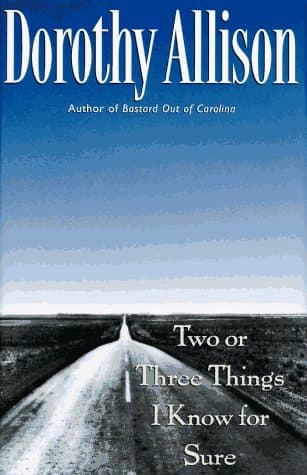
Two or Three Things I Know for Sure cover
Archivist's Choice

Two or Three Things I Know for Sure

Dorothy Allison (1995)

Genre

Biography / Memoir

Reading Time

90 min

Key Themes

See below

Track Your Reading

Sign in to track this book

In this memoir, Dorothy Allison confronts childhood abuse, tracing the feelings that shaped her life in the shadow of her abuser.

Core Idea

Dorothy Allison's "Two or Three Things I Know for Sure" is a memoir that explores the effects of poverty, sexual abuse, and the social stigma placed on working-class Southern women. Through narratives and photographs, Allison argues that silence causes trauma, and that telling one's story, no matter how painful, helps one survive. She shows how love and violence can be linked within families, questioning ideas of complicity and victimhood. The book supports storytelling as a way for marginalized people to define themselves and build community. Allison says that memory changes, and that by addressing the 'bad girl' stories society tells, individuals can create their own meaning and find belonging outside of biological family, turning shame into strength.
Reading time
90 min
Difficulty
Medium
✓ Read this if...
You are interested in a powerful, unflinching memoir about overcoming trauma, the complexities of Southern working-class life, and the transformative power of storytelling, especially from a queer feminist perspective. It's for readers who appreciate literary, non-linear narratives and raw emotional honesty.
✗ Skip this if...
You prefer traditional, chronological memoirs, are sensitive to graphic descriptions of abuse and poverty, or are uncomfortable with confrontational explorations of family dysfunction and societal shame.

Core idea

The central argument and framework that powers the entire book.

Dorothy Allison's "Two or Three Things I Know for Sure" is a memoir that explores the effects of poverty, sexual abuse, and the social stigma placed on working-class Southern women. Through narratives and photographs, Allison argues that silence causes trauma, and that telling one's story, no matter how painful, helps one survive. She shows how love and violence can be linked within families, questioning ideas of complicity and victimhood.

The book supports storytelling as a way for marginalized people to define themselves and build community. Allison says that memory changes, and that by addressing the 'bad girl' stories society tells, individuals can create their own meaning and find belonging outside of biological family, turning shame into strength.

At a glance

Reading time

90 min

Difficulty

Medium

Read this if...

You are interested in a powerful, unflinching memoir about overcoming trauma, the complexities of Southern working-class life, and the transformative power of storytelling, especially from a queer feminist perspective. It's for readers who appreciate literary, non-linear narratives and raw emotional honesty.

Skip this if...

You prefer traditional, chronological memoirs, are sensitive to graphic descriptions of abuse and poverty, or are uncomfortable with confrontational explorations of family dysfunction and societal shame.

Key Takeaways

1

The Weight of Silence

Unspoken truths fester, shaping identity and relationships.

Quote

The things that were not said were like a stone in the belly, always there, always heavy.

Allison shows how silence, especially around trauma and shame, becomes a basic part of a person's identity. Growing up in a poor, rural Southern family, unspoken rules and hidden abuses created a suffocating environment. This silence was not just a lack of words; it actively shaped how family members interacted, how they saw themselves, and how they viewed the outside world. It taught her that some truths are too dangerous to say, leading to a deep distrust of language as a tool for real connection or freedom. These unspoken experienc...

Supporting evidence

Allison's recounting of her childhood sexual abuse and the family's collective refusal to acknowledge or address it, instead creating an elaborate web of unspoken understanding and denial that permeated every aspect of their lives.

Apply this

Reflect on the 'unspoken' narratives in your own life or family. Identify any silences that might be shaping your perceptions or relationships. Consider how giving voice to these narratives, even privately, could alter your understanding and promote healing.


intergenerational-traumafamily-secretsnarrative-therapy
2

The Power of Storytelling as Survival

Crafting one's narrative is an act of defiance and self-definition.

Quote

Tell all the truth but tell it slant—Success in Circuit lies.

For Allison, storytelling is not just recounting events; it is a way to survive, to understand a chaotic and often brutal reality. Faced with a history of poverty, abuse, and social marginalization, she learns early that controlling her own story is a form of power. Her writing directly rejects the stories others imposed on her, by society, family, and even her abusers. By carefully choosing her words, by deciding what to reveal and how, she regains control over her own experience. This process turns trauma from a paralyzing force int...

Supporting evidence

Allison's explicit decision to write about her experiences, particularly her sexual abuse, despite the fear of judgment and the potential for further pain, seeing it as essential to her own survival and understanding.

Apply this

Engage in journaling or creative writing to explore difficult personal experiences. Focus on how you frame your story, the language you use, and the insights you gain from the act of narration itself. Consider how this process empowers you to define your own reality.

autobiographical-memorytrauma-informed-writingself-authorship
3

Shame as a Social Construct

Understanding the origins of shame can dismantle its grip.

Quote

Shame is a powerful tool, a fence built around secrets.

Allison analyzes shame not as a personal flaw, but as a social tool, used by poverty, class, and patriarchal structures. Her narrative shows how shame was used to control her family, to keep them quiet about abuse, and to make them feel less worthy due to their economic status. This shame became internalized, a 'stone in the belly' that controlled behavior and aspirations. By showing how shame works—how it's taught, reinforced, and used to maintain power—Allison begins to break its hold. She argues that true freedom comes not from hid...

Supporting evidence

Her detailed descriptions of the social stigma associated with being 'poor white trash' in the South, and how this external judgment was internalized by her family, leading to silence about their struggles and the abuses they faced.

Apply this

Identify areas in your life where you feel shame. Trace these feelings back to their origins: societal expectations, family messages, or specific incidents. Challenge whether these external judgments truly define your intrinsic worth, and consciously work to reframe your narrative.

social-stigmainternalized-oppressiondecolonizing-shame
4

The Complicity of Love and Abuse

Love can exist alongside and even enable profound harm.

Quote

Love is not enough to save anyone, but it can complicate everything.

One of the most unsettling truths Allison presents is the complex link between love and abuse within her family. The people who harmed her were also, in other contexts, capable of love, protection, and care. This creates a confusing psychological situation for the victim, blurring the lines between abuser and protector, making it difficult to process the trauma and assign blame. Her mother, for instance, is shown with both immense love and frustrating complicity. This nuance challenges simple ideas of good and evil, forcing the reader...

Supporting evidence

Her descriptions of her stepfather, whom she calls 'Daddy,' who was both her abuser and, at times, a source of affection and stability, creating a deeply confusing bond for her as a child. Also, her mother's love coexisting with her failure to protect her children.

Apply this

Examine complex relationships in your own life or observed in others, acknowledging the full spectrum of human behavior. Avoid oversimplifying individuals into 'good' or 'bad.' Recognize how conflicting emotions can coexist and impact healing processes.

trauma-bondingcomplex-traumacognitive-dissonance
5

Finding Family Beyond Blood

Chosen kinship provides crucial healing and affirmation.

Quote

Some of us find our family in the places we least expect, among the people who see us whole.

Allison's memoir shows that while biological family can cause pain and disappointment, the search for belonging often leads to 'chosen families.' For her, these are the communities, especially lesbian and feminist groups, where she found acceptance, understanding, and a sense of shared experience that was missing in her upbringing. These chosen families offered a space where her stories were met with validation and empathy, not silence or shame. This shift from a birth family that denied her truth to a chosen family that affirmed it w...

Supporting evidence

Her descriptions of finding solace and understanding in the lesbian community, where her experiences and identity were affirmed, in stark contrast to her birth family's silence and judgment.

Apply this

Actively seek out communities and relationships where you feel seen, understood, and supported, especially if your biological family struggles to provide this. Prioritize these chosen connections as essential for your well-being and growth.

found-familycommunity-healingqueer-kinship
6

The Body as a Site of Memory and Resistance

Trauma leaves its indelible mark, but the body can also reclaim agency.

Quote

My body remembers what my mind tried to forget.

Allison's narrative explores the connection between trauma and the body. Her experiences of abuse are not just psychological scars; they are physical memories that appear in her body and her relationships with touch and intimacy. She describes how the body holds the history of violence, influencing self-perception, sexuality, and the ability to feel safe. However, the body also becomes a site of resistance. Through self-care, sexual exploration (on her own terms), and the act of writing that gives voice to these embodied memories, she...

Supporting evidence

Her vivid descriptions of physical sensations, her struggles with intimacy, and the way her body reacts to memories or specific situations, all pointing to the lingering effects of childhood abuse.

Apply this

Explore practices like yoga, meditation, dance, or mindful movement to connect with your body and understand its messages. Consider how past experiences might be manifesting physically and how you can cultivate a sense of safety and agency within your own body.

somatic-experiencingembodied-traumabody-autonomy
7

Reclaiming the 'Bad Girl' Narrative

Embracing perceived transgressions as sources of strength.

Quote

I was a bad girl, and I learned to love it.

Allison embraces the labels society might give her—'poor white trash,' 'bad girl,' 'lesbian'—and reclaims them as markers of identity and resilience. Rather than giving in to the shame associated with these labels, she finds power in them. This act of reclamation is a form of resistance against the oppressive forces that tried to diminish her. By owning her perceived transgressions, she creates a space for authenticity and self-definition. This theme suggests that strength comes from refusing to conform to societal expectations and in...

Supporting evidence

Her pride in her Southern working-class roots, her unapologetic embrace of her lesbian identity, and her refusal to sanitize her stories of abuse and poverty, despite societal pressure to do so.

Apply this

Identify any labels or criticisms that have been directed at you and have made you feel 'less than.' Consider how you might reframe these perceptions, finding strength or unique perspective in what was once considered a flaw. Practice self-acceptance and defiance against external judgments.

identity-reclamationcounter-narrativequeer-theory
8

The Interconnectedness of Class, Gender, and Sexuality

Personal experience is shaped by a matrix of social forces.

Quote

You can't talk about one part of a life without talking about all the parts.

Allison's memoir is an example of intersectionality. She shows how her experiences of sexual abuse are linked to her family's poverty, her Southern working-class identity, and her emerging lesbian sexuality. These factors are not separate but form a complex web that shapes her vulnerability, her resilience, and her understanding of the world. She cannot separate the shame of abuse from the shame of being 'poor white trash,' nor can she separate her desire for love from the societal expectations placed on women. This holistic view argu...

Supporting evidence

Her detailed descriptions of the economic hardships faced by her family, the gender roles imposed on women in her community, and how these factors compounded her vulnerability to abuse and shaped her eventual search for identity and belonging.

Apply this

When analyzing personal or societal issues, consciously consider the interplay of class, gender, race, sexuality, and other social categories. Avoid single-axis thinking and strive for a more nuanced understanding of how these forces shape individual experiences.

intersectionalitysocial-determinants-of-healthfeminist-theory
9

Memory as a Shifting, Subjective Landscape

Truth is not static but constructed through recall and narrative.

Quote

Memory is a tricky thing, not a clear glass but a kaleidoscope.

Allison reminds the reader that memory is not a perfect, objective record but a fluid, subjective, and often unreliable landscape. She acknowledges the gaps, contradictions, and emotional distortions in recalling traumatic events, especially from childhood. Her memoir is less about presenting a definitive 'truth' and more about exploring the act of remembering and the impact of those memories, however fragmented, on her present self. This approach invites the reader into the human process of making sense of a past that resists eas...

Supporting evidence

Her frequent interjections about the uncertainty of specific details, her questioning of her own recollections, and her acknowledgment that some memories are more emotional impressions than factual records.

Apply this

Approach your own memories, especially those of difficult events, with curiosity rather than rigid adherence to 'fact.' Recognize that your understanding of the past can evolve, and allow for the subjective nature of memory in your personal narrative and healing journey.

repressed-memorynarrative-identityautobiographical-truth
10

The Enduring Search for Grace

Despite profound hardship, an aspiration for beauty and meaning persists.

Quote

I wanted grace, and I wanted it on my own terms.

Beneath the honesty and depiction of suffering, Allison's memoir includes a search for grace, beauty, and meaning. This is not a religious grace, but a secular, self-defined one—a desire for dignity, understanding, and the ability to live authentically despite her past. It is the grace found in storytelling itself, in finding connection with others, and in the resilience of the human spirit. Even among the darkest memories, there is hope, a desire to turn pain into something meaningful and to find a way to live fully. This pursuit of ...

Supporting evidence

Her dedication to writing, her search for loving relationships, and her active engagement in feminist and lesbian communities, all of which are pursuits that create meaning and beauty in her life despite her traumatic past.

Apply this

Reflect on what 'grace' or 'meaning' means to you, independent of external definitions. Identify concrete actions or pursuits that bring you a sense of dignity, beauty, or purpose, especially in the face of personal challenges. Actively cultivate these elements in your life.

resiliencepost-traumatic-growthmeaning-making

Critical analysis

Notable Quotes

I was born in 1949, the eldest of three girls, and all my life I have been a difficult woman. Not bad, not crazy, not even mean, just difficult.

Opening lines, establishing her self-perception and identity.

The truth is, I’ve always been a little bit afraid of respectable people. They always seem to know something I don’t, and they always want me to know it too.

Reflecting on her working-class background and distrust of the middle class.

Tell all the truth but tell it slant — Success in Circuit lies / Too bright for our infirm Delight / The Truth's superb surprise / As Lightning to the Children eased / With explanation kind / The Truth must dazzle gradually / Or every man be blind —

Quoting Emily Dickinson, which serves as a thematic touchstone for her approach to storytelling.

I learned to tell stories that were not true, but had truth in them.

Discussing the nature of memory, narrative, and the blurring lines between fact and fiction in her own life.

It is not the anger that makes us crazy, it is the silence.

Reflecting on the suppression of pain and trauma, particularly in women.

No one ever leaves home. Not really.

Exploring the enduring impact of one's origins and family, even after physical separation.

We are all of us, in some way, trying to make sense of what we have been given.

A general reflection on the human condition and the struggle to understand one's past.

Sometimes the only way to get through it is to remember that you are not alone, that others have felt what you feel, and that they have survived.

A message of solidarity and resilience in the face of hardship.

I never wanted to be a good girl. I wanted to be a strong woman.

Contrasting societal expectations for women with her personal aspirations.

The past is not a story you can just tell. It’s a story you have to live through, again and again, until you get it right.

Highlighting the cyclical and persistent nature of trauma and memory.

To be a writer, to be a woman, to be a lesbian, to be a working-class Southerner—all of it has shaped the way I see the world and the stories I have to tell.

Enumerating the various facets of her identity that inform her unique perspective and work.

Love is not enough, but it is a damn good start.

A pragmatic view on the power and limitations of love in overcoming life's challenges.

We were all survivors, but we were also, in our own ways, casualties.

Acknowledging both the resilience and the lasting wounds of her family and community.

I write to make sense of my life, to make sense of the lives of the women I love, and to make sense of the world we inhabit.

Stating her core motivation and purpose for writing.

There are things you know for sure, and things you just know, and things you wish you knew, and things you will never know.

Reflecting on the limits of knowledge and certainty, playing on the book's title.

Quiz

Test Your Knowledge

Ready to see how well you understood this book? Take our interactive quiz with 10 questions.

10
Questions
~5
Minutes
?
Best Score

Key Questions (FAQ)

"Two or Three Things I Know for Sure" is a powerful memoir by Dorothy Allison that delves into her personal history of abuse, poverty, and sexual identity. It explores the complex emotions and lasting impact of these experiences, particularly focusing on her confrontation with her abuser.

About the author

Dorothy Allison

Dorothy Allison is an American writer from South Carolina whose writing focuses on class struggle, sexual abuse, child abuse, feminism and lesbianism. She is a self-identified lesbian femme. Allison has won a number of awards for her writing, including several Lambda Literary Awards. In 2014, Allison was elected to membership in the Fellowship of Southern Writers.