BookBrief
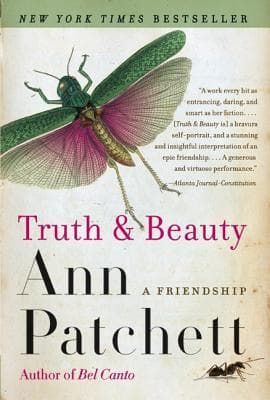
Truth and Beauty cover
Archivist's Choice

Truth and Beauty

Ann Patchett

Genre

Biography / Memoir / Creativity

Reading Time

6-8 hours

Key Themes

See below

Track Your Reading

Sign in to track this book

A memoir about the deep, twenty-year friendship between two writers, one disfigured by cancer, as they deal with ambition, addiction, and the lasting grief of a life intertwined with another's.

Core Idea

Ann Patchett's "Truth and Beauty" explores the close, often difficult, yet life-changing friendship between Patchett and the poet Lucy Grealy. The book shows that chosen family bonds, while offering great love and support, also require a clear view of pain, addiction, and self-destruction. This reveals the tension between loyalty and self-preservation. It also looks at how art can be both a safe place and a mirror reflecting life's hard parts, ultimately questioning what beauty and truth mean when mixed with suffering and the weight of others' expectations.
Reading time
6-8 hours
Difficulty
Medium
✓ Read this if...
You are fascinated by intense female friendships, the lives of artists, the complexities of addiction within a close relationship, or the ethical dilemmas of writing about those you love.
✗ Skip this if...
You prefer a purely objective biography, are sensitive to detailed accounts of chronic illness and drug abuse, or seek a narrative with a consistently uplifting tone.

Core idea

The central argument and framework that powers the entire book.

Ann Patchett's "Truth and Beauty" explores the close, often difficult, yet life-changing friendship between Patchett and the poet Lucy Grealy. The book shows that chosen family bonds, while offering great love and support, also require a clear view of pain, addiction, and self-destruction. This reveals the tension between loyalty and self-preservation. It also looks at how art can be both a safe place and a mirror reflecting life's hard parts, ultimately questioning what beauty and truth mean when mixed with suffering and the weight of others' expectations.

At a glance

Reading time

6-8 hours

Difficulty

Medium

Read this if...

You are fascinated by intense female friendships, the lives of artists, the complexities of addiction within a close relationship, or the ethical dilemmas of writing about those you love.

Skip this if...

You prefer a purely objective biography, are sensitive to detailed accounts of chronic illness and drug abuse, or seek a narrative with a consistently uplifting tone.

Key Takeaways

1

The Unbreakable Bond of Chosen Family

Friendship as a primary, defining relationship, often eclipsing traditional familial ties.

Quote

Lucy and I were entwined, our lives bound together by the invisible threads of love and shared experience, a bond as strong and intricate as any marriage.

Patchett's memoir shows how her friendship with Lucy Grealy became the most important relationship for both of them. It was a deep, almost marital commitment, offering emotional support, intellectual stimulation, and a shared history that shaped who they were. Their bond was a main way they understood the world, providing a model for intimacy and belonging that went beyond usual family structures. This chosen family offered a unique space for vulnerability, ambition, and acceptance, especially important for Lucy who faced many physica...

Supporting evidence

The narrative consistently details their shared living arrangements, their joint pursuit of writing careers at Iowa, and the deep intertwining of their daily lives, including Ann's role in Lucy's medical journeys and recovery periods, often taking precedence over other relationships.

Apply this

Actively cultivate and prioritize friendships that offer deep connection and mutual support. Recognize that 'family' can extend beyond blood relatives and invest in these chosen relationships as foundational pillars of your life.

chosen-familydeep-friendshipinterdependence
2

The Price of Unflinching Witness

To truly love and support someone means bearing witness to their suffering, even when it's painful.

Quote

To be Lucy's friend meant to see her, truly see her, in all her pain and all her glory, and to not look away.

Patchett directly portrays the emotional cost of being close to someone like Lucy Grealy, who experienced chronic pain, many surgeries, addiction, and struggles with self-image. The memoir confirms that deep love often means seeing a friend's darkest moments, providing support even when it is tiring, frustrating, or sad. Ann's commitment was not just to Lucy's successes but to her pain, showing the often-unspoken burden and privilege of true companionship.

Supporting evidence

Ann's detailed accounts of Lucy's hospitalizations, her struggles with pain medication, and the cycles of hope and despair related to her health and appearance. Patchett does not romanticize these experiences but presents them with raw honesty.

Apply this

When supporting a loved one through hardship, be prepared for the emotional demands. Practice active listening and empathy, and understand that your role may involve simply being present and acknowledging their pain, rather than trying to 'fix' it. Also, recognize your own limits and seek support if needed.

empathy-fatigueunconditional-lovecaregiver-burden
3

Art as Both Escape and Mirror

Creative expression offers both refuge from reality and a brutal reflection of it.

Quote

We wrote to make sense of the world, to escape it, and to hold up a mirror to its most difficult truths.

For both Ann and Lucy, writing was not just a job but a way to process their experiences and identities. Lucy's 'Autobiography of a Face' directly addressed her physical difference and how society reacted to it, turning personal trauma into art. Ann, in turn, found her voice by writing about their shared life. The memoir shows how creativity can be a double-edged sword: a powerful escape and a source of satisfaction, but also a demanding process that makes an artist face their deepest vulnerabilities and the often-painful realities of...

Supporting evidence

The book details their shared time at the Iowa Writers' Workshop, their dedication to their craft, and the eventual publication of Lucy's memoir, which directly addressed her facial deformities and surgeries. Ann's own memoir, 'Truth and Beauty,' is another example of using writing to process their intertwined lives.

Apply this

Engage in creative pursuits not just for entertainment, but as a therapeutic tool for self-discovery and emotional processing. Be prepared for the vulnerability that comes with true artistic expression, and understand that it can be both healing and challenging.

creative-processmemoir-writingart-therapy
4

The Elusive Nature of Beauty

Societal standards of beauty can profoundly impact self-worth, regardless of internal qualities.

Quote

Lucy's life was a testament to how deeply society judges a woman by her face, and how relentlessly that judgment can shape her existence, even when her spirit is magnificent.

Lucy Grealy's lifelong struggle with her facial disfigurement, caused by childhood cancer, is a main theme. Patchett reveals how Lucy's intelligence, wit, and personality were constantly overshadowed by how society reacted to her appearance. Despite many surgeries and her memoir, Lucy dealt with an inner feeling of 'ugliness' that deeply affected her self-perception and relationships. This highlights the widespread and often cruel influence of conventional beauty standards, showing how external judgment can deeply wound even bright an...

Supporting evidence

Patchett recounts numerous instances of people staring, making insensitive comments, and Lucy's own relentless pursuit of surgical 'fixes,' as well as her despair when these didn't yield the desired results or acceptance.

Apply this

Challenge personal and societal beauty standards. Practice self-compassion and focus on inner qualities over external appearance. Actively work to create environments that value people for who they are, not just how they look. Be mindful of how you perceive and react to others' appearances.

body-imagesocietal-pressureself-acceptance
5

Addiction's Insidious Erosion

Even the strongest bonds can be strained by the isolating and destructive force of addiction.

Quote

Addiction was a thief, stealing pieces of Lucy away, leaving behind a stranger in her place, and casting a shadow over everything we shared.

The memoir does not avoid Lucy's growing reliance on pain medication and her addiction. Patchett shows the impact of this addiction not only on Lucy's health and judgment but also on their friendship. It illustrates how addiction can isolate someone, distort their perception, and create distance even in close relationships. Ann's struggle to help Lucy, and her eventual recognition of her own limits, is a moving look at the helplessness felt by those who love an addict.

Supporting evidence

Patchett details Lucy's escalating use of medication, her evasiveness, the missed appointments, and the emotional distance that grew between them as Lucy became more consumed by her addiction, leading to Ann's painful realization that she couldn't 'save' her.

Apply this

Understand that addiction is a complex disease requiring professional intervention, not just willpower or the love of friends. Set healthy boundaries with loved ones struggling with addiction to protect your own well-being, while still offering support within those limits. Educate yourself about the signs and dynamics of addiction.

substance-abusecodependencyfriendship-challenges
6

The Burden of Expectations

Unspoken expectations, both self-imposed and external, can weigh heavily on a relationship.

Quote

I wanted to be the perfect friend, the one who could fix everything, but Lucy's life, and my own, taught me the futility of that desire.

Patchett explores the weight of her own expectations, especially her wish to 'save' Lucy or be the perfect, all-solving friend. This expectation, while born of love, eventually led to frustration and emotional exhaustion. Similarly, Lucy's own expectations for her life — for beauty, for love, for a 'normal' existence — often clashed with her reality, leading to disappointment. The memoir highlights how both conscious and unconscious expectations can create pressure within relationships, making it hard to accept people and situations a...

Supporting evidence

Ann's consistent efforts to help Lucy with medical appointments, financial struggles, and emotional support, often to her own detriment. Her internal monologues reveal her desire to 'fix' Lucy's problems and her eventual realization of the limits of her influence.

Apply this

Practice letting go of the need to control or 'fix' others. Communicate expectations clearly in relationships, and be open to adjusting them. Focus on acceptance and support rather than imposing your own vision of how someone else's life should unfold.

unmet-expectationsemotional-laborinterpersonal-dynamics
7

Grief as a Continuing Presence

Grief is not a linear process but an enduring shift in the landscape of one's life.

Quote

Losing Lucy wasn't an event, but a new way of being, a constant echo in the quiet spaces of my life.

The memoir is framed by the deep grief Ann experiences after Lucy's death. Patchett conveys that grief is not just a period of mourning but a fundamental change in one's life, a permanent absence that reshapes memory and the future. Her writing helps the reader understand grief not as something to 'get over,' but as an ongoing process of integrating loss into one's life, where the deceased continues to influence thoughts, actions, and identity. It emphasizes the lasting impact of a truly foundational friendship.

Supporting evidence

The entire book is written from the perspective of Ann looking back on their friendship after Lucy's death, constantly weaving in reflections on her absence and the lasting impact of their shared history.

Apply this

Allow yourself to experience grief as a non-linear process, accepting that it may ebb and flow over time. Find healthy ways to remember and honor those you've lost, integrating their memory into your present life rather than trying to erase it. Seek support from others who understand.

bereavementloss-and-griefenduring-memory
8

The Power of Narrative Control

Who tells the story profoundly shapes the understanding of a life.

Quote

Lucy had her story, and I have mine. They overlap, but they are not the same, and both are necessary to understand what truly happened.

This memoir is Patchett's answer to Lucy Grealy's 'Autobiography of a Face.' It shows that even shared experiences can be seen and told differently by those involved. Patchett offers a necessary counter-narrative, filling in gaps, correcting perceptions, and providing context that was missing from Lucy's account. This highlights the subjective nature of truth and memory, and the importance of multiple perspectives in understanding a person or event. It is a strong argument for the idea that no single story can fully capture a complex ...

Supporting evidence

Patchett explicitly states her motivations for writing the book, often referencing Lucy's memoir and explaining where her own recollections diverge or offer additional insight into Lucy's life and their relationship.

Apply this

Seek out diverse perspectives when trying to understand complex situations or individuals. Recognize that your own narrative is just one version of the truth, and be open to hearing and validating others' experiences. Practice critical reading and listening, considering the 'who' behind the story.

multiple-perspectivessubjective-truthnarrative-theory
9

Love's Imperfect Realities

Love, even profound love, is often messy, complicated, and tinged with frustration and pain.

Quote

Our love wasn't a fairy tale, it was a battleground, a sanctuary, and everything in between. It was real.

Patchett's memoir is an honest portrayal of love. It is not a cleaned-up account of friendship but one that includes jealousy, resentment, frustration, and moments of disappointment alongside joy, devotion, and tenderness. This complexity makes the bond feel real and relatable. It challenges idealized ideas of love, showing that true commitment often means navigating difficult emotions and enduring periods of strain, yet still choosing to remain connected.

Supporting evidence

The book details arguments, misunderstandings, Ann's exasperation with Lucy's self-destructive tendencies, and the emotional exhaustion she sometimes felt, contrasted with the deep affection and unwavering loyalty she consistently showed.

Apply this

Embrace the messy realities of love and relationships. Understand that conflict and negative emotions are not necessarily signs of a failing bond, but often part of its growth. Practice forgiveness, communicate openly, and value authenticity over idealized perfection in your relationships.

unconditional-loverelationship-dynamicsemotional-complexity
10

The Artist's Ethos of Witnessing

The responsibility of the artist includes bearing witness to life's truths, however difficult.

Quote

To be a writer is to pay attention, to remember, and to craft the truth from the fragments of what was.

Beyond being a memoir of friendship, 'Truth and Beauty' explores the writer's craft and ethical duties. Patchett, as a chronicler of Lucy's life and their shared history, deals with the challenges of telling someone else's story, especially a friend's. She shows that an artist's role is not just to create, but to observe, remember, and translate the often-painful realities of human experience into a coherent story, even when that story is complex and includes unflattering truths. This act of witnessing is presented as a profound and s...

Supporting evidence

Patchett's meticulous recounting of details, her careful consideration of Lucy's perspective, and her own internal debates about the ethics of writing this memoir, especially given Lucy's prior publication and death.

Apply this

If you are a creator, approach your work with integrity and a deep sense of responsibility to the truth, even when it's uncomfortable. If you are a consumer of art, appreciate the effort and ethical considerations that go into truthful storytelling. Support creators who are willing to delve into complex and challenging subjects.

writing-ethicsartistic-responsibilityobservational-writing

Critical analysis

Notable Quotes

I was never good at the kind of friendship that talked on the phone for hours. I was good at the kind of friendship that went on for years.

Reflecting on her long-standing friendship with Lucy Grealy.

The thing about being a writer is that you're always living in two worlds. There's the world you're living in, and then there's the world you're writing about.

Discussing the dual reality of a writer's life.

I didn't want to save Lucy. I wanted to be with her.

Clarifying the nature of her support for Lucy, not as a savior but a companion.

There are books that are like houses, and books that are like boats. And then there are books that are like maps.

A metaphor for different types of books and their functions.

The greatest gift you can give another person is your honest attention.

Reflecting on the value of presence and listening in relationships.

We were two halves of an equation, and it was hard to imagine one without the other.

Describing the profound interconnectedness of her and Lucy's friendship.

It was the beautiful, terrible work of being a friend.

Summarizing the challenging yet rewarding aspects of deep friendship.

What I learned from Lucy was that a person could be broken and still be beautiful.

A profound realization about resilience and inner beauty despite physical and emotional scars.

The past is a story we tell ourselves.

Considering the subjective nature of memory and personal history.

Love isn't a state of perfect grace. It's a state of being loved.

A nuanced perspective on the nature of love, focusing on acceptance.

Sometimes the only thing that makes sense is to keep going.

A simple yet powerful statement about perseverance in difficult times.

To be a writer is to be a professional observer.

Defining the core activity and mindset of a writer.

Grief is not a problem to be solved, but a process to be lived.

Reflecting on the experience of loss and how to navigate it.

She was not a simple person, and our friendship was not simple.

Acknowledging the complexity of Lucy's character and their relationship.

Quiz

Test Your Knowledge

Ready to see how well you understood this book? Take our interactive quiz with 10 questions.

10
Questions
~5
Minutes
?
Best Score

Key Questions (FAQ)

'Truth and Beauty' is a memoir by Ann Patchett that chronicles her profound and intertwined friendship with the late poet Lucy Grealy, spanning over twenty years. It explores the complexities of their bond, shared experiences, and the impact they had on each other's lives, from college through their literary careers.

About the author

Ann Patchett

Ann Patchett is an American author. She received the 2002 PEN/Faulkner Award and the Orange Prize for Fiction in the same year, for her novel Bel Canto. Patchett's other novels include The Patron Saint of Liars (1992), Taft (1994), The Magician's Assistant (1997), Run (2007), State of Wonder (2011), Commonwealth (2016), and The Dutch House (2019). The Dutch House was a finalist for the 2020 Pulitzer Prize for Fiction.