BookBrief
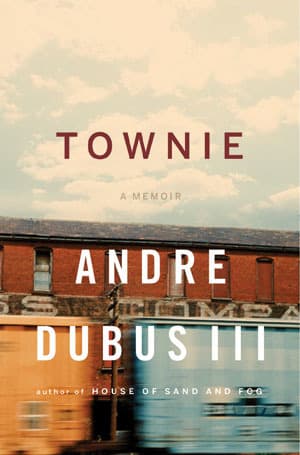
Townie cover
Archivist's Choice

Townie

Andre Dubus III (2011)

Genre

Biography / Memoir

Reading Time

9-12 hours (based on 387 pages)

Key Themes

See below

Track Your Reading

Sign in to track this book

From the brutal, impoverished streets of a 1970s mill town, a young Andre Dubus III fought his way through a life of violence and boxing, ultimately finding salvation and a bridge to his literary father through the very act of writing.

Core Idea

Andre Dubus III's "Townie" is a raw memoir about violence, masculinity, class, and the search for identity and meaning in a working-class New England town. It argues that trauma and love, often through physical confrontation and emotional absence, shape a person's path, making them both continue and break from family and environmental legacies. The book suggests that while fighting can define a life, writing and self-awareness are essential for escaping destructive patterns and becoming one's true self.
Reading time
9-12 hours (based on 387 pages)
Difficulty
Medium
✓ Read this if...
You are interested in memoirs about overcoming violence, exploring toxic masculinity, or understanding the impact of an absent father figure and a strong mother in a challenging working-class environment.
✗ Skip this if...
You prefer memoirs without graphic depictions of violence, or are not interested in a deep dive into the psychological and physical struggles of growing up in poverty and conflict.

Core idea

The central argument and framework that powers the entire book.

Andre Dubus III's "Townie" is a raw memoir about violence, masculinity, class, and the search for identity and meaning in a working-class New England town. It argues that trauma and love, often through physical confrontation and emotional absence, shape a person's path, making them both continue and break from family and environmental legacies. The book suggests that while fighting can define a life, writing and self-awareness are essential for escaping destructive patterns and becoming one's true self.

At a glance

Reading time

9-12 hours (based on 387 pages)

Difficulty

Medium

Read this if...

You are interested in memoirs about overcoming violence, exploring toxic masculinity, or understanding the impact of an absent father figure and a strong mother in a challenging working-class environment.

Skip this if...

You prefer memoirs without graphic depictions of violence, or are not interested in a deep dive into the psychological and physical struggles of growing up in poverty and conflict.

Key Takeaways

1

The Weight of the Fist

Violence as a learned, often necessary, coping mechanism in a brutal environment.

Quote

I was on a fast track to getting killed - or killing someone else.

Dubus's early life in the poor mill town of Haverhill, Massachusetts, meant facing violence directly. The memoir shows how fighting became a main way to communicate and survive, a way to protect himself, his mother, and his siblings from constant aggression. This was not pointless violence, but a desperate reaction to a lack of other choices in a community marked by economic hardship, drugs, and crime. He became skilled, even feared, building a reputation that both protected and trapped him in a cycle of aggression. The book examines ...

Supporting evidence

Dubus recounts numerous street fights, bar brawls, and confrontations, often detailing the specific techniques and emotional states involved, such as his early fights defending his sister or later protecting himself from older bullies and drug dealers.

Apply this

Recognize the environmental factors that can drive individuals to violence, fostering empathy rather than immediate judgment. Understand that for some, aggression is a learned survival skill, not an inherent flaw.

2

Absent Presence

The paradox of a physically absent but intellectually formidable father.

Quote

The clash of worlds couldn't have been more stark - or more difficult for a son to communicate to a father.

A main tension in 'Townie' is the relationship between Andre and his famous author father, Andre Dubus II. Despite living relatively close, their lives were very different: the son involved in street fights and working-class struggles, the father in academia and literary work. While the father was physically present on Sundays and offered intellectual guidance, he was largely absent from the intense, daily realities of his children's lives. This created a deep gap, a struggle for the son to explain his experiences to a father who, des...

Supporting evidence

Dubus describes the stark contrast between Sunday visits to his father's academic world and his weekdays in Haverhill. He also recounts specific, often awkward, attempts to communicate his violent experiences to his father, who struggled to process them.

Apply this

Consider how different life experiences, even within the same family, can create profound communication barriers. Strive to genuinely understand the lived realities of others, even if they differ vastly from your own.

3

The Maternal Shield

The fierce, exhausting devotion of a mother protecting her children against relentless hardship.

Quote

My mother, exhausted, working, trying to hold it all together.

Dubus paints a strong picture of his mother, a woman fighting the heavy burden of poverty, single parenthood, and the widespread violence of their environment. Her resilience and steady love are a constant, grounding force amid the chaos. She is the tired working mother, sacrificing her own well-being to care for her four children, often confronting landlords, bullies, and the systemic failures of their town. Her struggles highlight the huge burden on single mothers in disadvantaged communities, and her fierce protectiveness gave Andr...

Supporting evidence

The memoir details his mother's various low-paying jobs, her struggles with landlords, and her emotional exhaustion. Specific scenes depict her trying to manage the children's fights and navigate their dangerous neighborhood.

Apply this

Acknowledge the invisible labor and profound sacrifices made by caregivers, particularly single parents in challenging circumstances. Support policies and community initiatives that alleviate their burdens.

4

The Call of the Ring

Boxing as a structured outlet for chaotic aggression and a search for discipline.

Quote

I signed on as a boxer.

As Dubus grew up, the street fighting that once offered protection began to feel like a trap. Boxing appeared as a possible escape, offering a structured, disciplined environment for his natural aggression. The ring provided rules, a coach, and a clear path to improvement, a sharp contrast to the unpredictable brutality of the streets. It was not just about fighting, it was about control, technique, and directing his violent tendencies into a competitive, though still physically dangerous, sport. This decision is a turning point, a co...

Supporting evidence

Dubus details his training regimen, the guidance from his coach, and the specific fights he participated in. He contrasts the 'fairness' of the ring with the lawlessness of street fights.

Apply this

Consider how structured activities, particularly sports or creative outlets, can provide a healthy channel for intense emotions or problematic behaviors, offering discipline and a sense of purpose.

5

Beyond the Macho Facade

The vulnerability and emotional complexity hidden beneath a tough exterior.

Quote

I was even scared of myself.

While Dubus built a reputation for toughness, the memoir consistently shows the deep emotional vulnerability and self-doubt that existed beneath the surface. He was not a thoughtless brute; he was a sensitive, intelligent young man dealing with fear, guilt, and a deep desire for connection and understanding. His 'scared of myself' feeling captures the inner conflict: the power he had in fights was both a source of protection and a terrifying force he struggled to control. This inner world, full of introspection and moral struggle, is ...

Supporting evidence

Dubus frequently describes his internal monologues, his anxieties about his own capacity for violence, and his deep affection for his family, which often drove his protective instincts.

Apply this

Challenge superficial judgments based on outward appearances or reputations. Seek to understand the complex emotional landscapes that often lie beneath seemingly tough or aggressive exteriors.

6

The Transformative Power of Narrative

Writing as the ultimate act of bridging divides and achieving self-salvation.

Quote

Only by becoming a writer himself could Andre begin to bridge the abyss and save himself.

The memoir's main discovery is the healing power of writing. For Dubus, writing was not just a career choice, it was a lifeline. It allowed him to process his traumatic past, express the unspeakable experiences of violence and poverty, and finally communicate with his estranged father on a level that physical presence alone could not achieve. Writing became a way of understanding himself, making sense of the chaos, and finding a voice for the unspoken parts of his life. It turned his experiences from raw, potentially destructive memor...

Supporting evidence

The very act of writing the memoir is the primary evidence. Dubus also describes his early attempts at writing and the gradual realization that it offered a way to make sense of his life and connect with his father's legacy.

Apply this

Embrace creative expression, whether writing, art, or music, as a powerful tool for processing trauma, understanding complex experiences, and fostering self-discovery and connection.

7

Legacy and Burden

The complex inheritance of a literary father's name and expectations.

Quote

His father, an eminent author, taught on a college campus and took the kids out on Sundays.

Being the son of an acclaimed author, Andre Dubus II, cast a long shadow over Andre Dubus III's early life. This legacy was both good and bad: it provided an intellectual background and a connection to a world of words, but also created great pressure and a feeling of not being good enough. The father's literary success highlighted the son's 'unliterary' life, making the gap between them seem even wider. Andre's journey to become a writer himself was not just about finding his own voice, but also about dealing with, and finally accept...

Supporting evidence

Dubus discusses his father's books and reputation, and his own initial resistance or intimidation by the idea of becoming a writer, feeling his life was too 'different' to be literary.

Apply this

Reflect on how familial legacies, whether positive or challenging, shape personal identity and aspirations. Find ways to honor a legacy while forging an independent path.

8

The Geography of Despair

How socioeconomic decline fuels violence and limits opportunity.

Quote

a depressed Massachusetts mill town saturated with drugs and crime.

Haverhill, Massachusetts, is more than just a setting; it is a character in 'Townie,' a small example of post-industrial American decline. The memoir clearly shows how economic hardship, unemployment, and the resulting social decay create conditions for drug abuse, crime, and widespread violence. The lack of opportunity and the feeling of being forgotten by society created deep frustration and desperation among its residents. Dubus's experiences are closely tied to this environment, showing how systemic issues can directly affect indi...

Supporting evidence

Dubus details the boarded-up factories, the prevalence of drugs and drug deals, the visible poverty, and the general sense of hopelessness that permeated Haverhill during his youth.

Apply this

Recognize the profound link between socioeconomic conditions and social problems, including violence. Advocate for economic development, education, and social support systems in marginalized communities.

9

The Circularity of Trauma and Love

Violence born from love, and love surviving despite violence.

Quote

a riveting, visceral, profound meditation on physical violence and the failures and triumphs of love.

Perhaps the most touching part of 'Townie' is its exploration of how violence, ironically, often came from a deep well of love and protectiveness. Andre fought to defend his mother and siblings, his aggression an extreme expression of his devotion. Conversely, love—from his mother, his siblings, and later his wife—was the force that ultimately pulled him back from self-destruction. The memoir does not avoid the failures of love, especially in his relationship with his father, but it ultimately succeeds, showing that even in the most b...

Supporting evidence

Dubus's motivations for fighting are almost always rooted in protecting his family. His eventual healing and ability to write are directly linked to the support and love he receives from his wife and his own family later in life.

Apply this

Understand that extreme behaviors can sometimes be misguided expressions of love or protection. Cultivate compassion and recognize the healing power of genuine, unwavering love and connection.

Critical analysis

Notable Quotes

I was a townie, and that’s how I felt, like someone who belonged to a town, not to the world.

Reflecting on his identity and social standing in Haverhill.

The hardest thing was to face your own fear, to look it in the eye and say, 'I'm still going to do this.'

Discussing the challenges of fighting and overcoming personal obstacles.

Violence was a language we all understood, sometimes the only one.

Observing the pervasive role of violence in his upbringing and community.

You don't just wake up one day and become a writer. You wake up every day and write.

On the discipline and dedication required for his writing career.

We were always trying to outrun something, whether it was the past or the future.

Describing the constant struggle and sense of urgency in his family's life.

There's a fine line between protecting your family and becoming a monster yourself.

Grappling with the moral implications of his defensive actions.

The greatest lesson my father taught me was how not to be.

Reflecting on his complicated relationship with his absent father, Andre Dubus.

Home was not always a safe place, but it was always home.

Pondering the complex and often dangerous nature of his childhood home.

Grief is a funny thing. It comes in waves, and sometimes it just washes over you when you least expect it.

Processing the loss and emotional aftermath of difficult events.

To be a man, in our world, often meant to be tough, to never back down, to be ready to fight.

Analyzing the masculine ideals and expectations of his environment.

I was always looking for a way out, a way to transcend the circumstances I was born into.

Expressing his ambition and desire for a different life beyond his origins.

Forgiveness is not about forgetting; it's about making peace with what happened.

Considering the process of coming to terms with past traumas and conflicts.

There's a kind of beauty in the broken, in the scarred, in the places that have been put back together.

Finding meaning and aesthetic value in the imperfections and struggles of life.

You carry your history with you, no matter how far you run.

Acknowledging the indelible impact of one's past on the present.

Quiz

Test Your Knowledge

Ready to see how well you understood this book? Take our interactive quiz with 10 questions.

10
Questions
~5
Minutes
?
Best Score

Key Questions (FAQ)

'Townie' is a memoir by Andre Dubus III, detailing his turbulent youth in a working-class Massachusetts mill town in the 1970s. It explores his experiences with street violence, his journey as a boxer, and the profound impact of his celebrated author father, ultimately highlighting how writing became his salvation.

About the author

Andre Dubus III

Andre Dubus III is the author of the critically acclaimed memoir 'Townie,' which chronicles his experiences growing up in a working-class Massachusetts neighborhood and his complex relationship with his father, author Andre Dubus. His unflinching prose and honest exploration of themes like violence, class, and family have earned him widespread recognition.