“Being gay isn't a choice. Neither is being straight. What you do with your sexuality is a choice. Who you love is a choice. How you express yourself is a choice.”
— Discussing the nature of sexuality and individual agency.

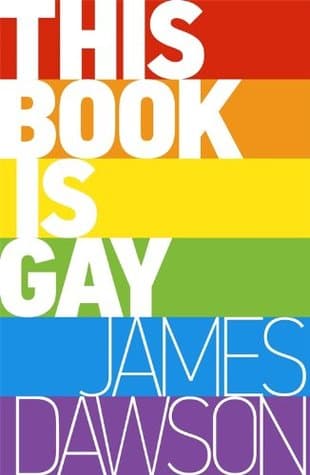
James Dawson (2014)
Genre
Non-Fiction
Reading Time
240 min
Key Themes
See below
Sign in to track this book
This direct and often funny guide explains the queer experience, from coming out and sex to navigating stereotypes, helping every LGBT+ reader feel understood and informed.
James Dawson begins the book by stating its purpose as a guide for young LGBT+ people, or anyone curious about queer experiences. He immediately sets a welcoming and humorous tone, ensuring readers that the book is for everyone. Dawson explains that there is no single 'gay experience' and highlights the diversity within the LGBT+ community. He clarifies that the book will cover many topics, from coming out and relationships to sex and dealing with social expectations, all presented in an understandable and open way. The introduction promises a mix of personal stories, practical advice, and reader submissions, making it clear that the book aims to be a helpful resource.
This section explores sexual orientation and gender identity, giving clear definitions for terms like lesbian, gay, bisexual, pansexual, asexual, transgender, cisgender, and non-binary. Dawson stresses that identity is personal and can change, and that labels are tools for understanding, not strict categories. He encourages readers to explore their own feelings without pressure to pick a label right away. The chapter also explains the difference between sex assigned at birth, gender identity, gender expression, and sexual orientation, clearing up common misunderstandings. Real stories from various people show how different individuals understand and express their identities.
Dawson dedicates a large part of the book to the 'coming out' process, explaining that it is many individual steps rather than one event. He offers practical advice on how to come out to oneself, friends, family, and in different social settings. Important points include checking for safety, choosing the right time and place, and preparing for various reactions. The author acknowledges the fear often linked with coming out but also points out the freedom it can bring. He includes many personal stories and reader submissions detailing both positive and difficult coming out experiences, offering support and different viewpoints. The importance of having a support system is a repeated idea in this chapter.
This chapter gives an honest and full look at sex within the LGBT+ community. Dawson covers safe sex practices, consent, STIs, and different types of sexual activity, all presented in an open way. He addresses specific concerns for gay, lesbian, bisexual, and trans individuals, often correcting myths and promoting healthy sexual attitudes. The importance of talking with partners, self-respect, and respecting others' boundaries is strongly emphasized. The author also discusses first sexual experiences, body image, and the emotional sides of sex, providing a complete view beyond just the physical. Reader questions and advice are included to offer different perspectives.
Dawson explores how romantic and platonic relationships work in the LGBT+ context. He discusses crushes, dating, forming partnerships, and dealing with breakups, often highlighting the unique challenges and joys queer individuals face. Topics include finding partners (online and offline), communication, dealing with jealousy, and building healthy relationships. The book acknowledges the social pressures and lack of visible queer representation that can make navigating relationships harder. Stories from different couples and individuals show the range of love and partnership experiences, reinforcing that queer relationships are just as valid as heterosexual ones, while also having their own distinct aspects.
This section deals with the widespread issue of stereotypes and bias against LGBT+ individuals. Dawson corrects common myths and harmful assumptions, from 'all gay men are effeminate' to 'bisexuality is just a phase.' He explains the difference between homophobia, transphobia, biphobia, and other types of discrimination, and discusses their real impact. Importantly, the chapter also gives advice on how to be a good ally, offering practical tips for supporting LGBT+ friends and family, challenging bias, and advocating for equality. It stresses the importance of learning, empathy, and listening to create a more inclusive society. Reader experiences with prejudice and allyship are shared to ground the discussion in reality.
Dawson gives advice on handling queer identity in different social settings, focusing on school, work, and public spaces. He discusses ways to deal with bullying and discrimination in schools, finding supportive communities, and advocating for inclusive policies. For the workplace, he covers topics like coming out to coworkers, workplace discrimination, and finding LGBT+ friendly employers. The chapter also addresses general public interactions, such as holding hands with a same-sex partner, dealing with stares, and finding safe places. The main message is about finding confidence, seeking support, and knowing one's rights in various environments, while also acknowledging varying levels of safety and acceptance worldwide.
This chapter focuses on the mental health effects of being LGBT+, recognizing the higher rates of anxiety, depression, and other mental health struggles due to social bias. Dawson discusses the impact of internalized homophobia/transphobia, the stress of coming out, and the importance of self-care. He offers practical advice on seeking professional help, finding support groups, and building resilience. The chapter normalizes talking about mental health and encourages readers to prioritize their well-being. It also highlights resources and organizations for LGBT+ mental health, emphasizing that readers are not alone and help is available.
Dawson provides a brief overview of key moments in LGBT+ history, from historical figures who challenged norms to major events in the fight for equality, such as Stonewall and the marriage equality movement. He stresses that current freedoms are the result of decades of activism. The chapter encourages readers to understand their place within this history and to consider how they can help with ongoing advocacy for LGBT+ rights globally. It looks to the future with a hopeful but realistic view, recognizing that while progress has been made, many battles remain for full equality and acceptance worldwide, especially for trans and non-binary individuals.
This section expands to discuss the widely different experiences of LGBT+ individuals across various cultures and countries. Dawson highlights the sharp contrast between countries where LGBT+ rights are protected and celebrated, and those where homosexuality or gender non-conformity is illegal, often punishable by death. He points out the privilege that many in Western countries have and encourages empathy for those living in less tolerant places. The chapter includes stories and perspectives from individuals in different parts of the world, emphasizing the global nature of the LGBT+ community and the ongoing need for international support. It reminds readers that the fight for equality is far from over everywhere.
The book ends with a list of resources for readers seeking more information, support, or community. This includes websites, organizations, helplines, books, and other media related to LGBT+ issues. Dawson encourages readers to continue their journey of self-discovery and learning, and to connect with supportive networks. This section reinforces the book's commitment to being a practical guide, ensuring readers have clear steps they can take after finishing the book. It serves as a final message of empowerment and connection, reminding readers that they are part of a larger, supportive community and that help and information are always available.
The Author/Narrator
Not a character in a traditional narrative sense, but his 'arc' as an author is to evolve from simply stating facts to fostering a deep sense of community and self-acceptance in the reader.
The Protagonist (Implied)
To move from confusion or uncertainty to greater self-understanding, acceptance, and empowerment regarding their own or others' LGBT+ identities.
The Supporting/Mentioned
Their collective 'arc' is to showcase the breadth of LGBT+ experiences and provide solidarity and diverse perspectives to the reader.
The Antagonist (Implied)
To be challenged and ultimately diminished through education, empathy, and advocacy, though never fully defeated within the scope of the book.
The Supporting
To provide unwavering support and affirmation, helping the reader navigate challenges and grow in self-acceptance.
A main theme is the journey of discovering and accepting one's sexual orientation and gender identity. The book emphasizes that identity is personal, can change, and has many parts, and that there is no single 'right' way to be LGBT+. It encourages readers to explore their feelings without pressure to label themselves and promotes self-love regardless of social pressures. This is clear in chapters like 'Identity: More Than Just a Label,' where different experiences of self-discovery are shared, and throughout the 'Coming Out' section, which presents coming out as an act of self-affirmation.
“However you identify (or don't) and whomever you love, you are exceptional. You matter. And so does this book.”
The book consistently highlights the importance of finding and building community among LGBT+ individuals and their allies. It stresses that no one is alone and that shared stories and mutual support are key for well-being. The many reader submissions and personal stories help create a sense of shared experience and solidarity. Dawson often refers to the 'LGBT+ family' and provides resources for finding support groups and organizations, reinforcing that community offers strength against isolation and prejudice.
“You are not alone. There's a whole world of LGBT+ people out there, and we've got your back.”
A core theme is the power of knowledge in fighting ignorance and prejudice. The book aims to educate readers on sexual orientation, gender identity, safe sex, mental health, and LGBT+ history. By giving clear definitions, correcting myths, and offering facts, Dawson helps readers understand themselves and others better, and to confidently challenge wrong information. This theme is strong in sections on stereotypes and allyship, where understanding is presented as the first step towards acceptance and advocacy.
“Ignorance is not bliss when it comes to understanding yourself and others. Knowledge is power.”
The book acknowledges the challenges and discrimination faced by LGBT+ individuals but also emphasizes the importance of resilience and the ongoing fight for rights. It encourages readers to develop ways to cope with prejudice, to advocate for themselves, and to contribute to the broader movement for equality. Chapters on mental health, dealing with prejudice, and the history of activism all show the strength needed to navigate an often-unfair world. The message is one of lasting hope and the continuous effort to create a more inclusive future.
“The fight for equality isn't over, but every step you take towards being authentically you is a victory.”
While focusing on LGBT+ experiences, the book acknowledges the great diversity within the community, including different sexual orientations, gender identities, races, religions, and economic backgrounds. It tries to present a wide range of voices and experiences through its reader contributions, showing that there is no single 'gay' or 'trans' experience. This theme encourages readers to recognize and celebrate the unique combinations of identities, fostering a more inclusive understanding of human experience. The 'Global Perspective' chapter especially highlights how location and culture add layers to LGBT+ identities.
“There isn't one way to be gay, or lesbian, or trans. There are as many ways as there are people.”
Engaging the reader personally through informal language.
James Dawson extensively uses direct address ('you') and a highly conversational, often humorous tone throughout the book. This device creates an immediate sense of intimacy and makes the reader feel like they are having a personal conversation with a trusted friend or mentor. It helps to demystify complex or sensitive topics, making them more approachable and less intimidating. The informal language and occasional slang foster a relatable and non-academic atmosphere, making the information more digestible for a young adult audience.
Illustrating concepts with real-life experiences from diverse individuals.
A core device is the integration of James Dawson's own personal stories and a multitude of anonymous or first-name-only reader submissions. These real-life accounts serve to illustrate the abstract concepts and advice being offered, making them tangible and relatable. They provide diverse perspectives on coming out, relationships, discrimination, and self-discovery, reinforcing the idea that many experiences are shared, yet unique. This device fosters a strong sense of community and validation for the reader, showing them that they are not alone.
Using jokes and lightheartedness to tackle serious topics.
Dawson employs humor and wit as a significant plot device, particularly when discussing sensitive or potentially challenging topics. Jokes, playful language, and self-deprecating remarks are used to lighten the mood, reduce anxiety, and make the information more memorable. This approach helps to normalize LGBT+ experiences and creates a more accessible entry point for readers who might otherwise feel overwhelmed or uncomfortable. The humor acts as a disarming mechanism, allowing the book to address serious issues of discrimination and mental health without becoming overly heavy.
Breaking up text and conveying information visually.
The book is interspersed with numerous vibrant and often humorous illustrations, diagrams, and bulleted lists. These visual aids serve multiple purposes: they break up the text, make the book more visually engaging for a young adult audience, and often convey complex information in a simplified, memorable format. For instance, diagrams might explain the difference between gender identity and sexual orientation, or a cartoon might humorously depict a common social dilemma. This device enhances accessibility and comprehension, catering to different learning styles.
Directly addressing common questions and debunking misconceptions.
Dawson frequently uses a question-and-answer format, either posing hypothetical questions that readers might have or directly addressing common myths and stereotypes. This device anticipates reader queries and provides clear, concise answers, making the book highly practical and user-friendly. By systematically debunking misconceptions, such as 'bisexuality is a phase' or 'trans people are confused,' the book actively educates and challenges prejudice, empowering readers with accurate information to counter ignorance.
“Being gay isn't a choice. Neither is being straight. What you do with your sexuality is a choice. Who you love is a choice. How you express yourself is a choice.”
— Discussing the nature of sexuality and individual agency.
“The only person who gets to decide your sexuality is you.”
— Empowering individuals to define their own identity.
“Coming out isn't a one-time event. It's a continuous process.”
— Explaining the ongoing nature of coming out to different people and in different situations.
“Your first crush might not be the right person for you, but they are right for showing you who you are attracted to.”
— Reflecting on early romantic experiences and self-discovery.
“Labels can be helpful tools for understanding yourself and communicating with others, but they don't define you completely.”
— Discussing the utility and limitations of identity labels.
“If someone tells you they are gay, bisexual, trans, or anything else, believe them. It's not your job to question their truth.”
— Emphasizing the importance of validating others' identities.
“There's no 'right' way to be gay. Or straight. Or anything else. Just be you.”
— Encouraging authenticity and individuality within any identity.
“Love is love. It doesn't matter who it's between, as long as it's consensual and makes you happy.”
— Promoting a broad and inclusive definition of love.
“It's okay to not know all the answers right now. Life is a journey of discovery.”
— Reassuring readers about the process of figuring out their identity and life path.
“Your safety and well-being are paramount. Never feel pressured to come out before you're ready or if it puts you at risk.”
— Providing crucial advice on prioritizing personal safety during the coming out process.
“You are not alone. There are millions of people out there who feel just like you do, or who have felt that way.”
— Offering comfort and solidarity to readers who might feel isolated.
“Being an ally means actively supporting and advocating for LGBTQ+ people, even when it's uncomfortable or challenging.”
— Defining the role and responsibilities of an ally.
“Your identity is a beautiful, complex thing. Embrace every part of it.”
— Encouraging readers to celebrate their unique identity.
“Don't let anyone tell you who you are or who you should be. That power belongs only to you.”
— Reinforcing personal autonomy over one's identity and life choices.
Ready to see how well you understood this book? Take our interactive quiz with 10 questions.

Biography coming soon.