“The football hooligan is often portrayed as a mindless thug, but the reality is far more complex.”
— Introducing the nuanced perspective Brimson aims to bring to the subject of football hooliganism.

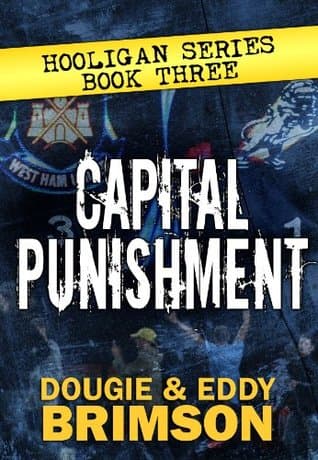
Dougie Brimson (2011)
Genre
Non-Fiction
Reading Time
240 min
Key Themes
See below
Sign in to track this book
This book tells the raw history of London's most feared football hooligan firms, showing their rivalries, how they used public transport, and the lasting violence that still affects the capital.
Dougie Brimson and Eddy Brimson introduce 'Capital Punishment,' highlighting London's important role in British football hooliganism. They explain that while firms like West Ham's ICF, Chelsea's Headhunters, and Millwall's Bushwhackers are well-known, their collective history and London's specific violence dynamics have not been fully documented. The authors aim to fix this, promising a frank look at why London clubs draw such followers, how rivalries grew, and how the city's public transport system helped those seeking confrontation. This first chapter sets up a detailed, club-by-club analysis.
The book has a large section on West Ham United and their Inter City Firm (ICF). It describes their rise in the 1970s and 80s, driven by a working-class identity and a love for organized violence. The authors explain the ICF's 'calling card' practice, leaving business cards on victims, and their reputation as one of the most feared and organized firms. The chapter covers their big clashes with rival firms, especially from other London clubs and northern strongholds, establishing their legendary status and the challenges they posed to police and opposing hooligans. The authors analyze the social factors that led to the ICF's formation and lasting reputation.
This section looks at Chelsea's Headhunters, a firm known for extreme violence and, at times, clear ties to right-wing political beliefs. The authors trace the Headhunters' origins and their rise to fame, often clashing with other London firms and those across the UK. The book details specific incidents and rivalries that made their reputation feared, especially their brutal encounters and willingness to cause serious disorder. The analysis explores how the firm's identity became linked with its aggressive tactics and the broader social and political mood of the time, setting them apart through their open extremism.
The book gives an overview of Millwall's Bushwhackers, noting their reputation for ferocity and an 'us against the world' attitude. The authors explain how Millwall's location, combined with a strong working-class identity in South East London, created a particularly aggressive and isolated fan culture. Details of their infamous clashes, especially with West Ham and Leeds United, are told, showing their willingness to fight against big odds. The chapter explores the psychology of being a Millwall supporter and a Bushwhacker, where loyalty and a readiness for violence are key, often leading to widespread disorder.
This chapter focuses on Arsenal's 'Gooners,' acknowledging that while they may not have the same iconic status as the ICF or Headhunters, their hooligan element has been present and capable of severe violence. The authors discuss how Arsenal's more 'respectable' image often hid the aggression of some of its supporters. They detail instances of clashes with rival firms, especially during European away games and domestic matches against other London clubs. The book shows that even clubs with a 'classier' image are not immune to football hooliganism, and their firms, though perhaps less publicized, were strong opponents.
The book examines Tottenham Hotspur's hooligan element, often called the 'Yid Army' or 'Spurs Casuals,' addressing the controversial aspects of their self-identification. The authors discuss the firm's history in football violence, their rivalries, especially with Arsenal and Chelsea, and the incidents that built their reputation. They look at the unique cultural and historical context of Tottenham's fan base, including its large Jewish following, and how this affected the firm's identity and interactions with other groups. The chapter explores how this identity, while sometimes a source of pride, also led to complex and often misunderstood confrontations.
The authors widen their scope to include other London clubs, such as Crystal Palace (The Dirty Thirty/Palace Ultras), Queens Park Rangers (The Bush Rangers), and Charlton Athletic (The Addicks Army). While these firms might not have gained the same national fame as the 'big three,' the book details their own histories of violence, local rivalries, and big clashes. This section shows that football hooliganism was widespread across London, not just in a few major clubs, and that each firm added to the city's violent football scene through their distinct identities and aggressive actions against local and national rivals.
A main point is how London's public transport network, especially the Underground and Overground rail systems, helped football hooliganism. The authors explain how firms used these networks to meet at stadiums, ambush rival groups, or escape police. Unlike other cities where firms might travel by coach or private cars, London's system allowed for more anonymity, speed, and strategic movement, creating unique chances for confrontation. This chapter details examples of how hooligans used these advantages to plan fights and avoid authorities, making London a difficult place for policing football matches.
The book looks at how various club and regional rivalries grew and intensified, fueling London's football violence. It examines the deep animosity between clubs like West Ham and Millwall, Arsenal and Tottenham, and Chelsea and Leeds United. The authors explain how these rivalries went beyond football, often based on historical, social, and class differences. They also discuss how London firms were often seen as the ultimate challenge for provincial firms, leading to anticipated and often brutal encounters whenever northern or midlands clubs visited the capital, solidifying London's place as a battleground for football hooligans.
The authors track the development of London's firms, from their start to their adjustments in the face of more policing, CCTV, and new laws. They discuss how firms first operated freely, but then had to become more organized and secret as authorities cracked down. The chapter also touches on the perceived decline of large-scale, open hooliganism, acknowledging that while the nature of violence has changed, it has not disappeared. The book reflects on the lasting appeal of firm culture for some individuals despite harsher penalties and public disapproval, and how the 'problem remains'.
This chapter looks at the psychological and sociological reasons why individuals joined and participated in football firms. The authors explore themes of identity, belonging, tribalism, and the search for excitement and respect within a subculture. They consider working-class alienation, a desire for fame, and the thrill of confrontation as driving factors. The book tries to understand the complex internal logic of hooliganism, offering insights into why individuals chose this lifestyle and how the firms gave a sense of purpose and camaraderie that might have been missing elsewhere, especially during times of social and economic change.
The Author/Narrator
Not a character with an arc, but his perspective evolves from direct participant (in past works) to critical analyst in this comprehensive study.
The Author/Narrator
No character arc; serves as an analytical voice alongside Dougie.
The Supporting/Mentioned
Their collective arc is the rise, dominance, and eventual adaptation of the ICF in the face of changing social and policing landscapes.
The Supporting/Mentioned
The collective arc of the Headhunters involves their rise to infamy and their ongoing adaptation to maintain their reputation amidst crackdowns.
The Supporting/Mentioned
Their collective arc mirrors the 'always fighting' mentality of Millwall, adapting but never truly yielding their fierce reputation.
The Antagonist/Supporting
Their arc involves a continuous process of adapting strategies and technologies to combat an ever-evolving problem.
The Antagonist/Supporting
Their collective arc reflects the ebb and flow of inter-regional rivalries and the constant struggle for supremacy within the hooligan scene.
The book shows how football hooliganism is rooted in tribalism and the search for identity. For many, their firm provides a sense of belonging, purpose, and camaraderie. This loyalty goes beyond supporting a football club; it becomes part of their identity, leading to fierce protection of their 'patch' and an 'us against the world' attitude, clear in the Millwall Bushwhackers. The clashes are about affirming group identity and superiority, not just football scores.
“For many, the firm was more than just a group of lads who went to the football; it was their identity, their family, their reason for being.”
A main theme is the appeal of violence and the pursuit of notoriety within the hooligan subculture. The authors explain that for some, the thrill of confrontation, the adrenaline of a fight, and the reputation gained from being in a feared firm are strong motivators. This is clear in the accounts of firms like the ICF and Headhunters, who sought confrontation to cement their status. The book explores how the 'horribly readable' nature of these firms' histories comes from their open embrace of aggression to gain respect and fear.
While not stated as the only cause, the book suggests that social and economic factors contributed to football hooliganism, especially in working-class areas of London. The decline of traditional industries, a feeling of alienation, and few opportunities for young men often created a void that firms filled. The authors mention how areas like West Ham's East End or Millwall's South East London developed a defiant, aggressive culture. Hooliganism, in this context, can be seen as a twisted form of rebellion or a search for meaning and power when little was offered.
“The terraces offered a different kind of theatre, where a man could prove himself, where his loyalty and courage were immediately visible.”
This theme highlights the ongoing conflict between football hooligans and law enforcement. As firms became more organized and violent, police tactics adapted, leading to a constant cycle of innovation on both sides. The book details how firms used public transport and communication, while police responded with intelligence gathering, CCTV, and stricter laws. This dynamic struggle is key to understanding hooliganism's persistence; it is a battle of wits and strategy as much as it is a physical fight, with each side trying to outmaneuver the other.
“The police were always playing catch-up, and the firms, for a long time, were one step ahead.”
Drawing on collective memory and historical accounts of specific incidents.
While not directly quoting individuals, the book relies heavily on a compilation of historical anecdotes, well-known incidents, and the collective 'folklore' of football hooliganism. The authors, through their research and insider knowledge, recount specific clashes, strategies, and the rise and fall of reputations. This device lends authenticity and vividness to the descriptions, making the history of the firms tangible and impactful. It allows the reader to visualize the chaos and organization of these events, grounding the analysis in concrete examples.
Comparing and contrasting different London firms and their methods.
The authors frequently employ comparative analysis to highlight the unique characteristics of each London firm. By examining West Ham's organization, Chelsea's extremism, Millwall's ferocity, and Arsenal's understated violence, the book illustrates the diverse manifestations of hooliganism within a single city. This device helps explain why some firms gained greater notoriety and how different rivalries evolved, providing a nuanced understanding of the London hooligan landscape rather than a monolithic view. It underscores the distinct identities and tactics that set each group apart.
Detailing the practicalities that enabled or shaped hooligan activity.
A key device is the detailed explanation of logistical factors, particularly the role of London's public transport system. The authors break down how the Underground and Overground facilitated movement, ambushes, and escapes, making London a unique battleground. This goes beyond simply describing fights; it explains the 'how' of hooliganism, revealing the strategic thinking involved and the environment that enabled large-scale disorder. It provides a practical, grounded understanding of why London's hooligan scene developed distinct characteristics compared to other regions.
Establishing hooliganism as an enduring and complex societal issue.
Right from the outset, the book frames football hooliganism not as a historical relic but as an ongoing 'problem that refuses to go away.' This device sets a serious, analytical tone, indicating that the book aims to understand the persistence and evolution of the issue rather than merely sensationalize it. It encourages readers to consider the deeper societal implications and the cyclical nature of the conflict between firms and authorities, emphasizing that while its form may change, the underlying motivations and challenges remain relevant.
“The football hooligan is often portrayed as a mindless thug, but the reality is far more complex.”
— Introducing the nuanced perspective Brimson aims to bring to the subject of football hooliganism.
“For many, the violence was not random, but an integral part of their identity, a tribal ritual.”
— Explaining the motivations and sense of belonging for those involved in football violence.
“The media's portrayal often demonized us, making it impossible for the public to understand the underlying social factors.”
— Critiquing the media's role in shaping public perception of hooligans and ignoring root causes.
“It wasn't about the football on the pitch; it was about the battle off it, the pride, the fear, the adrenaline.”
— Highlighting the disconnect between the sport itself and the motivation for the associated violence.
“We were products of our environment, of working-class communities where fighting was a way of life, a form of expression.”
— Attributing the roots of hooliganism to the socio-economic conditions and cultural norms of certain communities.
“The sense of camaraderie among the lads, the absolute loyalty, was something you rarely found anywhere else.”
— Describing the strong bonds and loyalty within hooligan groups, a key aspect of their appeal.
“Football hooliganism wasn't a disease to be cured; it was a symptom of deeper societal issues.”
— Arguing that the phenomenon was a manifestation of broader social problems rather than an isolated issue.
“The authorities never truly understood us because they viewed everything through a middle-class lens.”
— Explaining the gap in understanding between the working-class hooligans and the law enforcement/governing bodies.
“There was an unwritten code, a set of rules, that governed the violence, even if it seemed chaotic to outsiders.”
— Revealing the internal logic and structure within the seemingly random acts of violence.
“Nostalgia for those days isn't about glorifying violence, but about remembering a time when things felt simpler, more authentic.”
— Reflecting on the past with a nuanced view, separating the violence from the broader social context and feelings.
“The biggest misconception is that we hated the opposing fans; often, there was a grudging respect.”
— Challenging the idea of pure hatred, suggesting a more complex relationship between rival groups.
“It was a way of proving yourself, of earning your stripes in a world that offered few other opportunities for recognition.”
— Discussing the role of hooliganism as a means for personal validation and status within a specific subculture.
“The adrenaline rush of a confrontation, the sheer terror mixed with exhilaration, was addictive.”
— Describing the intense emotional experience that drew individuals to participate in violent encounters.
“You don't just 'grow out' of that mentality; it becomes a part of who you are, shaping your outlook long after the last punch is thrown.”
— Exploring the lasting psychological and identity impact of being involved in football hooliganism.
Ready to see how well you understood this book? Take our interactive quiz with 10 questions.

Dougie Brimson is a British author known for his gritty and unflinching non-fiction accounts of football hooliganism. His seminal work, 'Capital Punishment,' offers a raw and authentic insight into the subculture, making him a notable voice in sports journalism and true crime writing. Brimson's writing is characterized by its directness and insider perspective.