“I like work: it fascinates me. I can sit and look at it for hours.”
— Opening a chapter on the joys of not working.

Jerome K. Jerome (1880)
Genre
Non-Fiction
Reading Time
95 min
Key Themes
See below
Sign in to track this book
An 'idle fellow' charmingly admits his book offers only humorous, purposeless relief from 'improving' literature.
Jerome K. Jerome starts by defending idleness, saying society often misunderstands and unfairly criticizes it. He humorously notes that many 'busy' people are just doing trivial things, while true idleness allows for thought and observation. He believes the best ideas and deepest insights often come from quiet reflection, not frantic activity. He compares his own comfortable idleness with the frantic, often unproductive, busyness he sees in others, suggesting that society's focus on work for its own sake often stops real thought and creativity. He sets up the book as a collection of thoughts from such 'idle' moments, promising no big lessons, but a shared experience of thinking.
In this chapter, Jerome looks at shyness. He observes that real shyness is often mistaken for pride or stupidity, leading to wrong judgments of character. He distinguishes between the quiet, thoughtful person who struggles with social interaction and someone who is merely self-conscious or vain. He shares personal stories of his own youthful shyness and the funny situations it caused, like being unable to ask for what he wanted or making a fool of himself socially. He concludes that shyness is complex, sometimes charming, sometimes frustrating, but rarely understood by those who do not have it, often leading to a lonely life for the truly shy.
Jerome examines the experience of being in love with his usual wit. He calls it a temporary madness, a state where a man loses all sense of balance and reason, becoming completely devoted to the person he loves. He describes the silly things men do to impress women, the sudden change in priorities, and the common disappointment that often follows the first intense feelings. He humorously notes the physical and emotional signs of being smitten, from losing appetite to constantly daydreaming about the loved one. While recognizing its power, he treats love as a funny illness, a necessary but often absurd stage in life that men universally experience, often to their own harm, before settling into the more ordinary parts of marriage.
Jerome discusses the common problem of being 'hard up' or short on money. He vividly describes the worries, the clever budgeting, and the often embarrassing situations that come from not having enough money. He tells stories of trying to keep up appearances on a tight budget, avoiding those he owes money, and the mental effect of constant financial worry. He distinguishes between true poverty and the temporary issue of being merely 'hard up,' a state he suggests many middle-class people experience sometimes. He stresses the resourcefulness and strength that necessity often brings, and the unique sense of friendship that can grow among those who share financial struggles, often leading to shared humor about their problems.
Jerome turns his humorous observations to the typical English seaside holiday. He describes the predictable routines: crowded trains, uncomfortable places to stay, often disappointing weather, and the endless search for fun in a limited area. He makes fun of the fashion, the bathing habits, and the attempts at 'roughing it' that mark these vacations. He notes the strange social dynamics among holidaymakers, the brief friendships, and the underlying feeling of having to enjoy oneself. Despite its downsides, he admits the lasting appeal of the seaside as a place to escape and change pace, even if that change often involves more discomfort than relaxation, making for a distinctly English kind of leisure.
Jerome dedicates a chapter to the universally discussed and often complained about topic of the weather, especially in England. He notes how it is a constant conversation starter, a source of complaints, and an ever-present influence on mood and plans. He humorously points out how useless it is to try to predict it and the national obsession with its changes, often at the expense of more important conversations. He describes the various frustrations caused by unexpected rain, sudden cold, or unseasonable heat, and the British tendency to endlessly discuss these weather shifts. Despite the grumbling, he implies a certain national pride in the weather's unpredictability, making it a unique and unifying part of English life.
Jerome explores the different natures of cats and dogs and how humans interact with them. He describes dogs as loyal, lively, and eager to please, often showing their owners' personalities. He tells stories of owning dogs, from their playful antics to their steady devotion. Cats, on the other hand, are shown as independent, mysterious, and somewhat distant, giving their affection on their own terms. He describes a cat's quiet dignity and the challenge of truly understanding their motives. His observations highlight the different kinds of companionship these animals offer, and the ongoing debate among pet owners about which species is better, revealing much about human preferences and how people view their animal friends.
In a chapter that reflects the social norms of his time, Jerome playfully discusses the perceived 'advantages' of being a man. He points out the freedoms men had, such as being able to travel alone, choose their clothes without too much judgment, and take part in certain hobbies without social disapproval. He humorously contrasts this with the more restricted lives of women, who were often limited by social expectations regarding dress, behavior, and public appearance. While presented as lighthearted observations, the chapter subtly shows the gender inequalities of Victorian society, even as Jerome focuses on the more surface-level parts of daily life, like how easy it was to dress or the freedom to smoke a pipe in public without comment.
Jerome looks at babies, offering a clear-eyed yet loving portrayal. He acknowledges the universal adoration babies get but also humorously points out their less charming qualities: their demanding nature, their constant crying, and their complete lack of conversation skills. He describes the way a baby changes a household, bringing both joy and chaos. He pokes fun at the exaggerated praise often given to newborns and the often-pointless attempts of adults to calm or understand them. Despite the funny exaggerations, there is an underlying warmth to his observations, recognizing the unique power and innocence of these tiny humans, even as they turn a household upside down.
Jerome reflects on the nightly routine of going to bed, treating it as a significant daily event. He details the various preparations, from mentally winding down to the physical acts of undressing and getting settled. He humorously describes the challenges of falling asleep, the thoughts that bother one's mind, and the various ways people try to get to sleep. He touches on different types of sleepers – light, heavy, snorers – and the often unpredictable nature of dreams. The chapter is a gentle reminder of how important rest is and the personal, often solitary, experience of ending one day and preparing for the next, highlighting the simple yet deep act of retiring for the night.
After his thoughts on going to bed, Jerome explores the equally universal, and often harder, act of getting up again. He captures the common unwillingness to leave the warmth and comfort of bed, especially on a cold morning. He describes the various ways people try to wake themselves up, from the insistent alarm clock to the internal fight against staying still. He notes the sharp difference between the peaceful oblivion of sleep and the immediate demands of the waking world, from needing to dress to anticipating daily tasks. The chapter is a relatable comment on the daily struggle to move from rest to activity, filled with the everyday complaints and small triumphs of starting a new day.
After defending idleness, Jerome offers a balanced view on work. He acknowledges its necessity for survival and how society functions, but also criticizes the modern focus on endless labor. He distinguishes between meaningful, satisfying work and the dull tasks many endure. He observes that much of what is called 'work' is often inefficient, unproductive, or simply a means to an end, rather than a source of joy or purpose. He playfully suggests that if everyone stopped working for a day, the world would barely notice, highlighting the often exaggerated importance people place on their daily tasks. The chapter serves as a balanced reflection on work in human life, suggesting a more thoughtful approach than just constant activity.
The Protagonist
As a collection of essays, Jerome's character doesn't undergo a traditional arc, but his perspectives deepen and broaden as he explores different facets of life.
The Antagonist (conceptual)
Remains static as a societal archetype, representing the prevailing work ethic Jerome gently critiques.
The Supporting (as an archetype)
Remains a static representation of a personality type.
The Supporting (as an archetype)
A temporary state of being, eventually settling into a more mundane reality.
The Supporting (as an archetype)
A fluctuating state, often resolved through ingenuity or the arrival of funds.
The Supporting (as an archetype)
A static state of infancy within the essay, representing pure, unadulterated need and charm.
Jerome consistently supports idleness, not as laziness, but as a rich source of thought, observation, and real insight. He argues against society's endless pursuit of 'busyness' for its own sake, suggesting that true understanding and creativity often come from quiet reflection. This idea is central to the entire collection, especially in 'On Being Idle,' where he clearly states his goal is to share thoughts born from leisure, and implicitly in every essay where his sharp observations are clearly products of a mind allowed to wander and think. He encourages readers to embrace moments of inactivity as vital for mental well-being and intellectual growth.
“What readers ask nowadays in a book is that it should improve, instruct, and elevate. This book wouldn't elevate a cow. I cannot conscientiously recommend it for any useful purposes whatever. All I can suggest is that when you get tired of reading 'the best hundred books, ' you may take this up for half an hour. It will be a change.”
A common theme throughout the essays is Jerome's ability to find humor in the ordinary and often frustrating parts of daily life. He points out the common absurdities of human behavior, from the predictable routines of a seaside holiday ('On Being At The Sea-Side') to the unreasonableness of being in love ('On Being In Love'). His sharp observations let him turn universal experiences like shyness, money troubles, or the challenges of raising babies into gentle comedy. This theme encourages readers to laugh at themselves and the shared human experience, creating a sense of connection through shared amusement.
“It is a most extraordinary thing, but I never read a novel that I do not want to be the hero of it.”
While mostly humorous, Jerome's essays often subtly critique Victorian social norms and expectations. He questions the unquestioning respect for work ('On Work', 'On Being Idle'), pokes fun at social worries and pretenses ('On Being Shy'), and highlights the gender inequalities of his time, though in a lighthearted way ('On The Advantages Of Being A Man'). He challenges the idea that life must always be serious and purposeful, promoting a more relaxed and real approach. His criticisms are rarely harsh but rather gentle suggestions, inviting readers to rethink the unchallenged assumptions that guide their lives.
“I like work: it fascinates me. I can sit and look at it for hours.”
Jerome's essays connect with readers because they focus on common human experiences and emotions. Whether discussing the worries of being 'hard up,' the frustrations of unpredictable weather, or the joys and irritations of babies, he touches on feelings and situations most readers can relate to. He uses personal stories and common observations to create a sense of shared understanding, making the reader feel like they are talking with a witty friend. This theme highlights the idea that despite individual differences, humanity shares common emotions and similar daily challenges and pleasures, fostering connection and empathy.
“I have been in love several times, and I know what it is.”
The use of the author's own experiences to illustrate a point or introduce a topic.
Jerome frequently employs personal anecdotes, drawing from his own life experiences to make his observations more relatable and humorous. For instance, in 'On Being Shy,' he recounts his own youthful struggles with diffidence, lending authenticity and self-deprecating humor to his analysis. This device serves to establish a direct, informal connection with the reader, making the essays feel like a personal conversation rather than a formal treatise. It also allows him to present complex human behaviors through concrete, often comical, examples from his own past, reinforcing the universality of the experiences he describes.
Overstating situations or characteristics for comedic effect.
Jerome often uses humorous exaggeration to amplify the absurdities of daily life and human behavior. When describing the state of being in love, for example, he exaggerates the lover's irrationality and devotion to comedic effect, making the experience both recognizable and amusing. Similarly, his descriptions of the 'busy' man or the trials of dealing with babies often involve a degree of overstatement that highlights the inherent comedy in these situations. This device serves to lighten the tone, prevent the essays from becoming overly preachy, and elicit laughter from the reader by presenting familiar scenarios in an amplified, comical light.
Engaging the audience directly, creating a conversational tone.
Throughout the collection, Jerome frequently addresses the reader directly, using 'you' and 'we' to create a sense of shared experience and intimacy. This is evident from the Preface, where he sets the expectation of a casual, non-instructive read. This device fosters a conversational and friendly tone, making the reader feel like a companion in his idle musings rather than a passive recipient of information. It strengthens the relatability of his observations and encourages the reader to reflect on their own experiences in light of his, thereby enhancing the overall engagement and enjoyment of the book.
Placing opposing ideas or characters side-by-side to highlight differences or create humor.
Jerome effectively uses contrast to illuminate his points and create comedic tension. A prime example is the ongoing juxtaposition of the 'idle fellow' (himself) with the perpetually 'busy' man, highlighting the different philosophies of life and their perceived virtues. In 'On Cats And Dogs,' he contrasts the independent nature of cats with the loyal disposition of dogs, revealing the distinct human relationships with each. This device allows him to explore the nuances of a topic by presenting different sides or perspectives, often leading to humorous insights about human preferences and societal values.
“I like work: it fascinates me. I can sit and look at it for hours.”
— Opening a chapter on the joys of not working.
“It is a most extraordinary thing, but I never read a book the first time without having an irresistible desire to read it a second time.”
— Reflecting on reading habits and the pleasure of re-reading.
“When a man says he has been 'thinking' all the morning, he means he has been putting his legs up on the sofa and smoking.”
— Jerome's humorous take on what 'thinking' often entails.
“It is a curious fact that nobody ever is ready, and that everybody is always ready when they are not.”
— Observing the paradox of readiness and procrastination.
“The greatest fault in life is to be conscious of none.”
— A more serious reflection on self-awareness and improvement.
“Cheerfulness is a quality that is certainly worth cultivating.”
— Discussing the importance of maintaining a positive outlook.
“One cannot be too careful in the selection of one's enemies.”
— A witty remark on the strategic choice of adversaries.
“It is very easy to be good, but it is very hard to be clever.”
— Contrasting the relative difficulty of virtue versus intelligence.
“I like to have a thing just in case I want it, and then not want it.”
— Explaining the human tendency to acquire things for potential future use.
“The greatest pleasure in life is doing what people say you cannot do.”
— On the satisfaction of overcoming others' doubts.
“The world is a looking-glass, and gives back to every man the reflection of his own face.”
— A philosophical observation on how one's perception shapes their reality.
“It is impossible to please all the world and one's mother.”
— A humorous take on the impossibility of satisfying everyone.
“No man is a hero to his valet, nor to his wife.”
— Reflecting on the difference between public perception and private reality.
“All we want is to be let alone, and to be allowed to do our work in peace.”
— A simple desire for tranquility and freedom from interference.
Ready to see how well you understood this book? Take our interactive quiz with 10 questions.
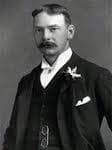
Biography coming soon.