BookBrief
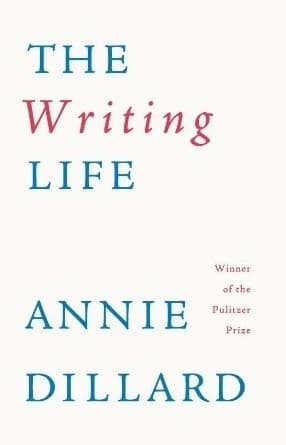
The Writing Life cover
Archivist's Choice

The Writing Life

Annie Dillard (1989)

Genre

Biography / Reference / Memoir / Creativity

Reading Time

90 min

Key Themes

See below

Track Your Reading

Sign in to track this book

Annie Dillard explores the challenging yet rewarding work of writing, showing its demands and rewards through her own experiences.

Core Idea

Writing is a physically and emotionally demanding act requiring discipline, solitude, and a steady, realistic commitment to craft over inspiration. It needs a carpenter's approach, valuing careful construction and understanding that true meaning comes from sustained, often hidden effort, not from chasing perfect sentences or believing in effortless genius. A writer's life is a solitary struggle against the unwritten, a long journey of meaning made through routine, habit, and respect for the reader's part in creating meaning.
Reading time
90 min
Difficulty
Medium
✓ Read this if...
You are a writer, aspiring writer, or artist seeking a raw, honest, and unsentimental account of the creative process, emphasizing the discipline and struggle over inspiration.
✗ Skip this if...
You are looking for practical writing exercises, a 'how-to' guide, or a romanticized view of artistic creation.

Core idea

The central argument and framework that powers the entire book.

Writing is a physically and emotionally demanding act requiring discipline, solitude, and a steady, realistic commitment to craft over inspiration. It needs a carpenter's approach, valuing careful construction and understanding that true meaning comes from sustained, often hidden effort, not from chasing perfect sentences or believing in effortless genius. A writer's life is a solitary struggle against the unwritten, a long journey of meaning made through routine, habit, and respect for the reader's part in creating meaning.

At a glance

Reading time

90 min

Difficulty

Medium

Read this if...

You are a writer, aspiring writer, or artist seeking a raw, honest, and unsentimental account of the creative process, emphasizing the discipline and struggle over inspiration.

Skip this if...

You are looking for practical writing exercises, a 'how-to' guide, or a romanticized view of artistic creation.

Key Takeaways

1

The Brutal Act of Writing

Writing isn't just difficult; it's a destructive, self-immolating act.

Quote

One of the few things I know about writing is this: spend it all, shoot it, play it, lose it, all, right away, every time. Do not hoard what seems good for a later place in the book, or for another book; give it, give it all, give it now. The impulse to save something good for a better place later is the signal to spend it now. Something more will arise for later, something better.

Dillard says writing is not gentle but a fierce, almost violent process of using up oneself. Writers must be ready to give up everything—every good idea, every elegant phrase—in the current draft, trusting that new insights and better material will appear. This is not about being perfect; it is about a steady commitment to the current work, using one's creative resources without holding back. Writing is a continuous giving, a willingness to destroy what was to make room for what will be. It requires a kind of creative excess, refusing...

Supporting evidence

Dillard's repeated metaphor of 'spending it all' and 'shooting it' like ammunition, emphasizing the finite nature of creative energy that must be fully deployed, not conserved.

Apply this

When working on a draft, resist the urge to 'save' a brilliant idea or turn of phrase for a different section or future project. Deploy it immediately and fully where it feels most impactful now. Trust that the creative well will replenish.

creative-profligacyself-immolationdrafting-philosophy
2

The Carpenter's Mindset

Writing is less about divine inspiration and more about diligent, often tedious, craft.

Quote

Appealing work is not what you do for money. It is what you do with your heart, with your soul, with your spirit, with your mind, with your body. It is what you do when you are not working.

Dillard clarifies the romantic idea of the writer, comparing the process more to carpentry than to a sudden spiritual outpouring. Most writing involves careful, often unglamorous work: cutting, fitting, measuring, sanding. It is about patiently adding small, precise actions, not waiting for a sudden idea. This means respecting the materials (words) and the tools (grammar, syntax, structure). A writer, like a carpenter, must know how to build, how to join different parts into a whole, and how to refine until the object works well and l...

Supporting evidence

Dillard's detailed descriptions of the painstaking revision process, moving sentences around, and the sheer volume of discarded material, contrasting sharply with any idea of effortless creation.

Apply this

Approach writing tasks with a 'carpenter's toolkit' mentality. Focus on the mechanics: outlining, structuring sentences, choosing precise words, and ruthlessly editing. Don't wait for inspiration; build the structure first, then refine the details.

craftsmanshipdisciplinerevision-process
3

The Peril of the Perfect Sentence

A beautifully crafted sentence can be a trap, hindering the larger narrative flow.

Quote

When you write, you make a point, you make an argument, you make a story. You make a line of words. You make a line of thought. You make a line of feeling. You make a line of music. You make a line of light. You make a line of life.

Dillard warns against the appeal of a perfectly built sentence that, while good on its own, does not help the overall goal of the text. Writers often love their own elegant phrases, only to find that these 'darlings' stop the story's flow or hide the intended meaning. The challenge is to know when a piece of writing, no matter how good on its own, needs to be cut for the sake of the whole. This needs a sharp objectivity and a willingness to let go of one's ego. The goal is not just to write beautiful sentences, but to write sentences ...

Supporting evidence

Dillard's personal anecdotes about cutting beloved passages and the agony involved, illustrating that even seasoned writers struggle with this necessary act of sacrifice.

Apply this

During editing, critically evaluate every sentence. Ask if it serves the larger paragraph, chapter, and book. Be prepared to cut even 'good' sentences if they don't advance the core message or narrative.

editing-ruthlessnessnarrative-flowwriter's-ego
4

The Writer's Solitary War

Writing is an intensely lonely battle against distraction, doubt, and the blank page.

Quote

The writer's job is to turn the world into words, to make the world make sense. The writer's job is to make the world out of words. The writer's job is to make the words out of the world.

Dillard describes a writer's life as one of deep solitude. It is a daily meeting with an empty page, where the only company is one's own mind, wrestling with ideas and language. This is not just physical isolation; it is an intellectual and emotional solitude, as the writer explores thoughts and feelings that others may not fully understand or share. The 'war' is fought against inner and outer forces: the pull of putting things off, the sting of self-doubt, the sheer difficulty of turning complex thoughts into clear writing. There is ...

Supporting evidence

Dillard's descriptions of her own writing routine, often isolated in cabins or remote studies, and the internal struggles she details in her essays.

Apply this

Embrace periods of deep, uninterrupted solitude for writing. Recognize and plan for the mental and emotional toll of this isolation, perhaps by scheduling social interaction or breaks after intense writing sessions.

solitude-in-writingcreative-struggleblank-page-syndrome
5

The Long Haul of Meaning

True impact in writing often comes from years of persistent, often unrewarded, effort.

Quote

How we spend our days is, of course, how we spend our lives. What we do with this hour, and with that one, is what we are doing. A schedule permits us to do what we want to do. It is a structure for freedom.

Dillard stresses that important writing rarely comes from quick success or brief inspiration. It is the combined result of years of dedicated, often unglamorous, daily work. The real 'reward' might not be immediate recognition or money, but the slow, deep satisfaction of having struggled with complex ideas and shaped them into lasting form. This view encourages resilience and a long-term outlook, understanding that each day's effort, no matter how small, adds to a larger, more meaningful body of work. It is about building a career and...

Supporting evidence

Dillard's own extensive career and her reflections on the many years she spent writing, often without immediate public acclaim for individual works, but building a substantial body of literature.

Apply this

Cultivate patience and a long-term perspective in your creative endeavors. Focus on consistent daily effort rather than chasing instant gratification or viral success. Understand that true mastery and impact take time.

persistencelong-term-visioncreative-legacy
6

The Unseen Work Beneath the Surface

The visible text is merely the tip of an iceberg of discarded material and mental wrestling.

Quote

There is no shortage of words. There is a shortage of words that matter.

What readers see in a published book is a very refined and shortened version of a much larger, often messy, creative process. Dillard shows that behind every polished sentence lies a graveyard of discarded drafts, failed attempts, and hours of intense thought that never made it to the page. This 'unseen work' is not wasted; it is the necessary structure and digging needed to find the true core of the message. The writer must be willing to create far more material than will ever be used, to explore side topics, and to write 'badly' to ...

Supporting evidence

Dillard's descriptions of her own extensive notes, research, and multiple drafts for her books, highlighting the sheer volume of material that never sees publication.

Apply this

Embrace the process of generating far more material than you'll ultimately use. Don't be afraid to write 'bad' first drafts or explore dead ends; these are crucial steps in finding the core of your message.

drafting-processcreative-wastehidden-labor
7

The Reader as Co-Creator

A truly engaging text invites the reader to actively participate in its meaning-making.

Quote

The writer is a conductor, not a composer. The words are the instruments, the reader is the audience, and the music is made by the interplay of the two.

Dillard suggests that effective writing is not just about giving information; it is about starting a conversation in the reader's mind. The writer does not give every detail but leaves intentional gaps, unclear parts, and challenges that make the reader think, question, and connect ideas. This active involvement turns reading from passive consumption into a shared act of creation. The text's meaning is not only in the words on the page but grows in the interaction between the author's purpose and the reader's understanding and experie...

Supporting evidence

Dillard's own prose often employs evocative imagery and relies on the reader to make conceptual leaps, rather than explicitly spelling out every connection, as seen in 'Pilgrim at Tinker Creek'.

Apply this

When writing, consider what you can *omit* to engage the reader more deeply. Instead of explaining everything, present compelling details and let the reader infer, connect, and participate in constructing meaning.

reader-engagementactive-readinginterpretive-space
8

The Necessity of Ritual and Habit

Consistent, almost ritualistic, daily practice is the bedrock of a productive writing life.

Quote

A schedule permits us to do what we want to do. It is a structure for freedom.

Dillard, despite focusing on the wildness of creation, also supports the power of routine and habit. For her, freedom in writing is not in sudden bursts of inspiration, but in disciplined following of a schedule. Setting a consistent time and place for writing creates a mental and physical space where creative work can reliably happen. This routine reduces decision fatigue and putting things off, signaling to the mind that 'now is the time for writing.' It changes writing from an occasional hobby into a serious practice, building a se...

Supporting evidence

Dillard's personal accounts of her strict daily writing schedule, often involving specific hours and locations, regardless of inspiration.

Apply this

Establish a non-negotiable daily or weekly writing routine. Treat it as a professional appointment. Show up at your desk at the same time, even if you don't feel inspired, and engage with the work.

writing-disciplinecreative-routinehabit-formation
9

The Fear of the Unwritten

The greatest obstacle isn't lack of talent, but the terror of failing to capture one's vision.

Quote

The great thing about writing is that you can make it up as you go along. The terrible thing about writing is that you have to make it up as you go along.

Dillard explores the deep fear that often stops writers: not the fear of writing poorly, but the fear of failing to do justice to the great, unformed vision in one's mind. The blank page is not an absence, but a huge gap between the ideal and the real. This fear can lead to putting things off, endless changes, or completely giving up projects. It is a battle against feeling overwhelmed when trying to turn complex, many-layered thoughts and feelings into clear writing. Overcoming this needs courage, a willingness to make mistakes, and ...

Supporting evidence

Dillard's poignant descriptions of the mental anguish and self-doubt that accompany the writing process, even for accomplished authors.

Apply this

Recognize and acknowledge the fear of not living up to your own internal vision. Start writing anyway, even if it feels inadequate. Focus on getting the ideas down, knowing that refinement comes later.

writer's-blockcreative-anxietyperfectionism
10

The Unpredictability of Inspiration

Inspiration is fleeting and must be seized, not waited for, through diligent presence.

Quote

The dedicated life is the life of the writer. It is a life of dedication to a craft, a dedication to a purpose, a dedication to a way of seeing the world. It is a life of dedication to truth.

While Dillard supports routine, she also knows that true inspiration is hard to find. It does not come when called but often appears as a quick glance, a sudden connection, or an unexpected insight. A writer's job is not to passively wait for this muse but to be always present, observant, and ready to catch these brief moments when they happen. This needs a strong awareness of the world, a deep connection with one's topic, and the mental flexibility to change and follow an unexpected thought. The 'gift' of inspiration is less about a ...

Supporting evidence

Dillard's own vivid descriptions of observing nature and life, and how these observations often spark profound philosophical or narrative insights.

Apply this

Cultivate a practice of active observation and deep presence in your daily life. Keep a notebook handy to capture sudden thoughts, images, or connections, as these are the seeds of inspiration. Don't rely solely on scheduled writing time; be ready for ideas at any moment.

inspiration-captureobservational-skillscreative-serendipity

Critical analysis

Notable Quotes

How we spend our days is, of course, how we spend our lives.

Reflecting on the daily grind of writing and its cumulative effect.

A schedule protects you from the chaos of the day and the demands of others. It is a fence around your creative time.

Discussing the importance of a structured routine for writers.

One of the things I know about writing is this: spend it all, shoot it, play it, lose it, all, right away, every time. Do not hoard what seems good for a later place in the book or for another book; give it, give it all, give it now.

Advice on generosity and immediacy in the writing process.

The writer is a professional daydreamer.

Describing the fundamental activity of a writer.

The feeling that the work is never good enough is the engine of perfectionism, and the fuel of excellence.

Exploring the tension between self-doubt and the pursuit of quality.

Writing a book is like building a house, then living in it, then tearing it down and building it again.

Illustrating the iterative and often destructive nature of revision.

Why do you write? Because you have to. Because you must. Because you are driven.

Pondering the intrinsic motivation behind the act of writing.

The writing life is a life of solitude. It is a life of discipline. It is a life of faith.

Summarizing the essential characteristics of a writer's existence.

Appealing work is not what you think. It is not necessarily what you enjoy. It is what you are compelled to do.

Distinguishing between enjoyment and the deep compulsion to create.

You do not so much write a book as it writes you.

Suggesting that the creative process transforms the author.

The most important thing about a book is that it be well-made.

Emphasizing craftsmanship and quality in literature.

The soul of a writer is a very strange animal indeed.

Reflecting on the unique psyche and disposition of writers.

A writer is a person who spends a good deal of time watching his own mind work.

Highlighting the introspective and self-observational nature of writing.

Quiz

Test Your Knowledge

Ready to see how well you understood this book? Take our interactive quiz with 10 questions.

10
Questions
~5
Minutes
?
Best Score

Key Questions (FAQ)

Annie Dillard's 'The Writing Life' is a profound meditation on the solitary, often arduous, and sometimes exhilarating process of writing. It delves into the dedication, discipline, and occasional despair that authors face while crafting their work, offering insights into the creative mind.

About the author

Annie Dillard

Annie Dillard is a Pulitzer Prize-winning author celebrated for her lyrical prose and profound explorations of nature, faith, and the human condition. Her notable works include "Pilgrim at Tinker Creek," "An American Childhood," and "The Writing Life." Dillard's essays and books often blend personal reflection with philosophical inquiry, earning her a significant place in contemporary American non-fiction.