BookBrief
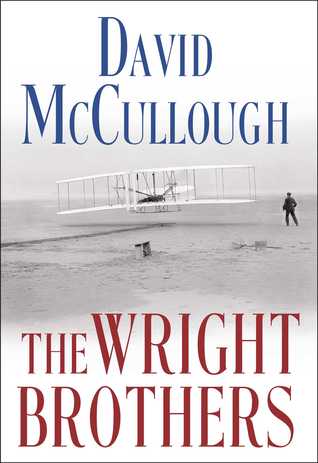
The Wright Brothers cover
Archivist's Choice

The Wright Brothers

David McCullough (2015)

Genre

Biography / History / Technology / Science

Reading Time

6-8 hours

Key Themes

See below

Track Your Reading

Sign in to track this book

Wilbur and Orville Wright, two bicycle mechanics, used grit, curiosity, and ingenuity to achieve human flight.

Core Idea

David McCullough's "The Wright Brothers" shows that the invention of the airplane resulted from relentless, methodical persistence, practical ingenuity, and strong teamwork between two brothers. The book explains that Wilbur and Orville Wright, without formal higher education but with great curiosity and a deep understanding of mechanical principles, carefully watched nature, did thousands of glider experiments, and systematically solved the problem of control. This challenge had stopped more famous scientists and engineers. Their success came from their self-reliance, their ability to learn from failure, and their family's support, especially their sister Katharine. The book shows the human effort and the difficult, repeated process behind major technological progress.
Reading time
6-8 hours
Difficulty
Easy
✓ Read this if...
You are fascinated by the origins of flight, appreciate detailed historical biographies, or want to understand the human elements of invention and perseverance.
✗ Skip this if...
You prefer theoretical discussions over narrative history, or are looking for a highly technical engineering breakdown of early aviation.

Core idea

The central argument and framework that powers the entire book.

David McCullough's "The Wright Brothers" shows that the invention of the airplane resulted from relentless, methodical persistence, practical ingenuity, and strong teamwork between two brothers. The book explains that Wilbur and Orville Wright, without formal higher education but with great curiosity and a deep understanding of mechanical principles, carefully watched nature, did thousands of glider experiments, and systematically solved the problem of control. This challenge had stopped more famous scientists and engineers. Their success came from their self-reliance, their ability to learn from failure, and their family's support, especially their sister Katharine. The book shows the human effort and the difficult, repeated process behind major technological progress.

At a glance

Reading time

6-8 hours

Difficulty

Easy

Read this if...

You are fascinated by the origins of flight, appreciate detailed historical biographies, or want to understand the human elements of invention and perseverance.

Skip this if...

You prefer theoretical discussions over narrative history, or are looking for a highly technical engineering breakdown of early aviation.

Key Takeaways

1

The Power of Practical Ingenuity

Theory is good, but hands-on experimentation leads to breakthroughs.

Quote

The way to learn to ride a bicycle is to ride it. The way to learn to fly a machine is to fly it.

The Wright brothers were not theoretical scientists or wealthy inventors. They were bicycle mechanics with a deep understanding of practical mechanics and a strong commitment to repeated experimentation. Their intelligence came not from new theoretical physics, but from using existing knowledge, carefully watching real-world events, and constantly testing their ideas through many glider flights. This hands-on method, along with their ability to build, change, and fix their own machines, let them learn from every failure and improve th...

Supporting evidence

Their extensive work with gliders at Kill Devil Hills, where they performed hundreds of test flights, meticulously observing the effects of wind, control surfaces, and airfoils. They built their own wind tunnel to test wing shapes, but it was the actual flight data that proved most invaluable.

Apply this

Embrace iterative design and rapid prototyping in any innovative endeavor. Don't get bogged down in theoretical perfection; build, test, learn, and refine. Prioritize direct experience and empirical data over abstract models where possible.

iterative-designempirical-learningprototype-testing
2

The Unsung Hero: Relentless Persistence

Failure is not an end, but a stepping stone to success.

Quote

We could not have learned to fly without our numerous failures. Every failure taught us something.

The path to powered flight involved many failures, crashes, and moments of great discouragement. Yet, the Wright brothers showed extreme persistence. They faced doubt, jokes, dangerous accidents, and the sheer difficulty of a problem that had puzzled humanity for thousands of years. Their ability to analyze each failure, understand its cause, and return to work with new determination was perhaps their most important trait. This was not just stubbornness; it was intelligent, analytical persistence that saw every crash as data, a chance...

Supporting evidence

The numerous crashes and near-fatal incidents during their glider experiments and early powered flight attempts. For instance, the 1908 Fort Myer crash, which tragically killed their passenger, Lieutenant Thomas Selfridge, and severely injured Orville, but did not deter them from continuing their work.

Apply this

Cultivate resilience in the face of obstacles. Develop a mindset that views failures as valuable learning experiences, not definitive defeats. Create systems for analyzing setbacks to extract lessons and inform future attempts.

resiliencegritfailure-analysis
3

The Synergy of Two Minds

Collaboration and complementary skills amplify individual genius.

Quote

It was a partnership in the closest sense of the word. They thought as one.

Both Wilbur and Orville were smart, but their success came from their teamwork. Wilbur often thought about the bigger problems and solutions, while Orville was the mechanical genius who made ideas into working machines. They understood each other well, finishing each other's thoughts and criticizing ideas without ego. This intellectual and practical teamwork helped them solve problems from many angles, carefully test assumptions, and stay motivated during hard times. Their partnership is an example of good collaboration, where individ...

Supporting evidence

McCullough frequently highlights how they worked side-by-side, often finishing each other's sentences, and how their distinct yet complementary skills (Wilbur's theoretical insights, Orville's mechanical dexterity) were essential to their progress. Their shared notebooks and correspondence reflect this constant intellectual exchange.

Apply this

Seek out partners whose skills and perspectives complement your own. Foster an environment of open, ego-free collaboration where ideas are freely exchanged and rigorously tested. Recognize that collective intelligence often surpasses individual brilliance, especially in complex problem-solving.

collaborationteamworkcomplementary-skills
4

The Power of Self-Reliance and Resourcefulness

Constraints can breed ingenuity, not stifle it.

Quote

We were not men of wealth, nor of influence. We had only ourselves and our bicycle shop.

The Wright brothers worked with very little money and no institutional help. This made them very resourceful, building much of their equipment, including their own wind tunnel and engine, from scratch. Their bicycle shop provided income, mechanical skills, and a workshop for their experiments. This self-reliance meant they fully controlled their designs and changes, allowing for quick improvements without bureaucracy. Their story challenges the idea that great achievements need huge money or established institutions; sometimes, the be...

Supporting evidence

They designed and built their own lightweight gasoline engine when commercial options proved too heavy. They also fabricated many of their own tools and testing equipment, including a primitive but effective wind tunnel, from materials readily available in their shop.

Apply this

Don't wait for perfect conditions or unlimited resources. Embrace constraints as catalysts for creative problem-solving. Leverage existing skills and available tools to begin, and build capacity incrementally. Foster a 'maker's' mindset.

resourcefulnessself-sufficiencybootstrapping
5

The Crucial Role of Family Support

A strong personal foundation enables monumental achievements.

Quote

Without Katharine, I doubt we would have had the strength to carry on.

Beyond their direct teamwork, the Wright brothers greatly benefited from their family's support, especially their sister Katharine. She managed their home, handled correspondence, offered emotional encouragement, and later promoted them and served as their confidante in Europe. Their father, Bishop Milton Wright, taught them to love learning and have strong morals. This stable, supportive home allowed Wilbur and Orville to focus on their demanding and often dangerous work, knowing they had a safe place and people cheering them on. The...

Supporting evidence

McCullough dedicates significant attention to Katharine's role, detailing her extensive correspondence, her trips to Europe to support her brothers, and her crucial role in managing their affairs and public image. Their father's intellectual influence and encouragement are also highlighted.

Apply this

Cultivate strong personal relationships and a supportive home environment. Recognize and value the contributions of family and close friends who provide emotional, logistical, or intellectual support. Don't underestimate the power of a stable personal life in fueling professional success.

family-supportemotional-intelligencepersonal-network
6

Mastering Control: The True Breakthrough

Beyond lift and thrust, stability and maneuverability define flight.

Quote

It is not merely enough to fly; one must be able to control the direction and balance of the machine.

While other inventors focused on lift and thrust, the Wright brothers uniquely understood that true flight needed control. They knew that an airplane, like a bicycle, needed constant adjustment to stay balanced in three dimensions. Their new idea was 'wing warping' for roll control, combined with a movable rudder for yaw and an elevator for pitch. This system, inspired by watching birds and their own bicycle experience, let the pilot actively control the aircraft, not just passively ride it. This focus on dynamic control, rather than ...

Supporting evidence

Their detailed studies of birds in flight, particularly eagles, and their application of bicycle balancing principles to aircraft. The development of their three-axis control system (wing warping, rudder, elevator) was meticulously documented in their notebooks and patents.

Apply this

When solving complex problems, look beyond the obvious metrics. Identify the true 'control variable' or the fundamental mechanism that allows for mastery, rather than just basic functionality. Seek inspiration from analogous systems in nature or other fields.

control-systemsaerodynamicsbiomechanics-inspiration
7

The Importance of Intellectual Curiosity

Lifelong learning and broad interests fuel innovation.

Quote

From childhood, we were surrounded by books and ideas. It shaped everything we did.

Even with only a high school education, the Wright brothers read a lot and kept learning throughout their lives. Their father's large library and encouragement of intellectual inquiry created a deep curiosity that went beyond mechanics to science, history, and philosophy. This broad intellectual background helped them approach the problem of flight with a unique view, using ideas from different fields. Their constant search for knowledge, with their practical skills, let them question common ideas and find new solutions. Their story r...

Supporting evidence

McCullough emphasizes their upbringing, surrounded by books and intellectual discussion, and their continuous reading throughout their lives. Their detailed notebooks reveal not just engineering calculations but also reflections on scientific principles and observations.

Apply this

Cultivate a habit of lifelong learning and explore diverse subjects. Don't limit your knowledge acquisition to your immediate field; cross-pollination of ideas often leads to breakthroughs. Encourage intellectual curiosity in yourself and others.

lifelong-learningintellectual-curiosityinterdisciplinary-thinking
8

The Delay in Recognition: A Cautionary Tale

Revolutionary ideas often face initial skepticism and resistance.

Quote

The world simply refused to believe what we had done. It was the hardest part.

Even after achieving sustained, controlled flight in 1903, the Wright brothers faced years of doubt, indifference, and even jokes from the press, public, and scientific groups in their own country. Their need for secrecy to protect their invention also delayed recognition. It was not until their public demonstrations in Europe in 1908 that the world truly understood their achievement. This period shows how hard it can be to convince people of truly revolutionary ideas, especially those that go against old beliefs. It's a reminder that...

Supporting evidence

The extensive documentation of the Wrights' struggle to gain recognition in America, contrasted with their triumphant public demonstrations in France and their subsequent celebrity there, which finally forced American attention.

Apply this

Be prepared for skepticism and resistance when introducing truly novel concepts. Focus on clear demonstration and persistent communication. Understand that societal adoption of radical innovation can be a long and challenging process, even with irrefutable evidence.

innovation-adoptionskepticism-biaspublic-perception
9

The Power of Observation and First Principles

Questioning assumptions and learning from nature leads to deeper understanding.

Quote

Man will not fly for a thousand years. We believed that was wrong, and we set out to prove it.

The Wright brothers did not just tinker; they re-evaluated the problem of flight from the beginning. They questioned existing aerodynamic data, especially Langley's tables, and made their own careful observations of birds and kites. This led them to understand that the main challenge was not just creating lift, but achieving dynamic control in an unstable environment. By breaking down the problem into its simplest parts and building their understanding from scratch, rather than relying only on established (and often flawed) theories, ...

Supporting evidence

Their rejection of inaccurate aerodynamic tables published by others, leading them to build their own wind tunnel and conduct extensive, precise measurements. Their detailed observations of buzzards and other birds for wing shape and control mechanisms.

Apply this

Always question underlying assumptions, especially in complex problem domains. Go back to first principles to build a solid foundation of understanding. Observe natural phenomena closely for inspiration and solutions. Don't be afraid to challenge established 'truths.'

first-principlesempirical-researchobservational-learning

Critical analysis

Notable Quotes

The greatest thing in the world is to know how to belong to oneself.

Early in their lives, reflecting the independent spirit of the brothers.

It is not a matter of whether a man will fly, but when.

Wilbur Wright's conviction about the inevitability of human flight, before their success.

No great discovery is ever made without a bold guess.

Attributed to the Wrights, embodying their experimental approach.

If we worked on the assumption that what is currently true will remain true, we’d never make any progress.

Reflecting their willingness to challenge existing beliefs about flight.

The desire to fly is an idea handed down to us by our ancestors who, in their grueling travels across trackless lands in prehistoric times, looked enviously at the birds soaring freely through space, at speeds unknown to man, and wished they, too, had wings.

Wilbur Wright's eloquent reflection on the ancient human dream of flight.

The course of experimentation was by no means a straight one. It was full of turns and twists, and often led to dead ends.

Describing the challenging and iterative process of their invention.

We were lucky enough to grow up in a home where there was always much encouragement to intellectual curiosity.

Orville Wright on the influence of their upbringing and family environment.

Learning the secret of flight from a bird would be a good deal like learning the secret of magic from a magician.

Wilbur Wright acknowledging the difficulty of simply observing nature to understand flight.

Success is not born of a single inspiration but of a continuous effort.

Their philosophy on achieving their goals through persistent work.

When we think of the Wright brothers, we think of Kitty Hawk. But the story really begins in Dayton, Ohio.

McCullough's emphasis on their origins and the groundwork laid before their famous flights.

The greatest invention of them all was the control system.

Highlighting the critical importance of their three-axis control system, often overlooked.

They were not daredevils. They were meticulous, methodical, and above all, patient.

McCullough's description of their character and approach to invention.

The fact that the machine was so light and fragile was actually a blessing in disguise, for it forced them to learn how to control it.

Explaining how the limitations of their early aircraft led to crucial advancements in control.

The air, indeed, is an untamed ocean, and the airplane is the ship of the future.

A visionary statement capturing the profound impact and potential of their invention.

They had not only invented the airplane but had established a new science, aeronautics.

McCullough summarizing the broader scientific contribution of the Wright brothers.

Quiz

Test Your Knowledge

Ready to see how well you understood this book? Take our interactive quiz with 10 questions.

10
Questions
~5
Minutes
?
Best Score

Key Questions (FAQ)

Wilbur and Orville Wright were two unknown brothers from Ohio who, on a winter day in 1903, achieved the first successful flight of a heavier-than-air, powered machine carrying a pilot. Their pioneering work marked the beginning of the age of flight and revolutionized transportation and human capability.

About the author

David McCullough

David McCullough was a two-time Pulitzer Prize winner and a recipient of the Presidential Medal of Freedom, celebrated for his vivid historical narratives. His notable works, including "1776," "John Adams," and "Truman," brought American history to life for millions of readers. McCullough's masterful storytelling and meticulous research made him one of the nation's most beloved and respected historians.