BookBrief
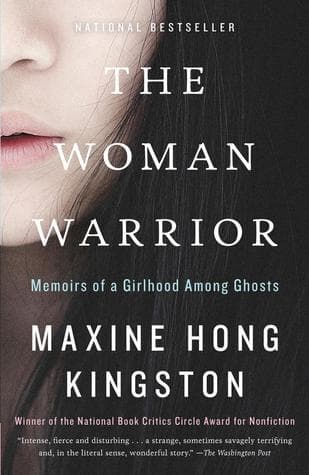
The Woman Warrior cover
Archivist's Choice

The Woman Warrior

Maxine Hong Kingston (1976)

Genre

Biography / Memoir

Reading Time

240 min

Key Themes

See below

Track Your Reading

Sign in to track this book

A Chinese American daughter finds her own voice among ancestral ghosts, warrior women, and immigrant struggles, echoing her mother's 'talk-stories' and the silent weight of tradition.

Core Idea

Maxine Hong Kingston's "The Woman Warrior" shows how an American-born Chinese woman comes to terms with her cultural background and her individual identity. Through memoir, myth, and her mother's 'talk-stories,' Kingston addresses conflicting ideas of female power and submission, the secrets passed down through generations, and the effort to create a unique voice despite tradition and the demands of assimilation. The book states that identity is not fixed, but a changing and often contradictory creation shaped by imagination, memory, and the constant balance between past and present, East and West.
Reading time
240 min
Difficulty
Medium
✓ Read this if...
You are interested in the complexities of bicultural identity, the immigrant experience, feminist literature, or the power of storytelling to shape self-perception. It's also excellent for those who appreciate experimental memoir that blurs the lines between fact and fiction, myth and reality.
✗ Skip this if...
You prefer straightforward, linear narratives and clear distinctions between truth and imagination. Readers looking for a purely historical account or a traditional, chronological autobiography might find its fragmented structure and mythic elements challenging.

Core idea

The central argument and framework that powers the entire book.

Maxine Hong Kingston's "The Woman Warrior" shows how an American-born Chinese woman comes to terms with her cultural background and her individual identity. Through memoir, myth, and her mother's 'talk-stories,' Kingston addresses conflicting ideas of female power and submission, the secrets passed down through generations, and the effort to create a unique voice despite tradition and the demands of assimilation. The book states that identity is not fixed, but a changing and often contradictory creation shaped by imagination, memory, and the constant balance between past and present, East and West.

At a glance

Reading time

240 min

Difficulty

Medium

Read this if...

You are interested in the complexities of bicultural identity, the immigrant experience, feminist literature, or the power of storytelling to shape self-perception. It's also excellent for those who appreciate experimental memoir that blurs the lines between fact and fiction, myth and reality.

Skip this if...

You prefer straightforward, linear narratives and clear distinctions between truth and imagination. Readers looking for a purely historical account or a traditional, chronological autobiography might find its fragmented structure and mythic elements challenging.

Key Takeaways

1

The Power of 'Talk-Stories'

How oral tradition shapes identity and reality.

Quote

My mother has given me 'talk-stories.' The beginning is hers, the ending, mine.

Kingston shows how the 'talk-story' — a mix of myth, history, and personal narrative passed down orally — is a basic tool for sharing culture and forming identity. These stories, often embellished and contradictory, make the listener deal with multiple truths, blurring the lines between fact and fiction. For Kingston, they are both confusing and empowering. They provide a way to understand her Chinese heritage while also pushing her to define her American self. The stories are dynamic, changing with each retelling, making the listener...

Supporting evidence

The entire structure of the book is a testament to this, as Kingston weaves together her mother's tales of Fa Mulan, the no-name woman, and her own childhood experiences. The story of Brave Orchid's medical school exploits in China is a prime example of a 'talk-story' that blurs the line between myth and reality.

Apply this

Reflect on the 'talk-stories' in your own family or culture. How do these narratives, whether factual or embellished, influence your self-perception and understanding of your heritage? Consider actively collecting and interpreting these stories, recognizing their power to shape identity.

oral-traditioncultural-identitynarrative-shaping
2

Navigating the 'No-Name Woman'

The chilling weight of shame and silenced female narratives.

Quote

You must not tell anyone,' my mother said, 'what I am about to tell you. In China your father had a sister who killed herself. She jumped into the family well. We say that your father has no sisters.'

The story of the 'no-name woman' deeply explores the patriarchal violence and community shame that can silence and erase women. Her aunt's suicide, caused by an illegitimate pregnancy and the subsequent shunning by her village, becomes a warning for Kingston. It reveals the harsh results of breaking social norms, especially for women, and how an entire community can work to erase someone's existence from history. This story greatly affects Kingston, making her face the brutal realities of her ancestral past and the possible dangers of...

Supporting evidence

The detailed account of the villagers raiding the family home, destroying property, and defiling the well to punish the family for the aunt's transgression, culminating in her suicide. Her mother's command to never speak of her.

Apply this

Consider the unspoken or silenced stories within your own family or community. How do these silences impact current generations? Challenge yourself to uncover and acknowledge these narratives, giving voice to those who have been marginalized or forgotten.

patriarchyfemale-silenceshame-cultureancestral-trauma
3

Fa Mulan: Heroine or Burden?

The complex legacy of a powerful female archetype.

Quote

The swordswoman and I are not so far apart.

Kingston's new version of Fa Mulan is not a simple celebration but a complex look at female heroism. While Mulan represents strength, independence, and the ability to go beyond gender roles, her story also carries the burden of great responsibility and the expectation for daughters to be fierce protectors and providers. Kingston struggles with the pressure to embody Mulan's stoicism and self-sacrifice, feeling both inspired and overwhelmed by the archetype. She questions whether Mulan's heroism truly frees women or is just another for...

Supporting evidence

Kingston's detailed fantasy sequences where she imagines herself as Fa Mulan, undergoing rigorous training and fighting battles, juxtaposed with her real-life struggles with shyness, speech, and the expectations placed upon her as a Chinese American daughter.

Apply this

Examine the heroic archetypes in your own cultural background. Do they empower or constrain? How do you reconcile traditional expectations with your personal aspirations and modern identity? Consider how these figures might be reinterpreted for contemporary relevance.

female-heroismarchetypal-figuresgender-rolescultural-expectations
4

The Burden of Translation

Struggling to articulate a bicultural identity.

Quote

Chinese Americans, when you try to understand what things in you are Chinese, how do you separate what is peculiar to childhood, to poverty, to growing up female in a certain family, from what is Chinese?

Kingston clearly shows the deep struggle of translating her Chinese heritage into an American context, both literally and figuratively. She deals with language's inability to convey the details of her experience, often feeling 'tongue-tied' in English while also seeing the limits of her Chinese. This language and cultural gap extends to her inability to fully understand her mother's 'talk-stories' or to explain her American life to her parents. The 'burden of translation' is the constant effort to bridge two worlds, two languages, and...

Supporting evidence

Her childhood struggles with speaking in school, her frustration with the literal translations of Chinese idioms that lose their poetic meaning, and her internal monologues attempting to decipher her mother's often cryptic pronouncements.

Apply this

If you navigate multiple cultural or linguistic identities, acknowledge the unique challenges and strengths this brings. Practice articulating your bicultural experiences, finding your own voice that bridges these worlds rather than feeling trapped between them. Embrace the complexity as a source of richness.

bicultural-identitylinguistic-dissonancecultural-translationcode-switching
5

Mother-Daughter Battles for Voice

A complex dance of love, frustration, and legacy.

Quote

I had to leave home in order to see the world, and I had to see the world in order to understand my mother.

The relationship between Kingston and her mother, Brave Orchid, is the emotional core of the book. It is marked by intense love, deep misunderstanding, and a constant struggle for control and voice. Brave Orchid's powerful, often contradictory 'talk-stories' both fascinate and intimidate Kingston. Her mother's expectations, based in a different culture, clash with Kingston's American upbringing, leading to explosive arguments and deep frustrations. Yet, through these conflicts and her mother's stories, Kingston eventually begins to un...

Supporting evidence

The vivid descriptions of their arguments, particularly the scene where Kingston refuses to speak for two years and her mother threatens to cut her frenum. Also, the extended 'talk-story' where Brave Orchid recounts her medical school adventures, revealing her own fierce independence.

Apply this

Reflect on your own relationships with parental figures. How do their narratives and expectations shape you, even in conflict? Seek to understand their lived experiences and the cultural contexts that inform them, which can deepen your empathy and self-understanding.

mother-daughter-relationshipsgenerational-conflictfamilial-narrativesempathy-building
6

The Ghosts of China and America

Navigating literal and metaphorical specters.

Quote

Chinese Americans, when you try to understand what things in you are Chinese, how do you separate what is peculiar to childhood, to poverty, to growing up female in a certain family, from what is Chinese? What is Chinese? What is Chinese American?

Kingston's story includes 'ghosts' – both the literal ghosts of Chinese folklore and the metaphorical ghosts of cultural memory, prejudice, and the past. Chinese immigrants in America often call white Americans 'ghosts,' showing their feeling of alienation and otherness. These 'ghosts' represent the unknown, the terrifying, and the foreign. For Kingston, the ghosts are also the unresolved traumas of her family's past in China, the silenced stories, and the lingering prejudices she faces in America. She must learn to tell the differenc...

Supporting evidence

The frequent use of the term 'ghosts' for white people, the stories of actual ghosts and spirits from her mother's tales, and the pervasive sense of fear and apprehension that accompanies her childhood experiences with racism and cultural misunderstanding.

Apply this

Identify the 'ghosts' in your own life – whether they are past traumas, societal prejudices, or inherited fears. How do these specters influence your present? Work to acknowledge and understand them, rather than letting them silently dictate your actions, and strive to define your own identity beyond their influence.

cultural-alienationprejudice-impactancestral-memoryidentity-formation
7

Finding a Voice Through Writing

The act of storytelling as liberation and self-creation.

Quote

I learned to make my mind large, as the universe is large, so that there could be room for paradoxes.

Ultimately, 'The Woman Warrior' is Kingston's journey to find her own voice, not just literally, but as a writer and an individual. Growing up 'tongue-tied' and struggling to reconcile her two cultures, she finds that writing is her most powerful tool for self-expression and understanding. By putting her 'talk-stories' on paper, she turns the fragmented, often contradictory stories of her past into a coherent, deeply personal memoir. This process lets her reclaim control, challenge social expectations, and create a unique identity tha...

Supporting evidence

The very existence of the book itself is the primary evidence. Kingston's explicit statements about her struggles with speech and silence in childhood, contrasted with the intricate and articulate prose of her memoir.

Apply this

Consider writing as a tool for personal exploration and liberation. Whether through journaling, poetry, or storytelling, articulate your own narratives to better understand your experiences, reconcile conflicting aspects of your identity, and find your unique voice.

self-expressionmemoir-writingvoice-findingnarrative-agency
8

The Weight of Expectations

The pressure to conform and the struggle for individuality.

Quote

The reporting is the vengeance—not the beheading, not the gutting, but the words.

Kingston deals with the great weight of expectations from her family and Chinese culture, which often prioritize communal duty, respect for elders, and traditional gender roles over individual desires. She feels pressure to be a 'good Chinese daughter,' to succeed, to marry, and to carry on the family name, all while navigating the contrasting individualistic ideals of American society. This tension creates a deep internal conflict, as she tries to honor her heritage without giving up her own independence and goals. The 'reporting' sh...

Supporting evidence

Her mother's constant comparisons to other, more 'successful' or traditional Chinese women, the pressure to conform to specific behaviors, and Kingston's rebellious acts, such as speaking out against her mother's 'talk-stories' and refusing to follow certain customs.

Apply this

Reflect on the expectations placed upon you by family, culture, or society. How do these align or conflict with your personal values and goals? Develop strategies to honor what resonates with you while assertively defining your own path and boundaries.

societal-expectationsindividualism-vs-collectivismautonomy-strugglefilial-piety
9

Reclaiming the Madwoman

Challenging the labels and finding power in perceived madness.

Quote

When the immigrants come to America, they bring their parents' ghosts with them.

Throughout the book, there is a subtle but powerful theme of women being called 'mad' or 'crazy' when they stray from social norms. The 'no-name woman' is effectively driven mad by shame, and Brave Orchid herself shows behaviors that might be seen as eccentric or even unstable by American standards. Kingston also feels pressure to conform, fearing that her independent thoughts and unconventional desires might mark her as 'mad.' However, she subtly reclaims this 'madness' as a form of strength and defiance. The ability to see beyond co...

Supporting evidence

Brave Orchid's dramatic and often irrational pronouncements, her seemingly wild stories, and Kingston's own internal struggles with her perceived oddness compared to her American peers. The 'no-name woman's' tragic end, brought on by social condemnation.

Apply this

Question societal labels, especially those that pathologize unconventional thinking or behavior in women. Reflect on moments where you or others have been dismissed. How can you reframe these perceptions as sources of unique strength, creativity, or insight?

female-defiancesocial-stigmatizationreclaiming-narrativeunconventional-strength
10

The Art of Self-Creation

Forging a unique identity from disparate cultural fragments.

Quote

I am not a ghost. I am a woman warrior.

Kingston's main point is the active, hard process of self-creation. She does not passively inherit an identity; she creates one by deliberately weaving together her Chinese heritage, her American upbringing, her mother's 'talk-stories,' and her own experiences. This involves wrestling with contradictions, embracing paradoxes, and actively choosing which elements to keep and which to discard. Her journey is not about choosing one culture over another, but about combining them into a new, unique whole. She becomes her own 'woman warrior...

Supporting evidence

The entire memoir is an example of this, particularly the ending where she recounts a 'talk-story' that her mother and she collaborated on, demonstrating their eventual, if uneasy, harmony and her own arrival at a sense of self.

Apply this

Recognize that identity is not fixed but a continuous process of self-creation. Actively engage in understanding your diverse influences, synthesize them in a way that resonates with your authentic self, and confidently articulate your unique narrative to the world.

identity-constructioncultural-synthesisautobiographical-narrativepersonal-agency

Critical analysis

Notable Quotes

My mother could make me laugh with her stories about ghosts and gods but they also made me afraid.

Reflecting on her mother's storytelling and its impact on her childhood imagination.

Chinese-Americans, when you try to understand what things in you are Chinese, how do you separate what is peculiar to individual families, your mother's insanity, from what is peculiar to your race? I've had to figure out what is me, a crazy woman, and what is normal and Chinese.

Grappling with the difficulty of distinguishing personal eccentricities from cultural identity.

You must not tell anyone,' my mother said, 'what I am about to tell you. In China your father had a sister who killed herself. She jumped into the family well. We say that your father has no sisters.'

The opening lines revealing the secret of her aunt, Moon Orchid, and the family's attempt to erase her.

The swordswoman and I are not so dissimilar. We both carry a sword and do not use it. We both belong to a secret order.

Comparing herself to the legendary female warrior Fa Mu Lan, highlighting their shared burdens and silent struggles.

My mother has given me telling stories and I have told them all to you.

The narrator's reflection on inheriting and transmitting her mother's oral traditions.

I learned to make my mind large, as the universe is large, so that there is room for paradoxes.

Describing the mental flexibility required to reconcile conflicting truths and experiences.

The immigrants I know have not been able to do without the old ways entirely. They have had to create new rituals, new superstitions.

Observing how immigrants adapt and blend their old traditions with new life in America.

I wanted to be an American girl. I did not want to be a Chinese girl.

Expressing her childhood desire to assimilate into American culture and reject her Chinese heritage.

To be a woman, to be a Chinese woman, to be a Chinese-American woman, to be a writer, to be a Chinese-American woman writer—it is all a big task.

Reflecting on the multiple layers of identity and the challenges of being a voice for these experiences.

No matter how much we loved her, she could not make us happy. She could not make herself happy.

Speaking about her aunt Moon Orchid's inability to find happiness even with family support, highlighting her mental fragility.

I had to figure out what was me, a crazy woman, and what was normal and Chinese.

A recurring theme, emphasizing her struggle to differentiate personal 'craziness' from cultural norms.

I learned to speak up, to talk back, to tell the truth. It was a painful process.

Describing her journey from a quiet, obedient child to finding her voice and asserting herself.

The Chinese are so loud. They have such big mouths. I don't know why they have to yell all the time.

A childhood observation of her family's boisterous communication style, contrasting with her own quieter nature.

I would live on plastic and aluminum, on steel and paper, on the new, clean, American things.

Expressing a longing for the perceived cleanliness and modernity of American life, a rejection of older, traditional Chinese ways.

Quiz

Test Your Knowledge

Ready to see how well you understood this book? Take our interactive quiz with 10 questions.

10
Questions
~5
Minutes
?
Best Score

Key Questions (FAQ)

'The Woman Warrior' is a memoir by Maxine Hong Kingston that explores her experiences growing up as a Chinese American woman in California. It weaves together family stories, Chinese myths, and personal reflections to illustrate the complexities of identity, gender, and cultural heritage.

About the author