BookBrief
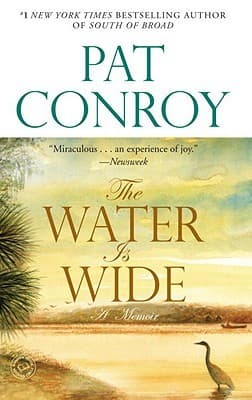
The Water is Wide cover
Archivist's Choice

The Water is Wide

Pat Conroy (1972)

Genre

Biography / Memoir / History

Reading Time

6-8 hours

Key Themes

See below

Track Your Reading

Sign in to track this book

Pat Conroy's memoir details his year-long fight against poverty, ignorance, and a biased school system to bring education and hope to the isolated Gullah children of Yamacraw Island, changing their lives and his own.

Core Idea

Pat Conroy's "The Water is Wide" tells of his year teaching poor Black children on Yamacraw Island, a remote South Carolina island. The book shows the neglect and lack of education these students faced, highlighting how one dedicated teacher can make a difference. Conroy's story shows how a teacher's belief in students, along with unusual methods and strong support, can spark a desire for learning and self-worth in difficult situations, even when institutions resist and the teacher faces professional sacrifice.
Reading time
6-8 hours
Difficulty
Medium
✓ Read this if...
You are interested in educational reform, the challenges faced by marginalized communities, the power of individual advocacy, or a raw, emotional memoir about teaching against all odds.
✗ Skip this if...
You prefer a purely academic analysis of educational policy, or are looking for a detached, objective historical account rather than a deeply personal and often confrontational narrative.

Core idea

The central argument and framework that powers the entire book.

Pat Conroy's "The Water is Wide" tells of his year teaching poor Black children on Yamacraw Island, a remote South Carolina island. The book shows the neglect and lack of education these students faced, highlighting how one dedicated teacher can make a difference. Conroy's story shows how a teacher's belief in students, along with unusual methods and strong support, can spark a desire for learning and self-worth in difficult situations, even when institutions resist and the teacher faces professional sacrifice.

At a glance

Reading time

6-8 hours

Difficulty

Medium

Read this if...

You are interested in educational reform, the challenges faced by marginalized communities, the power of individual advocacy, or a raw, emotional memoir about teaching against all odds.

Skip this if...

You prefer a purely academic analysis of educational policy, or are looking for a detached, objective historical account rather than a deeply personal and often confrontational narrative.

Key Takeaways

1

The Power of a Single Advocate

One person's dedication can profoundly transform an isolated community.

Quote

I was an island unto myself, but I was also an island trying to save an island.

Conroy's arrival on Yamacraw Island, a place ignored by the education system, shows the big impact one committed person can have. Despite facing neglect, few resources, and initial doubt from both islanders and the school board, Conroy's firm belief in his students slowly overcame years of disadvantage. His willingness to teach, live among them, understand their culture, and fight for their basic rights shows that true support goes beyond school walls. This point highlights that while system-wide change is vital, a caring and determin...

Supporting evidence

Conroy's decision to move to the island, his daily interactions with the families, and his persistent efforts to procure basic supplies and learning materials for a school that had none, despite constant pushback from the superintendent.

Apply this

Identify areas or communities where a lack of resources or attention has created significant disparities. Consider how individual commitment, beyond formal job descriptions, can initiate progress. This could involve volunteering, mentoring, or advocating for marginalized groups within existing structures.

advocacycommunity-empowermenteducational-reform
2

Culture Clash in the Classroom

Bridging the gap between traditional and modern education requires deep cultural understanding.

Quote

They were children of the sea and the land, and the world I was trying to introduce them to was as foreign as the moon.

Conroy's early struggles on Yamacraw show a deep cultural gap between his traditional teaching and his Gullah students' lives. Their world was one of spoken stories, self-reliance from the sea, and a unique language; the ideas and standard lessons he brought were foreign. This point stresses that good education, especially in diverse or isolated places, needs more than just knowing the subject. It needs cultural respect, a willingness to change methods, and recognizing that students' existing knowledge and world view are valid startin...

Supporting evidence

The students' initial inability to grasp basic academic concepts, their strong oral storytelling traditions versus written assignments, and their Gullah dialect being misunderstood by the mainland school system.

Apply this

When working with diverse groups, prioritize understanding their cultural context before imposing external frameworks. Adapt communication styles, learning materials, and expectations to resonate with their existing knowledge and values. Seek to learn from the community as much as to teach them.

cultural-competenceinclusive-educationgullah-culture
3

Bureaucracy as a Barrier

Systemic inertia and prejudice can actively hinder educational progress.

Quote

The superintendent saw the island as a problem to be contained, not a place to be helped.

Conroy's constant fight with Superintendent Griffin and the Beaufort County school board shows how old systems, often driven by bias and a need for control, can be harder to overcome than student disinterest or lack of resources. The board's indifference, their efforts to stop Conroy, and their eventual firing of him, show how systems meant to help can instead become tools of oppression and neglect. This point highlights the need to challenge unclear, unresponsive systems that put administrative ease or hidden biases before the actual...

Supporting evidence

The school board's refusal to provide basic textbooks, their attempts to fire Conroy for 'insubordination' (teaching outside the curriculum), and their general contempt for the Yamacraw islanders.

Apply this

Identify bureaucratic hurdles in your own sphere of influence that impede positive change. Advocate for transparency, accountability, and a focus on mission over rigid rules. Be prepared to challenge authority when it acts against the best interests of those it serves.

bureaucratic-resistancesystemic-inequalityeducational-politics
4

The Scars of Neglect

Generational neglect leaves deep, pervasive scars on individuals and communities.

Quote

These children had been abandoned by a world that didn't even know they existed.

The children of Yamacraw Island, and the whole community, carry the deep marks of generations of neglect. Their lack of formal education, limited contact with the outside world, and the system's indifference had created a deep sense of isolation and a struggle with self-worth. This neglect was not just about missing books; it was about being denied dignity, chances, and a voice. Conroy's story strongly shows that neglect is a kind of harm, destroying potential and creating a cycle of poverty and being left out. Breaking this cycle nee...

Supporting evidence

The students' initial shyness, their limited understanding of the world beyond Yamacraw, their lack of basic literacy skills, and the general poverty and lack of infrastructure on the island.

Apply this

Recognize that present-day challenges often have roots in historical and systemic neglect. Approach interventions with empathy and a long-term perspective, addressing not just immediate needs but also the underlying trauma and lack of self-belief that neglect instills. Focus on building self-esteem and agency.

socioeconomic-disparityintergenerational-povertysocial-justice
5

Finding Dignity in Identity

True education empowers individuals by affirming their unique cultural identity.

Quote

I realized that before I could teach them anything, I had to learn from them. I had to learn their world.

Conroy's biggest teaching change happened when he stopped trying to make his students fit a mainland mold and instead began to value their Yamacraw identity. By listening to their stories, using their Gullah language in lessons, and celebrating their unique bond with the land and sea, he unlocked their potential. This point argues that good education is not about erasing a student's background but about building on it. When students see their own culture, experiences, and voices respected in their learning, it builds dignity, belongin...

Supporting evidence

Conroy's decision to use the islanders' oral traditions and storytelling as a basis for writing exercises, his acceptance of their Gullah dialect, and his efforts to bring their local environment into the curriculum.

Apply this

In any educational or leadership role, actively seek to understand and incorporate the diverse identities and experiences of those you serve. Create spaces where individuals feel seen, heard, and valued for who they are, rather than pressured to conform to a dominant culture. Celebrate differences as strengths.

cultural-identitystudent-centered-learninggullah-heritage
6

The Transformative Power of Belief

Believing in someone's potential can unlock their hidden capabilities.

Quote

The children of Yamacraw were not stupid; they were simply untaught, and unloved by the system.

Perhaps Conroy's greatest gift to the Yamacraw children was his strong belief in their intelligence and ability to learn, despite what the mainland school system thought. He saw past their academic weaknesses, recognizing their natural curiosity, strength, and unique knowledge from island life. This belief was not passive; it showed in his constant efforts to involve them, celebrate small wins, and protect them from others' judgmental views. This point emphasizes that a teacher's or mentor's true belief in a student's potential can be...

Supporting evidence

Conroy's consistent praise, his innovative teaching methods to engage even the most withdrawn students, and his fierce defense of the children against the superintendent's derogatory remarks.

Apply this

In mentorship, leadership, or parenting, actively articulate and demonstrate belief in others' capabilities, especially when they doubt themselves. Provide constructive feedback, but always frame it within an overarching message of confidence in their potential for growth. Celebrate effort as much as outcome.

self-efficacymentorshipgrowth-mindset
7

Education Beyond the Textbook

Real learning extends far beyond formal curriculum into life experience and self-discovery.

Quote

I learned more from those children than I ever taught them.

Conroy's year on Yamacraw taught him as much as it taught his students. He learned about strength, the deep connection between people and nature, the richness of Gullah culture, and the big flaws of a system that overlooked such rich life. This point challenges the narrow idea of education, stating that true learning is not just about books or tests. It includes empathy, cultural understanding, practical life skills, and the ability to reflect on oneself and grow personally. The most effective education prepares people not just for a ...

Supporting evidence

Conroy's personal transformation, his growing appreciation for the islanders' way of life, and his realization of the limitations of his own mainland perspective.

Apply this

Seek out experiences that challenge your preconceptions and expose you to different ways of life. Embrace informal learning opportunities, travel, and interaction with diverse communities as essential components of lifelong education. Prioritize empathy and understanding as key learning objectives.

experiential-learningholistic-educationcultural-exchange
8

The Cost of Indifference

Societal indifference to marginalized communities perpetuates cycles of injustice.

Quote

The water was wide, but the indifference of the mainland was wider still.

The 'wide water' separating Yamacraw from the mainland shows not just physical distance, but the vast gap of indifference that allowed the islanders to be forgotten and underserved. This indifference was seen in poor schools, no healthcare, and a complete disregard for their human rights. Conroy clearly shows that silence and inaction from the main society are not neutral; they are active forms of being part of injustice. This point reminds us that progress for groups that are left out often depends on those in power, and society as a...

Supporting evidence

The long history of the island's neglect, the school board's active resistance to Conroy's efforts, and the general lack of public awareness or concern for the Yamacraw community before Conroy's arrival.

Apply this

Actively seek out and amplify the voices of marginalized communities. Challenge indifference and complacency in your own social circles and institutions. Support policies and initiatives that address systemic inequalities, recognizing that inaction is a form of complicity.

social-apathyhuman-rightssystemic-neglect
9

Courage in Conflict

Standing up for the vulnerable often requires confronting powerful, entrenched opposition.

Quote

I knew I was fighting a losing battle, but I couldn't stop fighting for them.

Conroy's time on Yamacraw was marked by constant conflict with Superintendent Griffin and the school board, who represented the old power structure unwilling to change. His choice to ignore orders, speak out against injustice, and strongly support his students, even losing his own job, shows deep courage. This point emphasizes that real social change rarely happens without facing strong opposition. It requires people to be willing to give up personal comfort and safety for a bigger cause, to challenge the current situation, and to spe...

Supporting evidence

Conroy's public denouncement of the school board's policies, his refusal to follow orders he deemed detrimental to his students, and his ultimate firing for 'insubordination.'

Apply this

Identify situations where injustice is perpetuated by powerful entities. Develop the courage to speak up, organize, and advocate for those who are marginalized, even when it's difficult or carries personal risk. Understand that challenging the status quo is a necessary part of progress.

activismmoral-couragespeaking-truth-to-power
10

The Unbreakable Human Spirit

Despite adversity, the human spirit's capacity for joy, resilience, and connection endures.

Quote

They had so little, but they had so much joy in their lives.

Amidst the poverty, neglect, and system-wide oppression, the Yamacraw islanders show incredible strength, a deep sense of community, and an ongoing ability to find joy. Their laughter, songs, resourcefulness in living off the land, and strong loyalty to each other show the unbreakable nature of the human spirit. This point offers a strong contrast to the sadness of their situation, reminding us that even in the toughest environments, basic human qualities of hope, connection, and the ability to find beauty remain. It shows that materi...

Supporting evidence

The children's infectious laughter, their love for music and storytelling, their ability to find joy in simple pleasures, and the strong familial and community ties that sustained them.

Apply this

In challenging times, seek inspiration from the resilience of others and cultivate gratitude for simple joys and strong community bonds. Focus on building and nurturing relationships, recognizing that human connection is a fundamental source of strength and well-being, regardless of external circumstances.

resiliencecommunity-spirithuman-dignity

Critical analysis

Notable Quotes

I was a teacher, but I was also a student. And I learned more from those kids than I ever taught them.

Conroy reflecting on his time teaching on Yamacraw Island.

The greatest gift you can give another is the purity of your attention.

A general reflection on human connection and respect, often implied in his interactions with the children.

There are some things you learn best in calm, and some in storm.

Conroy contemplating the challenges and growth experienced on Yamacraw.

There was a part of me that wanted to give up, that wanted to run away. But there was a stronger part that wanted to stay, to fight, to make a difference.

Conroy's internal struggle with the difficulties of his teaching assignment.

The water is wide, I cannot get o'er. And neither have I wings to fly.

The titular folk song lyric, symbolizing the isolation and challenges of Yamacraw Island.

I was an outsider, and they were outsiders. And in that, we found a common ground.

Conroy's realization of his shared status with the Yamacraw children within the educational system.

Sometimes in life, the best thing you can do is just show up.

A simple yet profound observation about presence and commitment in difficult situations.

You can't teach a child if you don't love a child.

Conroy's core philosophy on effective teaching, emphasizing genuine care.

The children of Yamacraw Island were not dumb. They were just untaught.

Conroy's refutation of the prevailing prejudice against the intelligence of his students.

It was the most important year of my life. I had gone there to teach, but I had been taught.

Conroy's retrospective summary of his transformative year on Yamacraw.

There is no such thing as a bad student, only a bad teacher.

A bold statement by Conroy, challenging the blame often placed on students.

The greatest enemy of knowledge is not ignorance, it is the illusion of knowledge.

Conroy's frustration with the administrators and their preconceived notions about the islanders.

I was fired, but I was not defeated. I had planted seeds, and I knew they would grow.

Conroy's defiant spirit after being unjustly dismissed from his teaching position.

Sometimes the best lessons are learned outside the classroom, in the wild, untamed world.

Conroy often took his students on excursions, believing in experiential learning.

Quiz

Test Your Knowledge

Ready to see how well you understood this book? Take our interactive quiz with 10 questions.

10
Questions
~5
Minutes
?
Best Score

Key Questions (FAQ)

'The Water is Wide' is Pat Conroy's memoir detailing his year teaching on Yamacraw Island, a remote, impoverished island off the coast of South Carolina. It explores his struggles to educate the neglected Gullah children and the profound impact the experience had on both him and the island community.

About the author

Pat Conroy

Donald Patrick Conroy was an American author who wrote several acclaimed novels and memoirs; his books The Water is Wide, The Lords of Discipline, The Prince of Tides and The Great Santini were made into films, the last two being nominated for Oscars. He is recognized as a leading figure of late-20th-century Southern literature.