BookBrief
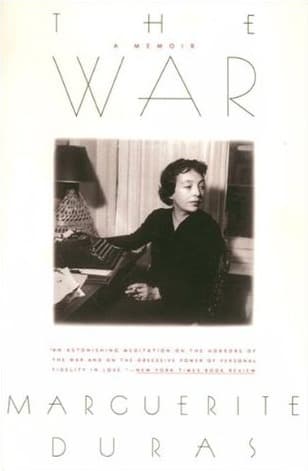
The War cover
Archivist's Choice

The War

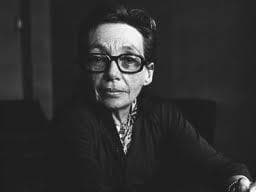
Marguerite Duras (1986)

Genre

Biography / Memoir / History

Reading Time

180 min

Key Themes

See below

Track Your Reading

Sign in to track this book

In this raw memoir, Marguerite Duras reveals the Nazi occupation of Paris, showing the harrowing intimacy of survival, resistance, and personal sacrifice through nursing her emaciated husband back from Bergen-Belsen and her dangerous connection with a Gestapo officer.

Core Idea

Marguerite Duras's 'The War' is a fragmented memoir that explores the psychological and physical devastation caused by the German occupation of Paris and the immediate aftermath of liberation. Through stark, often brutal scenes—some from her wartime diaries, others from memory—Duras examines the raw drive for survival amid starvation and terror, the moral complexities of collaboration and resistance, and the deep trauma war inflicts. It shows the lasting power of memory, even when distorted by pain and time, to describe the cruelties and acts of endurance during one of history's darkest periods.
Reading time
180 min
Difficulty
Medium
✓ Read this if...
You are interested in a raw, deeply personal, and unflinching account of the psychological and physical toll of World War II occupation and liberation, told through a modernist literary lens.
✗ Skip this if...
You prefer a conventional, chronological historical narrative or a memoir with a clear, linear plot and resolution. This book is emotionally challenging and stylistically fragmented.

Core idea

The central argument and framework that powers the entire book.

Marguerite Duras's 'The War' is a fragmented memoir that explores the psychological and physical devastation caused by the German occupation of Paris and the immediate aftermath of liberation. Through stark, often brutal scenes—some from her wartime diaries, others from memory—Duras examines the raw drive for survival amid starvation and terror, the moral complexities of collaboration and resistance, and the deep trauma war inflicts. It shows the lasting power of memory, even when distorted by pain and time, to describe the cruelties and acts of endurance during one of history's darkest periods.

At a glance

Reading time

180 min

Difficulty

Medium

Read this if...

You are interested in a raw, deeply personal, and unflinching account of the psychological and physical toll of World War II occupation and liberation, told through a modernist literary lens.

Skip this if...

You prefer a conventional, chronological historical narrative or a memoir with a clear, linear plot and resolution. This book is emotionally challenging and stylistically fragmented.

Key Takeaways

1

The Rawness of Survival

War strips away pretense, revealing the fundamental struggle for existence.

Quote

I was struck by the raw, almost animalistic hunger that consumed them, and the profound indifference of the world to their suffering.

Duras's memoir is a direct look into the unglamorous struggle for survival during wartime. It is not about grand battles or political ideas, but the daily reality of hunger, fear, and the constant negotiation with death. The narrative exposes the human body's fragility and its resilience, especially when facing extreme deprivation. It shows how quickly civilization can crack under pressure, revealing the basic needs and instincts that drive human behavior when resources are scarce and life is cheap. The book highlights that survival o...

Supporting evidence

Her harrowing account of nursing her emaciated husband, Robert L. (Dionys Mascolo), back to health after his return from Bergen-Belsen, describing his skeletal frame, the smell of death, and the slow, agonizing process of re-feeding him, which highlights the physical and psychological toll of concentration camps.

Apply this

Cultivate a profound appreciation for basic necessities often taken for granted. Practice gratitude for food, shelter, and safety, and consider how to build resilience in personal well-being, both physical and mental, to better cope with unexpected hardships.
survivalresiliencedeprivation
2

The Banality of Occupation

Life under occupation is a strange blend of terror and mundane routine.

Quote

The war was everywhere, yet life continued, twisted and distorted, but continued nonetheless.

Duras portrays the unsettling normalcy that can settle over a city under occupation. Everyday life continues alongside the horrific. People still go to markets (if they can find food), they fall in love, they gossip, all while the constant threat of arrest, torture, or death looms. This 'banality of evil' is not just about the perpetrators, but also about the strange adaptation of the occupied population. It is a disturbing insight into the human capacity to normalize the abnormal, to create routines and find small moments of life eve...

Supporting evidence

Her descriptions of the daily interactions in Paris, such as the struggle to find food, the black market, and the constant rumors, juxtaposed with the ever-present German soldiers and the fear of the Gestapo. The 'game of cat and mouse' she played with a Gestapo officer, where a perverse form of social interaction coexisted with deadly danger.

Apply this

Recognize the subtle ways oppressive systems can embed themselves into daily life. Be vigilant against normalization of injustice and actively question 'normal' when it feels wrong. Seek to maintain empathy and critical thinking even in challenging environments.

occupationnormalcyadaptationbanality-of-evil
3

The Ambiguity of Collaboration

The lines between victim, survivor, and collaborator are often blurred.

Quote

Who could truly judge, in those times, what was collaboration and what was simply trying to stay alive?

One of the most profound aspects of Duras's memoir is its refusal to offer simple moral judgments. The post-liberation period, in particular, reveals the messy, often hypocritical, pursuit of justice. Individuals who might have merely survived by making small concessions are suddenly branded traitors, while others, whose actions were more morally compromised, might escape scrutiny. Duras's own interrogation of a suspected collaborator highlights the psychological complexities and the difficulty of discerning true malice from desperate...

Supporting evidence

Her detailed account of interrogating a suspected collaborator, Rabier, after the liberation. The scene is fraught with tension and moral ambiguity, as Duras attempts to extract information and understand his motivations, revealing the psychological torment of both the interrogator and the interrogated, and the difficulty of assigning blame fairly.

Apply this

Practice empathy and critical thinking when evaluating historical events or contemporary conflicts. Avoid snap judgments about individuals' actions in extreme circumstances. Understand that moral choices are rarely black and white under duress, and seek to understand context before condemning.

collaborationmoral-ambiguityjusticepost-war
4

Memory's Fragmented Nature

Traumatic memories are not linear, but fractured and intensely vivid.

Quote

These are not memories, but fragments torn from the raw flesh of experience.

Duras's writing style reflects the fragmented nature of traumatic memory. The entries often jump in time, focus intensely on specific sensory details, and carry an emotional weight that goes beyond conventional chronological narrative. This is not a polished, retrospective account, but a raw, almost stream-of-consciousness grappling with events as they happened or were re-experienced later. It suggests that profound suffering does not allow for neat storytelling. Instead, it imprints itself in vivid, often disconnected images and sens...

Supporting evidence

The non-linear structure of the memoir, with entries dated '1944' but published much later, and Duras's own preface acknowledging the difficulty of recalling and organizing these intensely painful 'fragments' that she initially couldn't believe she had written. The shift between present tense observations and retrospective reflections within the same 'diary' entry.

Apply this

When processing personal trauma or listening to others' experiences, recognize that memory is often non-linear and emotionally charged. Prioritize validation and understanding over a demand for a perfectly coherent narrative. Allow for the fragmented nature of profound experiences.

traumamemorynarrativefragmentation
5

The Body as a Battlefield

The war's most intimate scars are etched onto the human body.

Quote

His body was the war, reduced to bone and skin, a living testament to its savagery.

Beyond the grand narratives of military strategy, Duras brings the war back to the most fundamental unit: the human body. Her descriptions of starvation, illness, and the slow, arduous process of recovery are direct. The body becomes a direct site of conflict, not just through injury, but through the systematic deprivation and dehumanization inflicted by the regime. The memoir shows how war ravages not only minds and spirits but also the very flesh and bones of its victims. This focus on physical suffering makes the abstract concept o...

Supporting evidence

The detailed and agonizing descriptions of her husband's return from Bergen-Belsen, his skeletal appearance, the difficulty he had digesting food, and the slow, almost painful process of his body attempting to heal and regain strength. The constant references to hunger and the physical weakness it caused among the Parisian population.

Apply this

Develop a deeper awareness of the body's vulnerability and resilience. Advocate for humanitarian aid and medical support in conflict zones, recognizing the direct physical toll of war. Practice self-care and empathy for those suffering from physical distress due to trauma.

bodysufferingstarvationdehumanization
6

The Power of the Unsaid

Silence, omission, and the unspoken convey as much as explicit words.

Quote

Some things were too terrible to write, too deeply felt to be put into words.

Duras's spare, almost arid prose, as noted by Julian Barnes, is not a lack of emotion, but a distillation of it. What she leaves unsaid, the gaps in the narrative, the abrupt shifts, often speak volumes more than elaborate descriptions. This deliberate restraint forces the reader to confront the unspeakable horrors and the emotional exhaustion that permeate the wartime experience. The silence around certain events, particularly the atrocities, amplifies their presence, allowing the reader's imagination to fill in the terrifying blanks...

Supporting evidence

The abrupt shifts between scenes, the lack of extensive exposition, and the raw, unadorned language. The way she presents horrific events with a detached, almost journalistic tone, allowing the facts themselves to carry the emotional weight rather than explicit emotional declarations. Her own acknowledgment of the 'unbelievable' nature of her own writings, suggesting a distance from the full horror.

Apply this

Practice active listening that goes beyond explicit words, paying attention to tone, body language, and what is *not* said. In communication, consider the power of brevity and allowing space for interpretation, particularly when discussing sensitive or difficult topics.

omissionsilencesubtextprose-style
7

The Intimacy of Resistance

Resistance isn't always grand acts, but often quiet, personal defiance.

Quote

We lived in a constant state of quiet defiance, each small act a whisper against the roar of occupation.

While Duras was part of a resistance network, her memoir focuses less on strategic operations and more on the personal, often intimate, forms of resistance. Her interactions with the Gestapo officer, the sheer act of survival, and the determination to nurse her husband back to health are all acts of defiance against a system designed to crush the human spirit. Resistance, in Duras's portrayal, is not always about bombs and sabotage. It is about maintaining humanity, protecting loved ones, and refusing to surrender entirely to despair....

Supporting evidence

Her membership in a French resistance network connected to François Mitterrand, but more specifically, her 'game' with the Gestapo officer, which, while dangerous, was a form of psychological resistance. Her unwavering commitment to her husband's recovery, which was a deeply personal act of defiance against the forces that sought to destroy him.

Apply this

Recognize that 'resistance' can take many forms, from grand gestures to quiet acts of integrity and kindness. Identify areas in your own life where you can practice small acts of defiance against injustice or dehumanization, maintaining your values even in challenging environments.

resistancedefiancehumanitypersonal-courage
8

The Psychological Toll of Witnessing

Bearing witness to atrocity leaves indelible psychological scars.

Quote

The images burned into my mind, and I knew they would never leave.

Duras's memoir shows the psychological impact of witnessing extreme suffering and atrocity. Even as a survivor and a member of the resistance, the events she describes—the emaciated bodies, the constant fear, the casual cruelty of the occupiers—leave deep, lasting scars. Writing these 'fragments' decades later suggests a continued struggle to process and come to terms with the trauma. It highlights that the end of the war does not mean the end of suffering; for many, the psychological battle continues long after the physical conflict ...

Supporting evidence

Her preface, written forty years after the events, where she expresses shock and disbelief upon rediscovering the notebooks, stating, 'I still don't understand how I was able to write them.' This indicates a significant psychological distance and the enduring impact of the trauma on her memory and self-perception.

Apply this

Cultivate empathy for those who have witnessed trauma, recognizing that healing is a long and complex process. Support mental health initiatives for survivors of conflict and violence. Understand that the psychological wounds of war are often invisible but deeply pervasive.

psychological-traumawitnessingmoral-injurypost-traumatic-stress
9

Liberation's Bitter Aftertaste

Freedom can be accompanied by chaos, revenge, and moral reckoning.

Quote

The joy of liberation was quickly mingled with the bitter taste of vengeance and the chaos of a world turned upside down.

The liberation of Paris, often romanticized, is depicted by Duras with a stark realism that reveals its darker side. While there is immense joy and relief, there is also a brutal surge of revenge, summary executions, and a chaotic scramble for order. The period immediately following the occupation is not a triumphant return to peace, but a messy, morally compromised transition. Duras exposes the raw human desire for retribution, the difficulty of establishing justice in the wake of such widespread suffering, and the disillusionment th...

Supporting evidence

Her descriptions of the immediate aftermath of liberation, including public shaming of women accused of collaborating, the summary executions, and the general atmosphere of score-settling and chaotic justice. The interrogation of Rabier is part of this complex post-liberation reckoning.

Apply this

Understand that transitions from conflict to peace are inherently complex and often fraught with challenges. Advocate for processes of restorative justice and reconciliation that address past wrongs without perpetuating cycles of violence. Be wary of simplistic narratives of triumph.

liberationrevengejusticepost-war-chaos

Critical analysis

Notable Quotes

I wrote 'The War.' I was the one who wrote it. It was still in the notebook, in the same handwriting, and I was the one who wrote it. I'm sure of it. I'm sure it was me.

Duras reflecting on her lost notebook and the act of writing during the war.

The wait. The wait for the return. The waiting for news. The waiting for the dead. The waiting for life to begin again.

Describing the pervasive atmosphere of waiting experienced by those left behind during wartime.

He was there, in the room, and I saw him. He was a skeleton. A living skeleton. And I knew him. I knew it was Robert L.

Duras's harrowing description of encountering her emaciated husband, Robert Antelme, upon his return from Dachau.

One day, I found myself with a notebook and I wrote. I wrote of the waiting, of the hunger, of the fear, of the hope, of the terrible joy of return.

Duras explaining the spontaneous act of writing that led to the memoir.

The silence of the dead. It's a heavy silence. It weighs on you. It's a silence that speaks of everything, but says nothing.

Reflecting on the profound impact of those who did not return from the camps.

The only way to live through it was to write it. To give it form. To make it a story. Otherwise, it would have been unbearable.

Duras articulating the therapeutic and necessary function of writing for her during and after the war.

We were all mad. Mad with hunger, mad with fear, mad with hope. Mad with the war.

Describing the collective psychological state of people living under occupation and during liberation.

It was impossible to forget. Impossible to forgive. But one had to live. One had to go on.

Duras grappling with the enduring scars of the war and the imperative to continue living.

The war was everywhere. In the air, in the streets, in the houses, in the hearts of men and women.

Emphasizing the pervasive and inescapable nature of war's impact on daily life.

The return of the deportees. It was a miracle. A terrible miracle. A miracle that tore the world apart.

Commenting on the bittersweet and devastating experience of concentration camp survivors returning.

I didn't know what to do with this man, this ghost, this survivor. How does one live with a ghost?

Duras's struggle to reconnect with her husband after his return, highlighting the profound changes he endured.

And then the silence. The silence after the bombs. The silence of the liberation. A silence full of screams.

Describing the paradoxical silence that followed intense wartime events, laden with unspoken pain.

The hunger was not just for food. It was for news. For a sign. For an end.

Expanding on the concept of hunger beyond physical need to include emotional and existential longings during wartime.

Quiz

Test Your Knowledge

Ready to see how well you understood this book? Take our interactive quiz with 10 questions.

10
Questions
~5
Minutes
?
Best Score

Key Questions (FAQ)

'The War' is a powerful memoir and diary by Marguerite Duras, chronicling her experiences during the Nazi occupation of Paris and its eventual liberation in World War II. It offers a deeply personal and often harrowing account of life in wartime France.

About the author

Marguerite Duras

Marguerite Germaine Marie Donnadieu, known as Marguerite Duras, was a French novelist, playwright, screenwriter, essayist, and experimental filmmaker. Her script for the film Hiroshima mon amour (1959) earned her a nomination for Best Original Screenplay at the Academy Awards.