BookBrief
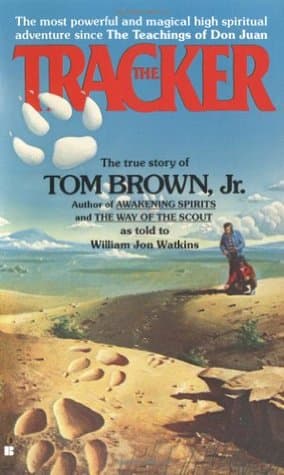
The Tracker cover
Archivist's Choice

The Tracker

Tom Brown Jr. (1978)

Genre

Biography / Memoir / Spirituality

Reading Time

4-5 hours

Key Themes

See below

Track Your Reading

Sign in to track this book

Guided by an ancient Apache, a New Jersey boy becomes a master tracker, learning to read the earth's subtle whispers and confront the wilderness's most harrowing challenges, ultimately saving lives and rediscovering humanity's lost connection to nature.

Core Idea

Tom Brown Jr.'s "The Tracker" tells the story of his training under Stalking Wolf, an Apache elder, from childhood into adulthood. The book shows that tracking is more than identifying footprints; it is a way of life and a spiritual practice that develops deep awareness, patience, and an understanding of how all life connects. Through training in wilderness survival, observation, and intuition, Brown learns to bridge the gap between human perception and the natural world, showing the wilderness not just as a physical space but as a teacher of self-discovery and universal wisdom.
Reading time
4-5 hours
Difficulty
Medium
✓ Read this if...
You are interested in indigenous wisdom, deep nature connection, spiritual memoirs, or learning the principles behind advanced wilderness tracking and awareness.
✗ Skip this if...
You are looking for a purely technical guide to tracking, prefer urban narratives, or are uninterested in a spiritual or philosophical approach to nature.

Core idea

The central argument and framework that powers the entire book.

Tom Brown Jr.'s "The Tracker" tells the story of his training under Stalking Wolf, an Apache elder, from childhood into adulthood. The book shows that tracking is more than identifying footprints; it is a way of life and a spiritual practice that develops deep awareness, patience, and an understanding of how all life connects. Through training in wilderness survival, observation, and intuition, Brown learns to bridge the gap between human perception and the natural world, showing the wilderness not just as a physical space but as a teacher of self-discovery and universal wisdom.

At a glance

Reading time

4-5 hours

Difficulty

Medium

Read this if...

You are interested in indigenous wisdom, deep nature connection, spiritual memoirs, or learning the principles behind advanced wilderness tracking and awareness.

Skip this if...

You are looking for a purely technical guide to tracking, prefer urban narratives, or are uninterested in a spiritual or philosophical approach to nature.

Key Takeaways

1

The Art of Seeing

True seeing transcends visual perception, embracing all senses and intuition.

Quote

The first track is the end of a string. At the far end, a being is moving; a mystery, dropping a hint about itself every so many feet, telling you more about itself until you can almost see it, even before you come to it.

Tom Brown Jr.'s training under Stalking Wolf shows that tracking is not just about seeing footprints. It is a full sensory experience that uses sight, sound, smell, touch, and an intuitive 'sixth sense' to understand an animal's or person's story. This close observation allows the tracker to not only identify a trail but to understand the being's intention, mood, and even its personality. It means looking past surface data to see the patterns and connections in nature, building a deep empathy and understanding for the subject being tr...

Supporting evidence

Stalking Wolf's initial lessons to young Tom, where he's told to 'see' the entire forest, not just individual trees, and to 'listen' to the silence for what it reveals.

Apply this

Practice 'soft eyes' in everyday life: instead of focusing intently on one object, relax your gaze and take in your peripheral vision and the broader environment. Pay attention to subtle sounds, smells, and sensations. Journal your observations to sharpen your sensory awareness.


sensory-awarenessdeep-observationintuition
2

The Mentor's Way

True mentorship fosters self-discovery through experience, not just instruction.

Quote

He taught me to learn from the earth, not just from him.

Stalking Wolf's teaching method is a great example of learning by doing. He rarely gives direct answers, instead guiding Tom to find solutions and insights for himself through observation, trial, error, and deep thought. This approach builds resilience, critical thinking, and a strong connection to the lessons themselves, making them deeply learned rather than just memorized. The mentor's job is to create the right conditions for learning, to ask the right questions, and to offer subtle corrections, letting the student form their own ...

Supporting evidence

Stalking Wolf's consistent refusal to answer direct questions, instead directing Tom to 'ask the earth' or 'find out for himself' through practice and observation.

Apply this

When teaching or mentoring others, resist the urge to provide immediate answers. Instead, ask open-ended questions, provide opportunities for hands-on experience, and encourage reflection. For personal growth, seek out mentors who challenge you to discover your own truths.

experiential-learningmentorshipself-reliance
3

The Language of Tracks

Every track is a story, a detailed narrative waiting to be read.

Quote

Further on, it will tell you the intimate details of its life and work, until you know the maker of the track like a lifelong friend.

Tracking is shown as a complex form of natural history. Beyond just identifying, a track reveals much information: the animal's species, sex, age, health, mood, speed, intent, and even its recent activities. A slight scuff might show a stumble, suggesting injury or fear. The depth of an imprint can reveal weight and how it walked. The pattern of tracks tells a story of pursuit, foraging, or playful movement. This 'language' is very detailed, needing not just sharp eyesight but an imaginative and empathetic mind to reconstruct the scen...

Supporting evidence

Tom's detailed descriptions of reading tracks to determine if an animal is injured, pregnant, or being hunted, often noting minute details like a single dewclaw mark or the angle of a paw print.

Apply this

When walking outdoors, consciously look for tracks and signs. Try to infer what happened: What animal made it? Was it running or walking? Where was it going? This practice enhances observation skills and connects you more deeply to your environment.

tracking-skillsforensicsecological-literacy
4

The Wilderness as Teacher

Nature is the ultimate classroom, offering profound lessons in survival and self-awareness.

Quote

The wilderness was my classroom, and the animals were my teachers.

The book clearly shows the wilderness not as a dangerous place to be conquered, but as a living thing that constantly teaches and challenges. Survival skills—finding water, shelter, food—are not just practical techniques but lessons in resourcefulness, patience, and humility. Beyond physical survival, the wilderness helps mental and spiritual growth. It removes societal distractions, forcing a person to face their fears, limits, and true nature. Constant interaction with natural cycles and the realities of life and death instills deep...

Supporting evidence

Tom's extended solo stays in the wilderness, learning to build shelters, find edible plants, and track animals for sustenance, often through trial and error.

Apply this

Spend regular time in nature, even if it's a local park. Practice mindful walking, observing the flora and fauna. Consider taking a wilderness survival course to learn practical skills and deepen your connection to the outdoors.

wilderness-survivalnature-connectionecological-wisdom
5

The Hunter's Ethos

Hunting, when practiced with respect, is a spiritual act of gratitude and connection.

Quote

Stalking Wolf taught me that true hunting was not about killing, but about connection, understanding, and gratitude.

Tom Brown Jr. shows a sharp contrast to the modern idea of hunting. For Stalking Wolf and Tom, hunting is not a sport or an act of power, but a sacred agreement between hunter and hunted. It involves deep respect for the animal, understanding its life, and giving sincere thanks for its sacrifice. The hunter must be in tune with the environment, move silently, and be completely present. It is a testament to the connection of life and death, where taking a life is done with humility and necessity, ensuring no part goes to waste. This et...

Supporting evidence

Stalking Wolf's rituals of thanking the animal after a successful hunt, and teaching Tom to only take what is needed, and to utilize every part of the animal.

Apply this

Reflect on your relationship with food sources. If you consume meat, consider learning about ethical sourcing and expressing gratitude for the life that sustains you. Even for plant-based diets, acknowledge the energy and life involved in your sustenance.

ethical-huntingindigenous-wisdomgratitude
6

The Quiet Mind

Stillness of mind is the foundation for heightened perception and intuition.

Quote

You cannot hear the whisper of the earth if your mind is shouting.

A repeated idea is the need to develop a 'quiet mind'—a state of mental stillness free from constant inner talk, judgment, and distraction. This is not just about relaxing; it is an active practice that allows for heightened awareness and receiving subtle information from the environment. When the mind is quiet, the senses become sharper, intuition becomes more accessible, and one can see patterns and connections that are otherwise hidden. Stalking Wolf teaches this through various meditative practices and by having Tom simply 'be' in...

Supporting evidence

Stalking Wolf's instructions for Tom to sit for hours in 'sacred silence,' observing without judgment, and allowing his mind to quiet down.

Apply this

Incorporate daily mindfulness or meditation practices into your routine. Even five minutes of focusing on your breath or sensory input can help quiet your mind. Practice active listening, fully present in conversations.

mindfulnessmeditationintuition-development
7

The Journey of Homecoming

The ultimate goal of tracking is to find your way back to your true self and place.

Quote

The greatest track you will ever follow is the one that leads you home.

While seemingly about tracking animals, the book subtly reveals a deeper spiritual journey. Tom's training with Stalking Wolf is a search for self-discovery and a return to a more basic, authentic way of being. The skills learned—observation, patience, resilience, connection to nature—are not just for survival in the wilderness but for handling life's complexities and finding one's true purpose. The 'home' is not just a physical place, but a state of being, a reconnection with ancient wisdom and the inherent wildness within. The diffi...

Supporting evidence

The narrative arc of Tom's life, from a curious boy to a skilled tracker and teacher, always seeking deeper understanding and connection, culminating in the profound spiritual insights gained during his most challenging searches.

Apply this

Reflect on your personal values and what 'home' truly means to you – physically, emotionally, and spiritually. Engage in activities that help you feel more connected to your authentic self and your community.

self-discoveryspiritual-journeyauthenticity
8

Interconnectedness of All Life

Every element in nature is inextricably linked, forming a vast, intricate web.

Quote

There are no isolated events in nature; everything is connected.

Stalking Wolf's lessons consistently highlight how all living things and the environment are deeply connected. A change in one element—a fallen tree, a shift in water flow, the presence of a predator—affects the entire ecosystem, impacting countless other species. The tracker learns to read these subtle connections, understanding that a single track is not isolated information but a part of a vast network. This ecological awareness fosters a sense of responsibility and care, recognizing that human actions have wide-ranging effects. It...

Supporting evidence

Tom's ability to deduce the presence of a predator by observing the behavior of smaller prey animals, or to find water by understanding plant indicators and geological formations.

Apply this

Observe the interactions in your local ecosystem. How do birds interact with insects? How do plants affect the soil? Consider the impact of your daily choices on the environment and seek ways to live more sustainably.

ecologysystems-thinkingenvironmental-stewardship
9

The Power of Patience

Patience is not passive waiting, but active, focused presence.

Quote

Patience is not simply the ability to wait, but how we behave while we're waiting.

Tracking requires an extraordinary level of patience. It is not about simply waiting, but about staying alert and quietly observant for long periods. This active patience involves careful attention to detail, a willingness to move slowly and carefully, and the mental strength to wait for subtle clues to appear. It is a discipline that teaches one to be fully present in the moment, to resist the urge for quick results, and to trust the process of gradual discovery. This patience, developed in the wilderness, becomes a valuable life ski...

Supporting evidence

Numerous accounts of Tom spending hours, sometimes days, following a faint trail, or sitting motionless for extended periods to observe animal behavior without disturbing it.

Apply this

When faced with a challenge, resist the urge to rush. Break down complex tasks into smaller steps. Practice 'deep work' where you focus intently on one task without interruption for a set period, cultivating sustained attention.

patiencepresencediscipline
10

Bridging Two Worlds

Integrating ancient wisdom with modern life offers a path to wholeness.

Quote

I was taught to walk in two worlds, to understand both the ways of the wilderness and the ways of man.

Tom Brown Jr.'s life shows the possibility and need to connect indigenous, nature-based wisdom with modern, industrialized society. He learned deep lessons from Stalking Wolf that are often ignored or forgotten in modern culture, yet he must also navigate the 'concrete jungle.' The book suggests that true completeness comes from understanding and combining both perspectives—using the practical skills and spiritual insights of the wilderness while functioning effectively in the modern world. This dual perspective offers a richer, more ...

Supporting evidence

Tom's early experiences in school trying to reconcile his wilderness teachings with classroom learning, and his later career as a tracker and teacher, bringing his unique skills to help others in diverse settings.

Apply this

Identify an aspect of ancient wisdom (e.g., mindfulness, community living, sustainable practices) and explore how you can integrate it into your modern daily life. Seek out opportunities to connect with nature regularly, even amidst urban environments.

indigenous-knowledgemodern-livingcultural-integration

Critical analysis

Notable Quotes

The greatest gift you can give another is the purity of your attention.

Stalking and observation lessons with Grandfather.

The wilderness holds answers to questions we have not yet learned to ask.

Reflecting on the deeper wisdom of nature.

True tracking is not just about following a trail, but about entering the mind and spirit of the animal.

Grandfather explaining the essence of tracking beyond physical signs.

Fear is a great teacher, but it is not a good master.

Learning to overcome fear in dangerous wilderness situations.

The more you know, the less you need.

Discussing self-sufficiency and survival in the wild.

Every plant, every animal, every rock has a story to tell if you only learn to listen.

Grandfather teaching how to read the landscape and its inhabitants.

The greatest challenge in life is to learn to live with an open heart and a clear mind.

Reflecting on personal growth and spiritual development.

You cannot truly know yourself until you have faced your own limitations in the wilderness.

Recounting a solo wilderness experience that pushed him to his limits.

Silence is not empty, it is full of answers.

Learning to meditate and find wisdom in quiet contemplation.

The earth is our mother; we must listen to her whispers and respect her ways.

Grandfather's teachings on environmental stewardship and respect for nature.

To truly see, you must look with your heart, not just your eyes.

A lesson on intuitive perception and connecting with the spirit of things.

The path to knowledge is often found not in seeking new things, but in rediscovering ancient truths.

Reflecting on the timeless wisdom passed down through generations.

Every step you take leaves a mark, not just on the ground, but in the world.

A teaching on responsibility and the impact of one's actions.

The greatest survival skill is the ability to adapt, not just to the environment, but to your own changing self.

Discussing the deeper meaning of survival beyond physical needs.

Quiz

Test Your Knowledge

Ready to see how well you understood this book? Take our interactive quiz with 10 questions.

10
Questions
~5
Minutes
?
Best Score

Key Questions (FAQ)

'The Tracker' is a memoir by Tom Brown Jr. detailing his extraordinary apprenticeship with an ancient Apache elder, Stalking Wolf, in the New Jersey Pine Barrens. It recounts how he learned the art of tracking, wilderness survival, and a profound spiritual connection to nature, culminating in a critical search mission.

About the author