BookBrief
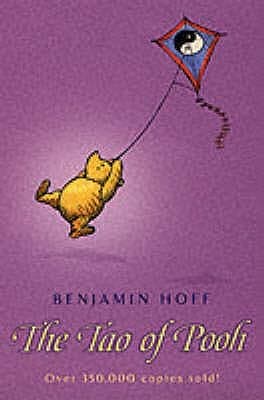
The Tao of Pooh cover
Archivist's Choice

The Tao of Pooh

Benjamin Hoff (1982)

Genre

Spirituality / Philosophy

Reading Time

180 min

Key Themes

See below

Track Your Reading

Sign in to track this book

Taoism's simple wisdom, found in Winnie-the-Pooh, shows that ancient philosophy is as easy to grasp as a walk in the Hundred Acre Wood.

Core Idea

Benjamin Hoff's "The Tao of Pooh" argues that Taoist philosophy lives in the simple wisdom of A.A. Milne's Winnie-the-Pooh characters, especially Pooh. The book says that real happiness and understanding come from accepting one's nature, living with life's natural flow (Wu Wei), and valuing simplicity. This means focusing on the 'Uncarved Block' state of mind instead of complex thought or artificial goals. It suggests that much modern worry comes from overthinking and seeking knowledge that hides our natural wisdom.
Reading time
180 min
Difficulty
Easy
✓ Read this if...
You are curious about Eastern philosophy but find traditional texts daunting, or if you appreciate allegorical storytelling to convey complex ideas simply and charmingly.
✗ Skip this if...
You prefer a rigorous academic analysis of Taoism, or if you dislike children's literature being used as a primary vehicle for philosophical discussion.

Core idea

The central argument and framework that powers the entire book.

Benjamin Hoff's "The Tao of Pooh" argues that Taoist philosophy lives in the simple wisdom of A.A. Milne's Winnie-the-Pooh characters, especially Pooh. The book says that real happiness and understanding come from accepting one's nature, living with life's natural flow (Wu Wei), and valuing simplicity. This means focusing on the 'Uncarved Block' state of mind instead of complex thought or artificial goals. It suggests that much modern worry comes from overthinking and seeking knowledge that hides our natural wisdom.

At a glance

Reading time

180 min

Difficulty

Easy

Read this if...

You are curious about Eastern philosophy but find traditional texts daunting, or if you appreciate allegorical storytelling to convey complex ideas simply and charmingly.

Skip this if...

You prefer a rigorous academic analysis of Taoism, or if you dislike children's literature being used as a primary vehicle for philosophical discussion.

Key Takeaways

1

The Uncarved Block

Embracing simplicity and one's natural state.

Quote

The essence of the Uncarved Block is that things in their original simplicity contain their own natural power, power that is easily spoiled and lost when that simplicity is changed to complexity or when that original power is misused.

The Uncarved Block, or 'P'u' in Chinese, is a main idea in Taoist philosophy shown through Pooh. It means the natural, simple state of things before human actions, desires, or too much thought make them complicated. Pooh shows this perfectly: he is happy with his simple life, his needs are basic, and he does not overthink. This is not about being unintelligent, but about being pure and trusting one's true nature. When we try too hard to be something we are not, or when we put complex answers on simple problems, we lose the natural pow...

Supporting evidence

Hoff contrasts Pooh's 'Uncarved Block' nature with characters like Rabbit, who constantly overthinks and complicates situations, or Owl, who values superficial knowledge over practical wisdom. Pooh's simple solutions often resolve complex problems that others exacerbate.

Apply this

Identify areas in your life where you might be overcomplicating things due to societal expectations, intellectual pride, or unnecessary ambition. Practice simplifying your approach, trusting your intuition, and accepting things as they are, rather than constantly trying to 'improve' or 'carve' them.
simplicitynatural-stateauthenticity
2

Wu Wei: The Art of Doing Nothing

Achieving more by exerting less effort and going with the flow.

Quote

The wise man does not strive. He lets things happen. He lets his mind do what it wants to do, and his body do what it wants to do. He does nothing, and everything gets done.

Wu Wei, often called 'effortless action,' is a main Taoist idea that Pooh shows. It is not about being lazy, but about matching oneself with the natural flow of the world, acting naturally and by instinct rather than through forced effort or strict plans. When we practice Wu Wei, we save energy, lower stress, and often get better results because we work with the current, not against it. Pooh does not plan big schemes; he simply responds to situations with an open heart and a clear mind, letting answers appear naturally. This idea te...

Supporting evidence

Pooh's successful honey-finding missions or his accidental discovery of the North Pole (by simply following a floating stick) are prime examples. In contrast, Rabbit's elaborate plans often go awry, demonstrating the futility of excessive striving.

Apply this

Instead of forcing solutions, try pausing and observing. Look for the path of least resistance. In your work or daily tasks, identify where you might be over-exerting or over-planning. Practice trusting your intuition and allowing solutions to emerge organically, rather than pushing for them.

effortless-actionflow-stateintuitionspontaneity
3

The Value of Being Small

Embracing limitations and finding strength in humility.

Quote

The Small are not afraid of what they are. They are not afraid of what they have been given. They are not afraid of what they have not been given. They know that what they are is enough.

Hoff uses Piglet to show the Taoist wisdom in 'being small.' This is not about actual size, but about being humble, accepting oneself, and knowing that one does not need to be grand or powerful to matter. Piglet, despite being shy and small, often shows great courage and loyalty. This proves that real strength comes from inside, not from outside traits or a wish for power. The 'Small' are happy with their inner worth, not burdened by ego or the need to impress. This teaches us that trying to be bigger, more important, or more influent...

Supporting evidence

Piglet's bravery in situations where larger characters like Pooh or even Christopher Robin might hesitate, such as venturing out in a flood or confronting a Heffalump (in his imagination), highlights his inner strength despite his 'smallness.'

Apply this

Reflect on areas where you might feel inadequate or 'small.' Instead of striving for external validation or power, focus on appreciating your unique qualities and contributions. Understand that your inherent worth doesn't depend on outward achievements or a larger-than-life persona.

humilityself-acceptanceinner-strengthmodesty
4

The Cottleston Pie Principle

Recognizing and utilizing the unique nature of things.

Quote

A Cottleston Pie is a Cottleston Pie, and a Cottleston Pie is not a Cottleston Pie. It is and it isn't, and that's the Cottleston Pie Principle.

The Cottleston Pie Principle is Hoff's fun way of explaining the Taoist idea that everything has its own unique nature, use, and place. Trying to force things to be what they are not is useless and often harmful. Just as a Cottleston Pie is simply a Cottleston Pie and cannot be anything else, each person, animal, or object has true qualities that define it. Wisdom lies in knowing these true natures and working with them, rather than against them. Trying to make a square peg fit a round hole only causes frustration. This idea encourage...

Supporting evidence

Hoff uses the example of different animals in the Hundred Acre Wood: Owl is good at talking, Rabbit is good at organizing (even if he overdoes it), Eeyore is good at being gloomy. Each has a specific role that contributes to the whole, and trying to make them act 'out of character' is silly.

Apply this

Observe the unique talents and limitations of yourself and those around you. Instead of trying to change people or force situations, seek to understand and utilize their inherent natures. Focus on what *is*, rather than what you think *should be*.

uniquenessacceptancediversityinherent-nature
5

The Emptiness of the Mind

Clearing mental clutter to achieve clarity and peace.

Quote

When you empty your mind of all the things that clutter it up, you can see clearly. That's what the Taoists mean by 'empty mind.'

Taoism stresses the importance of an 'empty mind' — not a blank or unintelligent mind, but one free from too much worry, judgment, and intellectual baggage. Characters like Rabbit and Owl are always weighed down by their thoughts, plans, and supposed knowledge, which often stops them from seeing simple answers or enjoying the present moment. Pooh, however, shows a mind that is open, ready, and clear. This lets him react naturally and well without overthinking. An empty mind is a clear mirror, able to show reality as it is, rather than...

Supporting evidence

Rabbit's frantic planning and worrying, which often leads to more trouble than it solves, contrasts sharply with Pooh's ability to remain calm and find simple solutions because his mind isn't cluttered with unnecessary thoughts.

Apply this

Practice mindfulness and meditation to quiet your inner dialogue. Before making a decision, try to clear your mind of assumptions and anxieties. Focus on being present and receptive, rather than constantly analyzing or planning. Allow space for intuitive insights to emerge.

mindfulnessmeditationmental-claritypresent-moment
6

The Danger of Too Much Knowledge

Prioritizing practical wisdom over intellectual accumulation.

Quote

A lot of people think that the more you know, the more you have, the better off you are. But that's not always true. Sometimes the more you know, the less you understand.

Hoff critiques the Western focus on gathering lots of intellectual knowledge, often at the cost of practical wisdom and common sense. Owl, with his fancy words and supposed learning, shows this flaw perfectly. Despite his 'knowledge,' Owl often misunderstands situations, gives bad advice, and makes simple things complicated. Real wisdom, in Taoism, is not found in memorized facts or complex theories, but in natural understanding, direct experience, and the ability to act well in the world. Too much knowledge can create mental blocks, ...

Supporting evidence

Owl's inability to write simple sentences correctly or his verbose, yet often unhelpful, advice in various predicaments demonstrates that his 'knowledge' is more about appearance than substance. Pooh's simple, direct understanding often cuts through Owl's intellectual fog.

Apply this

Question the value of information for its own sake. Prioritize understanding and practical application over mere accumulation of facts. Seek direct experience and intuitive insights, and be wary of intellectual arrogance that can blind you to simple truths.

practical-wisdomintuitioncommon-senseanti-intellectualism
7

The Eeyore Problem: Complaining vs. Acceptance

The futility of constant negativity and the power of acceptance.

Quote

Eeyore is a character who doesn't understand the Tao. He thinks that life is something to be endured, not enjoyed. He thinks that everything is always bad, and that there's nothing he can do about it.

Eeyore is a warning against always complaining and feeling like a victim. His constant negativity, though sometimes charming, is against Taoist ideas. Eeyore believes he is helpless against life's problems, and this belief makes it true. Taoism, in contrast, encourages accepting what is, adapting to change, and finding happiness in the current situation, no matter how imperfect. While it is natural to admit difficulties, staying negative and blaming outside things stops one from seeing chances or finding inner peace. Eeyore's problem ...

Supporting evidence

Eeyore's constant complaints about his tail, the weather, or his general lot in life, often despite others' attempts to cheer him up, illustrates the self-perpetuating nature of his negativity. He actively resists joy.

Apply this

Become aware of your own complaining habits. When faced with a difficult situation, try to shift from complaining to acceptance and proactive problem-solving (if possible) or simply letting go. Focus on what you *can* control or accept, rather than what you cannot.

acceptancepositivityresiliencevictim-mentality
8

The Importance of Inner Nature

Living in alignment with one's true self, not external pressures.

Quote

The Tao is the Way of Nature. It is the Way the Universe works. The more you are in harmony with the Way, the more you are in harmony with yourself.

At its core, Taoism, as seen through Pooh, is about living in harmony with one's true nature and the natural order of the world. This means understanding and accepting who you are, what you truly want, and what you can do, rather than following outside expectations or trying for an artificial ideal. Pooh is completely himself, without pretense or ambition beyond his simple needs. This honesty is his strength. When we ignore our true nature, we create inner conflict, leading to unhappiness and inefficiency. The book gently pushes reade...

Supporting evidence

Pooh's consistent character and actions, always true to his simple, kind, and honey-loving nature, stand in stark contrast to characters like Rabbit who are constantly trying to be more important or in charge, often leading to frustration.

Apply this

Take time for self-reflection to understand your core values, strengths, and natural inclinations. Make conscious choices that align with your true self, even if they go against societal norms. Reduce activities or relationships that force you to be someone you're not.

authenticityself-awarenessharmonyinner-self

Critical analysis

Notable Quotes

The Eeyore attitude is not just a way of looking at things; it's a way of not looking at things.

Describing the pessimistic Eeyore perspective.

A fly, having been caught in a spider's web, says, 'I am free.'

Illustrating the illusion of freedom without true understanding.

The wise, true, and natural state of things is to be simple.

Emphasizing the core Taoist value of simplicity.

While the Western mind is busily trying to improve the world, the Eastern mind is content to let things be.

Contrasting Western and Eastern philosophical approaches.

The way to do is to be.

A concise summary of Wu Wei, the Taoist principle of effortless action.

Pooh hasn't much of a Brain, but he isn't a Fool. He has a lot of Wisdom.

Highlighting Pooh's intuitive wisdom over intellectual cleverness.

Many people are afraid of what's inside them, and that is why they are afraid of themselves.

Discussing self-awareness and fear of one's inner self.

The Cottleston Pie Principle: A fly can't bird, but a bird can fly.

Explaining that everything has its own nature and limitations.

The more you know, the less you understand.

Critiquing excessive intellectualism that can obscure simple truths.

We are like the little bee, buzzing happily from flower to flower, finding our own nectar.

Encouraging individuals to find their own path and joy.

The wise man doesn't try to shine. He lets others shine.

Describing the humble nature of a truly wise person.

The present is the only time that exists.

Emphasizing the importance of living in the present moment.

Empty your mind, be formless, shapeless, like water.

Advocating for adaptability and freedom from rigid thinking, echoing Bruce Lee's famous quote.

When you know and respect your own Inner Nature, you know and respect the Inner Nature of everyone else.

Linking self-understanding to empathy and respect for others.

Quiz

Test Your Knowledge

Ready to see how well you understood this book? Take our interactive quiz with 10 questions.

10
Questions
~5
Minutes
?
Best Score

Key Questions (FAQ)

'The Tao of Pooh' introduces readers to the core principles of Taoism through the simple and natural wisdom of Winnie-the-Pooh. It suggests that Taoist philosophy is not an abstract concept but a practical approach to life, emphasizing simplicity, spontaneity, and living in harmony with one's true nature.

About the author

Benjamin Hoff is the author of the New York Times bestseller "The Tao of Pooh," which explores Taoist philosophy through the characters of A.A. Milne's Winnie-the-Pooh stories. He also wrote "The House at Pooh Corner," a sequel that further delves into these themes. Hoff's work is celebrated for making complex philosophical ideas accessible and engaging for a wide audience.