BookBrief
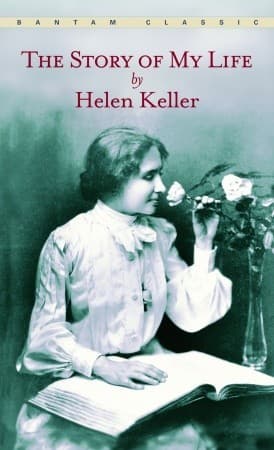
The Story of My Life cover
Archivist's Choice

The Story of My Life

Helen Keller (2002)

Genre

Biography / Memoir / History

Reading Time

240 min

Key Themes

See below

Track Your Reading

Sign in to track this book

Blinded, deafened, and muted as a toddler, Helen Keller's autobiography chronicles her journey of discovering language and the world through Anne Sullivan's guidance, culminating in her graduation from Radcliffe and a life dedicated to advocacy.

Core Idea

Helen Keller's autobiography details her journey from the isolated world of a deaf-blind child to an articulate, educated advocate. It chronicles her early frustrations and outbursts, Anne Sullivan's arrival, and the moment at the well where language was unlocked, connecting her to the world. The book argues that with instruction and spirit, sensory deprivations can be overcome to achieve intellectual and personal freedom.
Reading time
240 min
Difficulty
Easy
✓ Read this if...
You are interested in the power of education, the human spirit's resilience, or the history of disability advocacy, particularly through the lens of a personal narrative.
✗ Skip this if...
You prefer modern, fast-paced narratives or are looking for a detached, academic analysis of disability rather than a deeply personal memoir.

Core idea

The central argument and framework that powers the entire book.

Helen Keller's autobiography details her journey from the isolated world of a deaf-blind child to an articulate, educated advocate. It chronicles her early frustrations and outbursts, Anne Sullivan's arrival, and the moment at the well where language was unlocked, connecting her to the world. The book argues that with instruction and spirit, sensory deprivations can be overcome to achieve intellectual and personal freedom.

At a glance

Reading time

240 min

Difficulty

Easy

Read this if...

You are interested in the power of education, the human spirit's resilience, or the history of disability advocacy, particularly through the lens of a personal narrative.

Skip this if...

You prefer modern, fast-paced narratives or are looking for a detached, academic analysis of disability rather than a deeply personal memoir.

Key Takeaways

1

The Awakening at the Well

The transformative power of language acquisition, even in the face of profound sensory deprivation.

Quote

As the cool stream gushed over one hand, she spelled into the other the word 'water,' first slowly, then rapidly. I stood still, my whole attention fixed upon the motions of her fingers. Suddenly I felt a misty consciousness as of something forgotten—a thrill of returning thought; and somehow the mystery of language was revealed to me. I knew then that 'w-a-t-e-r' meant the wonderful cool something that was flowing over my hand. That living word awakened my soul, gave it light, hope, set it free!

Helen Keller's most iconic moment, the realization at the water pump, is not merely a charming anecdote. It shows the human mind's capacity for language and abstract thought, even when primary sensory channels are blocked. Before this, Keller describes her mind as a 'desert' or a 'ship at sea in a dense fog.' The connection between the spelled word and the object it represented was the birth of conceptual understanding, the unlocking of her intellect. This single moment demonstrated that language is the structure upon which our unders...

Supporting evidence

The vivid description of the 'water' moment, where the previously meaningless finger-spelling suddenly clicked, revealing the concept of words and their corresponding objects, marking a distinct before-and-after in her intellectual development.

Apply this

Appreciate and actively cultivate language in all its forms. Recognize that clarity in communication and thought stems directly from a robust vocabulary and understanding of linguistic structures. For educators, it highlights the critical importance of creating 'aha!' moments where abstract concepts connect with concrete experiences, especially for learners facing challenges.

language-acquisitionconceptual-understandingsensory-deprivationcognitive-awakening
2

The Unseen Prison of the Untaught Mind

Before language, life is a chaotic, frustrating, and isolated existence, even for an intelligent spirit.

Quote

Sometimes I stood in the big kitchen, helpless and bewildered. I had a dim idea that I was doing something naughty, but what it was I did not know. I felt as if I had been set apart, shut out from everything.

Keller's early childhood, before Anne Sullivan's arrival, paints a picture of the isolation and frustration that arises from a lack of language and structured communication. She describes herself as a 'wild, untamed creature,' prone to violent outbursts born of incomprehension and an inability to express her needs or desires. Her world was a jumble of sensations without names, actions without clear consequences, and emotions without outlets. This period reminds us that while we often focus on the physical aspects of disability, the gr...

Supporting evidence

Her accounts of smashing dishes, throwing tantrums, and experiencing deep confusion and rage, contrasted sharply with her later serene and intellectual demeanor. Her vivid descriptions of feeling 'apart' and 'shut out' from the world around her.

Apply this

Cultivate empathy for those struggling with communication barriers, whether due to disability, language differences, or cognitive impairments. Prioritize clear and patient communication, recognizing its immense power to alleviate frustration and foster connection. Support initiatives that expand access to language education and communication tools for all individuals.

communication-barriersintellectual-isolationchildhood-developmentfrustration-aggression
3

The Genius of Anne Sullivan

Effective teaching transcends conventional methods, requiring profound empathy, relentless patience, and innovative adaptation.

Quote

Thus I came up to Boston in March, 1887. The first thing I remember is a beautiful doll which my teacher had brought me. She had brought it for me to play with; she had brought it for me to love.

Anne Sullivan's teaching approach to Helen Keller was revolutionary, not because she invented finger-spelling, but because of her understanding of Keller's unique needs and her commitment to adapting her methods. Sullivan didn't just teach words; she taught the concept of language, patiently connecting signs to tangible objects and actions, enduring Helen's outbursts, and never giving up. Her genius was in her empathy, her ability to see beyond the 'wild child' to the brilliant mind trapped within, and her practical, immersive methodo...

Supporting evidence

Sullivan's insistence on taking Helen away from her family's indulgent environment, her daily, patient finger-spelling, and her strategic use of real-world objects and experiences rather than abstract lessons. The 'water' moment itself is a testament to Sullivan's persistent method.

Apply this

For educators and parents, embrace adaptive teaching strategies. Understand that every learner is unique and may require tailored approaches. Prioritize patience, empathy, and creating a supportive, experiential learning environment over rigid curriculum adherence. Seek to understand the underlying barriers to learning, not just the surface behaviors.

adaptive-teachingpedagogyempathetic-educationspecial-education

Critical analysis

Notable Quotes

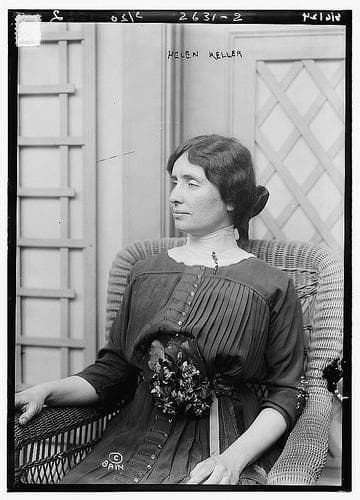
The most important day I remember in all my life is the one on which my teacher, Anne Mansfield Sullivan, came to me.

Reflecting on the arrival of her teacher, Anne Sullivan, and its profound impact.

Before my teacher came to me, I did not know that I am. I lived in a world that was a no-world.

Describing her state of being and lack of self-awareness before learning language.

I felt my teacher spell into my hand the word 'water,' first slowly, then rapidly. I stood still, my whole attention fixed upon the motion of her fingers. Suddenly I felt a misty consciousness as of something forgotten--a thrill of returning thought; and somehow the mystery of language was revealed to me.

Recounting the pivotal moment at the water pump when she connected the word with the object.

Knowledge is love and light and vision.

A philosophical reflection on the nature and power of knowledge.

Have you ever been at sea in a dense fog, when it seemed as if a tangible white darkness shut you in, and the great ship, tense and anxious, groped her way toward the shore with plummet and sounding-line, and you waited with beating heart for something to happen? I was like that ship before my education began, only I was without compass or sounding-line, and had no way of knowing how near the harbor was.

Using an extended metaphor to describe her pre-education state of blindness and ignorance.

The only difference between the world and me was that I could not see or hear. I could not speak, but I could think.

Reflecting on her inner life and mental capabilities despite her physical limitations.

Once I knew the meaning of 'I,' and 'me,' and had a sense of responsibility for my own body, I was no longer a phantom among phantoms, but an individual with a will and a purpose.

Describing her emerging sense of self and agency after learning language.

I do not think I could have borne it, if I had known then that I was an unfortunate child.

Reflecting on her childhood ignorance of her own 'misfortune' due to not having language.

All my early lessons have in them the breath of the woods--the fine, keen odor of pine needles and fallen leaves--and the good, sweet earth under my feet.

Recalling her early lessons with Anne Sullivan, often conducted outdoors in nature.

I had now the key to all language, and I was eager to learn to speak.

After the breakthrough at the pump, she realized the power of language and desired to communicate verbally.

The greatest blessing of my life has been my privilege to share my teacher's life.

Expressing deep gratitude and the profound bond with Anne Sullivan.

I was like a little island, waiting to be discovered.

A simple yet powerful metaphor describing her isolated state before Anne Sullivan's arrival.

It was my teacher's genius, her sympathy, her loving tact and patience, that made the first years of my education a joy.

Attributing the success and positive experience of her early education to Anne Sullivan's qualities.

I understood then that I was a human being, with a mind and a soul that could be reached, and that I was not merely a creature of instinct.

Realizing her full humanity and capacity for thought and feeling after learning language.

Quiz

Test Your Knowledge

Ready to see how well you understood this book? Take our interactive quiz with 10 questions.

10
Questions
~5
Minutes
?
Best Score

Key Questions (FAQ)

'The Story of My Life' is Helen Keller's autobiography, detailing the first 22 years of her life. It chronicles her journey from being blind, deaf, and mute due to an illness, to learning to communicate and navigating the world with the help of her teacher, Anne Sullivan.

About the author