BookBrief
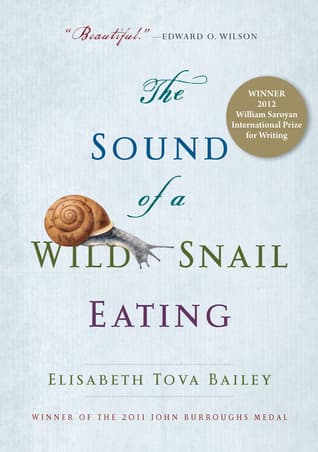
The Sound of a Wild Snail Eating cover
Archivist's Choice

The Sound of a Wild Snail Eating

Elisabeth Tova Bailey (2010)

Genre

Biography / Memoir / Health / Science

Reading Time

240 min

Key Themes

See below

Track Your Reading

Sign in to track this book

Confined to her bed by illness, a woman finds wonder, comfort, and a new understanding of her existence by observing a wild snail on her nightstand.

Core Idea

Confined to bed by a mysterious illness, the author finds comfort and a renewed sense of purpose by observing a wild snail she brings into her room. This forced stillness changes her perspective, showing her the life of a seemingly small creature and offering relief from her physical limits and isolation. Through the snail's slow life, she discovers a universal rhythm of life, resilience, and connection that goes beyond species and circumstances.
Reading time
240 min
Difficulty
Easy
✓ Read this if...
You appreciate nature writing, seek solace in meticulous observation, or are navigating illness/confinement and looking for a perspective shift.
✗ Skip this if...
You prefer fast-paced narratives, dislike detailed descriptions of natural processes, or are not interested in quiet, reflective memoirs.

Core idea

The central argument and framework that powers the entire book.

Confined to bed by a mysterious illness, the author finds comfort and a renewed sense of purpose by observing a wild snail she brings into her room. This forced stillness changes her perspective, showing her the life of a seemingly small creature and offering relief from her physical limits and isolation. Through the snail's slow life, she discovers a universal rhythm of life, resilience, and connection that goes beyond species and circumstances.

At a glance

Reading time

240 min

Difficulty

Easy

Read this if...

You appreciate nature writing, seek solace in meticulous observation, or are navigating illness/confinement and looking for a perspective shift.

Skip this if...

You prefer fast-paced narratives, dislike detailed descriptions of natural processes, or are not interested in quiet, reflective memoirs.

Key Takeaways

1

Profound Observation as Antidote to Confinement

Intense focus on a small creature can transform the experience of severe illness and limited mobility.

Quote

I was not a prisoner, but a captive observer, and in that I found a strange freedom.

Bailey's memoir shows how a restrictive environment—being bedridden with illness—can open doors to observation and inner freedom. Instead of giving in to despair, she focuses on the small world of a snail on her nightstand. This detailed observation becomes a form of meditation, a way to move past her physical limits. The snail, at first just a curiosity, becomes a way for Bailey to reconnect with life, finding purpose and wonder in its delicate existence. This suggests that even in challenging situations, people can find comfort and ...

Supporting evidence

Her entire experience is predicated on this. Confined to bed, she describes her initial despair, which is gradually replaced by a deep fascination with the snail's every movement and habit, transforming her room from a sickroom into a vibrant ecosystem.

Apply this

When facing personal limitations or overwhelming circumstances, actively seek out a small, manageable aspect of the world to observe closely. This could be a plant on a windowsill, the patterns of light, or the sounds outside. Engage all senses to find richness in the mundane.


mindfulnessbiophiliatranscendence
2

The Hidden Lives of the 'Insignificant'

Even the most common and overlooked creatures possess complex behaviors and intricate lives.

Quote

The snail's world was a miniature universe, complete with its own logic, its own dramas, its own silent, determined progress.

Bailey carefully shows the surprising complexity of the common woodland snail (Neohelix albolabris), challenging common beliefs that often see such creatures as simple or unimportant. She describes its movement, the rasping of its radula, its courtship rituals with 'love darts,' and its clear decision-making. This look into the snail's biology and behavior reveals a creature of remarkable adaptability and purpose, showing that complexity and wonder are not just for large, well-known animals. It is a reminder that our view of a creatur...

Supporting evidence

She describes the snail's 'love darts' and mating rituals, its 'grazing' patterns on mushrooms, and its methodical exploration of its environment, all observed with scientific precision and poetic language.

Apply this

Cultivate a habit of observing small insects, plants, or natural phenomena in your daily life. Use a magnifying glass or simply slow down to notice details. Challenge assumptions about what constitutes 'interesting' or 'important' life.

microcosmentomologybiodiversity
3

The Unhurried Rhythm of Nature as a Healer

Aligning with nature's slow pace can offer profound solace and a sense of belonging amidst human urgency.

Quote

The snail moved with an ancient, unhurried rhythm that seemed to mock the frantic pace of human existence.

Unlike the fast-paced human world, the snail embodies an old, slow rhythm. Bailey, confined and forced into a similar slowness by her illness, finds a deep connection with this natural pace. The snail's slow, deliberate movements—its grazing, its exploration, its patient waiting—become a comforting contrast to her own worries and the demands of the outside world. This alignment with nature's slowness offers a deep sense of peace and belonging, suggesting that our well-being often improves when we let go of constant activity and embrac...

Supporting evidence

She notes how the snail's slow progress across the nightstand could take hours, sometimes days, a timeline that initially frustrated her but eventually became a source of calm and wonder.

Apply this

Intentionally incorporate moments of slowness into your day. Practice mindful walking, savor a meal without distraction, or spend time observing a natural scene without feeling the need to 'do' anything. Resist the urge to rush.

slow-livingcontemplationbiophilia
4

Empathy Beyond Species Boundaries

Close observation fosters a deep, almost empathetic connection even with an alien creature.

Quote

I felt a kinship with this small, vulnerable creature, understanding its struggle for survival in its own small way.

Bailey's journey with the snail goes beyond scientific curiosity; it becomes an empathetic bond. Through observation, she gives the snail human-like qualities, interpreting its 'decisions,' 'struggles,' and even its 'solitude.' While she acknowledges this anthropomorphism, this imaginative connection allows her to bridge the evolutionary gap and find common ground in the shared experience of life, vulnerability, and resilience. This shows the human ability to extend empathy beyond our own species, suggesting that deep engagement with ...

Supporting evidence

She describes feeling concern for the snail's well-being, providing it with fresh mushrooms and water, and even feeling a sense of loss when it hibernates. She interprets its cautious movements as 'decision making' and its solitude as a 'quiet dignity.'

Apply this

Seek opportunities to connect with the natural world, whether through gardening, pet ownership, or simply observing local wildlife. Practice imagining the perspective and challenges of other living beings, fostering a broader sense of empathy.

anthropomorphisminterspecies-empathysentience
5

The Mundane Transformed into Marvel

Intense, focused attention can reveal extraordinary wonder in the most ordinary subjects.

Quote

The ordinary became extraordinary simply because I had nothing else to do but watch.

One of the most important lessons from Bailey's experience is the power of focused attention. Confined to her bed, she had no distractions, which made her direct her intellect and curiosity toward a creature most people would barely notice. This sustained focus turns the ordinary—a snail eating a mushroom, moving across a leaf—into moments of marvel and discovery. It suggests that wonder is not only found in grand landscapes or exotic creatures, but is part of all life, waiting to be found by a patient and observant eye. This redefine...

Supporting evidence

Her detailed descriptions of the snail's radula at work, the 'sound' of its chewing, its intricate mating rituals, and its hydraulic locomotion all stem from her relentless, microscopic observation of something readily available.

Apply this

Choose an everyday object or phenomenon—a raindrop on a window, the way light hits a wall, a single leaf—and dedicate 10-15 minutes to observing it with absolute focus, noticing every detail, texture, and change.

awemindfulnessphenomenology
6

Resilience in the Face of Vulnerability

Both the author and the snail demonstrate remarkable resilience in challenging conditions.

Quote

We were both creatures of habit, bound by our separate physiologies, yet both striving for survival.

The story is a dual study in resilience. Bailey, battling a severe, unnamed illness that leaves her almost entirely unable to move, finds a mirror in the snail's quiet determination to survive. The snail navigates its small, artificial environment with consistent purpose—eating, exploring, retreating into its shell for safety. This parallel struggle highlights the universal drive for survival and adaptation in all living things, regardless of size. The author's own resilience is strengthened by observing the snail's unwavering life fo...

Supporting evidence

The author's long illness and her gradual recovery, alongside the snail's consistent daily routines of eating, moving, and hibernating, despite being uprooted from its natural habitat.

Apply this

When facing personal adversity, identify a small, consistent action you can take each day that contributes to your well-being or progress. Draw inspiration from the steady, persistent efforts of nature.

gritperseveranceadaptation
7

The Solace of Natural Sounds

Even the faintest sounds of nature can provide profound comfort and connection.

Quote

The sound of a wild snail eating was not loud, but it was there, a delicate, rhythmic rasp that filled my quiet room.

The book's title points to a key idea: the comfort found in the subtle sounds of nature. For Bailey, isolated and confined, the faint rasping sound of the snail's radula as it grazes on a mushroom becomes a vital connection to the living world. This delicate, rhythmic sound, barely noticeable to others, fills her quiet room and her quiet life with meaning. It shows how our senses, especially hearing, can ground us and offer comfort, even without grand natural sights. It highlights the power of small sensory experiences to enrich our l...

Supporting evidence

Her detailed description of hearing the snail's radula for the first time—a 'tiny, rhythmic rasping'—and how this sound becomes a comforting presence in her otherwise silent sickroom.

Apply this

Pay attention to the subtle sounds in your environment: the rustle of leaves, distant bird calls, the hum of an insect. Close your eyes and focus on these sounds, letting them fill your awareness without judgment.

acoustic-ecologyauditory-mindfulnesssensory-awareness
8

The Universal Language of Life's Essentials

Despite vast differences, fundamental needs and behaviors connect all living organisms.

Quote

The snail's life, in its quiet determination, was a reflection of all life: the need to eat, to move, to reproduce, to survive.

Through her observations, Bailey reduces life to its basic parts, seeing that the snail's existence, despite its different form, is driven by the same core needs as her own: food, movement, reproduction, and survival. This focus on universal essentials allows her to see beyond species differences and appreciate the shared design of life. It is a reminder that beneath the surface of diversity, a common thread connects all living things, fostering a sense of unity and shared purpose. This perspective can be humbling and unifying.

Supporting evidence

Her repeated emphasis on the snail's eating habits, its hydraulic 'foot' for movement, its 'love darts' for reproduction, and its retreats into its shell for protection from predators or adverse conditions.

Apply this

Consider your own basic needs and compare them to those of a plant, an animal, or even a microorganism. Reflect on the shared, fundamental drives that connect you to all other life forms on Earth.

biological-imperativesinterconnectednessuniversal-life
9

The Gift of Forced Stillness

Unplanned periods of inactivity can become opportunities for unexpected growth and insight.

Quote

My illness had stolen my active life, but in return, it had given me the gift of stillness, and with it, the gift of the snail.

Bailey's memoir champions the unexpected gifts that can come from forced stillness. Her illness, at first a source of frustration and loss, becomes the reason for her encounter with the snail and the insights into nature and her own resilience. Without the enforced quiet and lack of outside demands, she would not have had the chance, or the mental space, to observe the snail with such intensity. This suggests that periods of inactivity, whether from illness, job loss, or other life changes, can be seen as valuable opportunities for re...

Supporting evidence

Her initial despair at being bedridden is explicitly contrasted with the later profound appreciation she develops for the snail, an appreciation only made possible by her prolonged, enforced immobility.

Apply this

When faced with unexpected downtime or limitations, instead of fighting against them, consciously seek out new ways to engage with your immediate environment or inner world. View it as a chance for discovery.

serendipityintrospectionslowing-down

Critical analysis

Notable Quotes

The snail's world was a small one, but it was a perfect one. It was all the snail knew, and it was enough.

Reflecting on the snail's self-contained existence while the author is bedridden.

Illness had narrowed my world, but the snail expanded it.

Describing how observing the snail provided a new focus and mental escape during her long illness.

The snail was a teacher, and I, its student, learned the slow rhythms of its life.

Acknowledging the profound impact of the snail's presence on her understanding of time and patience.

Perhaps the greatest lesson I learned from the snail was the importance of paying attention.

Highlighting the core insight gained from her meticulous observation of the snail.

Every day brought a new discovery, a new pattern, a new understanding of the intricate world within my room.

Detailing the daily revelations provided by watching the snail.

Life, even in its most circumscribed form, offered endless opportunities for fascination.

Pondering the richness of life even within the confined space of her sickroom.

The snail moved with an ancient grace, a silent testament to evolution.

Observing the snail's movement and reflecting on its biological history.

To watch a snail eat was to witness a miniature ballet of destruction and creation.

Describing the intricate and almost artistic process of the snail feeding.

My illness had stolen my ability to move, but the snail, in its own way, showed me how to travel.

Drawing a parallel between her immobility and the snail's slow journey, finding freedom in observation.

There was a profound peace in simply being present with another living creature.

Reflecting on the calming effect of sharing her space and attention with the snail.

The sound of a wild snail eating is not a sound you hear often, but once heard, it stays with you.

Referring to the book's title and the unique, subtle experience of hearing the snail feed.

In the quiet of my room, the snail brought the wild indoors.

Explaining how the snail connected her to the natural world despite her confinement.

It was a reminder that even in the darkest times, there is beauty and resilience to be found.

A general reflection on the overarching message of her experience with the snail.

The world outside my window had blurred, but the world inside, the world of the snail, became intensely vivid.

Contrasting her diminished external world with the heightened internal world of observation.

Quiz

Test Your Knowledge

Ready to see how well you understood this book? Take our interactive quiz with 10 questions.

10
Questions
~5
Minutes
?
Best Score

Key Questions (FAQ)

The book is a memoir by Elisabeth Tova Bailey, chronicling her observations of a wild snail that lives on her nightstand while she is bedridden due to illness. It explores themes of nature, resilience, and finding wonder in small details during confinement.

About the author