“I carry my father’s name, and my father’s sins. I am the serpent king, and I am not afraid.”
— Dill reflects on his identity and his father's legacy of snake handling.

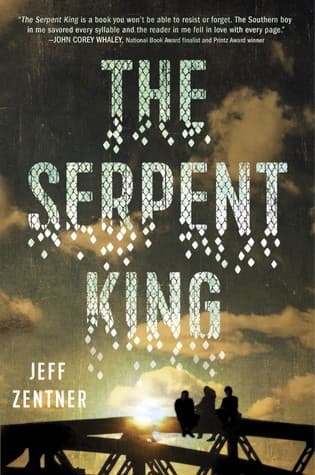
Jeff Zentner (2016)
Genre
Spirituality / Young Adult / Romance
Reading Time
384 min
Key Themes
See below
Sign in to track this book
In a rural Tennessee town, the son of a disgraced Pentecostal minister must navigate the expectations of his past and the uncertain path to his future, all while grappling with forbidden love and the meaning of faith alongside his two outcast friends.
Dillard Early, known as Dill, lives in rural Forrestville, Tennessee, under the shadow of his disgraced Pentecostal minister father, who is out of prison but still burdened by the scandal of child pornography charges. Dill's home life is oppressive, marked by his father's religious fervor and the family's poverty. He finds solace in his two best friends: Lydia Blankenship, an ambitious fashion blogger with plans for college in New York, and Travis Brandywine, a gentle giant obsessed with a fantasy book series called 'Bloodfall.' As their senior year begins, Dill feels the pressure of his family's expectations and the lack of opportunity in their small town, contrasting sharply with Lydia's clear path to escape.
Lydia Blankenship actively works on her fashion blog, 'Dolly Blank,' which has gained traction, making her a local celebrity and securing her a scholarship to a New York university. She is driven to leave Forrestville behind. Travis Brandywine, on the other hand, finds his escape in the 'Bloodfall' series. He spends most of his free time reading and discussing the books, often with a girl named Tiffany, a fellow fan he meets online. His life is simple, focused on his job at the local bookstore and his fantasy world, providing a stark contrast to Dill's anxieties and Lydia's aspirations.
Dill secretly has a deep passion for music, writing and playing songs on his guitar. His lyrics often reflect his internal struggles, his feelings for Lydia, and the oppressive atmosphere of his home and town. He keeps this talent hidden from his parents, who would likely disapprove, seeing secular music as a sin. Even from Lydia and Travis, he keeps the full extent of his musical endeavors a secret, fearing judgment or a lack of understanding. This secret artistic outlet becomes his primary coping mechanism, a way to express the emotions he cannot voice aloud.
Dill is constantly reminded of his father's past as a Pentecostal preacher who practiced serpent handling, a tradition that brought both reverence and notoriety to their family. Though his father no longer handles snakes, the memory of it, combined with the scandal, haunts Dill. He feels the weight of this legacy, the small-town gossip, and the judgment from others. This past defines much of his identity in Forrestville, making it difficult for him to forge his own path or escape the shadow of his family's history, intensifying his desire for a different future.
Travis's love for 'Bloodfall' culminates in him driving to a distant city to meet Tiffany, a fellow fan he has connected with online. This encounter fills him with immense joy and a sense of belonging, a rare moment of pure happiness for the gentle giant. However, on his way back, tragedy strikes. Travis is involved in a horrific car accident, which leads to his death. This event shatters Dill and Lydia's world, forcing them to confront the fragility of life and the sudden, irreversible loss of their dear friend.
Travis's death plunges Dill and Lydia into deep grief. Dill is particularly hard hit, feeling a profound sense of loss and guilt. He questions if he could have done more to help Travis, or if he was a good enough friend. The suddenness of the tragedy forces him to confront his own mortality and the preciousness of the relationships he has. Lydia, though also grieving, channels her pain into her work and her plans for the future, demonstrating a different coping mechanism. Their shared sorrow tests the strength of their friendship.
Amidst his grief for Travis, Dill's family faces another crisis. His father's health takes a severe turn for the worse. The years of stress, the scandal, and the physical toll of his past life as a preacher catch up to him. Dill is left to shoulder more responsibility, dealing with his ailing father and his mother's increasing despair. This further isolates him and intensifies his feelings of being trapped, as his personal dreams seem to recede even further from possibility.
After much internal struggle and spurred by the raw emotion of Travis's death, Dill finally gathers the courage to share his secret passion for music with Lydia. He plays her some of his songs, revealing his vulnerability and the depth of his feelings, both for his life and for her. This act of openness marks a turning point for Dill, allowing him to be his authentic self. Lydia, deeply moved, encourages him and sees his talent, affirming his worth beyond the confines of Forrestville.
The time for Lydia to leave for New York arrives. Her departure is bittersweet, a symbol of the future she has fought for and the end of an era for the trio. While Lydia embraces her new life, Dill remains in Forrestville. However, he is no longer the same person. Inspired by Lydia's ambition and his own newfound courage, he decides to pursue his music. He starts playing at local open mic nights, slowly building a new path for himself, one that honors his true self rather than the expectations placed upon him.
Dill, though still grieving Travis and dealing with his family's struggles, begins to embrace his future with a sense of agency. He continues to write and perform music, finding his voice and connecting with others through his art. He starts to shed the skin of his past, understanding that while his family and hometown will always be a part of him, they do not have to define his entire existence. He learns to navigate the complexities of his life, finding strength in his friendships, his music, and his evolving sense of self, stepping out of the shadow of the serpent king and into his own light.
The Protagonist
Dill transforms from a passive, guilt-ridden boy trapped by his past into a self-assured young man who embraces his artistic talent and forges his own path.
The Supporting
Lydia successfully achieves her goal of escaping her hometown, validating her ambition and showing Dill the possibility of a different future.
The Supporting
Travis experiences a brief but profound moment of connection and happiness before his untimely death, which profoundly impacts his friends.
The Supporting
His arc is one of decline, both physically and spiritually, serving as a cautionary tale and a source of both burden and eventual release for Dill.
The Supporting
She maintains her unwavering faith, serving as a constant, albeit sometimes suffocating, presence in Dill's life.
The Mentioned
Her brief appearance serves to bring Travis a moment of pure happiness before his tragic death.
The novel explores how the past, particularly family history and societal expectations, can weigh heavily on individuals. Dill is constantly haunted by his father's past as a serpent-handling preacher and the subsequent scandal, which dictates how he is perceived and limits his perceived future. The legacy of poverty and the rigid religious culture of Forrestville also constrain his choices, making escape feel impossible. This theme manifests in Dill's internal struggle to reconcile his love for his family with his desire for a different life, and his fear of repeating his father's mistakes. Travis's character also reflects this, as he attempts to escape his mundane reality through fantasy.
““It was the Early family curse. A generation of men who’d never been able to outrun the town, who’d never been able to outrun their own blood.””
Central to Dill's journey is his struggle to discover and accept his true self amidst the conflicting pressures of his environment. He hides his musical talent, fearing it will be seen as sinful or unworthy. His secret feelings for Lydia also contribute to his internal conflict, as he lacks the confidence to express them. Through the narrative, particularly after Travis's death, Dill is forced to confront his fears and embrace who he truly is, finding solace and strength in his music and his authentic voice. Lydia, in contrast, embodies self-acceptance, knowing who she is and what she wants.
““There was a world in Dill’s head that had been trying to get out, and now it was getting out.””
The friendship between Dill, Lydia, and Travis is the emotional core of the novel. For these three outcasts, their bond is a sanctuary from the harsh realities of their lives in Forrestville. They provide each other with unconditional support, understanding, and a sense of belonging. Travis's tragic death acts as a powerful catalyst, forcing Dill and Lydia to confront their grief, re-evaluate their lives, and ultimately strengthen their bond. It pushes Dill to step out of his comfort zone and embrace his true self, demonstrating the power of deep friendship.
““They were the three-person island, and they were all they had.””
The longing for escape, both physical and metaphorical, is a pervasive theme. Lydia actively plans her escape from Forrestville through her fashion blog and college in New York, embodying ambition and the possibility of a better future. Travis finds his escape in the immersive world of 'Bloodfall,' highlighting the human need for fantasy and solace from reality. Dill, initially feeling trapped, yearns for a way out but struggles to envision it. His journey ultimately becomes about finding an escape not just geographically, but within himself, by pursuing his passion for music and creating his own future, rather than succumbing to the limitations of his past.
““But there was a world out there, waiting for her, and she was going to claim it.””
Represents the oppressive legacy of Dill's family and the weight of tradition.
The 'Serpent King' refers to Dill's father, who was a Pentecostal preacher known for handling venomous snakes. This imagery is a potent symbol throughout the novel, representing the dangerous and suffocating legacy Dill inherits. It embodies the extreme religious practices, the public scandal, and the pervasive judgment that define Dill's family and his place in Forrestville. The serpent also symbolizes the 'venom' of small-town gossip and the fear that constricts Dill's life, from which he struggles to break free to forge his own identity.
A fictional fantasy series that serves as an escape and a symbol of innocence.
The 'Bloodfall' series is Travis Brandywine's obsession, providing him with an immersive escape from his mundane and often unfulfilling reality. It functions as a symbol of innocence, imagination, and the power of storytelling to create alternative worlds. For Travis, it's a source of pure joy and connection, as seen in his relationship with Tiffany. Its significance is heightened by Travis's tragic death, which occurs after he pursues a 'Bloodfall'-related adventure, highlighting the vulnerability of those who seek solace in fantasy and the harsh intrusion of reality.
Provides a collective voice of the town, highlighting its pervasive judgment.
While the main narrative is typically third-person limited, the novel occasionally uses a 'we' narration, representing the collective voice of Forrestville's inhabitants. This device effectively conveys the pervasive gossip, judgment, and small-mindedness of the town. It creates an oppressive atmosphere that Dill, Lydia, and Travis constantly battle against, emphasizing their status as outcasts and the difficulty of escaping the community's scrutiny. It also reinforces the theme of the burden of the past and the weight of societal expectations.
Symbolizes Dill's hidden self, emotional expression, and eventual liberation.
Dill's secret passion for writing and playing music is a recurring motif that represents his true, authentic self, which he keeps hidden from the world. His songs are an outlet for his unspoken feelings, his grief, and his aspirations. As the story progresses, his willingness to share his music with Lydia and later perform it publicly symbolizes his journey towards self-acceptance and liberation from the constraints of his past. It becomes his personal language, his path to forging a unique identity, and his ultimate act of defiance against the expectations placed upon him.
“I carry my father’s name, and my father’s sins. I am the serpent king, and I am not afraid.”
— Dill reflects on his identity and his father's legacy of snake handling.
“The thing about small towns is that they’re like tiny black holes. They suck you in, and they never let you go.”
— Lydia contemplates the restrictive nature of her hometown, Forrestville.
“Sometimes the bravest thing you can do is just keep going.”
— A general life lesson that Dill or Lydia might reflect upon during their struggles.
“We’re all just trying to figure out who we are, aren’t we? And sometimes, that means figuring out who we’re not.”
— A reflection on the journey of self-discovery, particularly relevant to the protagonists.
“There are some things you just can’t outrun. And sometimes, you shouldn’t even try.”
— Travis's perspective on facing one's past or destiny.
“Music was the only thing that made sense to him, the only thing that didn’t lie.”
— Dill's solace and passion for music, a contrast to his complicated home life.
“She wanted to be a person who lived in a world where things made sense, where people weren’t trapped by the past.”
— Lydia's aspirations for a life beyond the limitations of Forrestville.
“Love isn't always fireworks and grand gestures. Sometimes it's just quiet understanding.”
— Reflecting on the evolving relationship between Dill and Lydia.
“He knew what it was like to be an outcast, to be judged for things you had no control over.”
— Dill's empathy stemming from his own experiences with his father's reputation.
“The past is a stubborn thing. It holds on tight.”
— A general observation about the lingering effects of history on individuals and communities.
“Sometimes the best way to help someone is just to listen.”
— A quiet moment of support between friends, highlighting the power of presence.
“There was a whole world out there, and she was going to see it, even if she had to claw her way out of Forrestville with her bare hands.”
— Lydia's fierce determination to escape her small town and explore the world.
“Grief is a funny thing. It comes in waves, and sometimes the biggest waves hit when you least expect them.”
— Characters dealing with loss and the unpredictable nature of sorrow.
Ready to see how well you understood this book? Take our interactive quiz with 10 questions.

Biography coming soon.

Kay Lynn Mangum
4.3
Stormie Omartian
4.3
Jerry Bridges
4.3
Walter Brueggemann
4.3
Rhonda Byrne
4.3
Brother Lawrence
4.3
Joseph Campbell
4.3

Unknown
4.3