BookBrief
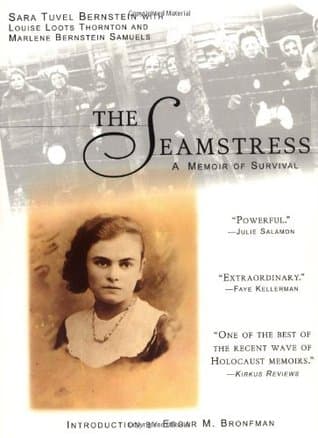
The Seamstress cover
Archivist's Choice

The Seamstress

Sara Tuvel Bernstein (1997)

Genre

Biography / Memoir / History

Reading Time

8-10 hours

Key Themes

See below

Track Your Reading

Sign in to track this book

Defying her father, throwing ink at an anti-Semitic priest, and surviving Ravensbrück, Sara Tuvel Bernstein's memoir tells a story of rebellion and resilience during the Holocaust.

Core Idea

Sara Tuvel Bernstein's memoir, "The Seamstress," shows the human spirit's strength during atrocity. It argues that surviving the Holocaust was not just luck, but a choice driven by defiance, a will to live, and strategic alliances. Bernstein illustrates how humor, resourcefulness, and family bonds helped people resist and adapt amid the cruelty of concentration camps. The book's main idea is that identity, when stripped of everything else, shows its true power through inner strength and the refusal to be dehumanized. It emphasizes that liberation, while desired, does not erase the trauma's lasting scars, but starts a new, lifelong journey of healing and telling one's story. Ultimately, Bernstein’s narrative says that sharing these experiences is not just personal, but necessary to preserve memory and fight against forgetting and indifference.
Reading time
8-10 hours
Difficulty
Medium
✓ Read this if...
You seek a harrowing yet ultimately inspiring first-person account of Holocaust survival that emphasizes agency, resilience, and the enduring power of the human spirit through defiance and humor.
✗ Skip this if...
You prefer a purely historical account without personal emotional depth, or find detailed narratives of wartime brutality and its lasting psychological impact too distressing.

Core idea

The central argument and framework that powers the entire book.

Sara Tuvel Bernstein's memoir, "The Seamstress," shows the human spirit's strength during atrocity. It argues that surviving the Holocaust was not just luck, but a choice driven by defiance, a will to live, and strategic alliances. Bernstein illustrates how humor, resourcefulness, and family bonds helped people resist and adapt amid the cruelty of concentration camps. The book's main idea is that identity, when stripped of everything else, shows its true power through inner strength and the refusal to be dehumanized. It emphasizes that liberation, while desired, does not erase the trauma's lasting scars, but starts a new, lifelong journey of healing and telling one's story. Ultimately, Bernstein’s narrative says that sharing these experiences is not just personal, but necessary to preserve memory and fight against forgetting and indifference.

At a glance

Reading time

8-10 hours

Difficulty

Medium

Read this if...

You seek a harrowing yet ultimately inspiring first-person account of Holocaust survival that emphasizes agency, resilience, and the enduring power of the human spirit through defiance and humor.

Skip this if...

You prefer a purely historical account without personal emotional depth, or find detailed narratives of wartime brutality and its lasting psychological impact too distressing.

Key Takeaways

1

Defiance as a Survival Instinct

Sara's unyielding spirit in the face of oppression was a powerful tool for survival.

Quote

The author's life story demonstrates that an indomitable will to resist, even in small acts, can be a crucial factor in enduring unimaginable suffering.

Sara Tuvel Bernstein's story shows how defiance is not just a moral stance, but a practical way to survive. From her youth, she fought against antisemitism, whether it was fighting schoolchildren or challenging authority. This was not just youthful rebellion; it was a deep refusal to accept being a victim. This spirit of resistance carried her through the Holocaust, letting her make choices and take actions that, though risky, often led to her survival. Her story suggests that actively defying dehumanization can help one maintain cont...

Supporting evidence

Her expulsion from school in Bucharest for throwing an ink bottle at a priest who delivered an antisemitic diatribe; her repeated acts of insubordination and cleverness to secure resources or escape immediate dangers during forced labor and in Ravensbruck.

Apply this

In challenging situations, identify areas where you can assert agency, even in small ways. Refuse to internalize victimhood. Cultivate a mindset of active problem-solving and resistance to oppressive forces, rather than passive acceptance.


resilienceagencyresistance
2

The Power of Unexpected Alliances

Survival often hinged on the unlikely connections forged in dire circumstances.

Quote

In the camps, the most profound acts of humanity often came from unexpected sources, blurring the lines between victim and perpetrator, and revealing the complex tapestry of human nature under duress.

Bernstein's memoir shows how important unexpected alliances were for her survival. These were not always with fellow prisoners; sometimes, they were with people in power or those initially seen as enemies. The extreme conditions of the Holocaust created a strange social environment where acts of kindness or help could come from surprising places, driven by various reasons – a hint of humanity, a desire for personal gain, or even just a moment of shared vulnerability. Sara's ability to spot potential allies, no matter their uniform or ...

Supporting evidence

Specific instances where guards or kapos, for various reasons, offered small but life-saving assistance or overlooked infractions, often in exchange for a service or simply out of a momentary lapse in cruelty.

Apply this

In difficult environments, practice open-mindedness and discernment. Look beyond initial impressions and fixed roles to identify potential points of connection or shared humanity, even with those you might instinctively distrust. Nurture these connections carefully.

interdependencecompassionsocial-dynamics
3

Humor as a Shield and Weapon

Laughter, even dark humor, provided a psychological buffer against despair.

Quote

If you couldn't laugh, even at the absurdity of your own suffering, you might as well give up. Humor was a small victory against the oppressors who wanted to strip away every last shred of our humanity.

One of the most notable parts of Bernstein's story is the role of humor. Facing terrible atrocities, Sara and others found ways to inject humor, however dark, into their daily lives. This was not a denial of their reality, but a psychological defense. Laughter, even forced, offered a temporary escape from despair, a way to reclaim a bit of their humanity and control. It was an act of defiance, a refusal to let oppressors completely crush their spirit. Humor allowed for momentary relief, built solidarity among prisoners, and provided a...

Supporting evidence

Anecdotes of prisoners sharing jokes, making light of their dire circumstances, or using wit to outsmart guards, creating moments of levity amidst the horror of the camps.

Apply this

Cultivate a sense of humor, even in challenging times. Find ways to laugh at absurdities or difficulties. Use humor as a coping mechanism to alleviate stress, build camaraderie, and maintain a positive outlook when faced with adversity.

coping-mechanismspsychological-resiliencehuman-spirit
4

The Everydayness of Evil

The book exposes how systemic evil relies on ordinary people's complicity.

Quote

The true horror wasn't just the grand plan of extermination, but the countless small acts of cruelty, indifference, and complicity from ordinary people who simply 'followed orders' or looked away.

Bernstein's memoir clearly illustrates Hannah Arendt's idea of 'the banality of evil.' While the Holocaust system was monstrous, its execution relied on the 'everydayness' of countless individuals. From antisemitic schoolchildren to indifferent neighbors and bureaucrats, the book details how ordinary people, not just fanatical Nazis, contributed to the suffering. This was not always active malice, but often passive involvement, fear, or a chilling lack of empathy. The story makes readers confront the uncomfortable truth that systemic ...

Supporting evidence

Descriptions of neighbors turning a blind eye, local authorities cooperating with German occupiers, and the varied motivations of camp personnel, some of whom were not ideologically fanatical but simply performing their jobs.

Apply this

Actively challenge indifference and complicity in your own life and community. Speak up against injustice, even when it feels small or uncomfortable. Reflect on your own biases and the potential for passive acceptance of harmful norms. Recognize the power of individual choice in resisting systemic evil.

banality-of-evilcomplicitymoral-courage
5

The Scars Beyond Liberation

Survival did not erase the profound and lasting psychological wounds.

Quote

Liberation was not an end to the struggle, but the beginning of a new one: the fight to reclaim a life, a self, and a future from the ashes of the past.

Bernstein's account goes beyond liberation, offering a view of the long-term psychological and emotional impact on survivors. The book implicitly, and sometimes explicitly, shows that the end of physical captivity did not mean the end of suffering. Survivors carried deep scars – trauma, loss, guilt, and a profound change in their worldview. Rejoining 'normal' society, rebuilding lives from scratch, and coping with memories of horrors presented a new, lifelong battle. This takeaway emphasizes that the impact of such extreme experiences...

Supporting evidence

Her descriptions of the immediate aftermath of liberation, the difficulties of finding family, the lingering fear, and the challenges of adapting to a world that had moved on while she was trapped in time.

Apply this

Develop empathy for those who have experienced profound trauma, understanding that healing is a long and non-linear process. Avoid assumptions about 'getting over it.' Support resources for trauma survivors and advocate for a nuanced understanding of post-traumatic stress and its long-term effects.

traumapost-traumatic-stresshealing
6

The Fabric of Identity: Beyond Labels

Her identity was a complex tapestry, not solely defined by her Jewishness or victimhood.

Quote

Though the world tried to define me by my religion and my suffering, I was always more than that. I was a daughter, a sister, a student, a fighter, a woman with dreams and flaws.

While Sara's Jewish identity was central to her persecution, the memoir subtly argues that her selfhood was much broader. She was a fiery individual, a scholar, a sister, a daughter, and a woman with personal ambitions and flaws, both before and during the Holocaust. Her defiance, intelligence, and even her rebellious nature were central to who she was, not just her religious affiliation. This multifaceted identity, rather than a single label of 'Jew' or 'victim,' allowed her to draw on various inner resources for survival. It is a st...

Supporting evidence

Her pursuit of education despite parental disapproval, her fierce independence, her strong family bonds, and her personal aspirations that transcended the immediate threat to her life.

Apply this

Recognize and celebrate the multifaceted nature of your own identity and that of others. Resist the urge to define individuals solely by one characteristic or experience. Cultivate a sense of self that is resilient and complex, drawing strength from all aspects of who you are.

self-identityintersectionalityhuman-dignity
7

The Indispensable Role of Family Bonds

The memory and hope of family were powerful motivators for survival.

Quote

Even when separated, the memory of my family, the hope of seeing them again, was a burning ember that kept me alive when all else seemed lost.

Despite being separated from her immediate family for much of her ordeal, the strength of her family bonds helped Sara's will to survive. The memory of her parents, siblings, and the life they shared before the war served as a strong anchor and a future goal. This connection gave her a deep sense of purpose, a reason to endure unimaginable suffering. It was not just about individual survival, but about the hope of reunification, of remembering those lost, and of continuing the family's legacy. This shows how, even in the most isolatin...

Supporting evidence

Her constant thoughts of her family, her efforts to find them after liberation, and the profound grief she experienced for those she lost, indicating the depth of these connections.

Apply this

Actively nurture and appreciate your family and close relationships. Understand that these bonds provide significant emotional and psychological support, especially during challenging times. Make conscious efforts to maintain connection and communication with loved ones.

family-tiesbelongingemotional-support
8

The Narrative as an Act of Bearing Witness

Telling her story is a crucial act of historical and personal reclamation.

Quote

To tell my story is not just to remember, but to fight against forgetting, to ensure that the voices of those who perished are not silenced, and that the lessons of history are never lost.

Bernstein's memoir is more than a personal account; it is a profound act of remembering. Facing attempts to erase history and deny atrocities, her narrative stands as a firm testament to the truth of the Holocaust. By carefully recounting her experiences, she not only honors the memory of those who died but also educates future generations. This act of storytelling is a form of resistance itself, ensuring that the lessons from such brutality are not forgotten. It highlights the moral need for survivors to share their stories, and for ...

Supporting evidence

The very existence of the book, its detailed recollection of events, names, and places, and the author's clear intention to share her experiences with a wider audience.

Apply this

Actively seek out and engage with survivor testimonies and historical accounts of injustice. Support efforts to preserve historical memory and fight against historical revisionism. Use your own voice to speak truth to power and advocate for remembrance and justice.

historical-memorytruth-tellingnever-again

Critical analysis

Notable Quotes

When you have nothing, you have nothing to lose.

Reflecting on the desperation and resilience in the face of extreme poverty and persecution.

The needle was my only weapon, my only hope.

Describing how her skill as a seamstress became crucial for survival in concentration camps.

Even in the darkest places, a thread of beauty can be found if you look hard enough.

Finding small moments of humanity or aesthetic appreciation despite horrific surroundings.

Memory is a heavy cloak, but it keeps you warm against the cold wind of forgetting.

Contemplating the burden and importance of remembering past traumas.

To be human is to yearn for dignity, even when stripped of everything else.

Observing the persistent human desire for respect and self-worth in dehumanizing conditions.

A dress can be more than fabric; it can be a disguise, a currency, a shield.

Illustrating the multifaceted utility and significance of her craft in dire circumstances.

The greatest prison is not behind barbed wire, but in the mind that refuses to hope.

Emphasizing the psychological aspect of survival and the importance of maintaining an inner spirit.

Sometimes, the smallest act of kindness can save a life, or at least a soul.

Recalling instances of compassion from unexpected sources during her ordeal.

Fear is a constant companion, but it doesn't have to be the driver.

Acknowledging the pervasive fear but asserting the choice to act despite it.

My story is not just my own; it belongs to all who suffered and all who remember.

Reflecting on the broader significance of her personal narrative as a testament to historical events.

To create something beautiful from nothing, that is a kind of rebellion.

Finding a form of resistance and assertion of life through her creative work amidst destruction.

The language of suffering needs no translation.

Understanding the universal nature of pain and hardship experienced by diverse people.

Life is a tapestry woven with threads of joy and sorrow, strength and fragility.

A philosophical reflection on the complex and intertwined nature of human existence.

You can take everything from a person, but you cannot take their spirit, not if they refuse to give it.

Asserting the ultimate resilience of the human spirit against oppression.

Quiz

Test Your Knowledge

Ready to see how well you understood this book? Take our interactive quiz with 10 questions.

10
Questions
~5
Minutes
?
Best Score

Key Questions (FAQ)

'The Seamstress' is a powerful memoir detailing Sara Tuvel Bernstein's experiences as a young Jewish woman in Romania during the Holocaust. It covers her defiant spirit, early encounters with anti-Semitism, and her survival through forced labor and ultimately Ravensbruck concentration camp, all told with vivid detail and resilience.

About the author