BookBrief
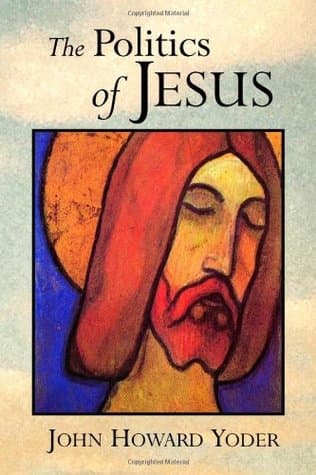
The Politics of Jesus cover
Archivist's Choice

The Politics of Jesus

John Howard Yoder (1972)

Genre

Politics / Spirituality / Philosophy

Reading Time

360 min

Key Themes

See below

Track Your Reading

Sign in to track this book

Yoder argues that Jesus's life and the cross are a blueprint for Christian pacifism, challenging worldly power.

Core Idea

John Howard Yoder reinterprets Jesus's Kingdom as a present, concrete, and political reality, not a future or spiritual one. He argues that Jesus's life, teachings, and death on the cross create a social ethic of non-resistance and peacemaking, which directly challenges conventional power. For Yoder, Christian discipleship means living this alternative political reality as a distinct, pacifist community (the Church). This community witnesses to the world rather than seeking to dominate or align with worldly powers.
Reading time
360 min
Difficulty
Hard
✓ Read this if...
You are a Christian seeking a radical reinterpretation of Jesus's mission as inherently political and pacifist, or you are interested in a theological critique of state power and violence.
✗ Skip this if...
You prefer a purely spiritual or individualistic understanding of Christian faith, or you are uncomfortable with a pacifist stance that challenges conventional political engagement.

Core idea

The central argument and framework that powers the entire book.

John Howard Yoder reinterprets Jesus's Kingdom as a present, concrete, and political reality, not a future or spiritual one. He argues that Jesus's life, teachings, and death on the cross create a social ethic of non-resistance and peacemaking, which directly challenges conventional power. For Yoder, Christian discipleship means living this alternative political reality as a distinct, pacifist community (the Church). This community witnesses to the world rather than seeking to dominate or align with worldly powers.

At a glance

Reading time

360 min

Difficulty

Hard

Read this if...

You are a Christian seeking a radical reinterpretation of Jesus's mission as inherently political and pacifist, or you are interested in a theological critique of state power and violence.

Skip this if...

You prefer a purely spiritual or individualistic understanding of Christian faith, or you are uncomfortable with a pacifist stance that challenges conventional political engagement.

Key Takeaways

1

Jesus's Kingdom: A Present Political Reality

The reign of God is not merely spiritual or future, but an active, present political alternative.

Quote

The kingdom of God is not merely an eschatological hope but a present, concrete social order inaugurated by Jesus.

Yoder challenges the common idea that Jesus's mission was separate from politics. He argues that Jesus's announcement of the Kingdom of God was political, creating a counter-cultural social order here and now, not just in an afterlife. This kingdom does not aim to seize earthly power through usual means. Instead, it embodies an alternative way of living, characterized by justice, peace, and radical love. It directly challenges the legitimacy and methods of existing political powers, showing a different kind of rule and community.

Supporting evidence

Yoder extensively analyzes Luke's Gospel, particularly the Beatitudes and the Sermon on the Plain, showing how Jesus's teachings describe an active community living out different values. He points to Jesus's actions, like eating with outcasts and healing on the Sabbath, as tangible demonstrations of this new social order.

Apply this

Christians should actively seek to embody and build this alternative kingdom in their daily lives and communities, rather than waiting for a future spiritual event or conforming to prevailing political systems. This involves discerning where the values of the Kingdom conflict with societal norms and choosing the Kingdom's path.


kingdom-of-godpolitical-theologyeschatology-realized
2

The Cross as Social Efficacy

Jesus's non-violent suffering on the cross is the model for Christian social change, not a failure of strategy.

Quote

The cross of Christ is the model of Christian social efficacy.

Against interpretations that see the cross mainly as atonement for individual sin, Yoder says it has deep political and social meaning. He argues the cross is not just passive suffering but an active display of alternative power. It shows that God's power works through weakness, vulnerability, and self-sacrificial love, not through force, violence, or dominance. This challenges common ideas of 'effectiveness' in politics, suggesting that real change comes not from wielding power over others, but from embodying a different way of relat...

Supporting evidence

Yoder highlights Jesus's consistent rejection of violent resistance and his embrace of a path of suffering love, culminating in his crucifixion. He contrasts this with the expectations of a violent messiah and the methods of Zealot movements of the time.

Apply this

Christians are called to engage in social action through non-violent means, even when it leads to suffering or perceived failure in worldly terms. This means embracing a 'politics of Jesus' that prioritizes suffering love over power and control, trusting in God's ultimate vindication.

nonviolenceatonement-politicalpower-of-weakness
3

Pacifism as a Core Christian Ethic

Jesus's life and teachings mandate a specific, non-violent response to conflict for his followers.

Quote

The command to love enemies and turn the other cheek is not an impossible ideal but a concrete ethical imperative for the Christian community.

Yoder argues that Christian pacifism is not an optional ethical choice but a direct result of following Jesus. He says Jesus's commands to love enemies, turn the other cheek, and avoid violent retaliation are not just ideals but practical ethical rules for his followers. This pacifism is not passive resignation but active resistance to evil through non-violent means. It comes from the belief that God's justice will ultimately win through such methods. It is a departure from the 'just war' tradition and other attempts to make Christian...

Supporting evidence

Yoder points to key texts such as Matthew 5:38-48 (Sermon on the Mount), Luke 6:27-36 (Sermon on the Plain), and Jesus's admonition to Peter in Gethsemane ('Put your sword back in its place'). He argues these are not isolated commands but central to Jesus's entire ethical framework.

Apply this

Christians must critically re-evaluate their participation in violence, whether state-sanctioned or personal, and commit to active non-violence in all spheres of life, advocating for peaceful resolution and resisting systems of oppression without resorting to the oppressors' methods.

pacifism-christiannonresistancejust-war-critique
4

The Church as a Distinct Society

The Christian community is called to be a visible, alternative social order, distinct from the world's norms.

Quote

The church is not merely a collection of individuals awaiting salvation, but a new social body, a colony of heaven on earth, demonstrating an alternative way of life.

Yoder stresses that the 'politics of Jesus' is lived out within the Church, the community of believers. This community is not meant to blend into the surrounding culture or serve the state. Instead, it is called to be a distinct, visible society that lives by the values and practices of the Kingdom of God. This means developing internal structures, ethical norms, and social practices that reflect Jesus's teachings, offering a real alternative to the world's systems of power, economics, and justice. The Church's witness is its corporat...

Supporting evidence

He draws from the early church's practices described in Acts (e.g., communal sharing, radical hospitality, internal conflict resolution) as concrete examples of this alternative social order. He also highlights Paul's letters, which consistently address the corporate life and ethics of the believing community.

Apply this

Christian communities should prioritize their internal life and witness, ensuring their practices align with Jesus's teachings, even if it means being counter-cultural. This involves cultivating practices of mutual aid, conflict resolution, and shared discipleship that demonstrate the Kingdom's reality.

ecclesiologycounter-culturechurch-social-ethics
5

Critique of Constantinianism

The merging of Church and State under Constantine fundamentally corrupted Christian ethics and political understanding.

Quote

The 'Constantinian shift' represents a tragic deviation from the politics of Jesus, leading the church to embrace the very power structures Jesus rejected.

Yoder sees the 'Constantinian shift'—when the Roman Empire embraced Christianity under Emperor Constantine—as a moment of corruption for Christian ethics. Before this, the Church was a persecuted minority, living its 'politics of Jesus' against imperial power. After Constantine, Christianity became the state religion. This led to a compromise: the Church began to justify violence, force, and state power, leaving its pacifist stance and its role as a distinct, alternative society. This historical moment, Yoder argues, distorted Christi...

Supporting evidence

Yoder contrasts the pre-Constantinian Church's consistent witness against violence and its separate communal life with the post-Constantinian Church's embrace of military service, 'just war' theory, and state-sanctioned coercion.

Apply this

Christians must critically examine how Constantinian assumptions still influence their political engagement and theological frameworks. This requires disassociating from state power and critically evaluating any alliance between religious and governmental authority.

constantinian-shiftchurch-state-relationshistorical-theology-critique
6

Jesus's Ministry as Political Act

Every aspect of Jesus's life, from birth to resurrection, carried inherent political implications.

Quote

Jesus's entire ministry, not just his death, was a concrete political act, challenging the powers of his day.

Yoder argues that Jesus's political engagement was not limited to a few statements or his trial, but ran through his entire life and ministry. His birth story (Luke 2:1-7) directly challenged Caesar's power. His choice of the Twelve (Luke 6:12-16) reflected a new government for Israel. His healings, exorcisms, and shared meals with outcasts were not just charity but direct challenges to the social hierarchies, purity codes, and power structures of his time. He was creating a new social order through his actions, showing God's rule in ...

Supporting evidence

Yoder analyzes specific Lukan narratives: the Magnificat (Luke 1:46-55) as a revolutionary song; Jesus's Nazareth sermon (Luke 4:16-30) as a declaration of liberation for the oppressed; his interactions with tax collectors and prostitutes as breaking social boundaries; his cleansing of the temple as a challenge to religious authority.

Apply this

Christians should see their own daily lives and acts of compassion, justice, and community-building as inherently political, contributing to the ongoing manifestation of God's Kingdom in the world. Every act of love and service can be a challenge to dominant systems.

incarnation-politicalliberation-theologyjesus-historicity
7

Ethics as a Description of Reality

Christian ethics is not merely a set of rules, but a description of what life looks like under God's rule.

Quote

Christian ethics is not a matter of subjective choice or abstract ideals, but a description of the way things actually are when God is truly sovereign.

Yoder claims that Christian ethics, especially as seen in Jesus's life, is not about following arbitrary commands or aiming for an impossible ideal. Instead, it describes the reality of God's Kingdom. To live ethically as a Christian is to align one's life with this present reality, to participate in how God's world should work. This view grounds ethics in what God is and what God means, making it less about individual moral struggle and more about a community living out God's true order. It means that non-violence, love of enemy, a...

Supporting evidence

He contrasts this with legalistic or idealistic interpretations of Jesus's commands, arguing that the Beatitudes, for instance, are not just 'blessings' but descriptions of the blessed state of those who live according to the Kingdom's logic.

Apply this

Christians should approach ethical decision-making by asking: 'What does God's Kingdom look like here?' rather than 'What is the most pragmatic or personally beneficial choice?' This reorients ethical action towards communal manifestation of God's reality.

ethics-theologicalontologymoral-philosophy
8

Discipleship as Political Apprenticeship

Following Jesus means learning a new way of life that directly challenges worldly power structures.

Quote

Discipleship is not merely intellectual assent but a practical apprenticeship in a different way of being, a different politics.

For Yoder, discipleship is more than belief or personal piety; it is an active, ongoing learning in Jesus's 'politics.' It means learning to think, act, and relate in ways that embody the Kingdom of God, often against the norms of the world. This learning is communal, requiring believers to support each other in living this alternative social order. It is a journey of transformation where one gradually leaves the patterns of the 'world' and adopts the patterns of the 'Kingdom,' becoming a living example of God's alternative rule.

Supporting evidence

Yoder highlights Jesus's call to his disciples to leave everything and follow him, to learn from him, and to practice his teachings. He points to the specific instructions Jesus gave them regarding service, humility, and mission, which all had social and political implications.

Apply this

Christians should actively seek out communities and practices that foster this political apprenticeship, engaging in intentional learning and living that challenges conventional norms and embodies the values of the Kingdom of God.

discipleshipchristian-formationcommunal-living
9

The Suffering Servant as Political Figure

Jesus's identity as the Suffering Servant of Isaiah is key to understanding his non-violent political strategy.

Quote

The prophetic image of the Suffering Servant provides the crucial interpretative key for understanding Jesus's non-coercive, self-sacrificial approach to political transformation.

Yoder argues that the Old Testament idea of the 'Suffering Servant' (especially from Isaiah) is not just a theological concept but a vital way to understand Jesus's political method. Jesus did not come as a conquering king or a violent revolutionary, but as one who would suffer for justice and redemption. This suffering is not passive but an active, strategic choice to expose the violence and injustice of the world's powers through self-giving love. It redefines what 'victory' and 'power' mean in a political context, showing that true...

Supporting evidence

Yoder connects Jesus's self-understanding and actions (e.g., his refusal to call down legions of angels, his acceptance of the cross) directly to the Suffering Servant passages in Isaiah, showing how this prophetic tradition shaped his 'politics.'

Apply this

Christians are called to embrace a 'suffering servant' posture in their political and social engagement, being willing to suffer for justice and peace, rather than seeking to dominate or coerce. This means embodying humility, self-sacrifice, and a willingness to be misunderstood or persecuted for the sake of the Kingdom.

suffering-servantmessianic-expectationsprophetic-politics
10

The Church's Mission: Witness, Not Conquest

The primary political task of the Church is to bear faithful witness to Jesus's alternative, not to seize control.

Quote

The church's mission is not to conquer the world for Christ, but to be a visible, faithful witness to the world of Christ's alternative way.

Yoder critiques any idea of the Church's mission as a quest for worldly power, dominance, or 'Christianization' through force or law. Instead, he argues that the Church's true political mission is faithful witness. This means consistently living out the 'politics of Jesus' within its own community, showing the viability and beauty of God's Kingdom. This witness transforms not by force, but by persuasion and attraction, inviting others to see and experience the alternative reality God started through Christ. It is a humble, yet powerfu...

Supporting evidence

He contrasts this with historical examples of Christian empires or attempts to legislate morality, arguing that these betray the spirit of Jesus. He emphasizes Jesus's own method of inviting discipleship rather than compelling it.

Apply this

Christian individuals and communities should prioritize living faithfully according to Kingdom values, letting their lives be a 'light' and 'salt' in the world, rather than seeking to impose their beliefs through political power or cultural dominance. This involves a commitment to evangelism through embodied ethics.

church-missionevangelism-ethicalkingdom-witness

Critical analysis

Notable Quotes

The cross is the visible embodiment of the meaning of discipleship, the shape of the Christian life.

Discussing the centrality of the cross in Christian ethics and the life of faith.

The church is not called to be politically effective, but to be faithfully obedient.

Challenging conventional notions of political engagement for the church.

Jesus does not give us a set of rules, but a way of life, a social ethic embodied in a community.

Emphasizing the communal and practical nature of Jesus' teachings.

The suffering of God is not a defeat, but the very nature of His redemptive work.

Reflecting on the theological meaning of God's suffering in Christ.

Nonviolence is not merely a tactic, but an ontological statement about the nature of God and His kingdom.

Arguing for nonviolence as a fundamental aspect of Christian faith, not just a strategic choice.

The church is called to be a visible, tangible alternative society, demonstrating the politics of Jesus.

Describing the church's role as a counter-cultural community.

The resurrection is not simply a miracle proving divinity, but the vindication of Jesus' nonviolent way.

Interpreting the resurrection in light of Jesus' life and teachings.

The power of God is made perfect in weakness, not in worldly strength.

Contrasting divine power with human conceptions of power.

To follow Jesus means to participate in His rejection of the sword and His embrace of the cross.

Defining discipleship in terms of Jesus' specific actions and choices.

The state is not the primary agent of God's work in the world.

Critiquing Constantinianism and the conflation of church and state.

The church's witness is not primarily verbal, but embodied in its life together.

Highlighting the importance of communal practice over mere proclamation.

The kingdom of God is not a future utopia, but a present reality to be lived out now.

Emphasizing the immanence and present demands of the Kingdom.

The church is called to be a servant community, not a dominating empire.

Contrasting the nature of the church with worldly power structures.

The meaning of history is found in the cross, not in the triumphs of empires.

Offering a Christ-centered interpretation of history.

The ethics of Jesus are not ideal counsel for a few, but mandatory for all who claim His name.

Rejecting the idea that Jesus' ethical teachings are only for a select few or an 'interim ethic'.

Quiz

Test Your Knowledge

Ready to see how well you understood this book? Take our interactive quiz with 10 questions.

10
Questions
~5
Minutes
?
Best Score

Key Questions (FAQ)

Yoder argues that Jesus was deeply concerned with political issues, power dynamics, and social ethics, contrary to traditional interpretations that portray him as apolitical. He asserts that Jesus's life and ministry model a specific kind of Christian pacifism, where the cross represents the model for Christian social efficacy.

About the author