BookBrief
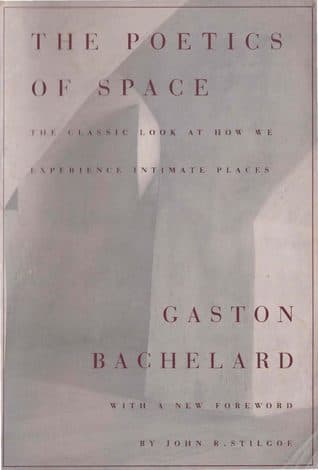
The Poetics of Space cover
Archivist's Choice

The Poetics of Space

Gaston Bachelard (1964)

Genre

Creativity / Philosophy

Reading Time

8-10 hours

Key Themes

See below

Track Your Reading

Sign in to track this book

Gaston Bachelard's "The Poetics of Space" explores how our homes, from attics to cellars, shape our dreams, memories, and sense of self.

Core Idea

Gaston Bachelard's "The Poetics of Space" states that our experiences with physical spaces, especially the home, shape our imagination, memories, and sense of self. The book considers architecture beyond its function, explaining that spaces have subjective values, dreams, and unconscious symbolism. By analyzing different spatial types—like the attic, cellar, nests, corners, and doors—Bachelard shows how these places hold and start reverie, giving a deep, poetic understanding of how humans live. Bachelard suggests that imagination, more than perception, is how we truly experience and give meaning to space. He shows how literature and poetry capture these lived, imaginative dimensions of space, often revealing universal mental structures in ordinary places. The main idea is that by focusing on the poetic nature of our surroundings, we can learn about our inner lives and the human need for shelter, intimacy, and belonging.
Reading time
8-10 hours
Difficulty
Hard
✓ Read this if...
You are interested in the philosophy of space, phenomenology, the psychology of architecture, or how imagination shapes our experience of the world. Also, if you enjoy lyrical, meditative prose that delves into the symbolic meaning of everyday objects and places.
✗ Skip this if...
You are looking for a practical guide to interior design, a historical account of architecture, or a book with a linear, argument-driven structure and empirical evidence. This book is highly philosophical and poetic, not pragmatic or scientific.

Core idea

The central argument and framework that powers the entire book.

Gaston Bachelard's "The Poetics of Space" states that our experiences with physical spaces, especially the home, shape our imagination, memories, and sense of self. The book considers architecture beyond its function, explaining that spaces have subjective values, dreams, and unconscious symbolism. By analyzing different spatial types—like the attic, cellar, nests, corners, and doors—Bachelard shows how these places hold and start reverie, giving a deep, poetic understanding of how humans live.

Bachelard suggests that imagination, more than perception, is how we truly experience and give meaning to space. He shows how literature and poetry capture these lived, imaginative dimensions of space, often revealing universal mental structures in ordinary places. The main idea is that by focusing on the poetic nature of our surroundings, we can learn about our inner lives and the human need for shelter, intimacy, and belonging.

At a glance

Reading time

8-10 hours

Difficulty

Hard

Read this if...

You are interested in the philosophy of space, phenomenology, the psychology of architecture, or how imagination shapes our experience of the world. Also, if you enjoy lyrical, meditative prose that delves into the symbolic meaning of everyday objects and places.

Skip this if...

You are looking for a practical guide to interior design, a historical account of architecture, or a book with a linear, argument-driven structure and empirical evidence. This book is highly philosophical and poetic, not pragmatic or scientific.

Key Takeaways

1

The House as a Psychic Shell

Our homes are not merely physical structures but deeply imprinted psychological landscapes.

Quote

The house is not primarily a 'body' in the ordinary sense of the word, but a set of images that give mankind proofs or illusions of stability.

Bachelard states that the house is more than just walls and a roof; it is a main part of our mind, a 'first world' that shapes who we are. It is a space where we put our memories, dreams, and deepest feelings, becoming part of our inner selves. This is not just about comfort, but about the deep connection we make with the spaces we live in. The house holds our reveries, giving a sense of stability against the changing outside world. It is a safe place for our thoughts and a setting for our unconscious stories, making the study of its ...

Supporting evidence

Bachelard frequently references poets like Rilke, Baudelaire, and Valéry, not as mere literary examples, but as direct evidence of how the poetic imagination imbues the house with psychological depth and meaning, transforming mere architecture into lived experience.

Apply this

When designing or redecorating a space, consider its emotional and psychological impact. Instead of just functionality, think about how the space will foster dreams, memories, and a sense of rootedness. Choose objects and arrangements that resonate with your inner world, creating a true 'home' for your psyche.

phenomenology-of-spacepsychogeographyintimate-space
2

Attic and Cellar: Poles of the Psyche

The extreme verticality of the house mirrors the contrasting depths of our unconscious and heights of our consciousness.

Quote

The cellar is first and foremost the dark entity of the house, the one that partakes of underground, of earth, of the primeval.

Bachelard looks at the symbolic differences between the attic and the cellar. The cellar, often dark and forgotten, represents the unconscious, the primitive, and buried memories and fears. It is the grounding force, connecting us to the earth and our past. The attic, often light and open, represents conscious thought, reflection, and dreams. It is where we keep the 'light' of our past, the memories that are easy to access. This vertical line of the house is a metaphor for the human mind, with conscious goals reaching up and unconscio...

Supporting evidence

Bachelard dissects various literary descriptions of cellars and attics, noting how poets consistently associate the cellar with mystery, fear, and hidden secrets (e.g., cellars as places for wine, preserves, or even torture in gothic novels), while attics are linked to childhood memories, forgotten treasures, and quiet contemplation.

Apply this

Reflect on the attics and cellars (literal or metaphorical) in your own life. What do they hold? How do they make you feel? Consciously engage with these spaces, understanding them as reflections of your inner landscape. Perhaps decluttering an attic can symbolize clearing mental space, or exploring a cellar can represent confronting buried emotions.

spatial-metaphorunconscious-mindarchetypal-spaces
3

Nests and Shells: Primal Refuge

Small, intimate spaces within the house offer profound feelings of security, warmth, and belonging.

Quote

The house is one of the greatest powers of integration for the thoughts, memories and dreams of mankind.

Beyond grand architecture, Bachelard values the 'nests' and 'shells' inside the house—the small, private nooks, corners, and enclosed spaces that offer a greater sense of safety. These could be a window seat, a cozy armchair, a hidden closet, or a bed. These small spaces are where we feel truly protected from the outside world. They bring a basic feeling of security, like a mother's womb or an animal's burrow. In these small havens, reverie grows, letting us go into ourselves, dream, and feel completely safe and contained. The 'warmth...

Supporting evidence

Bachelard dedicates a chapter to 'Nests,' drawing parallels between human dwellings and animal nests – the bird's nest, the snail's shell – emphasizing the universal need for a protected, intimate enclosure. He references the 'snugness' of a bed and the comfort of a small room, often citing poetic descriptions.

Apply this

Identify and cultivate 'nests' within your own home. Create a cozy reading corner with blankets and soft lighting, or arrange your bed to feel like a true sanctuary. Prioritize comfort and enclosure in these spaces to maximize their psychological benefits for rest, contemplation, and emotional security.

intimacy-of-spaceshelter-psychologycozy-spaces
4

The Power of the Corner

Corners, often overlooked, are potent psychological spaces for contemplation and refuge.

Quote

The corner is a haven for the imagination.

Bachelard argues that corners are important spaces. They offer a unique sense of enclosure and protection, a place to 'huddle' and feel contained. For children, a corner can be a place for both punishment and imaginative play, a hidden world. For adults, it can be a favorite spot for reading, dreaming, or quiet thought. The corner provides a physical boundary that helps define a personal space within a larger room, allowing for focused reverie. It is where one can feel both hidden and secure, watching the world from a protected spot. ...

Supporting evidence

Bachelard discusses how children often seek out corners for play or hiding, and how poets frequently describe characters finding solace or solitude in corners, indicating their psychological resonance. He contrasts the 'sharpness' of a corner with its capacity for 'roundness' in the imagination.

Apply this

Embrace the potential of corners in your living spaces. Instead of filling them with clutter, consider them as opportunities for quiet contemplation. Place a comfortable chair, a small lamp, and a book in a corner to create a designated 'reverie zone.'

phenomenology-of-cornerssolitude-in-spaceintrospective-design
5

Doors, Locks, and Keys: Thresholds of Being

These mundane objects are charged with symbolic meaning, representing access, secrets, and the transition between worlds.

Quote

The door is a whole cosmos of the half-open.

Bachelard sees the ordinary door, lock, and key as objects of philosophical thought. A door is not just an entry point; it is a threshold, a barrier, and a promise. It marks the shift between inside and outside, public and private, known and unknown. Opening a door is a moment of anticipation, while locking one means security or exclusion. Keys are symbols of access, power, and secrets. They can reveal or hide. These elements, often overlooked, are central to our experience of space, guiding our interactions with the world and shaping...

Supporting evidence

Bachelard explores the rich symbolism of doors in literature, from the 'door of secrets' to the 'door of paradise.' He discusses the psychological impact of a locked door versus an open one, and the poetic imagery associated with keys as instruments of revelation or concealment.

Apply this

Pay conscious attention to the doors in your life. Consider what they represent – what are you opening yourself up to, or what are you choosing to protect? Even the simple act of turning a key can be imbued with a moment of mindfulness about transitions and boundaries.

liminal-spacesymbolism-of-doorsthreshold-experience
6

Miniatures and Immensity: The Dialectic of Scale

Small objects can evoke vast imaginative landscapes, while immense spaces can feel intimate through reverie.

Quote

In the realm of imagination, a miniature is a world.

Bachelard looks at how something very small can make us feel something immense. A miniature object—a toy house, a tiny garden, a doll—does not just represent something larger; it becomes a world for the imagination, letting us put our vast dreams and memories onto its small scale. And, immense spaces, like the sky or the ocean, can be connected to intimately through our reveries, becoming mental landscapes that we live in. This back-and-forth of scale shows the power of imagination to go beyond physical size, showing that true space...

Supporting evidence

Bachelard frequently references miniature paintings, dioramas, and children's toys to illustrate how small objects can contain entire worlds within the imagination. He also discusses how the contemplation of vast landscapes can be internalized and made intimate through poetic reverie.

Apply this

Engage with miniatures in your own life – a small collection, a detailed model. Allow your imagination to expand their worlds. When contemplating vastness (a starry sky, a panoramic view), try to internalize it, letting it become a part of your inner landscape rather than just an external spectacle.

miniature-worldsimagination-and-scalesubjective-space
7

Roundness and Enclosure: The Primacy of the Circle

The psychological comfort of circular and enclosed forms offers a profound sense of security and completeness.

Quote

The being of the house is roundness, a certain roundness that is the very being of home.

While houses are often angular, Bachelard argues that our deepest sense of home tends towards roundness and enclosure. This comes from the earliest experiences of shelter—a mother's womb, a cave, a nest—all naturally circular or enveloping. Round forms offer seamless protection, without sharp corners, creating a feeling of security and endless return. This 'roundness' is not just physical but psychological, representing wholeness. It is the ultimate form of refuge, where one feels completely contained and safe, letting the mind wander...

Supporting evidence

Bachelard frequently refers to the 'roundness' of nests and shells, and the psychological comfort derived from being 'enclosed' or 'curled up.' He also references the idealized circularity of certain architectural forms and the feeling of being 'at the center' within a protective sphere.

Apply this

In your home, seek out or create elements that evoke roundness and enclosure. A circular rug, a rounded armchair, or even arranging furniture to create a 'cocoon' effect can enhance feelings of comfort and security. Prioritize softness and curves over harsh angles where possible.

archetypal-formspsychology-of-formwomb-space
8

The House as a Memory Palace

Our homes are the primary vessels for our personal and collective memories, shaping our identity.

Quote

Memory and imagination do not only reproduce past houses, they also build houses for us in which we can live anew.

Bachelard states that the house is not a fixed container but a 'memory palace.' Every room, every object, every sound of the floorboards has personal history, acting as a trigger for memory. Our childhood homes, especially, stay clear in our minds, forming the base of our identity and giving a constant point of reference. These memories are not just facts but are often changed by our imagination, creating a richer past. The house helps us organize our past, giving it a physical form and letting us revisit moments, feelings, and relati...

Supporting evidence

Bachelard extensively discusses how childhood homes are remembered with intense detail and emotion, not just as physical spaces but as scenes of vivid past events, often citing literary examples where characters' memories are inextricably linked to specific rooms or objects within their house.

Apply this

Consciously engage with the memories held within your home. Take time to sit in different rooms and recall the events and feelings associated with them. Curate your space with objects that hold personal significance, allowing your home to be a rich tapestry of your life story.

memory-palaceautobiographical-memorynostalgia-of-space
9

Imagination's Primacy over Perception

Our lived experience of space is fundamentally shaped by our imagination, not just objective reality.

Quote

The imagination works on the real, but it is not a slave to it.

A main idea of Bachelard's philosophy is that imagination is not just for escaping but is a primary way of interacting with and shaping reality, especially spatial reality. We do not just see a house; we imagine it, filling it with our dreams, fears, and desires. The 'poetics' of space come from this imaginative layer, changing physical dimensions into personal and meaningful landscapes. This means a small room can feel vast in reverie, or a grand hall can feel intimate. Bachelard asks us to go beyond a geometric or functional under...

Supporting evidence

Throughout the book, Bachelard consistently prioritizes poetic and literary descriptions of space over architectural or scientific ones, arguing that poets reveal the true, imagined reality of spaces. He uses examples of reverie to show how the mind transforms objective features.

Apply this

Actively cultivate your imaginative engagement with your surroundings. Don't just see a wall; imagine it as a boundary, a canvas, or a protector. Allow your mind to wander and embellish your perception of everyday spaces, discovering new layers of meaning and connection.

phenomenology-of-imaginationsubjective-realitypoetic-reason

Critical analysis

Notable Quotes

The house is a nest for dreaming, a shelter for imagining.

Bachelard explores the house as a primary space for human imagination and memory.

The house shelters daydreaming, the house protects the dreamer, the house allows one to dream in peace.

Emphasizing the protective and nurturing role of domestic spaces in fostering creativity.

A house that has been experienced is not an inert box. Inhabited space transcends geometrical space.

Contrasting lived, emotional space with abstract, mathematical conceptions of space.

The corner is a sort of half-box, part walls, part door.

Analyzing the intimate, protective qualities of corners in rooms.

The miniature is a refuge for greatness.

Discussing how small, enclosed spaces can amplify imagination and significance.

The wardrobe is a very simple object, but it is a great reservoir of intimacy.

Examining everyday objects as containers of personal memories and secrets.

Space that has been seized upon by the imagination cannot remain indifferent space.

Arguing that imagination transforms neutral space into meaningful, lived space.

The cellar dreamer knows that the walls of the cellar are buried walls, that they are walls with a single casing, walls that have the entire earth behind them.

Describing the cellar as a primal, earthy space that evokes deep, unconscious dreams.

The attic is the rational zone of the house.

Contrasting the attic's logical, organized nature with the cellar's irrational, dark qualities.

A poet's house... must be a house that is easy to dream in.

Linking architectural qualities to the needs of poetic creativity and reverie.

The house image would appear to have become the topography of our intimate being.

Proposing that houses map onto and shape our inner psychological landscapes.

The drawers, chests and wardrobes are veritable organs of the secret psychological life.

Exploring how storage spaces function as extensions of the mind and memory.

The house is our corner of the world.

Asserting the house as a fundamental, personal universe for each individual.

Memory and imagination remain associated, each working for their mutual deepening.

Discussing the interdependent relationship between memory and creative imagination.

Quiz

Test Your Knowledge

Ready to see how well you understood this book? Take our interactive quiz with 10 questions.

10
Questions
~5
Minutes
?
Best Score

Key Questions (FAQ)

'The Poetics of Space' is a philosophical exploration of how our perceptions of domestic spaces like houses shape our thoughts, memories, and dreams. Gaston Bachelard examines spaces from cellar to attic, arguing that these physical environments profoundly influence our psychological and creative lives.

About the author