BookBrief
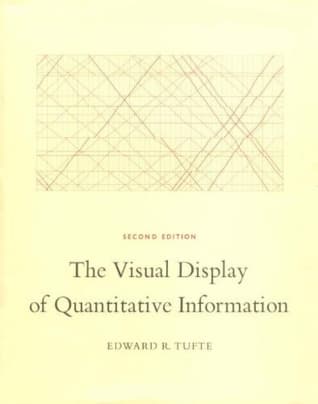
The Visual Display of Quantitative Information cover
Archivist's Choice

The Visual Display of Quantitative Information

Edward R. Tufte (1983)

Genre

Business / Reference / Creativity / Technology / Science

Reading Time

240 min

Key Themes

See below

Track Your Reading

Sign in to track this book

Tufte's book explains how to make statistical graphics clear, honest, and insightful.

Core Idea

Edward Tufte's "The Visual Display of Quantitative Information" argues that good statistical graphics communicate complex ideas clearly, precisely, and efficiently. The book promotes a design philosophy that focuses on maximizing the data-ink ratio—the amount of ink used for actual data—and minimizing "chartjunk," which includes any extra elements that distract from the message. Tufte believes that good data visualization should show the data, make viewers think about the information itself rather than the design, avoid distortion, present many numbers in a small space, make large datasets understandable, and help people compare and explore details.
Reading time
240 min
Difficulty
Medium
✓ Read this if...
You design, create, or consume any form of data visualization and want to improve clarity, precision, and analytical power in graphical displays. Essential for anyone in data science, journalism, research, or business intelligence.
✗ Skip this if...
You are looking for a practical, step-by-step software tutorial on how to create specific charts, or if your interest is solely in highly artistic or abstract data representations where analytical precision is secondary.

Core idea

The central argument and framework that powers the entire book.

Edward Tufte's "The Visual Display of Quantitative Information" argues that good statistical graphics communicate complex ideas clearly, precisely, and efficiently. The book promotes a design philosophy that focuses on maximizing the data-ink ratio—the amount of ink used for actual data—and minimizing "chartjunk," which includes any extra elements that distract from the message. Tufte believes that good data visualization should show the data, make viewers think about the information itself rather than the design, avoid distortion, present many numbers in a small space, make large datasets understandable, and help people compare and explore details.

At a glance

Reading time

240 min

Difficulty

Medium

Read this if...

You design, create, or consume any form of data visualization and want to improve clarity, precision, and analytical power in graphical displays. Essential for anyone in data science, journalism, research, or business intelligence.

Skip this if...

You are looking for a practical, step-by-step software tutorial on how to create specific charts, or if your interest is solely in highly artistic or abstract data representations where analytical precision is secondary.

Key Takeaways

1

Maximize Data-Ink, Minimize Chartjunk

Every drop of ink on a graphic should convey data, not decoration.

Quote

Above all else show the data.

Tufte's main idea is the 'data-ink ratio,' which measures how much ink in a graphic shows data versus non-data elements. The goal is to maximize this ratio by removing 'chartjunk' – unnecessary or repeated graphic parts that distract from the data. This includes thick grid lines, too much decoration, misleading 3D effects, and repeated legends when labels work. By removing these extra parts, the data stands out more, leading to clearer and faster understanding. This idea is not about being plain, but about clarity and honesty, making ...

Supporting evidence

Tufte frequently shows 'before and after' examples, demonstrating how removing decorative borders, redundant axes, or heavy backgrounds dramatically improves the legibility and impact of the underlying data.

Apply this

Review your own charts and graphs with a critical eye. For every line, shade, or color, ask: 'Does this directly represent data or aid in its understanding?' If not, remove it. Opt for subtle grid lines, direct labeling, and avoid gratuitous visual effects.
data-ink-ratiochartjunkdata-visualization-principles
2

Small Multiples for Comparative Analysis

Repeated, identical graphics change only by data, facilitating powerful comparisons.

Quote

Small multiples are 'micro/macro readings' where the overall structure of the graphic is seen at a glance and then, in another moment, details of the data are explored.

Small multiples, also called 'trellis displays,' are a good way to show data with multiple variables. They involve showing a series of small, identical graphics, each presenting a different part of the data (e.g., different time periods, categories, or regions). Because the design is consistent across all multiples, viewers can quickly see patterns, trends, and unusual points by comparing how the data changes visually, instead of trying to understand different chart types or complex legends. This method uses our ability to spot shifts...

Supporting evidence

Tufte showcases numerous historical examples, such as Minard's map of Napoleon's Russian campaign (which, while not strictly small multiples, demonstrates the power of rich, layered data) and various scientific charts comparing data across different experimental conditions using consistent visual frameworks.

Apply this

When comparing data across multiple categories, time periods, or conditions, resist the urge to cram everything into one complex chart. Instead, create a grid of smaller, simpler charts, each illustrating a specific slice of the data, maintaining consistent scales and axes across all. This makes trends and outliers immediately apparent.

small-multiplestrellis-displaymultivariate-data
3

The Power of High-Resolution Data

Dense, detailed graphics reveal more, not less, when designed thoughtfully.

Quote

Graphical excellence is that which gives to the viewer the greatest number of ideas in the shortest time with the least ink in the smallest space.

Unlike the idea that 'less is more' in all design, Tufte argues for the power of detailed data displays. He supports graphics that show a lot of information, allowing viewers to see both general patterns and specific details at the same time. This needs careful design to avoid clutter, often done through methods like small multiples, layering, and precise labeling. The aim is to respect the viewer's intelligence and ability to process visuals, giving them enough context and detail to draw informed conclusions, rather than oversimplify...

Supporting evidence

Tufte frequently references historical masterpieces like Minard's map of Napoleon's Russian Campaign, which masterfully combines multiple variables (troops, temperature, date, location) into a single, highly informative graphic without sacrificing clarity.

Apply this

Don't shy away from presenting rich datasets. Instead of breaking complex information into many separate, simple charts, explore ways to integrate related variables into a single, coherent graphic using layering, varying line weights, or well-placed annotations. Ensure scales are consistent and labels are clear, allowing for both macro and micro readings.

data-densityinformation-richnessmacro-micro-readings
4

Avoid Graphical Deception

Design choices must reflect data variation, not distort it for manipulative ends.

Quote

The greatest density of information, the best display of data, the most elegant and efficient design, is often the most truthful.

Tufte carefully critiques graphics that mislead, often by accident, but sometimes on purpose. Graphical deception happens when the visual representation distorts the data, making differences seem larger or smaller than they are. Common examples include cut-off axes that exaggerate changes, inconsistent scales across comparison charts, using area or volume to show one-dimensional data (e.g., changing a bar's height and width when only height shows the value), and 'design variation greater than data variation.' Tufte stresses that ethic...

Supporting evidence

Tufte dedicates a significant section to 'Graphical Deception: Design Variation vs. Data Variation,' showcasing numerous examples from newspapers and government reports where manipulated scales or misleading visual metaphors distorted public understanding of economic or social trends.

Apply this

Always ensure your visual representations accurately reflect the magnitude of the data. Use full baselines for bar charts unless clearly indicated, maintain consistent scales across comparable graphics, and avoid using 3D effects or non-proportional scaling that can distort perception. Scrutinize published graphics for potential deceptive practices.

graphical-deceptiondata-integritymisleading-graphics
5

Integrate Text and Graphics

Words and images should be interwoven, not separated, for cohesive understanding.

Quote

Words, numbers, and drawing are not kept separate because the information is not kept separate in our minds.

Traditional publishing often separates text, charts, and tables, making readers jump between different parts of a page or document. Tufte argues for closely combining text and graphics, placing labels, explanations, and notes directly on or next to the data they describe. This 'narrative flow' reduces mental effort, helping viewers understand information more naturally and quickly without looking for matching legends or text. This approach recognizes that reading a graphic is an active mental process, and design should help, not hinde...

Supporting evidence

Tufte praises historical maps and scientific drawings (e.g., early anatomical illustrations) that seamlessly weave labels and descriptive text directly into the visual representation, enhancing immediate comprehension.

Apply this

Whenever possible, directly label data points, lines, and regions on your charts instead of relying solely on a separate legend. Use annotations within the graphic to highlight key trends or outliers. Think of your graphic as a complete visual statement that can largely stand on its own, with supporting text integrated rather than externalized.

graphic-text-integrationdirect-labelingcognitive-load
6

Embrace Data Maps for Geographic Insights

Geographic context enriches data, revealing spatial patterns and relationships.

Quote

Data maps, like all good information displays, are a combination of art and science, clarity and complexity.

Tufte supports using data maps to show quantitative information in a spatial context. He shows how mapping data can reveal patterns, connections, and unusual points that might not be visible in other displays. A good data map combines accurate geographic representation with clear, well-chosen data overlays (e.g., color gradients, proportional symbols, flow lines). He emphasizes avoiding 'map junk' and ensuring the geographic base acts as a transparent frame for the data, not a distraction. The relationship between location and data po...

Supporting evidence

Tufte features John Snow's cholera map, a seminal example of using geographic data to identify the source of a disease outbreak, demonstrating the profound impact of spatial visualization.

Apply this

When your data has a geographic component, strongly consider mapping it. Choose appropriate visual variables (color, size, texture) to represent your data on the map. Ensure the base map is minimal and serves only to provide context, allowing the data itself to be the focal point. Look for spatial clusters or outliers that might reveal new insights.

data-mapsgeographic-visualizationspatial-analysis
7

Aesthetics Serve Function

Beauty in data visualization arises from clarity, precision, and intellectual honesty.

Quote

The best graphics are about the careful and precise rendering of information, not about decoration.

For Tufte, aesthetics in data visualization are not about superficial decoration but about the beauty of clear, precise, and honest representation. A 'beautiful' graphic communicates complex information well, with elegance and efficiency, making the data accessible and understandable without distortion. This often means using subtle colors, thin lines, and good typography that blends into the background, letting the data stand out. True graphical excellence is found when form follows function, and the visual design improves, rather th...

Supporting evidence

Tufte showcases numerous historical and contemporary examples of 'graphical excellence,' such as William Playfair's early statistical charts, which, despite their age, possess an enduring clarity and elegance due to their functional design.

Apply this

Prioritize clarity and precision over flashy design elements. Use subtle, harmonious color schemes that differentiate data without overwhelming it. Choose legible fonts and appropriate line weights. Focus on making the data easy to read and interpret, and the aesthetic appeal will naturally follow from its effectiveness.

graphical-excellencedata-aestheticsfunctional-design
8

The Importance of Comparison

Data is most meaningful when viewed in relation to other data.

Quote

Comparison is the key to understanding, and data graphics are often the best way to make comparisons.

A key part of good data visualization is making comparisons easy. Isolated data points or trends mean less than when they are shown with other relevant information. Tufte supports designs that let viewers easily compare different variables, time periods, categories, or groups. This can be done through consistent scaling, layering multiple datasets on the same graphic, or, most effectively, through small multiples. The human eye is good at finding differences and similarities when data is presented for comparison, leading to deeper ins...

Supporting evidence

Tufte frequently demonstrates how juxtaposing different datasets on a single graphic (e.g., showing unemployment rates alongside inflation) or using small multiples for different regions allows for more profound analytical insights than viewing each dataset in isolation.

Apply this

When designing a graphic, always ask: 'What am I trying to compare?' Then, design your chart to make that comparison as easy and direct as possible. Use consistent axes, clear legends (if necessary), and consider visual techniques like sparklines or small multiples to place data in a comparative context.

comparative-analysisdata-comparisoncontextual-data
9

Avoid Data-Ink Swindles

Be wary of graphics that inflate data-ink without increasing information.

Quote

The principle of the data-ink ratio means that for every bit of data-ink, there should be a corresponding bit of data.

A 'data-ink swindle' happens when a graphic uses a lot of ink to show very little information, essentially weakening the data's impact. This is often seen in overly simple charts that show only a few data points within a large, empty visual space, or in pie charts with only two slices that could be more simply stated as a single number. While a simple chart is sometimes appropriate, a swindle occurs when the visual design exaggerates the importance or complexity of minor data, wasting the viewer's time and attention. The goal is effic...

Supporting evidence

Tufte criticizes common corporate report graphics that feature oversized, heavily bordered charts displaying only two or three data points, often with redundant labels and excessive whitespace, demonstrating a low data-ink ratio without any corresponding increase in clarity.

Apply this

Before creating a complex chart, consider if a simple table or even a sentence could convey the information more efficiently. If you must use a graphic, ensure it is densely packed with relevant data, avoiding large empty spaces or overly elaborate designs for minimal information. Every visual element should earn its place.

data-ink-swindleinformation-efficiencyvisual-economy
10

Edit and Refine Graphics Relentlessly

Good graphics are made, not born; they result from iterative improvement.

Quote

Clutter and confusion are not attributes of data, they are shortcomings of design.

Tufte's work promotes a careful, ongoing process of editing and improving data graphics. Just as writers revise text, designers must constantly check their visualizations for clarity, precision, and efficiency. This means actively finding and removing chartjunk, improving the data-ink ratio, ensuring accurate representation, and enhancing the overall aesthetic and intellectual integrity of the display. The best graphics come from thoughtful revision, where every element is justified and contributes meaningfully to understanding the da...

Supporting evidence

The entire book is an exercise in critique and improvement, with Tufte dissecting various graphics, pointing out flaws, and suggesting concrete ways to enhance their effectiveness and truthfulness.

Apply this

Treat your data graphics as living documents. After creating an initial draft, step away, then return with a critical eye. Ask colleagues for feedback. Systematically remove non-data ink, simplify legends, refine labels, and ensure scales are appropriate. Continuous improvement is key to achieving graphical excellence.

graphic-editingdesign-iterationvisual-refinement

Critical analysis

Notable Quotes

The greatest challenges in the design of statistical graphics are the challenges of understanding.

Emphasizing the intellectual effort required for effective data visualization, beyond just aesthetics.

Above all else show the data.

A foundational principle advocating for minimizing chart junk and maximizing the data-ink ratio.

Clutter and confusion are failures of design, not attributes of information.

Arguing that poor design choices, rather than the complexity of the data itself, lead to ineffective communication.

Graphical excellence is that which gives to the viewer the greatest number of ideas in the shortest time with the least ink in the smallest space.

Defining the core tenets of effective data visualization: efficiency, density, and clarity.

Data graphics are paragraphs about numbers, and, like well-written paragraphs, they should have a topic sentence, a verb, and a period.

Drawing an analogy between good writing and good graphics, highlighting structure and purpose.

What is to be sought in designs for the display of information is the clear portrayal of complexity, not the reduction of complexity to simplicity.

Distinguishing between simplifying complex information and accurately representing its inherent complexity.

Chartjunk is that entire interior decoration of graphics that does not tell the viewer anything new.

Defining and critiquing superfluous visual elements that distract from the data.

The world is complex, dynamic, multidimensional; the paper is flat, static, two-dimensional. How are we to represent the rich visual world of experience and measurement on mere flatland?

Posing the fundamental challenge of translating complex reality into static, two-dimensional displays.

Graphical displays should be of high resolution, revealing the data in detail.

Advocating for graphics that allow for granular inspection of data, rather than just broad overviews.

To clarify, add detail.

A counter-intuitive but powerful principle suggesting that more relevant detail can lead to greater clarity, not less.

The often-heard lament, 'I have too much information,' usually means 'I cannot organize the information to suit my purposes.'

Reframing the problem of information overload as a failure of organization and design.

Even the most sophisticated graphics are not panaceas; they are but one instrument in a larger orchestra of information.

Placing data visualization within a broader context of communication tools, acknowledging its limitations.

Graphical excellence requires telling the truth about the data.

Emphasizing the ethical imperative of accurate and honest data representation.

The principle of data-ink maximization means that nearly all ink should present data-information, not non-data-information.

Introducing the concept of the data-ink ratio as a measure of efficiency in graphical design.

Quiz

Test Your Knowledge

Ready to see how well you understood this book? Take our interactive quiz with 10 questions.

10
Questions
~5
Minutes
?
Best Score

Key Questions (FAQ)

This book is a seminal work on statistical graphics, charts, and tables, focusing on the theory and practice of designing data displays. It teaches readers how to present quantitative information precisely, effectively, and for quick analysis, using over 250 illustrations to demonstrate best practices and common pitfalls.

About the author