“Inspiration is for amateurs. The rest of us just show up and get to work.”
— Asterios reflecting on his creative process and discipline as an architect.

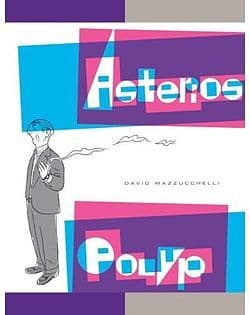
David Mazzucchelli (2009)
Genre
Creativity / Philosophy
Reading Time
240 min
Key Themes
See below
Sign in to track this book
After a fire destroys his carefully built life, a self-absorbed architect travels through the American heartland, re-examining his past love and his identity.
“Inspiration is for amateurs. The rest of us just show up and get to work.”
— Asterios reflecting on his creative process and discipline as an architect.
“The problem with being an architect is that everyone thinks they're an architect.”
— Asterios's frustration with clients and public perception of his profession.
“The building is not just a building. It is a story. It is a life.”
— Asterios explaining the deeper meaning and emotional connection he has to his architectural designs.
“We are all, in a way, architects of our own lives. We build them, brick by brick, choice by choice.”
— A philosophical reflection on agency and self-creation, often linked to Asterios's journey of rebuilding after the fire.
“You can't really see something until you understand how it's made.”
— Asterios's emphasis on understanding underlying structure and mechanics, whether in art or life.
“The greatest tragedy is not death, but life without meaning.”
— A profound statement on the human search for purpose, a theme central to Asterios's existential crisis.
“Every line is a choice. Every choice is a commitment.”
— Asterios articulating the precision and intentionality required in both drawing and life.
“Sometimes you have to tear down everything to build something new.”
— A metaphor for personal transformation, directly relating to the fire that destroys Asterios's apartment and his subsequent journey.
“Silence is not empty. It is full of unsaid things.”
— A reflection on communication, or lack thereof, within relationships, particularly between Asterios and Hana.
“There are two kinds of people in the world: those who divide the world into two kinds of people, and those who don't.”
— A meta-commentary on categorization and dualism, a recurring stylistic and thematic element in the book.
“The past is not a burden; it is a foundation.”
— Asterios grappling with his past mistakes and experiences, learning to integrate them into his present identity.
“We don't see things as they are, we see them as we are.”
— A classic philosophical idea on subjective perception, illustrated through the distinct perspectives of different characters.
“Love is not about finding the perfect person, but about seeing an imperfect person perfectly.”
— A realization Asterios comes to regarding his relationship with Hana and his own idealized expectations.
“The world is full of answers, if only you know how to ask the right questions.”
— A reflection on inquiry, curiosity, and the pursuit of knowledge, central to Asterios's intellectual journey.
Ready to see how well you understood this book? Take our interactive quiz with 10 questions.

David Mazzucchelli is an acclaimed graphic novelist celebrated for his innovative storytelling and distinctive art style. His seminal work, 'Asterios Polyp,' is a critically lauded exploration of architecture, philosophy, and the complexities of human relationships, earning him widespread recognition for its formal experimentation and profound narrative depth.