“No, it is not a talent, it is a curse. It is a curse to be able to see the things that other people cannot see, and to feel the things that other people cannot feel.”
— Wyatt Gwyon reflecting on his artistic abilities.


William Gaddis (2020)
Genre
Literary Fiction / Creativity
Reading Time
2400 min
Key Themes
See below
Sign in to track this book
William Gaddis's "The Recognitions" is a sprawling story of art forgery and spiritual decay, showing a world where authenticity is a carefully made illusion and the search for truth only leads to more deceptions.
Wyatt Gwyon grows up in a New England rectory, stifled by his father, Reverend Gwyon's, strict Calvinist faith. His mother, Camilla, dies early, leaving a deep emptiness. Wyatt finds comfort and a developing artistic sense through his Aunt May, who introduces him to painting and the Old Masters. Despite his father's disapproval, Wyatt becomes very skilled at drawing and painting. He sees it as a way to understand the world, a contrast to his father's abstract theology. This time sets up his later struggles with originality and forgery.
Wyatt goes to Paris to study art, getting involved in the lively but often shallow art scene. He struggles to find his own style among modern art trends, which he sees as a departure from the spiritual and technical skill of the Old Masters he admires. His precise nature and desire for perfection make him an outsider among his peers. He meets and falls in love with Esme, a young woman whose delicate beauty captivates him, but their relationship is strained by his artistic worries and her fragile mental state. Wyatt grapples with the idea that true originality might be impossible, and that his greatest skill is perfect imitation. This skill starts to feel less like creation and more like giving up his own artistic spirit.
After a deep crisis of faith and a period of artistic stagnation, Wyatt returns to his father's rectory. Convinced that true creation is beyond him, or that his own artistic vision is flawed, he turns to forgery. He sees it as a way to atone and to achieve the perfection he admires in the Old Masters. He carefully recreates a painting by Hieronymus Bosch, driven by a desperate need to copy beauty rather than create it. This act is a major turning point, as he consciously moves away from original creation to become a perfect copyist. His forgeries are so flawless they are indistinguishable from the originals, showing his skill but also his artistic despair.
Wyatt's forgeries come to the attention of Recktall Brown, a wealthy, unethical art dealer and collector. Brown is a shrewd businessman with a cynical view of art, valuing profit over authenticity. He recognizes the extraordinary quality of Wyatt's imitations and sees a chance for huge financial gain. Brown starts buying Wyatt's forged Old Masters and selling them as genuine, deceiving rich collectors and art institutions. Wyatt, in his artistic and spiritual despair, becomes an unknowing tool in Brown's scheme, providing the 'originals' for Brown's fraudulent empire. This partnership shows the corruption of the art world and how easily authenticity can be undermined for profit.
Wyatt moves to New York, where he becomes involved in the city's bohemian and intellectual circles. He meets many different characters, including artists, writers, musicians, and socialites, many of whom are themselves engaged in various forms of pretense and self-deception. These encounters further solidify Wyatt's feeling of disappointment with the modern world's lack of genuine art and spiritual depth. He observes the superficiality of their goals and the widespread nature of fraud, not just in art but in personal identity and relationships. This period shows Wyatt's growing isolation and his struggle to balance his artistic integrity with the compromises he has made.
Among the New York residents, Wyatt meets Otto, a perpetually struggling writer who admires Wyatt's artistic talent and longs for recognition. Otto, a master of self-deception and intellectual posing, eventually tries to steal Wyatt's identity and publish his own mediocre work under Wyatt's name. This act of literary forgery mirrors Wyatt's art forgeries, though with less skill and a clearer motive for personal fame. Otto's pathetic attempts at plagiarism and identity theft serve as a humorous yet sad contrast to Wyatt's deeper artistic and spiritual struggles, further highlighting the theme of inauthenticity throughout the novel.
Overwhelmed by his involvement in the art fraud and his deep spiritual despair, Wyatt eventually seeks refuge in a remote Spanish monastery. He hopes to find forgiveness and a way back to genuine creation through a life of simple devotion. In the monastery, he dedicates himself to carefully restoring a damaged fresco. This act is both a penance and a renewed engagement with art, but this time in a selfless, anonymous way. This period represents Wyatt's most earnest attempt to escape the cycle of forgery and reclaim a sense of purpose and authenticity, though through restoration rather than original creation.
While Wyatt is in Spain, his father, Reverend Gwyon, undergoes his own spiritual change. Having first condemned Wyatt's art as idolatry, the Reverend becomes increasingly absorbed in the ancient Mithraic religion, studying obscure texts and archaeological research. His rigid Calvinist faith slowly disappears, replaced by a fervent, almost fanatical, devotion to this forgotten pagan cult. This intellectual and spiritual journey, driven by a similar search for ultimate truth, parallels Wyatt's artistic quest. It highlights the shared human need for meaning and the different forms it can take, even when those forms contradict previous beliefs. The Reverend's decline is both intellectual and physical, ending in his tragic death.
Recktall Brown's elaborate art fraud scheme eventually begins to fall apart. The sheer number of Wyatt's forgeries, along with increasing scrutiny from the art world, makes it impossible to keep up the deception. The reveal leads to widespread scandal, exposing the greed and superficiality of the art market. Various characters involved, directly or indirectly, face the consequences of their actions. Otto's literary frauds are also exposed, further solidifying the novel's theme of inauthenticity. The aftermath of the revelations forces many characters to confront their own deceptions and the false realities they built, leaving behind shattered reputations and disillusionment.
Having finished his careful restoration of the fresco in the Spanish monastery, Wyatt feels a deep sense of peace and anonymity. He has moved past the need for personal recognition or originality, finding fulfillment in the selfless act of preserving beauty. In a final, symbolic act, Wyatt falls from the scaffolding while working on the fresco. This ambiguous ending can be seen as either an accident or a deliberate embrace of martyrdom. His disappearance and the later recognition of his restored work (though still anonymous) signify his ultimate freedom from the burdens of identity, authorship, and the corrupting forces of the commercial art world. He achieves a true 'recognition' of his spiritual and artistic purpose.
The Protagonist
Wyatt moves from aspiring original artist to master forger, driven by despair, eventually finding a form of spiritual and artistic absolution through anonymous restoration in a monastery.
The Antagonist
Brown builds a massive fortune through fraudulent art dealings, eventually facing the unraveling of his empire.
The Supporting
Moves from a strict Calvinist minister to an obsessed scholar of Mithraism, dying in his pursuit of ancient knowledge.
The Supporting
Otto moves from a struggling, pretentious writer to an exposed literary forger, never achieving genuine recognition.
The Supporting
Her mental fragility steadily declines throughout her relationship with Wyatt.
The Supporting
Maintains his role as a cynical, complicit art critic, untroubled by the ethics of his actions.
The Supporting
Remains a minor, aspiring poet, a static presence in the bohemian scene.
The Mentioned
Her early death is a foundational event that shapes Wyatt's character and motivations.
This is the main theme, explored through Wyatt's artistic journey and the widespread fraud in the art world and beyond. Wyatt's expert forgeries show how hard it is to tell original from copy, questioning the very idea of authenticity. The novel suggests that in a world focused on appearances and commercial value, true originality is often ignored or actively suppressed. Recktall Brown's success in selling forgeries as originals, and Otto's attempts to steal Wyatt's identity, further emphasize how easily truth can be made up or undermined. The ultimate 'recognition' in the book is often of the fake, rather than the real, challenging the reader to find true value.
“All of them, they're searching for something, something to recognize, a sign, a symbol, something to believe in, and all they find are copies.”
The novel explores deep questions about what makes true art and the creative process. Wyatt's struggle to create original work, his despair over his perceived lack of 'inspiration,' and his eventual turn to perfect imitation, all examine the burdens and limits of artistic genius. Gaddis criticizes modern art's move away from traditional craftsmanship and spiritual depth, suggesting that much of it has become superficial or self-indulgent. The careful detail of Wyatt's forgeries, while technically brilliant, represents a spiritual surrender. This raises the question of whether imitation, when perfectly done, can itself be a form of creation, or if it is just an empty gesture.
“The greatest forgery is to be oneself, and not to be oneself.”
Wyatt's journey is deeply spiritual, marked by a profound despair from his Calvinist upbringing and his disappointment with the modern world's spiritual emptiness. His artistic crisis is linked to a crisis of faith. Both Wyatt and his father, Reverend Gwyon, go on desperate quests for ultimate truth and meaning, one through art and the other through ancient religions. The novel suggests that in a post-religious, commercial society, people often turn to various forms of 'recognition' — whether in art, identity, or obscure beliefs — to fill a void. Wyatt's eventual retreat to the monastery and his anonymous restoration work represent a search for forgiveness and a return to a selfless, spiritual purpose.
“He sought a meaning, a recognition, which the world around him seemed increasingly unwilling to provide.”
Beyond art forgery, the novel explores how people create and deceive themselves about their own identities. Otto's attempts to steal Wyatt's identity and pass off his work as another's are a clear example. Many characters in the New York bohemian scene wear masks of intellectualism or artistic genius, showing widespread self-deception and a desire to be 'recognized' for something they are not. Wyatt himself, by becoming a forger, effectively erases his own artistic identity. The novel suggests that the modern world encourages performance and pretense, making it hard for people to achieve true self-knowledge or to show an authentic self to others.
“One is always an actor, playing a part, even to oneself.”
Gaddis paints a stark picture of a modern world steeped in commercialism, superficiality, and moral decay. The art market, controlled by figures like Recktall Brown, is shown as a system where profit matters more than integrity, and authenticity is easily manipulated. The bohemian circles of New York are full of pretense, cynicism, and unfulfilled ambition. The novel criticizes the loss of genuine craftsmanship, spiritual depth, and intellectual rigor in favor of mass production, quick fame, and financial gain. This widespread corruption is not limited to art but affects all parts of society, leading to a deep sense of disappointment and a world where everything is suspect.
“The world was becoming a vast, glittering forgery, where the original was lost in the endless copies.”
Extensive references to art history, literature, theology, and philosophy.
Gaddis saturates 'The Recognitions' with allusions to a vast array of cultural and intellectual touchstones, from Hieronymus Bosch and the Old Masters to obscure theological texts, classical mythology, and literary figures. This dense intertextuality serves multiple purposes: it enriches the novel's thematic depth, highlighting the long history of human creation and deception; it underscores the characters' intellectual struggles and their engagement with tradition; and it challenges the reader to actively participate in uncovering layers of meaning, mirroring the characters' own search for 'recognition' and authenticity amidst a world of copies. It also subtly reinforces the idea that all creation builds upon what came before.
Conversations often overlap, are fragmented, or lack clear attribution.
The novel frequently employs long, unbroken passages of dialogue where speakers are not explicitly identified, or where multiple conversations overlap and intertwine. This stylistic choice creates a sense of cacophony and confusion, reflecting the fragmented nature of modern communication and the difficulty of finding clear meaning in a chaotic world. It forces the reader to pay close attention and infer context, mimicking the characters' own struggles to understand each other and their environment. This device also emphasizes the pervasive self-absorption of many characters, as their dialogues often run parallel without truly connecting, underscoring the theme of isolation and misunderstanding.
Character names often carry symbolic weight related to their roles or themes.
Many character names in 'The Recognitions' are carefully chosen for their symbolic resonance. For example, 'Wyatt Gwyon' (suggesting 'why on?') hints at his existential questioning, while 'Recktall Brown' evokes a sense of moral rectitude (or lack thereof) and earthy materialism. 'Basil Valentine' is a name associated with alchemy and transformation, fitting for an art critic who helps transmute forgeries into 'gold.' These names are not merely identifiers but serve as subtle clues and thematic reinforcements, adding another layer of meaning to the characters' roles and the novel's overarching concerns about authenticity, deception, and the search for true value.
A coming-of-age story where the protagonist moves away from genuine creation.
While 'The Recognitions' follows Wyatt's development from youth into adulthood, it subverts the traditional Bildungsroman narrative. Instead of growing towards self-realization and successful integration into society, Wyatt's journey is one of increasing disillusionment, self-erasure, and a retreat from original creation into the world of forgery. His 'education' leads him to recognize the pervasive inauthenticity of the world and his own complicity in it, rather than achieving a clear, positive sense of self. It's a journey of un-becoming, highlighting the novel's pessimistic view of modern society's ability to foster genuine artistic or spiritual growth.
“No, it is not a talent, it is a curse. It is a curse to be able to see the things that other people cannot see, and to feel the things that other people cannot feel.”
— Wyatt Gwyon reflecting on his artistic abilities.
“Originality, said the professor, is a device for avoiding the problem of being original.”
— A cynical observation during a discussion about art and authenticity.
“What is art? It is the attempt to make something out of nothing, to give form to the formless, to speak the unspeakable.”
— Wyatt Gwyon musing on the fundamental nature of art.
“The only real history is the history of art.”
— A character's assertion, implying art as the true record of human experience.
“Everything is a copy of a copy of a copy.”
— A recurring theme about the lack of genuine originality in the modern world.
“The artist is a man who tries to make something that will outlast him, and in doing so, he tries to outlast himself.”
— A reflection on the artist's desire for immortality through their work.
“Faith is a recognition of the things that are not seen.”
— A theological discussion, connecting faith to perception and the unseen.
“The world is full of people who are trying to be someone else, and the tragedy is that they succeed.”
— A commentary on the loss of individual identity in society.
“A man's life is a long process of being born.”
— A philosophical statement about continuous self-discovery and becoming.
“There are no original sins, only original virtues.”
— A character's inversion of a theological concept, suggesting inherent goodness.
“The only thing that is real is what you can see, and what you can touch, and what you can taste, and what you can smell, and what you can hear. Everything else is a lie.”
— A character expressing extreme empiricism, rejecting abstract ideas.
“Art is a way of recognizing oneself.”
— A simpler, more direct statement about the personal function of art.
“To be an artist is to be an eternal student, always learning, always questioning, always striving for something beyond reach.”
— A description of the perpetual journey of the artist.
“The greatest forgeries are those that are not even recognized as such.”
— A subtle observation on the nature of deception and unrecognized authenticity.
Ready to see how well you understood this book? Take our interactive quiz with 10 questions.
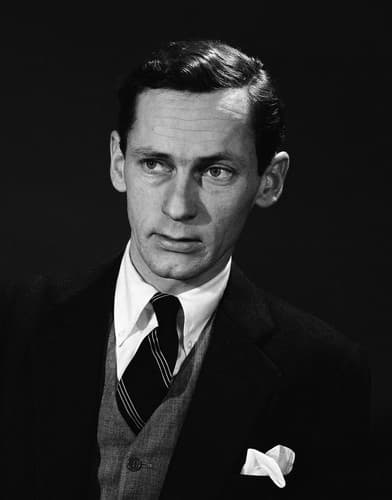
William Thomas Gaddis, Jr. was an American novelist. The first and longest of his five novels, The Recognitions, was named one of TIME magazine's 100 best novels from 1923 to 2005 and two others, J R and A Frolic of His Own, won the annual U.S. National Book Award for Fiction. A collection of his essays was published posthumously as The Rush for Second Place (2002). The Letters of William Gaddis was published by Dalkey Archive Press in February 2013.