“Without contraries is no progression. Attraction and Repulsion, Reason and Energy, Love and Hatred, are necessary to Human existence.”
— The opening 'Argument' section, introducing Blake's core dialectical philosophy.

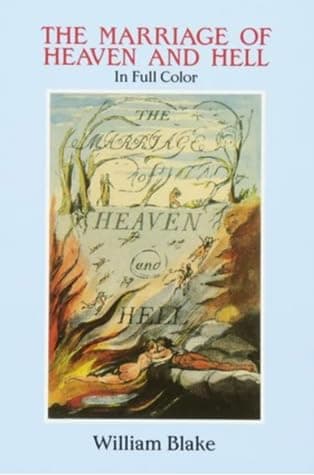
William Blake (1793)
Genre
Spirituality / Creativity / Philosophy
Reading Time
60 min
Key Themes
See below
Sign in to track this book
William Blake's "The Marriage of Heaven and Hell" merges demonic energy and angelic reason, challenging common morality through poetry and art.
“Without contraries is no progression. Attraction and Repulsion, Reason and Energy, Love and Hatred, are necessary to Human existence.”
— The opening 'Argument' section, introducing Blake's core dialectical philosophy.
“The Tygers of wrath are wiser than the Horses of instruction.”
— From 'Proverbs of Hell', advocating for passionate instinct over rigid dogma.
“If the doors of perception were cleansed every thing would appear to man as it is, Infinite. For man has closed himself up, till he sees all things thro' narrow chinks of his cavern.”
— From 'A Memorable Fancy', describing a vision and the limitations of human perception.
“Prisons are built with stones of Law, Brothels with bricks of Religion.”
— From 'Proverbs of Hell', criticizing societal institutions built on restrictive principles.
“The road of excess leads to the palace of wisdom.”
— From 'Proverbs of Hell', challenging conventional morality by suggesting value in transgression.
“Energy is the only life and is from the Body; and Reason is the bound or outward circumference of Energy. Energy is Eternal Delight.”
— From 'The Voice of the Devil', articulating the central role of desire and energy.
“What is now proved was once only imagin'd.”
— From 'Proverbs of Hell', emphasizing the power of imagination as a precursor to reality.
“The ancient Poets animated all sensible objects with Gods or Geniuses, calling them by the names and adorning them with the properties of woods, rivers, mountains, lakes, cities, nations, and whatever their enlarged & numerous senses could perceive.”
— From 'A Memorable Fancy', describing the origins of ancient religion and poetic vision.
“I was in a Printing house in Hell & saw the method in which knowledge is transmitted from generation to generation.”
— From 'A Memorable Fancy', a symbolic description of the creative and transformative process of knowledge.
“He who desires but acts not, breeds pestilence.”
— From 'Proverbs of Hell', stressing the importance of action and the fulfillment of desire.
“As I was walking among the fires of hell, delighted with the enjoyments of Genius; which to Angels look like torment and insanity. I collected some of these remarks, intending to present them to the public as proverbs, & maxims, of infernal wisdom.”
— Introduction to 'Proverbs of Hell', framing the unconventional wisdom that follows.
“Man has no Body distinct from his Soul; for that call'd Body is a portion of Soul discern'd by the five senses, the chief inlets of Soul in this age.”
— From 'The Voice of the Devil', challenging the Cartesian mind-body dualism.
“One Law for the Lion & Ox is Oppression.”
— From 'Proverbs of Hell', advocating for individual freedom and against universal, restrictive laws.
“The Giants who formed this world into its sensual existence and now seem to live in it in chains, are in truth the causes of its life & the sources of all activity.”
— From 'A Memorable Fancy', portraying ancient creative forces as chained but essential.
Ready to see how well you understood this book? Take our interactive quiz with 10 questions.
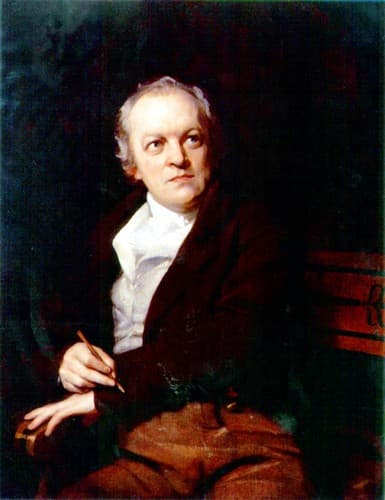
William Blake was an English poet, painter, and printmaker. Largely unrecognised during his life, Blake is now considered a seminal figure in the history of the poetry and visual art of the Romantic Age. What he called his "prophetic works" were said by 20th-century critic Northrop Frye to form "what is in proportion to its merits the least read body of poetry in the English language". His visual artistry led 21st-century critic Jonathan Jones to proclaim him "far and away the greatest artist Britain has ever produced". In 2002, Blake was placed at number 38 in the BBC's poll of the 100 Greatest Britons. While he lived in London his entire life, except for three years spent in Felpham, he produced a diverse and symbolically rich collection of works, which embraced the imagination as "the body of God" or "human existence itself".
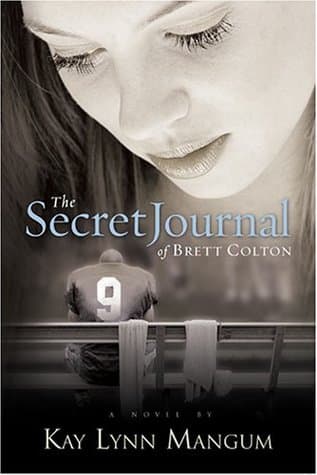
Kay Lynn Mangum
4.3
Stormie Omartian
4.3
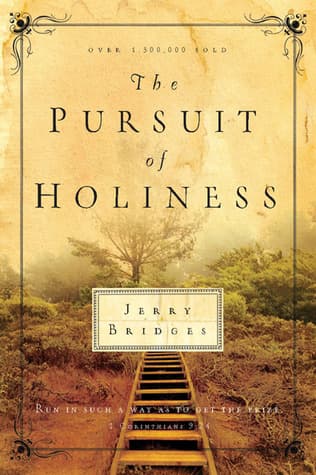
Jerry Bridges
4.3
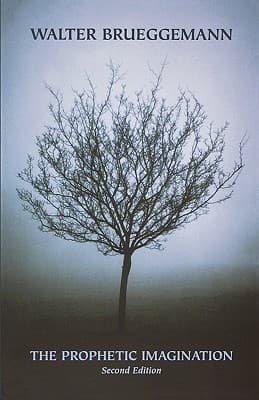
Walter Brueggemann
4.3
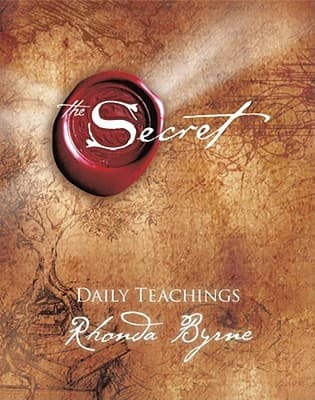
Rhonda Byrne
4.3
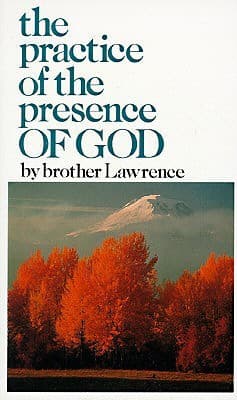
Brother Lawrence
4.3
Joseph Campbell
4.3
Unknown
4.3