BookBrief
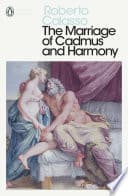
The Marriage of Cadmus and Harmony cover
Archivist's Choice

The Marriage of Cadmus and Harmony

Roberto Calasso (2019)

Genre

Spirituality

Reading Time

1200 min

Key Themes

See below

Track Your Reading

Sign in to track this book

Explore the mythical origins of Western thought as gods and mortals meet, revealing life's big questions through ancient Greek tales.

Core Idea

Roberto Calasso's "The Marriage of Cadmus and Harmony" looks at ancient Greek mythology not as simple stories, but as a complex way of thinking that shaped how humans understood existence, consciousness, and the divine. Calasso argues that these myths provided a way to deal with basic questions of identity, memory, reality, and the cosmic forces of love and violence. This offers a different view of how humans constantly encounter the unknown and the sacred. The book suggests that the 'vanishing threshold' between gods and mortals, and the interplay of appearance and reality in myth, show a unique way of thinking that valued reciprocity, sacrifice, and experiencing the world's beauty.
Reading time
1200 min
Difficulty
Hard
✓ Read this if...
You are fascinated by ancient Greek mythology and seek a dense, philosophical, and literary interpretation that delves into its deeper psychological and cultural significance, rather than a simple retelling.
✗ Skip this if...
You prefer straightforward narrative non-fiction, are looking for a light introduction to Greek myths, or are averse to highly abstract and poetic prose that demands close, reflective reading.

Core idea

The central argument and framework that powers the entire book.

Roberto Calasso's "The Marriage of Cadmus and Harmony" looks at ancient Greek mythology not as simple stories, but as a complex way of thinking that shaped how humans understood existence, consciousness, and the divine. Calasso argues that these myths provided a way to deal with basic questions of identity, memory, reality, and the cosmic forces of love and violence. This offers a different view of how humans constantly encounter the unknown and the sacred. The book suggests that the 'vanishing threshold' between gods and mortals, and the interplay of appearance and reality in myth, show a unique way of thinking that valued reciprocity, sacrifice, and experiencing the world's beauty.

At a glance

Reading time

1200 min

Difficulty

Hard

Read this if...

You are fascinated by ancient Greek mythology and seek a dense, philosophical, and literary interpretation that delves into its deeper psychological and cultural significance, rather than a simple retelling.

Skip this if...

You prefer straightforward narrative non-fiction, are looking for a light introduction to Greek myths, or are averse to highly abstract and poetic prose that demands close, reflective reading.

Key Takeaways

1

The Vanishing Threshold

The gradual withdrawal of the gods from mortal affairs marks a profound shift in human consciousness.

Quote

The marriage of Cadmus and Harmony was the last time the gods of Olympus feasted alongside mortals.

Calasso argues that the 'marriage' of Cadmus and Harmony is not just a story; it is a key moment, a symbolic shift marking the end of direct divine presence in the human world. Before this, gods and mortals lived together, their lives linked in a rich, often terrifying, shared experience. The generations that followed saw a slow, sure separation, where the divine withdrew, leaving humanity to increasingly deal with its own choices, its own suffering, and its own search for meaning. This withdrawal is not abandonment but a change, forc...

Supporting evidence

The entire narrative structure of the book, which moves chronologically through the myths, showing the diminishing direct interaction of gods with heroes and mortals after the Cadmus and Harmony event, contrasting the earlier, more fluid boundaries.

Apply this

Reflect on how modern spirituality often seeks an internal divine connection rather than external manifestations, mirroring this ancient shift. Consider the implications of a world where 'miracles' are no longer commonplace but deeply personal or metaphorical.

divine-immanencemythological-thresholdhuman-consciousness-evolution
2

Myth as Cognitive Map

Greek myths are not mere stories but complex systems for comprehending the world's inherent chaos and beauty.

Quote

The gods are an immense apparatus for not seeing the world as it is.

Calasso challenges the simple idea of myths as charming fables. Instead, he presents them as complex tools for thought. They are a language, a way for ancient Greeks, and by extension, us, to process the unexplainable: the unpredictability of nature, the irrationality of human desire, the certainty of death, and the sheer wonder of existence. Each god, hero, and monster is a symbolic point in a vast network of understanding, allowing for a structured engagement with a reality that would otherwise be overwhelming and meaningless. The m...

Supporting evidence

Calasso's detailed deconstruction of specific myths, such as the abduction of Persephone or the wanderings of Odysseus, showing how each character and event embodies fundamental human experiences and natural phenomena, offering a way to categorize and interpret them.

Apply this

Approach contemporary narratives, be they scientific theories or popular culture stories, as modern myths that attempt to structure our understanding of complex phenomena. Ask: What fundamental truths are these stories trying to convey?

myth-interpretationcognitive-frameworkssymbolic-representation
3

The Aesthetics of Violence

Violence in Greek mythology is not gratuitous but a foundational element of creation and transformation.

Quote

The gods' actions, however violent, are always beautiful.

One of Calasso's most notable insights is his look at violence not as a moral failing but as an aesthetic and creative force in the mythical world. The rape of goddesses, the dismemberment of titans, the bloody battles—these acts are not shown with modern moral judgment but as essential to reality's unfolding, the creation of cosmic order, and the birth of new forms. It is a challenging view that makes us move beyond our current ethical lens and appreciate how, in the ancient mindset, destructive forces were often tied to creative one...

Supporting evidence

The recurring motif of dismemberment (e.g., Uranus by Cronus, Dionysus by the Titans) leading to new forms of life or cosmic order. The brutal clarity with which divine retributions are enacted, often for perceived slights, yet leading to new myths or transformations.

Apply this

Consider how contemporary art and storytelling grapple with violence. Does it merely shock, or does it attempt to reveal deeper truths or transformative processes? Reflect on the 'creative destruction' often observed in natural and societal cycles.

mythical-violencecreation-through-destructionaesthetic-of-myth
4

The Labyrinth of Identity

Human and divine identities are fluid and interconnected, constantly shifting and merging.

Quote

Every metamorphosis is a gesture of becoming, a shedding of the fixed self.

Calasso shows that fixed identities, as we understand them, are mostly absent in Greek myths. Gods often take mortal forms, mortals become animals, plants, or constellations, and even the lines between species are fluid. This constant change highlights a deep understanding of identity not as a fixed thing but as a dynamic, connected process. It suggests that individuality is always linked with the collective, the natural, and the divine, challenging our modern focus on the isolated, independent self. This fluidity makes the myths feel...

Supporting evidence

The myriad tales of metamorphosis: Zeus transforming into various animals to seduce mortals, Daphne becoming a laurel tree, Io transforming into a cow. These transformations are not mere tricks but fundamental changes in being.

Apply this

Consider how modern psychology and philosophy explore the fluidity of identity (e.g., gender identity, self-reinvention). How might embracing a more fluid understanding of self alleviate existential pressures?

identity-fluiditymetamorphosisdivine-human-interconnection
5

The Allure of the Unknown

The power of myth lies in its capacity to embrace, rather than explain away, mystery.

Quote

The myths do not offer answers, but rather a way of living with the questions.

Unlike scientific or philosophical writings that aim to explain things, Calasso argues that Greek myths thrive on the unknown, the ambiguous, and the paradoxical. They do not give clear explanations for the world's origins or life's purpose; instead, they present stories that embody and explore these deep questions without necessarily answering them. This acceptance of mystery is what gives them their lasting power and spiritual depth. They teach us to live in wonder, to accept existence's inherent strangeness, and to find meaning not...

Supporting evidence

The often contradictory versions of myths, the unexplained origins of certain gods or monsters, and the open-ended nature of many mythical narratives, which resist definitive closure or singular interpretation.

Apply this

Cultivate a 'beginner's mind' in daily life, approaching new experiences with curiosity and openness rather than a need for immediate understanding. Allow for ambiguity in personal beliefs and resist the urge to over-explain complex emotions or phenomena.

mystery-in-mythambiguity-as-truthspiritual-inquiry
6

Sacrifice as Reciprocity

Sacrifice is not merely propitiation but a vital act of cosmic exchange and renewal.

Quote

To sacrifice is to return a fragment of what has been given, to keep the circuit open.

Calasso explores the deep importance of sacrifice in the Greek world, moving past a simple understanding of it as appeasement. He shows it as a basic act of reciprocity, a way for mortals to engage in a continuous dialogue with the divine and the natural world. By offering a portion of their bounty, their animals, or even their own lives, mortals participated in a sacred exchange, ensuring the continuation of cosmic order and the flow of blessings. It was not about giving something up, but about maintaining a vital connection, a cycle...

Supporting evidence

The detailed accounts of various sacrifices within the myths, from simple offerings to complex rituals, and the consequences (both positive and negative) of performing or neglecting them. The concept of the 'feast' as a shared act between gods and men, where portions are given to each.

Apply this

Consider modern acts of 'giving back' – whether through charity, environmentalism, or community service – as echoes of this ancient principle of reciprocity. Reflect on how personal sacrifices in life (time, effort) contribute to larger, meaningful outcomes.

ritual-sacrificecosmic-economyreciprocity-divine
7

The Weight of Memory

Memory, both individual and collective, shapes destiny and defines the mythical landscape.

Quote

The gods remember everything, and their memory is our fate.

Memory, or Mnemosyne, is not just a passive ability in Calasso's exploration; it is an active, shaping force. The gods remember insults, promises, and lineages, and these memories drive their actions and, consequently, mortal destinies. Heroes strive for lasting memory through their deeds, fearing oblivion more than death. Calasso suggests that the entire structure of Greek mythology is, in essence, a grand act of collective memory, a continuous retelling that keeps the past alive and powerful in the present. This focus on memory high...

Supporting evidence

The consistent emphasis on lineage and ancestry (e.g., the genealogies of gods and heroes), the long-held grudges of deities (e.g., Hera's hatred of Heracles), and the pursuit of kleos (glory/fame) by heroes as a form of immortal memory.

Apply this

Recognize the power of personal and cultural narratives in shaping individual and collective identities. Actively cultivate positive memories and engage with historical narratives to understand their influence on present realities.

mythical-memorydestiny-and-memorycollective-unconscious
8

The Dance of Appearance and Reality

The mythical world constantly blurs the lines between what is seen and what truly is.

Quote

Nothing is ever quite what it seems when the gods are involved.

Calasso vividly shows a world where illusion, disguise, and shape-shifting are not exceptions but part of reality. Gods appear in many forms, often to deceive or test mortals. Omens are unclear, dreams are prophetic, and the true nature of events is often hidden. This constant interplay between appearance and a deeper, often hidden, reality makes both the characters in the myths and the reader question what they perceive. It is a deep exploration of how we gain knowledge, suggesting that truth is rarely simple and often lies beneath l...

Supporting evidence

Zeus's countless disguises to approach mortal women, the deceptive nature of prophecies from oracles, the frequent use of illusions by gods to manipulate outcomes, and the difficulty mortals have in discerning divine presence.

Apply this

Develop critical thinking skills to analyze information and identify potential biases or hidden agendas. Practice mindfulness to distinguish between immediate perceptions and deeper truths in personal interactions and media consumption.

illusion-in-mythepistemology-mythicalappearance-vs-reality
9

Eros as Cosmic Force

Desire, in its rawest and most potent form, is a fundamental driver of creation and destruction.

Quote

Eros is not merely love; it is the primordial urge that moves the cosmos.

Calasso raises Eros beyond mere romantic or sexual love, presenting it as a fundamental, cosmic force that predates even many of the Olympian gods. It is the primal urge, the irresistible attraction that brings entities together, sparking creation, conflict, and transformation. This Eros is often wild, irrational, and dangerous, leading to both great beauty and terrible violence. It is the engine of the universe, responsible for the birth of gods, the coupling of mortals, and the unfolding of all events. Understanding this untamed, al...

Supporting evidence

The numerous tales of divine infatuations and abductions, the jealousies and rivalries fueled by desire, and the genealogical accounts that often begin with primordial couplings driven by a raw, undifferentiated Eros.

Apply this

Recognize the powerful, often unconscious, role that desire plays in human motivations, from personal choices to societal movements. Cultivate an awareness of both the creative and destructive potential of powerful urges.

cosmic-erosprimal-desirecreative-destruction
10

The Fragility of Order

Even divine order is perpetually threatened by chaos, requiring constant vigilance and renewal.

Quote

The cosmos, however ordered, always remembers its own chaotic origins.

Despite the establishment of Olympian rule, Calasso shows that the Greek mythical world is never truly secure. The forces of chaos—represented by Titans, monstrous creatures, or even the unpredictable moods of the gods themselves—constantly lurk beneath the surface, threatening to undo the established order. This inherent fragility means that order is not a fixed state but a dynamic, ongoing process, requiring continuous acts of heroism, sacrifice, and divine intervention to maintain. It speaks to a deep ancient understanding that sta...

Supporting evidence

The recurring battles between Olympians and Titans, the constant threat of monsters like Typhon or the Hydra, and the need for heroes to undertake seemingly impossible labors to restore balance or avert disaster.

Apply this

Recognize that societal and personal order are not inevitable but require continuous effort, adaptation, and vigilance to maintain. Appreciate the constant tension between stability and change in all systems.

cosmic-chaosmythical-orderfragility-of-existence

Critical analysis

Notable Quotes

Every myth is a catastrophe.

A foundational statement on the nature of myth and its inherent disruption.

The gods are not a catalogue, but a web.

Emphasizing the interconnectedness and dynamic relationships among the Greek deities.

We are born into the middle of a story that has already begun.

Reflecting on human existence as always already embedded in a larger narrative.

The greatest danger for a god is to be forgotten.

Highlighting the reliance of divine power on human memory and belief.

To know is to take part.

Suggesting that true understanding involves participation and immersion in the subject.

The world is not a problem to be solved, but a mystery to be lived.

A shift in perspective from analytical problem-solving to embracing life's enigmatic nature.

Every event is a knot in a network of affinities.

Describing the intricate causal and symbolic connections between seemingly disparate occurrences.

The divine appears only when it is not sought.

Paradoxically, suggesting that the gods reveal themselves spontaneously rather than through direct pursuit.

Silence is the only language capable of describing certain encounters.

Emphasizing the ineffable nature of profound experiences, particularly with the divine.

The myth does not explain, it presents.

Clarifying the function of myth as a direct presentation of reality rather than a rational explanation.

To be human is to be perpetually on the threshold.

Illustrating the liminal and transitional nature of human existence.

Beauty is the ultimate argument of the gods.

Suggesting that the aesthetic perfection of the divine world is its most compelling justification.

The sacred is what resists being reduced to the profane.

Defining the sacred by its inherent otherness and refusal to be assimilated into the mundane.

Every sacrifice is an attempt to restore a shattered harmony.

Explaining the ritualistic function of sacrifice as an act of rebalancing and reconciliation.

Quiz

Test Your Knowledge

Ready to see how well you understood this book? Take our interactive quiz with 10 questions.

10
Questions
~5
Minutes
?
Best Score

Key Questions (FAQ)

'The Marriage of Cadmus and Harmony' by Roberto Calasso is a masterful retelling of ancient Greek myths, focusing on the period when gods and mortals still interacted. It explores the profound stories that shaped Western self-consciousness and delves into the deepest questions of human existence through these timeless tales.

About the author

Roberto Calasso

Roberto Calasso was an Italian writer and publisher. Apart from his mother tongue, Calasso was fluent in French, English, Spanish, German, Latin and ancient Greek. He also studied Sanskrit. He has been called "a literary institution of one". The fundamental thematic concept of his œuvre is the relationship between myth and the emergence of modern consciousness.