“Every man has a sun, and the sun is his soul.”
— The resurrected man reflecting on his inner being.

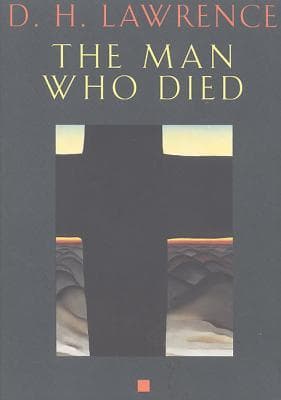
Genre
Spirituality
Reading Time
112 min
Key Themes
See below
Sign in to track this book
After miraculously rising from the tomb, a disillusioned Christ embarks on a sensual journey of self-discovery, embracing the pagan life-force and finding redemption not in divinity, but in the arms of an Isis priestess.
After being taken down from the cross and placed in a tomb, a man, implied to be Jesus, stirs back to life. He feels a strange, cold detachment from his previous identity and mission as a savior. The women who come to anoint his body are terrified by his movement and flee. He realizes he has been resurrected, but not as expected. His body is weak, his mind clear but without the spiritual fervor that defined his public life. He feels tired of being 'the Christ' and yearns to experience life as a simple, physical being, free from the burden of his past sacrifice and divine purpose. He slowly emerges from the tomb, observing the natural world with new wonder, seeking genuine connection rather than spiritual leadership.
Weak and disoriented, the man stumbles upon a small peasant farm. A cock crows, symbolizing his return to life and a primal connection to the earth. The peasant family, initially wary, takes him in, offering food and shelter. He observes their simple, earthy life, their connection to the land and their animals. He is drawn to the peasant woman, feeling a stir of physical desire and a longing for human warmth that he had previously denied. He works alongside them, learning to appreciate the mundane tasks of farming and the quiet dignity of their existence, a contrast to the spiritual and intellectual life he had led. This period helps him shed the last parts of his former persona and embrace a more grounded, sensual reality.
Despite the comfort and simple contentment he found with the peasant family, the man feels an urge to move on, to explore his new self further. He says goodbye to the family, leaving them with a sense of peace and a renewed connection to their own lives. He travels towards the sea, drawn by its vastness and ever-changing nature. During his journey, he sheds his old garments and identity, symbolically casting off the 'man who died' and embracing the 'man who lives.' He reflects on his past teachings, finding them incomplete without the full embrace of the physical and sensual aspects of life. He begins to feel a new kind of vitality, a life-force that connects him to all living things.
Upon reaching the coast, the man encounters a fisherman and acquires a small boat. He learns the basics of sailing and fishing, spending his days on the water, observing the sea and its creatures. This experience deepens his connection to the natural world and reinforces his detachment from human society's expectations. The fisherman, a man of few words but deep understanding, becomes a silent companion, offering practical wisdom without judgment. The man finds a deep sense of peace and self-sufficiency in this solitary existence, allowing his body and spirit to heal and integrate. He feels a growing sense of his own physical being, separate from any divine or spiritual role, simply existing and experiencing.
Driven by an unseen force, the man eventually sails to a remote island. As he approaches, he sees a magnificent temple dedicated to the goddess Isis, its presence radiating an ancient, powerful feminine energy. He feels an immediate, visceral connection to this place, a sense of belonging he hasn't experienced since his resurrection. The temple contrasts with the patriarchal, ascetic world he previously inhabited, promising a different kind of spiritual fulfillment. He senses a profound mystery here, a celebration of life, death, and rebirth, rather than just sacrifice. He is drawn to explore this new spiritual landscape, feeling it holds the key to the final piece of his reborn identity.
Upon entering the temple grounds, the man encounters the High Priestess of Isis, a beautiful and commanding woman. She initially mistakes him for a god or a spirit, due to his ethereal appearance and the wounds on his hands and feet. He corrects her, stating simply that he is 'the man who died.' There is an immediate, powerful connection between them, a recognition of profound loneliness and a shared yearning for authentic life. She is drawn to his vulnerability and quiet strength, while he is captivated by her sensual nature and her embodiment of the ancient feminine mysteries. Their meeting is important, signaling the start of his journey towards physical and spiritual completion.
The Priestess, through her intuitive understanding and the rituals of Isis, begins to minister to the man. She recognizes that he is not a god, but a man deeply wounded by his past, both physically and spiritually. She tends to his scars, both visible and invisible, with a gentle, reverent touch. Through her, he begins to shed the last remnants of his crucified self, understanding that true resurrection involves embracing the body and its desires, not denying them. She speaks of Isis, the goddess of life, death, and rebirth, and the importance of the sacred union of male and female principles for true wholeness. He feels a deep sense of acceptance and healing in her presence.
In a climactic moment, the man and the Priestess engage in a sacred sexual union. This act is not merely physical but deeply spiritual, representing the culmination of his rebirth and the integration of his spirit and body. Through this intimate connection, he experiences the full spectrum of life, feeling joy, passion, and deep connection to another human being. It is a resurrection of his flesh, a rediscovery of his sensual self, which he had suppressed in his previous life. The Priestess, through her sacred sexuality, helps him to fully 'live' again, to embrace the 'blood-knowledge' and the life-force that flows through all creation. This union signifies his complete liberation from the burden of his former identity as a suffering savior.
The peace and deep connection between the man and the Priestess are threatened by the arrival of Roman soldiers on the island. The Priestess expresses fear that they will desecrate the temple and disrupt their sacred existence. The man, having found his true self and embraced life, refuses to return to his former role as a martyr or a spiritual leader. He understands that his new life is precious and must be protected. The presence of the soldiers reminds him of the external world's demands and its potential to destroy the fragile, authentic life he has cultivated. This external threat forces him to consider how to preserve his newfound freedom.
To protect the Priestess and their shared sacred space from the encroaching Roman influence, the man makes the difficult decision to leave the island. He cannot allow himself to be recaptured or to become a symbol for the world again. He promises the Priestess that he will return, and that their connection is eternal. He sails away, carrying the seed of their union within him, a symbol of the new life he has embraced. This departure signifies not an abandonment, but a protective measure, ensuring that the 'man who died' has truly become 'the man who lives,' free to experience life on his own terms, carrying the wisdom of his resurrection and his sacred union into an unknown future.
The Protagonist
He transforms from a suffering, spiritual savior into a fully embodied, sensual man who embraces life's physical and emotional dimensions.
The Supporting
She helps the man complete his transformation, and through their union, she finds a new depth to her own spiritual practice.
The Supporting
She remains a static, comforting presence, providing a foundational experience for the man's re-entry into life.
The Supporting
He serves as a catalyst for the man's journey, providing the means for further independence.
The Mentioned
Her brief appearance emphasizes the man's complete break from his past and his followers.
The central theme is a reinterpretation of resurrection, moving beyond spiritual rebirth to embrace the physical and sensual aspects of life. The man, after his awakening, feels a disconnect from his 'spirit-self' and a yearning for 'blood-knowledge' and physical experience. His journey with the peasant family, his life on the sea, and his sacred sexual union with the Priestess of Isis, all show his rediscovery and celebration of the body, touch, taste, and passion. This theme suggests that true life, and true divinity, includes the full embrace of human physicality, not its denial. The wounds on his hands and feet, initially symbols of suffering, become marks of his humanity, healed through sensual connection.
“''I have died, and I have to live again, not the life of the spirit, but the life of the flesh, the life of the sun and the moon and the stars, the life of the earth and the sea, the life of the human body, the life of the human heart, the life of the human soul, the life of the human spirit. I have died, and I have to live again, not the life of the spirit, but the life of the flesh, the life of the sun and the moon and the stars, the life of the earth and the sea, the life of the human body, the life of the human heart, the life of the human soul, the life of the human spirit.'”
The narrative critiques established religious dogma and the ascetic rejection of the body. The man's awakening is marked by a weariness with his previous role as 'the Christ,' a figure burdened by suffering and abstract spiritual ideals. He rejects the notion that life's purpose is solely spiritual or sacrificial. His flight from his former followers and his avoidance of resuming his preaching highlight his desire to escape the confines of doctrine. His embrace of the pagan goddess Isis, with her emphasis on cyclical life, fertility, and sensual worship, contrasts with the Christian emphasis on suffering and transcendence, suggesting that true spirituality lies in connection to the earth and the body.
“''They had nailed him up, and now they expected him to be a saviour! The fools!''”
This theme explores the life-affirming power of the feminine principle, often expressed through pagan symbolism. The Priestess of Isis is a central figure, embodying sensuality, fertility, and the ancient wisdom of life and death cycles. Her temple, dedicated to a goddess of rebirth, contrasts with the patriarchal and suffering-focused religion the man previously represented. Through her, the man finds healing, acceptance, and a path to wholeness that integrates the physical and spiritual. The novel suggests that true spiritual fulfillment requires the balance and embrace of both masculine and feminine energies, celebrating the life-giving aspects of nature and the body, rather than condemning them.
“''Isis! Isis! The goddess of the earth and the moon, the goddess of the womb and the tomb, the goddess of life and death, the goddess of love and creation!''”
The story is about the protagonist's quest to shed a preconceived, imposed identity ('the Christ') and discover his true, individual self. His resurrection is not a return to his old role but an opportunity for liberation. He actively rejects the expectations of others and the burden of being a symbol. His journey of solitude, his interactions with the peasant family and the fisherman, and his relationship with the Priestess, all help him forge a new identity as 'the man who died' and then 'the man who lives.' This theme emphasizes the importance of personal experience and self-discovery over adherence to external roles or societal expectations, leading to a sense of freedom and authenticity.
“''I am not the Christ. I am the man who died. And I am born again, to live my own life, not to be a saviour to others.''”
A literal awakening from death that serves as a metaphor for spiritual and sensual rebirth.
The physical resurrection of the man is not merely a miraculous event but a profound symbolic act. It represents his rebirth not into his former spiritual role, but into a new, embodied existence. The wounds on his hands and feet, initially stigmata, become marks of his humanity that require sensual healing. His emergence from the tomb signifies shedding the 'dead' identity of a suffering savior and embracing the 'living' identity of a man seeking authentic experience. The resurrection allows the narrative to explore themes of identity, sensuality, and the redefinition of spirituality.
The man's physical travels mirror his internal transformation and search for identity.
The man's journey from the tomb, through the peasant farm, to the sea, and finally to the Temple of Isis, is a literal and metaphorical quest for self-discovery. Each stage of his journey exposes him to different aspects of life and helps him shed another layer of his former self. The solitude of the sea allows for introspection, while the peasant family offers simple human connection. The ultimate destination, the Temple of Isis, represents the culmination of his search for an integrated, sensual spirituality. The journey is essential for his transformation from a symbolic figure to a fully realized individual.
The juxtaposition of Christian and pagan imagery to highlight thematic differences.
Lawrence employs contrasting symbolism to underscore the novel's central themes. The Christian symbols of the cross, the tomb, and the suffering Christ are juxtaposed with the pagan symbols of the cock (representing life and vitality), the sea (representing freedom and primal nature), and particularly the goddess Isis (representing fertility, rebirth, and the sacred feminine). This contrast highlights the novel's argument for a more embodied, sensual spirituality over an ascetic, suffering-focused one. The tension between these symbol sets drives the narrative's exploration of new spiritual paradigms and the rejection of established dogma.
The physical scars on the man's body that symbolize his past suffering and need for healing.
The wounds on the man's hands and feet, remnants of his crucifixion, serve as powerful symbols throughout the narrative. Initially, they are reminders of his past suffering and his identity as 'the Christ.' However, as he embarks on his journey of self-discovery, these wounds transform. They become physical manifestations of his humanity, requiring not spiritual transcendence but physical and sensual healing. The Priestess of Isis tends to them, symbolizing the integration of his physical pain into his new, embodied self. By the end, they are no longer stigmata of sacrifice but marks of a man who has fully lived and been healed through touch and love.
“Every man has a sun, and the sun is his soul.”
— The resurrected man reflecting on his inner being.
“I am not Jesus, but the man who was Jesus. I have risen from the dead, but not to the old life.”
— The man's declaration of his new identity after resurrection.
“The great living heart of the cosmos, beating, beating, beating, and I am part of it.”
— Experiencing a profound connection with nature and the universe.
“To be alone, to be utterly alone, and to be whole.”
— Embracing solitude as a path to wholeness.
“I have died, and am born again, but not to the old world.”
— A central theme of the protagonist's transformation.
“The world is not to be saved, but to be lived.”
— Rejecting a messianic role in favor of personal experience.
“The sun of my soul is not the sun of the world.”
— Distinguishing between inner and outer realities.
“He knew that the only way to live was to accept the otherness, the mystery.”
— Coming to terms with the inexplicable aspects of life.
“The flower of life, unfolding, unfolding, and I am part of it.”
— Observing the natural cycle of life with deep connection.
“I have come back, but I am not the same.”
— A simple yet powerful statement of the man's altered state.
“The only saviour is the soul itself.”
— Emphasizing individual inner salvation.
“To be alive is to be aware, to be sensitive, to be open to the wonder.”
— Defining true aliveness beyond mere existence.
“He felt the deep, dark pulse of the earth, and it was his own pulse.”
— A moment of profound communion with the earth.
“The past is a husk, and I have shed it.”
— Letting go of former identities and experiences.
Ready to see how well you understood this book? Take our interactive quiz with 10 questions.

D.H. Lawrence was a prominent English novelist, poet, playwright, and essayist whose works explored themes of sexuality, industrialization, and the human condition. His most controversial and famous novel, "Lady Chatterley's Lover," challenged societal norms and censorship. Other notable works include "The Rainbow," "Women in Love," and "Sons and Lovers," solidifying his place as a significant figure in modernist literature.

Kay Lynn Mangum
4.3
Stormie Omartian
4.3
Jerry Bridges
4.3
Walter Brueggemann
4.3
Rhonda Byrne
4.3
Brother Lawrence
4.3
Joseph Campbell
4.3
Unknown
4.3