BookBrief
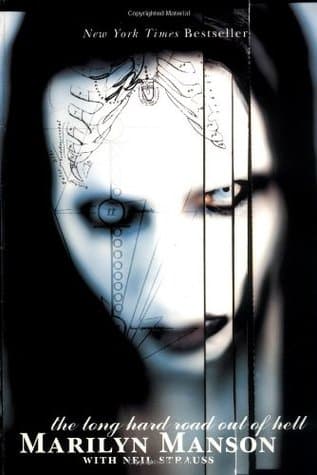
The Long Hard Road Out of Hell cover
Archivist's Choice

The Long Hard Road Out of Hell

Marilyn Manson (1999)

Genre

Biography / Memoir

Reading Time

6-8 hours

Key Themes

See below

Track Your Reading

Sign in to track this book

From the suffocating grip of Christian schoolboy conformity to the defiant roar of America's most feared rock icon, Marilyn Manson's memoir rips through a landscape of shock, fame, and self-reinvention.

Core Idea

Marilyn Manson's memoir details the deliberate, often painful, construction of a controversial artistic persona. This persona is a direct response to a conservative upbringing and a critique of societal hypocrisy. The book argues that the provocative imagery and transgressive performances were not just shock tactics, but a philosophical exploration of good and evil, faith and doubt, and the contradictions within American culture. It reveals the personal cost and artistic need behind becoming a modern-day antichrist superstar. The book suggests that artistic rebellion often requires a complete deconstruction of self and societal norms, even with public condemnation.
Reading time
6-8 hours
Difficulty
Medium
✓ Read this if...
You are fascinated by the deliberate creation of controversial artistic personas, the intersection of shock rock and social commentary, or want a raw, unvarnished look into the mind and experiences of a highly polarizing figure in music history.
✗ Skip this if...
You are easily offended by graphic descriptions, explicit content, or the challenging of religious and moral conventions, or you are looking for a purely objective historical account rather than a subjective, often self-aggrandizing, personal narrative.

Core idea

The central argument and framework that powers the entire book.

Marilyn Manson's memoir details the deliberate, often painful, construction of a controversial artistic persona. This persona is a direct response to a conservative upbringing and a critique of societal hypocrisy. The book argues that the provocative imagery and transgressive performances were not just shock tactics, but a philosophical exploration of good and evil, faith and doubt, and the contradictions within American culture. It reveals the personal cost and artistic need behind becoming a modern-day antichrist superstar. The book suggests that artistic rebellion often requires a complete deconstruction of self and societal norms, even with public condemnation.

At a glance

Reading time

6-8 hours

Difficulty

Medium

Read this if...

You are fascinated by the deliberate creation of controversial artistic personas, the intersection of shock rock and social commentary, or want a raw, unvarnished look into the mind and experiences of a highly polarizing figure in music history.

Skip this if...

You are easily offended by graphic descriptions, explicit content, or the challenging of religious and moral conventions, or you are looking for a purely objective historical account rather than a subjective, often self-aggrandizing, personal narrative.

Key Takeaways

1

The Genesis of the Grotesque

How suburban repression and religious hypocrisy fueled a rebellious persona.

Quote

I was a product of the very things I hated, and the only way to escape was to become something entirely new, something they couldn't control.

Manson's memoir vividly details his early life as Brian Warner, a child growing up in a suburban environment marked by intense religious indoctrination and an underlying sense of dread. The book argues that the very forces meant to 'protect' and 'guide' him—strict Christian schooling, conservative societal norms, and a pervasive fear of the 'other'—paradoxically laid the groundwork for his rebellion. His interest in the macabre, the forbidden, and the transgressive was not an inherent evil, but a direct reaction to the suffocating hyp...

Supporting evidence

Manson recounts his experiences at Heritage Christian School, where he was taught about demons and hellfire, contrasted with the unspoken tensions and secrets within his own family and community. He details the fear-mongering tactics used by his teachers and the way this fostered a morbid curiosity rather than genuine faith.

Apply this

Reflect on how your own upbringing, particularly any restrictive or hypocritical elements, might have inadvertently shaped your current values, rebellions, or artistic expressions. Consider how societal pressures can create the very counter-cultures they seek to suppress.
suburban-gothicreligious-hypocrisyrebellion-genesis
2

The Art of Provocation

Manson's calculated use of shock as a tool for social commentary and self-liberation.

Quote

I didn't want to just entertain; I wanted to challenge, to provoke, to force people to look at the parts of themselves they preferred to ignore.

Manson's career is a study in strategic provocation. He did not just seek to offend; he used shock tactics as a deliberate artistic and philosophical tool. His transformation into 'Marilyn Manson'—a fusion of an American icon of beauty (Marilyn Monroe) and a notorious serial killer (Charles Manson)—immediately signals his intent to subvert societal norms and expose the duality of human nature. The book reveals how his stage antics, lyrics, and imagery were carefully crafted to mirror and critique the darker undercurrents of American c...

Supporting evidence

Manson details the conceptualization of his stage name and the band's aesthetic, explaining the deliberate blend of the sacred and profane. He discusses specific controversies, such as the use of offensive imagery or the burning of the American flag on stage, and the thought process behind each act as a response to perceived societal hypocrisy.

Apply this

Consider how you can use unconventional or challenging methods to draw attention to important issues in your own field. How can you disrupt complacency to spark genuine dialogue, rather than just outrage?

shock-artsocial-commentaryidentity-formationtransgression
3

The Power of Persona

Crafting an alter ego as a shield and a weapon against the mundane and the malevolent.

Quote

Marilyn Manson became the monster they wanted me to be, but also the monster I needed to be to survive.

The memoir powerfully shows how the persona of Marilyn Manson was not just a stage act but a complex psychological construct. For Brian Warner, creating Marilyn Manson was an act of self-preservation and empowerment. It allowed him to shed the anxieties and vulnerabilities of his past, providing armor against the criticisms and misunderstandings aimed at him. This alter ego became a way for him to explore forbidden themes, express repressed emotions, and control his narrative in a world that often sought to define and demonize him. Th...

Supporting evidence

Manson frequently contrasts his inner thoughts and anxieties as Brian Warner with the public image and actions of Marilyn Manson. He describes the deliberate choices in makeup, costume, and stage presence as a means to embody this new identity, and how it gave him the confidence to confront hostile audiences and media.

Apply this

Consider how you might strategically craft an 'alter ego' or a specific professional persona to help you overcome insecurities, project confidence, or achieve specific goals in your own life or career. What aspects of yourself do you want to amplify or shield?

alter-egoidentity-constructionself-empowermentperformance-art
4

The Scapegoat Syndrome

How society projects its anxieties onto unconventional figures, especially during moral panics.

Quote

I was just a convenient target, a monster for them to point at while they ignored the real monsters in their own backyards.

Manson's memoir offers a compelling, though self-serving, argument for the 'scapegoat syndrome.' The book chronicles the intense moral panic surrounding his band, particularly after tragic events like the Columbine High School massacre, where he was unfairly blamed and vilified by media and politicians. Manson argues that his controversial image and music became a convenient target for a society unwilling to confront its deeper issues—gun violence, mental health, parental neglect, and the hypocrisy of its own institutions. This narrat...

Supporting evidence

Manson dedicates significant portions to detailing the accusations and media frenzy following Columbine, including death threats, cancelled tours, and protests by religious groups. He recounts specific interviews and public statements where he was directly blamed, and his attempts to defend himself and highlight the real issues.

Apply this

When confronted with widespread blame or accusations, critically examine whether you are truly at fault or if you are being used as a convenient scapegoat for larger, systemic issues. Understand the dynamics of moral panics and how they often target the 'other.'

moral-panicscapegoatingmedia-sensationalismsocietal-anxiety
5

The Glamour and Grind of Rock 'n' Roll

Behind the spectacle lies a relentless cycle of creativity, chaos, and self-destruction.

Quote

The stage was a battlefield, the studio a mad scientist's lab, and life on the road was a perpetual hangover with brief moments of transcendence.

Beyond the shock value, Manson's memoir provides an unvarnished look at the grueling reality of being a successful rock musician. It is a world not just of sold-out shows and adoring fans, but also of relentless touring, creative pressures, inter-band conflicts, and pervasive substance abuse. The book details the physical and psychological toll of constantly being 'on,' the struggle to maintain authenticity amidst commercial demands, and the fine line between artistic expression and self-destruction. It debunks the myth of effortless ...

Supporting evidence

Manson describes the cramped tour buses, the endless string of hotel rooms, the exhaustion, and the constant cycle of writing, recording, and performing. He details specific instances of band member disputes, drug use, and the physical injuries sustained during performances, painting a picture of constant strain.

Apply this

For anyone pursuing a creative or high-pressure career, recognize that external glamour often masks internal struggles and immense effort. Prioritize self-care and establish healthy boundaries to avoid burnout and maintain creative longevity.

rock-star-lifestylecreative-processsubstance-abuseburnoutmusic-industry
6

The Deconstruction of Faith

Challenging religious dogma as a pathway to personal truth and intellectual freedom.

Quote

They taught me about heaven and hell, but I found more truth in questioning both than in blindly accepting either.

A recurring theme in the memoir is Manson's aggressive deconstruction of organized religion. Stemming from his early experiences in Christian schools, he systematically dismantled the tenets of faith he was taught, viewing them as instruments of control and hypocrisy rather than sources of genuine spiritual enlightenment. His music and public persona became a direct challenge to religious authority, questioning the nature of good and evil, sin and redemption. The book argues that true understanding and personal truth often emerge not ...

Supporting evidence

Manson recounts specific lessons from his Christian schooling about original sin, the literal devil, and the fear of eternal damnation. He then contrasts these with his later artistic explorations of Nietzschean philosophy, Aleister Crowley, and his own interpretations of morality, culminating in songs like 'Antichrist Superstar.'

Apply this

Encourage critical examination of deeply held beliefs, whether religious, political, or social. Don't be afraid to question authority or dogma in pursuit of your own understanding, even if it makes others uncomfortable.

religious-critiqueatheismintellectual-freedomdogma-deconstructionspiritual-autonomy
7

The Power of Collaboration

The vital role of creative partnerships in forging a unique artistic vision.

Quote

You can have a vision, but it takes a collective madness, a shared obsession, to truly bring it to life.

While often seen as a singular figure, the memoir shows the indispensable role of collaboration in Manson's artistic journey. The book highlights the contributions of band members like Daisy Berkowitz (Scott Putesky) and Twiggy Ramirez (Jeordie White), and producers like Trent Reznor. These partnerships were not always harmonious, often with tension and conflict, but they were essential for translating Manson's conceptual ideas into tangible, impactful music and imagery. Creative friction often led to innovative solutions and pushed t...

Supporting evidence

Manson details the early days of forming the Spooky Kids with Daisy Berkowitz, describing their shared influences and the initial development of their sound. He also discusses the pivotal role of Trent Reznor in shaping the sound of 'Antichrist Superstar' and providing resources, despite their later strained relationship.

Apply this

Actively seek out collaborators who challenge your ideas and bring diverse skills to the table. Embrace creative friction as a potential catalyst for innovation, understanding that the strongest visions often emerge from collective effort.

creative-collaborationband-dynamicsartistic-partnershipmusic-productioncollective-vision
8

The Cycle of Self-Creation and Destruction

The relentless drive to redefine oneself, even at the cost of personal stability.

Quote

Every album was a death and a rebirth, a tearing down of what came before to make room for something new, something more extreme.

Manson's memoir reveals a relentless, almost compulsive, cycle of self-creation and destruction that defined his artistic and personal trajectory. Each album, each era of Marilyn Manson, was a deliberate reinvention, often involving shedding former band members, altering his image, and pushing his sound in new directions. This constant metamorphosis, while vital for his artistic evolution and maintaining relevance, often came at a significant personal cost, leading to instability, strained relationships, and periods of intense persona...

Supporting evidence

Manson describes the deliberate shifts in his aesthetic and musical style from 'Portrait of an American Family' to 'Antichrist Superstar' and 'Mechanical Animals.' He details the departures of key band members and the personal turmoil that often accompanied these artistic transformations and reinventions.

Apply this

While reinvention is crucial for growth, consider the personal costs and strive for a balance between artistic evolution and personal well-being. Understand that constant radical change can be exhilarating but also destabilizing.

self-reinventionartistic-evolutionpersonal-transformationcreative-destructionidentity-flux
9

The Perils of Iconoclasm

The heavy price paid for challenging norms and refusing to conform.

Quote

I didn't choose to be an iconoclast; I just couldn't be anything else, and that came with its own kind of damnation.

Manson's story is a stark reminder of the perils inherent in being an iconoclast. While his deliberate defiance of societal norms garnered him fame and a devoted following, it also subjected him to intense scrutiny, vilification, and the constant threat of censorship or violence. The book details numerous instances of protests, cancelled shows, legal battles, and death threats, illustrating the personal and professional costs of refusing to conform. It highlights that true rebellion, especially in the public eye, is rarely celebrated ...

Supporting evidence

Manson recounts numerous incidents of protests by religious groups outside his concerts, threats from various organizations, and the legal challenges he faced regarding his performances and lyrics. He details the psychological toll of being constantly demonized and misunderstood by large segments of society.

Apply this

If you choose a path of challenging established norms, be prepared for significant backlash and develop strategies for resilience. Understand that not everyone will appreciate your vision, and some will actively seek to suppress it.

iconoclasmcensorshippublic-vilificationnon-conformitysocial-resistance
10

The Search for Authenticity in Art

Even within a constructed persona, the drive for genuine expression remains paramount.

Quote

Every mask I wore, every character I played, was just another way of trying to get closer to the truth of who I was, or who I wanted to be.

Despite the layers of theatricality, shock, and constructed persona, Manson's memoir ultimately reveals a deep-seated desire for authenticity in his art. The book suggests that the elaborate masks and provocative performances were not just a means of deception, but rather a complex method of exploring and expressing his genuine internal world, anxieties, and philosophical inquiries. His art, however extreme, was a sincere attempt to articulate uncomfortable truths about society and himself. This takeaway emphasizes that authenticity i...

Supporting evidence

Manson frequently discusses the personal meaning behind his lyrics and concepts, linking them back to his childhood experiences, fears, and intellectual curiosities. He emphasizes that even the most outrageous acts were rooted in a desire to communicate a specific message or feeling, rather than just to be shocking.

Apply this

When creating, reflect on the core truths you are trying to convey, regardless of the medium or style. Understand that authenticity can be expressed through many forms, and a constructed persona can sometimes be the most effective way to reveal deeper truths.

artistic-authenticityself-expressionpersona-and-truthconceptual-arttruth-in-art

Critical analysis

Notable Quotes

I was born into a white, middle-class family in Canton, Ohio, in 1969. I was an only child, and my parents were a strange combination of conservative and eccentric.

Opening lines, setting the scene for his upbringing.

I never wanted to be famous. I only wanted to be heard.

Reflecting on his early motivations for making music and art.

I learned that there were no rules, no limits, no right or wrong. Only what you could get away with.

Describing his realization about societal norms and personal freedom during his formative years.

My father taught me how to be a man, even if he didn't realize it. He taught me how to be a monster.

Discussing the complex relationship with his father and its influence on his persona.

Music was my escape, my therapy, my weapon.

Explaining the profound role music played in his life and development.

I didn't want to just shock people; I wanted to make them think.

Clarifying his artistic goals beyond mere provocation.

There's a fine line between genius and insanity, and I've always walked it.

Reflecting on his creative process and public perception.

We were creating something that was supposed to be ugly and beautiful at the same time. Something that would make you question everything.

Describing the aesthetic and philosophical goals of the band Marilyn Manson.

I was never a Satanist. I was a provocateur.

Addressing common misconceptions about his beliefs and public image.

The greatest trick the devil ever pulled was convincing the world he didn't exist. The greatest trick I ever pulled was convincing the world I did.

A play on a famous quote, reflecting on his constructed persona and impact.

My art is not a reflection of my life; it's a reflection of the world I see.

Distinguishing between his personal life and the broader themes in his work.

I don't believe in God, but I'm afraid of him.

Expressing a nuanced and conflicted view on religion and faith.

The minute you start trying to be what other people want you to be, you're dead.

Emphasizing the importance of authenticity and self-definition.

I'm not trying to be shocking. I'm just being myself.

A recurring theme throughout the book, asserting his natural inclination towards his controversial persona.

Quiz

Test Your Knowledge

Ready to see how well you understood this book? Take our interactive quiz with 10 questions.

10
Questions
~5
Minutes
?
Best Score

Key Questions (FAQ)

This book is the autobiography of Marilyn Manson, detailing his life story from a Christian schoolboy to becoming a controversial music superstar. It covers his experiences from childhood, through his early career, and up to the point of its publication, exploring the transformation that shaped his public persona and music.

About the author