BookBrief
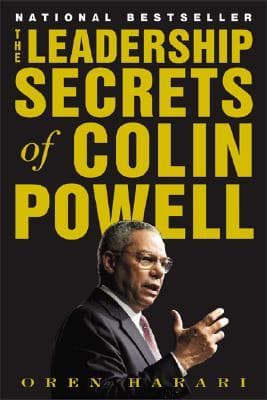
The Leadership Secrets of Colin Powell cover
Archivist's Choice

The Leadership Secrets of Colin Powell

Oren Harari (2002)

Genre

Business / Biography / Leadership / History

Reading Time

12 Minutes

Key Themes

See below

Track Your Reading

Sign in to track this book

Oren Harari distills Colin Powell's journey through war and politics into a practical guide for aspiring leaders, emphasizing strategic thinking, rational objectives, and challenging old norms.

Core Idea

Oren Harari distills the leadership philosophy and practices of General Colin Powell, one of America's most respected military and political figures. The book argues that Powell's success wasn't due to innate charisma alone, but rather a consistent application of practical, disciplined principles focused on people, clear communication, decisive action, and unwavering integrity. Harari presents these 'secrets' as actionable strategies that can be applied by leaders in any organization, emphasizing that true leadership is about achieving results while fostering a positive and ethical environment.
Difficulty
Medium

Core idea

The central argument and framework that powers the entire book.

Oren Harari distills the leadership philosophy and practices of General Colin Powell, one of America's most respected military and political figures. The book argues that Powell's success wasn't due to innate charisma alone, but rather a consistent application of practical, disciplined principles focused on people, clear communication, decisive action, and unwavering integrity. Harari presents these 'secrets' as actionable strategies that can be applied by leaders in any organization, emphasizing that true leadership is about achieving results while fostering a positive and ethical environment.

At a glance

Difficulty

Medium

Key Takeaways

1

Vision Before Action

Clear, concise objectives are the bedrock of effective leadership.

Quote

Leadership is about having a clear vision, articulating it to your team, and then relentlessly pursuing that vision.

Harari explains that Powell's success came from always defining and communicating a clear vision before starting any major project. This meant painting a clear picture of the desired future, so every team member understood their role. Powell's military career, from junior officer to Chairman of the Joint Chiefs of Staff, consistently showed this. He would understand the 'why' behind a mission, then simplify complex goals into clear instructions. This clarity reduced confusion, aligned efforts, and allowed subordinates to make informed...

Supporting evidence

Powell's strategic planning during Operation Desert Storm, where he articulated clear political and military objectives to a diverse coalition, is a prime example.

Apply this

Before launching any project, dedicate significant time to defining the project's ultimate purpose and desired outcome. Communicate this vision repeatedly and in various formats to ensure universal understanding.


2

The Power of Provocation

Challenge the status quo and encourage dissent to foster innovation and avoid stagnation.

Quote

Don't be afraid to challenge the assumptions, even if they're your own. The best decisions come from vigorous debate.

One of Harari's best points is Powell's careful use of 'playing the provocateur.' Powell knew that unchallenged agreement often led to groupthink and missed chances. He looked for different opinions, creating a space where subordinates felt safe to question existing ideas and offer other viewpoints, even if they went against his own. This wasn't about being difficult; it was about thoroughly testing assumptions and looking at all sides of a problem before deciding. Harari argues this practice is vital for businesses in changing enviro...

Supporting evidence

Powell's often-cited 'left-turn' meeting strategy, where he would explicitly ask for opposing viewpoints, illustrates his commitment to intellectual friction.

Apply this

As a leader, actively solicit and reward constructive criticism. Designate a 'devil's advocate' in key decision-making meetings to challenge prevailing assumptions.

3

Character as Currency

Integrity, trust, and accountability are non-negotiable assets for any leader.

Quote

The day soldiers stop bringing you their problems is the day you have stopped leading them. They have either lost confidence that you can help them or conclude that you do not care. Either case is a failure of leadership.

Harari clearly states that Powell's character was not just a personal trait but a strategic advantage. His reputation for integrity, honesty, and genuine care for his people earned him great trust, both above and below him in command. This trust was the basis for building effective teams and earning respect. Leaders who show these qualities build loyalty and open communication, which are important for handling crises and achieving long-term success. Harari suggests that leaders who lack character, even if strategically brilliant, will...

Supporting evidence

Powell's consistent emphasis on taking care of his troops, even when it meant challenging higher authorities, built deep loyalty.

Apply this

Prioritize transparency and honesty in all interactions. Consistently follow through on commitments and take responsibility for mistakes to build and maintain trust with your team.

4

The 40-70 Rule

Make decisions when you have 40-70% of the information, balancing analysis with decisive action.

Quote

You'll never have 100% of the information. Make your decisions when you have between 40 and 70 percent of the facts.

This is one of the book's most useful insights for business leaders. Powell knew that waiting for perfect information caused inaction, while acting too fast led to recklessness. The 40-70 rule finds a balance: gather enough information to make an informed decision (at least 40%), but avoid endless analysis (don't wait for more than 70%). Beyond 70%, more information often helps less, and delaying costs more. This rule lets leaders act decisively in unclear situations, understanding that adapting and improving a plan is often more valu...

Supporting evidence

Powell applied this rule consistently in military operations, where delaying decisions could have catastrophic consequences, emphasizing adaptability over perfect foresight.

Apply this

When faced with a decision, set a mental 'information threshold.' Once you've gathered sufficient data to understand the core problem and potential solutions, make a choice and be prepared to adjust as new information emerges.

5

Empowerment Through Delegation

Trust your subordinates to execute, and provide them with the resources and authority to succeed.

Quote

Give me the mission, tell me what you want done, and let me go do it. Don't tell me how to do it. Let me figure that out.

Harari emphasizes Powell's strong belief in empowering subordinates. This meant more than just giving out tasks; it meant trusting people with responsibility and the power to make decisions in their area. Powell understood that micromanagement stopped initiative and new ideas. By clearly stating the objective ('what') and then letting his team figure out the 'how,' he built a sense of ownership and accountability. This approach not only develops future leaders but also uses the combined intelligence and creativity of the whole organiz...

Supporting evidence

Powell's command philosophy in the military was to provide clear intent, then allow commanders on the ground to adapt tactics as needed, trusting their expertise.

Apply this

When delegating, clearly define the desired outcome and the boundaries of authority, but resist the urge to dictate the process. Offer support and resources, but allow your team to find their own solutions.

6

The Feedback Imperative

Continuous, honest feedback is essential for individual and organizational growth.

Quote

The greatest leaders are those who are constantly learning, and that learning comes from receiving and acting on feedback, both good and bad.

Powell's leadership involved both giving and receiving feedback. Harari stresses that feedback, when given constructively and accepted openly, helps development. Powell didn't avoid tough conversations, knowing that addressing performance issues directly and early was better than letting them worsen. Equally important, he asked for feedback on his own performance, showing humility and a dedication to getting better. This creates a safe environment where employees feel comfortable sharing their views, leading to better decisions and a ...

Supporting evidence

Powell's regular 'walk-arounds' and informal conversations with soldiers at all ranks were opportunities for both giving and receiving direct, unfiltered feedback.

Apply this

Implement regular, informal feedback sessions, not just annual reviews. Frame feedback as a gift for growth, and actively ask your team for feedback on your own leadership.

7

Lead from the Front (and the Back)

Leaders must inspire through personal example while also supporting their team from behind.

Quote

You can't do it alone. You have to pull with your people, and you have to push with your people.

Harari shows Powell's careful understanding of leadership presence. 'Leading from the front' meant setting a personal example of dedication, courage, and hard work. Powell was visible, involved, and willing to share his team's burdens. However, he also understood 'leading from the back'—providing strategic guidance, removing obstacles, and supporting his people, letting them succeed and take credit. This dual approach created both inspiration and support, leading to a highly motivated and effective team. Harari suggests that many lead...

Supporting evidence

Powell's visits to troops in the field, even as a high-ranking general, demonstrated his 'lead from the front' mentality, while his advocacy for military families showed 'leading from the back.'

Apply this

Be present and visible, especially during challenging times. Simultaneously, dedicate time to removing bureaucratic hurdles and advocating for resources on behalf of your team.

8

Adapt or Die

Embrace change and be willing to discard outdated strategies.

Quote

The world is constantly changing, and if you're not changing with it, you're going to be left behind.

Powell's career spanned decades of major geopolitical and technological change, and Harari highlights his remarkable ability to adapt. This was not just reacting to outside pressures, but actively seeking new information and being willing to abandon strategies, even successful ones, when they no longer fit the changing environment. For corporate leaders, this means building an organizational culture that sees change as an opportunity, not a threat. It requires flexible thinking and the courage to admit when an old approach is no longe...

Supporting evidence

Powell's leadership in transforming the US military after the Cold War, adapting to new threats and technologies, is a testament to his adaptability.

Apply this

Regularly review and challenge your organization's core assumptions and strategies. Foster a culture where experimentation and learning from failure are encouraged, rather than punished.

9

Simplicity in Communication

Clarity and conciseness amplify your message and ensure understanding.

Quote

Great leaders are often great communicators. They can take complex ideas and make them simple and understandable for everyone.

Harari highlights Powell's excellent communication skills, especially his ability to simplify complex issues into clear, actionable messages. Whether speaking to troops, politicians, or the public, Powell avoided jargon and spoke directly and with conviction. This simplicity was not a sign of superficiality but a deliberate strategy to ensure his message was understood at all levels of an organization. In a corporate setting, overly complex language can lead to misunderstanding, wasted effort, and disengagement. Powell's example shows...

Supporting evidence

Powell's clear and compelling presentations to the UN and the American public during various crises showcased his ability to simplify complex geopolitical situations.

Apply this

Before communicating, ask yourself: 'Can this be simpler?' Eliminate jargon, use analogies, and ensure your key message is easily digestible by diverse audiences.

10

Prioritize People, Not Just Profits

Invest in your team's well-being and development; it's the ultimate competitive advantage.

Quote

The most important thing in any organization is its people. Take care of them, and they will take care of the mission.

While not called 'profits' in the military, Harari consistently implies that Powell's focus on the well-being and development of his personnel was most important. Powell understood that a well-trained, motivated, and cared-for team is much more effective than one driven only by orders. This directly applies to business: companies that truly invest in their employees' growth, provide a supportive environment, and prioritize their well-being will do better than those that see employees only as resources. This is the book's main theme, s...

Supporting evidence

Powell's relentless advocacy for better equipment, training, and support for soldiers and their families throughout his career.

Apply this

Implement mentorship programs, offer professional development opportunities, and actively listen to employee concerns. Prioritize work-life balance and foster a culture of respect and psychological safety.

Critical analysis

Notable Quotes

Quiz

Test Your Knowledge

Ready to see how well you understood this book? Take our interactive quiz with 10 questions.

10
Questions
~5
Minutes
?
Best Score

Key Questions (FAQ)

The book highlights principles such as defining clear objectives, fostering trust and loyalty, maintaining a positive attitude, and the importance of decisiveness. It emphasizes Powell's ability to communicate effectively and inspire action in diverse situations.

About the author