BookBrief
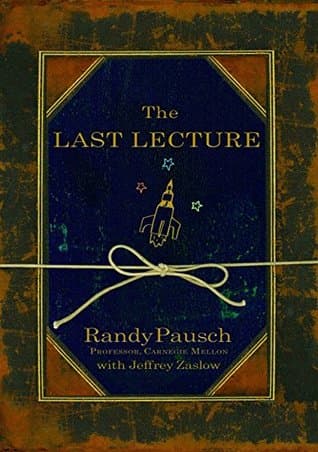
The Last Lecture cover
Archivist's Choice

The Last Lecture

Randy Pausch (2008)

Genre

Biography / Memoir / Philosophy

Reading Time

180 min

Key Themes

See below

Track Your Reading

Sign in to track this book

With terminal cancer, a professor gives his 'last lecture' not as a farewell, but as a guide to living fully, achieving childhood dreams, and helping others achieve theirs.

Core Idea

Randy Pausch, a computer science professor with terminal pancreatic cancer, shares his life's wisdom in a final lecture. He means it as advice for his children and the world. The book says that by pursuing childhood dreams, overcoming challenges, and helping others' dreams, one can live a meaningful life, no matter its length. It highlights the effect of attitude, preparation, and gratitude in handling life's difficulties and finding joy and success.
Reading time
180 min
Difficulty
Easy
✓ Read this if...
You are looking for an uplifting and practical guide to living a meaningful life, facing adversity with grace, and achieving your dreams. Ideal for anyone seeking inspiration on career, parenting, or personal growth.
✗ Skip this if...
You prefer a purely academic or deeply philosophical exploration of mortality, or if you are averse to personal memoirs with an overtly optimistic and motivational tone.

Core idea

The central argument and framework that powers the entire book.

Randy Pausch, a computer science professor with terminal pancreatic cancer, shares his life's wisdom in a final lecture. He means it as advice for his children and the world. The book says that by pursuing childhood dreams, overcoming challenges, and helping others' dreams, one can live a meaningful life, no matter its length. It highlights the effect of attitude, preparation, and gratitude in handling life's difficulties and finding joy and success.

At a glance

Reading time

180 min

Difficulty

Easy

Read this if...

You are looking for an uplifting and practical guide to living a meaningful life, facing adversity with grace, and achieving your dreams. Ideal for anyone seeking inspiration on career, parenting, or personal growth.

Skip this if...

You prefer a purely academic or deeply philosophical exploration of mortality, or if you are averse to personal memoirs with an overtly optimistic and motivational tone.

Key Takeaways

1

The Power of Childhood Dreams

Your earliest aspirations hold profound lessons for your adult life.

Quote

The brick walls are there for a reason. They're not there to keep us out. The brick walls are there to give us a chance to show how badly we want something.

Pausch says that childhood dreams are not just fantasies, but strong signs of our deepest desires and abilities. Thinking about these dreams again and working to achieve them offers a plan for a good life, even with big problems. He says that the journey to these dreams, and what you learn, is often more important than the dreams themselves. These early hopes often teach flexibility, the need for hard work, and the joy of working with others, all important for handling life's difficulties.

Supporting evidence

Pausch recounts his own childhood dreams: experiencing zero gravity, playing in the NFL, being Captain Kirk, winning stuffed animals, and becoming a Disney Imagineer. He then details how he achieved or at least approximated each of these, demonstrating how seemingly impossible dreams can be realized through persistence and ingenuity.

Apply this

Reflect on your own childhood dreams. Identify one or two that still resonate with you. Break down the core desire behind that dream and brainstorm small, actionable steps you can take today to move closer to its essence, even if a literal achievement is no longer possible.


childhood-dreamsgoal-settingresilience
2

Brick Walls as Opportunities

Obstacles are not meant to deter you, but to test your resolve.

Quote

The brick walls are there for a reason. They're not there to keep us out. The brick walls are there to give us a chance to show how badly we want something.

Pausch sees obstacles not as problems, but as important tests that separate those who truly want a goal from those who do not. These 'brick walls' are chances to show passion, endurance, and problem-solving skills. He tells readers to accept challenges, knowing that overcoming them builds character and makes successes more meaningful. A brick wall means you are working toward something worthwhile, and how you react to it shows how committed you are.

Supporting evidence

Pausch's experience applying to Carnegie Mellon for a professorship, being initially rejected, and then working to impress the department through his work and eventually getting hired. He also shares the story of getting into Disney Imagineering after multiple rejections, eventually securing a sabbatical.

Apply this

When faced with a significant obstacle, instead of feeling defeated, ask yourself: 'What is this brick wall trying to teach me? How can I demonstrate my commitment to this goal by finding a way around or through it?' Brainstorm three alternative approaches to your current challenge.

overcoming-obstaclesperseveranceproblem-solving
3

The Importance of Enabling Others

True leadership involves empowering those around you to achieve their potential.

Quote

It's not about what you can get, it's about what you can give.

Pausch points out that a lot of a good life comes from helping others achieve their dreams. This 'enabling' does not lessen one's own successes; it makes them bigger by creating a chain reaction of success and happiness. Mentoring, supporting, and creating chances for others are presented as key parts of a life well-lived. He believes that by investing in others, you help them grow and also improve your own life and leave a lasting mark.

Supporting evidence

Pausch frequently discusses his role as a professor and mentor, emphasizing how much joy he derived from seeing his students succeed. He recounts stories of helping students get jobs, pursue their passions, and even recover from mistakes, such as the anecdote of the student who crashed a car and Pausch helped him fix it.

Apply this

Identify someone in your life – a colleague, friend, or family member – whose dream you can genuinely help enable. Offer specific, actionable support, whether it's mentorship, a connection, or simply an encouraging word. Make it a regular practice.

mentorshipleadershipaltruism
4

Experience Over Material Possessions

Invest in moments and memories, not just things.

Quote

It's not about the things you own, it's about the experiences you have.

Pausch quietly but strongly supports choosing experiences that create lasting memories and personal growth over getting rich. He suggests that true wealth in life comes from shared moments, challenges overcome, and the joy of creating, not from possessions. This view is especially clear given his terminal diagnosis. It shows that time is limited and that every moment matters through meaningful connection with the world and people around us.

Supporting evidence

While not explicitly stated as a 'takeaway', Pausch's joy in his Disney Imagineering experience, his zero-gravity flight, and his time with his family, often described in vivid detail, implicitly supports this idea. He focuses on the *doing* and *being* rather than the *having*.

Apply this

Instead of buying a new gadget, plan an experience: a trip, a class, a special meal with loved ones. Actively seek out opportunities to create new memories and engage deeply with the present moment.

experiential-learningmindfulnessgratitude
5

The Value of Preparation and Hard Work

Luck is what happens when preparation meets opportunity.

Quote

Luck is indeed what happens when preparation meets opportunity.

Pausch firmly believes that success rarely happens by chance. He stresses that careful preparation and steady hard work create the conditions for 'luck.' He shows that behind every seemingly sudden success are many hours of dedication, learning, and practice. This idea counters the myth of sudden success, reinforcing that consistent effort is the most reliable way to reach goals and be ready when chances appear.

Supporting evidence

Pausch's detailed account of his rigorous academic career, his dedication to his research, and his meticulous planning for his 'Last Lecture' itself, which he treated as a major production, all underscore his belief in preparation.

Apply this

Identify a goal you want to achieve. Break it down into smaller steps and dedicate specific, consistent time slots each week for preparation and practice related to that goal. Track your progress to reinforce the habit.

work-ethicdiligenceopportunity-creation
6

Don't Complain, Just Work Harder

Focus your energy on solutions and effort, not grievances.

Quote

Complaining does not work as a strategy. We all have finite time and energy. Any time we spend whining is less time we have for doing something productive.

This idea is a main part of Pausch's practical philosophy. He says that complaining wastes energy that could be used for action. Instead of focusing on problems, he suggests using that energy to find solutions and work harder. This active approach leads to better results and also creates a more positive and strong mindset, which is important for dealing with life's unavoidable problems. It emphasizes personal responsibility and control.

Supporting evidence

Pausch's stoic acceptance of his cancer diagnosis and his decision to focus on living fully and preparing his family, rather than lamenting his fate, is the ultimate example. He also recounts his father's advice: 'Never complain, never explain.'

Apply this

For one week, consciously catch yourself whenever you start to complain. Instead of vocalizing the complaint, immediately reframe the situation and brainstorm one constructive action you can take to improve it or your perspective on it.

proactivityresiliencepositive-mindset
7

The Power of Thoughtful Feedback

Honest and constructive criticism is a gift for growth.

Quote

When you're screwing up and nobody says anything to you anymore, that means they've given up on you.

Pausch sees honest, even harsh, feedback as a valuable tool for personal and career growth. He says that if people do not criticize you, it often means they do not care about your potential. He tells people who get feedback to listen openly, understand the real reason, and use it to get better. This view changes criticism from a personal attack into an act of caring and a chance for growth.

Supporting evidence

Pausch's experience with his football coach, Jim Graham, who was incredibly tough but taught him valuable life lessons about fundamentals and perseverance. He credits this tough love with shaping his character.

Apply this

Actively seek out constructive feedback from trusted mentors or colleagues. When receiving feedback, practice active listening without immediately defending yourself. Ask clarifying questions to understand the criticism fully, then reflect on how you can apply it.

constructive-criticismpersonal-growthactive-listening
8

Embrace Playfulness and Fun

Joy and levity are essential for creativity and well-being.

Quote

If you don't have fun, you're not going to be successful. If you're not having fun, you're doing it wrong.

Despite the serious topic of his lecture, Pausch always supports bringing joy and playfulness into all parts of life and work. He believes that fun is not just a distraction but an important part of creativity, motivation, and sustained effort. A playful attitude can make hard tasks easier, encourage new ideas, and build stronger relationships. He argues that if you are not enjoying the process, you are probably not doing it well.

Supporting evidence

Pausch's 'Last Lecture' itself is filled with humor, props (like the giant stuffed animals), and an infectious sense of joy. His approach to teaching computer science, incorporating virtual reality and engaging projects, also demonstrates this principle.

Apply this

Identify one task or area in your life that feels overly serious or burdensome. Brainstorm ways to inject an element of play, humor, or lightheartedness into it. This could be through music, a creative approach, or involving others in a fun way.

creativitywork-life-balancepositive-psychology
9

Time Management: The Most Precious Resource

Your time is finite; spend it wisely and intentionally.

Quote

Time is all you have. And you may find one day that you have less than you think.

Pausch's terminal diagnosis makes him focus on how irreplaceable time is. He says that time is the only truly limited resource, and using it wisely is most important for a good life. This is not just about being efficient, but about being intentional: choosing how to spend your moments in line with your values and priorities. He tells readers to be aware of where their time goes, to remove distractions, and to invest in what truly matters, knowing that every minute spent is a minute gone forever.

Supporting evidence

His entire 'Last Lecture' and the subsequent book are a testament to his intentional use of his remaining time to impart wisdom and create a legacy for his children. He meticulously planned every aspect to maximize its impact.

Apply this

Perform a 'time audit' for a few days, tracking exactly how you spend your hours. Identify one or two significant time-wasters and consciously replace that time with an activity that aligns with your core values or goals.

time-managementintentional-livingprioritization
10

Show Gratitude

A simple 'thank you' can profoundly impact relationships and well-being.

Quote

A good apology is like an antibiotic, a good 'thank you' is like a painkiller.

Pausch highlights the great effect of showing gratitude, not just as politeness, but as a basic part of building strong relationships and having a positive outlook. He sees a sincere 'thank you' as a strong tool that recognizes others' contributions, confirms their efforts, and strengthens connections. In a world often focused on what is missing, actively recognizing and appreciating the good, and the people who contribute to it, greatly improves one's own well-being and the well-being of those around them.

Supporting evidence

Pausch makes a point of thanking specific individuals throughout his lecture and book – his parents, his wife, his mentors, his colleagues, and even the audience – demonstrating this principle in action.

Apply this

Make it a daily practice to verbally or in writing thank at least one person for something specific they did or said. Be genuine and specific in your appreciation.

gratitudeinterpersonal-skillspositive-relationships

Critical analysis

Notable Quotes

We cannot change the cards we are dealt, just how we play the hand.

A core philosophy Randy lived by, especially pertinent given his terminal diagnosis.

The brick walls are there for a reason. They're not there to keep us out. The brick walls are there to give us a chance to show how badly we want something.

Discussing the challenges and obstacles in life, and their true purpose.

Experience is what you get when you don't get what you want.

Reflecting on the value of setbacks and unexpected outcomes.

It's not about achieving your dreams, it's about living your life.

A nuanced perspective on the pursuit of dreams, emphasizing the journey.

If I can't be an example, I'll be a horrible warning.

Said in jest about his weight and health habits, highlighting self-awareness.

Show gratitude. When I was a kid, my mom and dad taught me to always write thank-you notes.

Emphasizing the importance of expressing appreciation.

Have something to bring to the table, because that will make you more welcome.

Advice on being a valuable contributor in any group or situation.

Never lose the child-like wonder. It's too important. It's what drives us.

Encouraging the retention of curiosity and imagination throughout life.

When you're the first person to do something, you're the first person to have all the problems.

Discussing the challenges and pioneering spirit of being an innovator.

It's not about what you achieve. It's about what you become.

A deeper look at personal growth and transformation over mere accomplishments.

Complaining does not work as a strategy. We all have finite time and energy. Any time we spend whining is unlikely to help us achieve our goals.

A pragmatic view on the inefficiency and futility of complaining.

The only way to get the best people is to let them do their jobs.

Reflecting on effective leadership and delegation.

Don't kid yourself. It's all about money. If you don't have it, you're going to have a harder life.

A frank and realistic assessment of the role of finances in life.

If you wait long enough, good things will happen. But you have to be ready for them.

Emphasizing patience combined with preparation for opportunities.

Quiz

Test Your Knowledge

Ready to see how well you understood this book? Take our interactive quiz with 10 questions.

10
Questions
~5
Minutes
?
Best Score

Key Questions (FAQ)

'The Last Lecture' by Randy Pausch is a powerful memoir based on a talk he gave after being diagnosed with terminal cancer. It's not about dying, but rather about the importance of living, achieving childhood dreams, overcoming obstacles, and enabling the dreams of others.

About the author